Category: Politics

  • Kwankwasiya: Taming Ignorance and Begging in Kano

    Kwankwasiya: Taming Ignorance and Begging in Kano

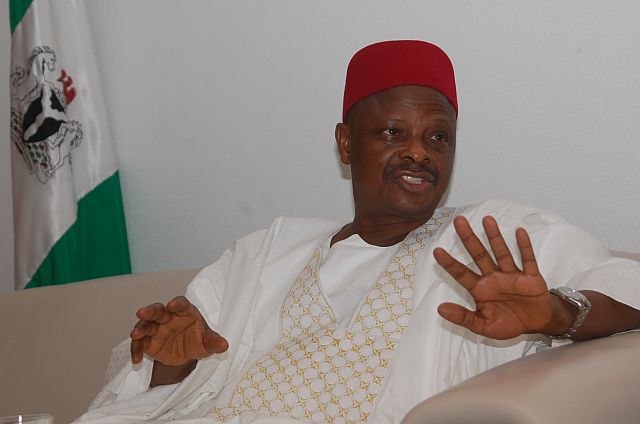
    Governor Kwankwaso of Kano StateKwankwasiya: Taming Ignorance and Begging in Kano
    By Yushau A. Shuaib

    Realising the importance of knowledge, skill acquisition and job creation, the Kano State government through its Kwankwasiya slogan is fighting ignorance, street begging and other vices through massive investment on education and critical infrastructure.

    This writer was recently invited by the duo of Jafar Jafar and Baba Dantiye, Media Assistant, and Director Public Relations respectively to Governor Rabiu Musa Kwankwaso of Kano State. While still waiting inside the reception hall of the Government House, Governor Rabiu Musa Kwankwaso and his Deputy, Dr. Abdullahi Umar Ganduje strolled in. They were on their way to inspect some ongoing projects in the city. They asked a guest and myself to join the team on the inspection tour. Who am I to resist such a gesture, considering various perceptions about the governor and impressions on the ongoing projects in the state?

    I must admit from the outset that I had close encounter with, and supported former Governor Mal. Ibrahim Shekarau during his eight year tenure. Due to that affinity, some aides and supporters of the current Governor Kwankwaso have often challenged some of us to make sincere appraisal and comparisons of the two administrations in the state.

    As the convoy moved from sites to sites, youths and the elderly especially women trooped out to hail the governor. While we sighted some newly established schools, we were at the sites of ongoing megacity project aimed at decongesting the old city. The new city is spread in three estates: Kwankwasiya, Amana and Bandirawo with different types of residential accommodations with provision for schools, security posts, commercial and recreational centres. Other ongoing projects include: construction of dual carriage way complete with street lights; fly over bridges; rehabilitation of roads; modern trailer parks and the important independent power plant project, which is expected to generate 35 MW of electricity from Challawa and Tiga Dams in Kano. Already the street and traffic lights in the metropolis have become functional through independently generated electricity without depending on PHCN.

    Rather than talking about past administrations or accusing presumed political enemies for whatever excuses, Kwankwaso is so passionate about education projects in the state with new schools being established, and some created from abandoned structures.

    The governor traced the security problem in the country to ignorance and lack of proper knowledge of religious and moral injunctions. He said parents procreate in dozens as if they were meant for sale and abandon them to becoming almajiranci (destitute beggars) without provision for feeding, clothing and shelter, which he described as ‘un-Islamic.’ “We cannot continue to tolerate begging in our city. Never!” he declared matter-of-factly.

    In an effort to discourage child beggars from the streets and ensure their return to schools, the state has reintroduced free feeding, materials and uniforms for pupils in primary schools. Schools for Quranic and Islamic studies are now established to incorporate western education and skills acquisition. The curricula is designed in such a way that knowledge acquired would empower the participants and improved their standard of living spiritually and socially so that they could become useful to themselves and the society.

    Related to this, the government has created rehabilitation centres for destitute where they could learn some skills rather than prostituting and constituting themselves into nuisance on the streets. The state is working on a law to ban shameful act of begging anywhere in Kano.

    Though the newly established North-West University has fulfilled NUC requirements and equipped with state-of-the-art facilities, there are also various skill acquisition institutes for entrepreneurship development to empower people to be self-employed. Some of the institutes include those deliberately designed for training on fishery, poultry, livestock, farming, film-making, and even sports among others. The most impressive is the Kano Corporate Security Institute which graduates would replace tired but refused to retire security gatemen who are indeed very old.

    On Corporate Security Institute, the governor said: “The initial idea is to ensure that we have professionally trained security personnel who are strong, healthy, mentally alert young men and women. We cannot continue to have old people doing the jobs while their children and grandchildren are jobless. We want to see indigenes of Kano well-dressed, proud in corporate security outfit doing their job professionally and earning decent living.”

    While scholarships are provided to indigenes for foreign studies on specialised fields of medicine, engineering, piloting and other science-based education, the state is working to ensure that additional teaching hospitals could be provided for universities in the state. There is balance in gender representation in the scholarship scheme that encourages female-education, especially in the specialised field of paediatrics and gynaecology. An average Northerner would rather prefer a female medical doctor to attend to the crucial medical needs of their wives.

    On the source of funding, Governor Kwankwaso said the state relies on the Federation Account and its improved internally generated revenue (IGR) to fund the projects. He emphasised that his administration has refused to secure any new loan, locally or internationally as it prioritises its budget for infrastructure and human capital development. Capital expenditures take lion’s share of over 70% while recurrent services take the remainder.

    During the tour, Dr. Kwankwaso was bold in tackling his officials and contractors at each site, dishing out instructions on the need for quality jobs that should meet deadlines and specifications. He often threatened to sack officials or revoke contracts that fail the demand of the job. I saw this with my korokoro eyes!

    With just two years to the end of the tenure, could Kwankwaso complete his missions, visions and the projects before he leaves? His aides give an impression that “Kwankwasiya is not just about the unique dress code and Red Caps, the administration symbolises due process, transparency, accountability, and fiscal discipline towards achieving its goals within the tenure.”


    This article by Yushau A. Shuaib has been published in June 2013 by People Daily, Blueprint, Punch, Thisday, Vanguard, Daily Sun, Nigerian Tribune, Premium Times, Eagle Online….

    Related to this, the government has created rehabilitation centres for destitute where they could learn some skills rather than prostituting and constituting themselves into nuisance on the streets. The state is working on a law to ban shameful act of begging anywhere in Kano.

  • On El-rufai and His Accidental Book

    Why should Mallam Nasir el Rufai reveal so much confidential information, behind the scene deals and political melodrama in his “Accidental Public Servant” book? The book is not only accidental as the former Director General of Bureau for Public Enterprises (BPE) and Minister of the Federal Capital Territory (FCT) wants the readers to believe. It is acidic to image of some public figures he so mentioned. The book is probably influenced by journalistic instinct of fearlessness, bluntness and damning the consequence of a journalist. It seemingly lacks the finesse of public relations, which he could have deployed to convey the same messages without resorting to the publish-and-be-damned style and still become a best-seller.
    This writer, like most Abuja dwellers was a beneficiary as well as victim of Nasir el Rufai’s policies when he was Minister of FCT. While I bought one of the monetized houses, my family lost legally acquired business premises to El Rufai’s demolition squad. Everyone was affected in one way or the other: the powerful politicians and the poor civilians have different adjectives to fittingly qualify his style of administration.

    Before the publication, he has always been as controversial as his physique and high positions he held. His enigmatic disposition is reflective in his outbursts and battles at various stages of his life.

    In over 20 years of syndicated opinion writings, this writer had causes to write to, and on el-Rufai, as an arrow-head of the government in attempts to question some of his controversial policies and decisions. Some of the articles where his name appeared in the titles include: “el Rufai: From Privatization to Demolition,” “Memo to el-Rufai on Monetisation of Government Houses,” “Six el-Rufai in Mummy’s Shop,” and “Between el Rufai, Ribadu and Yar’Adua.”

    It was obvious that, to some extent he was tolerant to some of the constructive criticisms going subsequent actions he took and occasional responses. His Special Assistant, Dr. Abdu Mukhtar once issued a lengthy rejoinder to my criticism of the Monetisation policy, clearly stating government position and how it could benefit the civil servants at the end.

    My close contact with him came when I was nominated by his office to be the Chief Rapporteur and Leader of the Rapportorial Team of the International Conference on Abuja @30 Celebration in 2006. At a close range, el Rufai is a jolly fellow. He related seamlessly with all officials at the weeklong event. Though his style as an administrator could defer from what would be expected from typical Nigerian politicians and top civil servants, he was focused on the assigned targets, especially on the restoration of Abuja Master plan, the monetization policy concerning government houses, the initial public service reform among others would remain indelible hallmarks of el Rufai’s time in government.

    From the PR practitioner’s perspective, Nasir el Rufai is a difficult brand to manage. He strongly believes in the power of his voice no matter what others would say. He admitted this in his book when he wrote that “certain people hold the opinion that I am feisty, argumentative and antagonistic- ….I just believe in being honest with myself and with others and in speaking my mind frankly..”

    While it was difficult to recall his open criticism or opinion on the ‘Third Term’ agenda of President Olusegun Obasanjo as clearly demonstrated then by Vice President Atiku Abubakar, el Rufai narrated his behind the scene campaigns against the project in association with other members of the then Economic Management Team, which included Nuhu Ribadu, Ngozi Okonjo-Iweala and Oby Ezekwesili. One of his direct confrontations angered President Obasanjo who retorted: “I am looking forward to May 29, 2007 to go back to my farm.” At another instance Obasanjo had to refer to el Rufai as “coup plotter” for secretly leading others against the Third Term Agenda after a consultation with Gen. Abdullahi Mohammed, the Chief of Staff.

    Although it is difficult to determine from the book if el Rufai nursed the ambition to replace Obj/Atiku after their second term in 2007, it is clear that he was very bitter over the failure of Obasanjo to groom a successor. He said in the book: “The fact that Obasanjo did not even explore the idea of grooming a suitable successor speaks of the depths of his delusion… he deprived the ordinary Nigerian of that luxury of making a real choice.”

    While he publicly supported the emergence of Umar Musa Yar’Adua and Goodluck Jonathan as presidential and Vice presidential candidates of the ruling People’s Democratic Party (PDP), he nevertheless writes in his book: “Yar’Adua and his deputy, Goodluck Jonathan emerged for no other discernible reasons than being weak governors sympathetic to the Third Term project and therefore, handpicked as paypack.”

    Notwithstanding his scathing criticisms of his boss, it is obvious from the book that el Rufai retains some kind impressions about Obasanjo when he said “In spite of all these deficits, President Obasanjo is an intelligent, hardworking, dedicated and competent leader. I consider my experiences working with him, one of the pinnacles of my public service career.”

    Dwelling on his sojourn at the BPE, el Rufai justifies his recruitment policy of favouring friends, associate and first class graduates on the ground that he knew their capabilities. While debunking the allegations of paying a youth corps member, Aishetu Fatima Kolo N2 million per month, he justifies his realistic salaries for staff in BPE as means of fighting corruption due to temptation of office with supports from some multilateral institutions like World Bank and DFID.

    The book unveils a lot of financial scandals and corrupt practices involving individuals in high places from the public and private sectors, especially during the privatisation process. El Rufai narrates how one Nessim Gaon, a Swiss-Jew who was awarded $320million contract to build Nicon-Noga Hilton in Abuja manoeuvred himself to become a shareholder in the hotel. The project, according to el Rufai should not have cost $120million in the estimation of a quantity surveying firm, yet the same contractor without injecting any fund into the hotel claimed to be a 25% shareholder in the ownership under a very questionable management contract executed with NICON Insurance. El Rufai ensured the man lost the controversial shareholding after consulting Vice President Atiku Abubakar as Chairman of National Privatisation Council who approved that Hilton became a 100%- owned asset of the Government.

    Another hanky-panky he exposed was his alleged rejection of N25,000,000 and $100,000 cash as a ‘thank you’ gift from Mike Adenuga after the sale of the National Oil (Nolchem) to his (Adenuga’s) Conpetro. When the courier of the bribery, a named staff of BPE was reprimanded by Elrufai with a threat to report him to NCP, the staff replied that the Chairman of the Council (VP Atiku) had been informed by Adenuga on the ‘Naira-Dollars’ gift.

    El Rufai writes that he immediately went to Atiku to accuse him of complicity. A surprised Atiku immediately put a speaker phone call to Adenuga and asked: “Did we ever discuss Nasir Elrufai with you and what did I say?” Adenuga replied: “Yes sir. You told me he is a straightforward person and that I should not try to give him any money or try to thank him in any way.”

     This book review by Yushau A. Shuaib has been published in the print edition of Economic Confidential, Thisday, Guardian, Punch, Vanguard, National Mirror, Nigerian Tribune, People’s Daily, Blueprint, Daily Trust and the Sun in April 2013


    To be continued in PartII

  • New Orleans: The Disaster Resilient City

    Yushau Shuaib of Nigeria NEMA with Antwane Johnson, Director Intergrated Public Alert and Warning Systems (IPWAS) of FEMA USA a
    Yushau Shuaib of Nigeria NEMA with Antwane Johnson, Director Intergrated Public Alert and Warning Systems (IPWAS) of FEMA USA a

    Sometimes in 2011, this writer got an invitation to attend the annual International Disaster Conference and Expo (IDCE) which takes place every year in the city of New Orleans in the United States of America.

    But due to a short notice and stringent requirements for US visa, the writer missed the opportunity to attend the global conference. The following year, after the worst flood disaster in Nigeria, another invitation was extended to me as the spokesperson of National emergency Management Agency (NEMA).

    Surprisingly visa was granted even at short notice after an interview that was less than five minutes at the US Embassy in Abuja!

    For decades, New Orleans was reputed to be a city of good music, tantalizing cuisine, rich culture and friendly dwellers who welcome visitors from across the globe with open arms until the arrival of Hurricane Katrina, which on August 29, 2005 washed away the city and devastated the Gulf Coast. Thousands of people fled their homes as huge sections of the city disappeared under floodwaters.

    The disaster in this city of mostly black people has been described as one of the deadliest, costliest and most destructive of the 2005 series of Atlantic hurricane in the United States of America. Over 1,500 people died in the disaster. It was also estimated that over $80 billion was lost due to damages to property.

    The incidence also exposed the weakness of humans in relation to technology. The hurricane surge protection failures in New Orleans are considered the worst civil engineering disaster in U.S. history and this prompted a lawsuit against the U.S. Army Corps of Engineers (USACE), who were the designers and builders of the levee system. There was also an investigation of the responses from federal, state and local governments, resulting in the resignation of Federal Emergency Management Agency (FEMA) director, Michael D. Brown and of New Orleans Police Department (NOPD) Superintendent Eddie Compass.

    While first timers in the city could have anticipated an excursion into sites of ruins and traces of destructions from Hurricane Katrina, it was amazing that New Orleans is not only bubbling with full of side attractions is a great example of disaster resilient city that have recovered faster than expected. From the well-tarred road networks, magnificent structures and uninterrupted utility services, Katrina disaster story is now in the past tense. New Orleans is re-enacting its old reputation as one of the most popular convention and leisure destinations in USA.

    It wasn’t surprising that the annual IDCE is designed to always take place in New Orleans with a mission to unite public and private sector professionals from around the world for discussions regarding policy, lessons learned, best practices, and forward thinking, resulting in the mitigation of loss of life and property when catastrophic events occur.

    Though conferences on disaster management are held in various cities of the world, IDCE is reputed to be the only event supported across a broad spectrum of industry perspectives: Homeland Security, Emergency Management, Emergency Response, Disaster Recovery, Business Continuity, Resilience, Global Security, Large Loss / Claims, academia and many more.

    During a breakout session at the IDCE Conference, participants were told of how within six months of the Hurricane Katrina, government declared that every parts of New Orleans had become safe as no soil was contaminated and the air quality was pure, while, water and sewage systems were gradually restored. Involvement of the residents and the community in the planning effort also ensured rapid transformation of the city. Relief agencies and volunteer groups helped many returnees especially in the provision of hot meals, packaged food, bottled water and other supplies.


    The U.S. military and other relevant security agencies were involved in the reconstruction of the damaged buildings and structures. Faith-based and community-based organisations as well as individuals all volunteered in providing necessary relief to the displaced people while some non-profit organisations played active roles in mobilising funds in rebuilding houses of the poor and low-earners. Philanthropic organisations involved in financial services also made donations of cash with some providing soft loans to enable victims to return to their businesses.

    There is no denying the fact that USA has an effective, reliable, integrated, and comprehensive system to alert and warn the American people. This writer was fascinated by the sophistication of Early Warning Alert System being regularly utilized to warn residents of looming disasters which contributed to minimal loss of lives during Hurricane Katrina.

    The Director for the Integrated Public Alert and Warning System (IPAWS) in Federal Emergency Management Agency (FEMA), Antwane Johnson told participants that beyond local alerting system, his agency is integrating public alert and warning systems so that warning messages could reach the target audience as soon as possible through various channels including television, radio, online media, mobile phones and public signage simultaneously. The system has collaboration with various institutions, including telephone operators, media owners and volunteers in its successful implementation because it facilitates single emergency alert message delivery to all available public dissemination channels.

    After losing billions of dollars in tourism business due to Katrina, the New Orleans Convention and Visitors Bureau successfully embarked on a rebranding campaign to reposition the potential of the city. The outcome of the crisis and reputation management campaign has propelled the tourism industry of the city to become taller and stronger than expected.

    The success of the rapid recovery efforts of New Orleans from the catastrophe resulted from the massive supports from various institutions, groups and individuals who volunteered to sacrifice in the recovery processes. The great lesson here in disaster management is that while we cannot prevent or even anticipate all disasters, we should plan and prepare for any eventuality that could occur due to nature or human error. Nigeria and other developing countries, especially in Africa have a lot to learn from the disaster resilience and recovery strategies employed during and after Hurricane Katrina in the United States of America.


    Yushau A. Shuaib
    www.yashuaib.com


    This article by Yushau A Shuaib, has been published in February 2013 by the Economic Confidential, Peoples Daily, Punch, Tribune, Blueprint, Leadership, Daily Trust, Vanguard, Champion and National Mirror

  • Flood in the Eyes of the President

    President Goodluck Ebele Jonathan of Nigeria
    President Jonathan- Picture by YAShuaib

    By Yushau A. Shuaib
    While addressing the nation in a broadcast over the unprecedented flood disaster that ravaged many communities in Nigeria, President Goodluck Jonathan’s eyes and head movement, betrayed the fact that he was reading from a prepared text, though there was no sign of a speech on his table.

    His stiffness said it all. He neither gesticulated nor moved parts of his body as he is wont to in normal discussions and addresses to the rhythm of the broadcast. Aside from the motion of his mouth as he uttered the words and the intermittent sounds of billions of Naira donations to some federal institutions and states, the broadcast was a mere dictation session.

    However, an opportunity to study the natural moods of the President to the devastation away from the dictates of protocol, came when he undertook a tour of some selected states affected by the flood. He was accompanied on the tour by Minister of Environment, Hajia Hadiza Mailafiya and Director General of National Emergency Management Agency (NEMA) Muhammad Sani-Sidi among others.

    The tour was indeed an opportunity to see him move in flesh and react naturally in his interaction with victims. He responded directly to their plights and walked under the sun to inspect the internally displaced persons’ (IDPs) camps. Uncharacteristically, there were few body guards and security men accompanying him. In fact, any displaced person could easily walk to him and hold his hands as if it is not the same almighty Nigerian leader. The atmosphere was quite convivial.

    In all the states he had visited, President Jonathan encouraged leaders of the IDPs to voice out their minds openly on their plights. In response, victims narrated how they lost their homes, livestock and farmlands. They gave gory tales of deaths, missing persons and submerged markets, schools, police stations and places of worship.

    In Kogi for instance, President Jonathan was in a melancholic mood. His mien fell further when mothers brought newly born babies to him. He also learnt that some men committed suicide following losses of loved ones and lifelong investments. He admonished victims to desist from taking extreme decisions. He said: “please, don’t commit suicide. You have a government that will assist you. Even, if you borrow money from banks, don’t worry, when the flood is over, we will know how to deal with it. Be rest assured that the government will take care of the situation.’’

    In Adamawa State, he disclosed that the government plans to construct more buffer dams on rivers Niger and Benue to check the menace of flooding in communities along the river banks and from neighbouring countries. He disclosed that the flood this year was a natural phenomenon due to climate change occasioned by global warming and pointed out that government would take steps to prevent a future re-occurrence.

    In Delta State, President Jonathan inspected a camp, equipped with a skills acquisition centre where displaced persons were learning trades, artwork, music, drama, hair dressing and computer skills. While he believed that such facilities could make them useful after leaving the camp he disclosed that the government had initiated measures for proper resettlement of flood victims.

    While addressing displaced persons in Anambra, he advised them not to worry as the Federal Government was collaborating with sympathetic groups and individuals to make life better for them after leaving the camp.

    In Rivers and Bayelsa states, President Jonathan confessed that the flood disaster, which destroyed property worth billions of naira, was beyond the capacity of the Federal Government to solely remedy. He therefore solicited the supports of development partners and international bodies.

    In Taraba State, while assuring that the European Union and the World Bank have indicated their readiness to assist Nigeria, the President stated that the water level was gradually reducing. He gave the assurance that government would provide farmers with maturing seedlings that would guarantee early harvest of farm produce as an antidote to the much anticipated food crisis.

    President Goodluck Jonathan cuddles a baba at IDP Camp for flood victims- Pic by YAShuaib

    In all the states he had visited, President Jonathan allowed governors to present their opening address and thereafter, stood and listened attentively to the victims. His responses were calm, re-assuring and warm as he sometimes cuddled new born babies while addressing the mostly women and children victims.

    The President had also explained that the inauguration of a high power committee on Flood Relief Fund co-headed by billionaire businessman, Alhaji Aliko Dangote and human rights activist, Chief Olisa Agbakoba was to raise funds, which will mitigate the effects of the devastation. He explained that membership of the committee included “individuals who could not steal people’s money because they include philanthropists and advocates of transparency and accountability who will not also condone injustice.”

    While most of the utterances and actions of President Jonathan over the flooding are commendable, the establishment of the Dangote’s committee should have been in consonance with the enabling laws. As former Chairman of the governing council of NEMA, the President would recall that there is a provision envisaging such development in the law that established NEMA: Act 12 as amended by Act 50 of 1999. Among other things the law empowers NEMA to “co-ordinate the activities of all voluntary organisations engaged in emergency relief operations in any part of the Federation; Receive financial and technical aid from international organisations and non-governmental agencies, for the purpose of disaster management in Nigeria; Collect emergency relief supply from local and foreign source and from International and non-Governmental Agencies; and distribute emergency relief materials to victims of natural or other disasters and assist in the rehabilitation of the victims, where necessary…”

    In view of the above therefore, the government could delegate and designate the Dangote Committee, as National Fund Raisers, to assist in the mobilisation of funds for the relevant established agencies including State Emergency Management Agencies (SEMA) to manage the processes judiciously. The secretariat could be in NEMA. If government is still more concerned about the selected individuals, the President could nominate them into membership of NEMA governing council.

    It does not augur well to relegate established statutory institutions to the background due to vague misgivings. No-one is infallible, our leaders need to be supported and guided appropriately to take rational decisions to better the society without entertaining any fear whatsoever.

    This article by Yushau A. Shuaib has been published in the print edition of the New Nigerian October 22, Punch October 22, National Mirror October 22, People’s Daily October 23, Leadership October 24, Blueprint October 24, Vanguard October 24, Daily Trust October 25, and Daily Sun October29, 2012

  • Boko Haram and Political Elites in Northern Nigeria

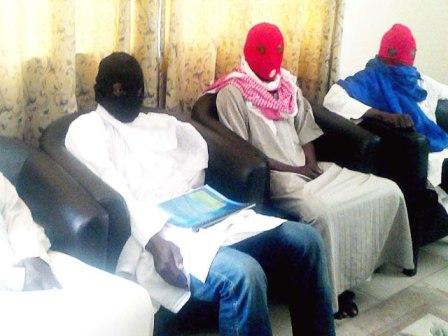
    Boko Haram
    Boko Haram

    Boko Haram and Political Elites in Northern Nigeria
    By Yushau Shuaib,

    For those observing recent events in Nigeria, it came as little surprise when the announcement was made of the arrest of an alleged Boko Haram commander, Shuaibu Muhammad Bama, by Nigeria’s military officers in the residence of a high profile politician in Maiduguri, the capital and the largest city of Borno State in north-eastern Nigeria.

    Boko Haram seeks to create an Islamic state in Nigeria and has used violence to achieve its goals since 2009. There have been strong suspicions that politicians and top government functionaries are behind some of the atrocities perpetrated against ordinary Nigerians by armed groups across the country.

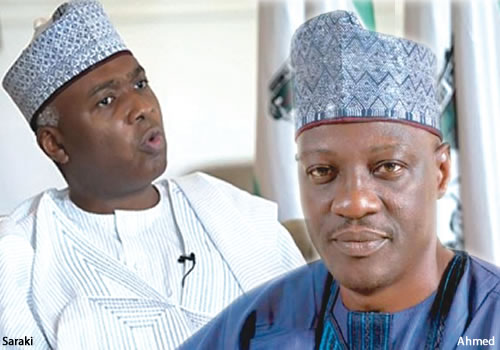
    Ahmed Khalifa Zannah, a senator representing Borno Senatorial District and member of the ruling People’s Democratic Party (PDP) and Senator Ali Madu Sherif, the previous governor of the state and member of the opposition All Nigerian Peoples Party (ANPP), are two individuals who have traded accusations as to the identities of the real masterminds of the Islamist group.

    The invitation of the two prominent citizens from the state by security agencies over their roles in the formation, funding and activities of Boko Haram have further exposed the government corruption in the crisis. Their desperation to exonerate themselves is a further testament to their possible complicity.

    The controversy could linger but the fact remains that atrocities being committed in the name of Boko Haram group is alarming. This group claims to champion Islam yet most of its victims are attacked in major enclaves of Borno and Yobe states and are actually Muslims.

    While attacks on Christians and churches in Bauchi and Kaduna states are quite worrisome with obvious wide media coverage, the attackers do not discriminate against their targets. There have been recorded killing of Muslims, traditional rulers and other religious leaders. In fact, the majority of the victims during the Ramadan fasting period and towards the Eid-Kabir festivities in Borno and Yobe states were either retired or serving public figures who were Muslims. Not only were they killed along with their family members, but their houses were also razed.

    Consequently, other undesirable elements have obviously capitalized on the chaotic scenario created by the Boko Haram for economic extortion and other forms of criminal activities. Armed robbers and kidnappers now easily use the name of the group to advance the pursuit of their sinister agenda.

    Genuine religious leaders, especially Christians who are able to read between the lines, have continued to decry the killing and destruction of properties by the attackers. They also counsel their followers to be wary of undesirable elements who could be fanning the flames of disunity and disintegration of the country.

    Realizing that various other groups are hiding behind Boko Haram to perpetrate their violent motives of extortion, robbery and national disintegration on ethnic and religious lines, some interfaith groups have also sprung up to promote peaceful coexistence among Nigerians. These groups promote healthy dialogue and interaction while encouraging joint observation and celebration of religion festivities.

    This major security challenge confronting Nigeria has also weakened the economy of the affected states as schools, banks, factories and other institutions remain closed.

    While Nigeria’s security challenges are real and complex, they are not insurmountable. It is a stage of development that was also similar to experiences in other countries but the good news is that realistic efforts are now underway to ensure that the country is returning to its peaceful past.

    This article by Yushau A. Shuaib was a special contribution to Global View website: http://www.sharnoffsglobalviews.com/boko-haram-and-political-elites-in-northern-nigeria/

  • Asari Dokubo: Another View on Boko Haram

    Asari Dokubo and Mohammed Yusuf

    Love him or hate him, Asari Dokubo must be admired for his consistency in expressing his view without fear or favour. He supports causes with reasons and also courageously points out weaknesses of some of the causes. Lately he is reported to have rejected offers of appointment in government. When some members of his families and associates, he sponsored failed to win in the elections in Nigeria, he refuses to make noise or fight but believes philosophically in the will-of-God.

    Stragely too, Dokubo is very passionate about the political struggle of his ethnic group in their quest for better share from the national economy where oil revenue from their areas account for the chunk of funds to the Federation Account. On the other side, he is not only a Muslim by name as a convert but an Islamic follower by conviction who studies the Quran and Hadith to the highest level. He is neither hypocritical in his belief like some so-called scholars and leaders who for selfishness and patronage from government would keep mute on the face of naked injustice.
    He may dislike Northern elites for their ineptitude but defend the innocent and poor northerners, especially the minority who have been abused in that region. Before his famous sermon at the Presidential Villa where quoted copiously from the Islamic holy book on Allah’s admonition that “God gives Power to whom he wishes and take power from whom he wishes,” he has proven to doubting Thomases that he is well read on any issue of public interest.
    In his effort to get himself well-acquainted with his religion, he took some daring venture in seeking for knowledge and even lived in harshest environment not meant for lily-livered. In that expenditure he met with so-called Boko Haram group.
    We shared our views in an online forum, where once in a while he expressed his opinions. But on August 1, 2009 after watching a horrific video of extra-judicial massacre of some so-called members of Boko Haram including its leader, Mohammed Yusuf and gruesome public execution of former commissioner of Water Resources, Alhaji Buji Fai in daylight on a street by the police in Maiduguri, Borno State(similar fate befell Yusuf’s father-in-law, Baa Fugu Mohammed who was allegedly killed on a visit to Police station), I responded to a posting by Benjamin Obiajulu Aduba from Boston, Massachusetts who had described the murder as “Cold blooded murder by the government and Acts against humanity.” He advised that “the worst the government will now do is sweeping it under a carpet. The police officers responsible must be identified and tried and punished for the crime against humanity.”
    While traumatised by the video of poor souls killed in the mass-murder in a civilised society, in responding to Aduba, I pointed out that “It does not matter to some people and many would not care because the so-called Boko Haram killed by the security were not Niger Delta militants who could get an AMNESTY and Special Budgetary provision after destroying public infrastructure and killing members of the armed forces. I added that because they were mostly ‘bloody Northerners’ nobody care to defend them. I also restated the genesis of the crisis in Borno when I wrote: “it started when boko-haram followers were on procession to bury their lost members early in July 2009 and were ambushed…. without daring anyone… by some forces and before you know it more members of that sect were mercilessly killed. Then the followers vowed to retaliate. My pain is that, as reported more than 300 innocent people had been killed. They are Nigerians, probably poor illiterates who may not have benefited from good education whether western or local to eke out a living. … Nobody will stand for them because they lack lawyers and media. They are NIGERIANS like all of us. This is my mind. I may be carried away by emotion. It painful that bombs were alleged dropped from the air.”
    Asari Dokubo’s response to my posting was swift and timely when he narrated his close encounter with same leaders of the so-called Boko-Haram. His posting received further comments from respected bloggers like Prof. Mobolaji Aluko who said “It is all an oligarchic reaction to maintain the status quo, whether in the North or in the South. And the security forces are the official armed wing of that oligarchy that has no ethnic affiliation or religion.”
    Also Dr. Nowa Omoigui supported our argument saying that he concurred “with calls for a full investigation of Police conduct in this matter. It is scandalous.” While pro-democracy activist Yinka Odumakin said there had been a lot of disinformation about Boko Haram. The media has only been reporting the information being churned out by the government. Adding that information being presented “as if these (so-called Boko Haram were lunatics who just woke up and started burning down police stations and attacking people.” He therefore advised that “The critical segment of our media should move in now to investigate these issues. We are tired of “Police commissioner said” and all those packaged versions.”
    Please note that the above commentators are neither Northerners nor Muslims but are sincere and forthright rather than allowing parochial and sectional sentiments to becloud their senses of reasoning.
    It is necessary to provide unedited the response of Asari Dokubo to my posting on August 1, 2009 which he signed of as Alhaji Mujahid Abubakr Dokubo-Asari with a title of ‘Alabo Edi Abali Of Kalabari.’ It goes thus: “Dear Yushau Shuaib, I met Yusuf and some members of the Salafiya Islamic organisation both at the Kuje prison and SSS underground. They were good Muslims and had humane and good public relations with all inmates irrespective of belief. Their name was not BOKO HARAM. They advocated hijra from the state of bidia and kufr to the state of sunnah and Islam (belief) .They were among the finest men I had met in life. Before our prison experience unknown to both of us, myself and Yusuf had met severally at the Indimi Mosque when I was frequenting Maiduguri as an Islamic student at Gamboru Ngala.
    “The Indimi mosque was the center of sunnni and salafi activism and Sheikh Jafar Adams used to come from kano for Ramadan tafsir. I discovered during our discussion that all was not well between the group and sheikh Jafar Adams. Then they refer to them as Nigerian Talibans. I became thier advocate anytime I was taken to court, as their plight was dehumanising because most of them were held in chains for more than two years. We became very friendly during his few days stay. When he left I got closer to his remaining followers who he described as his fellow students. He was humble to a fault and was ready to discuss all issues without any show of arrogance as is customary with most so-called Islamic scholars. Those left behind such as Isam, Mohammed Ashaffa, Yusuf, Hussein, e.t.c became my Arabic teachers, Hussein who was an hafiz was my Quranic teacher and I started memorizing the Quran. After my release I established contact with Isam who I later suspected was now a government agent. In my relationship with them I came to understand their desire to be free to practice their faith without interference from others. I believe that is their right.
    I agree with you that the government of the Nigerian state orchestrated and provoked the incident in Bauchi to justify the attack they are planning against us in the Niger Delta and they already have supporters in people like Okala. Yusuf Mohammed and his followers were a threat to evil and dubious status quo in the north which use Islam to perpetuate all the evil. The fear of the oligarchy was that Yusuf and his followers activities will strengthen other religious and national minorities to overthrow their dubious status quo in the north. I want them to know that, they will not perpetually maintain and sustain these evil status quo forever. May Allah reward Yusuf Mohammed and his followers shahada and admit to the highest rank in paradise. Amin. The Struggle Is Unstoppable.”
    The Message from all these interactions is that: we should be sincere in managing crises in the country. There is a need for thorough investigation on unfolding development to guard against undesirable elements that could be gambling in giving a dog bad a name. Have we forgotten the so-called NADECO bombing gimmicks during Abacha?
    Those who kill innocent souls in whatever names or  garbs should be investigated and prosecuted according to the law for fairness and justice.
  • Another Video of Massive Rigging by Under-aged in Nigeria

    April 2011 Election rigging in nigeria

    When a woman was first shown in a video of rigging during the April 2011 election in a southern state in Nigeria which is accessible from this link: Election Rigging in Southern Nigeria another video has emerged of another disturbing massive rigging by under-age (children) in a northern state of Nigeria. While some amount of money were giving to the poor riggers, women and children mostly, in the presence of electoral officers include youth corps members, it is difficult to determine how the judiciary would handle the case of those massive riggings.
    [youtube=http://www.youtube.com/watch?v=lVcIFa8Wdgw]
    So far more video recording, some amateurish because of they were recorded by mobile phones, are being circulated.

    Can we still describe the elections as free and fair in the face of the unfolding developments?

    That is Nigeria and Nigerians for you: the more you see the less you understand. If we allow the politicians to have their ways we must ensure that we don’t loss our sense of reasoning to love ourselves regardless of our social, political and religious background.

  • That Election after April Fool’s Day

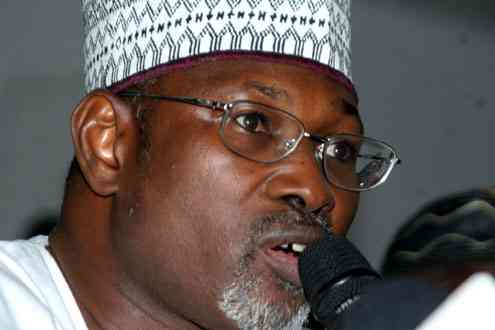
    Professor Attahiru Jega of INEC
    One should always be extremely cautious of being fooled by pranksters and mischievous people on April 1st every year. Media and public figures could even play pranks with deceptive and false information to celebrate the day. The April Fools’ Day is marked in different parts of the world as foolish and funny pranks are played on unsuspecting victims. Some highly reputable international media too have been involved in spreading April Fool”s message including the British Broadcasting Corporation (BBC) in the past.

    When the Chairman of the Independent National Electoral Commission (INEC), Professor Attahiru Jega announced sometimes last year that all the national elections would be held in April 2011, some expressed reservation if the process would not be jokes while the results would turn out to be April Fool’s gimmicks. The first election was then announced to start on April 2, 2011 to elect legislators to the National Assembly.

    Professor Jega and his team do not look like pranksters. At least their antecedents were exemplary of serious and principled personalities who could not engage in fooling others or allow themselves to be fooled by circumstances. Surprisingly a day after the April fool, (precisely April 2, 2011) an announcement was made mid-afternoon that jolted everybody including foreigners.

    Nigerians believed the notorious April Fool’s day had passed and they went out with high expectations to actively exercise their franchise. The electorates trooped out in large numbers; the queues in some places were unprecedented; media were so excited and overwhelmed with developments as the unfolded; political observers and activists were in top gear with latest gadgets to monitor the elections. Like the revolutions taking place in the Arab World for positive change in the system, Nigerians were so passionate and conscious of the inalienable right to determine who should represent them; they sacrifice everything in order to make a success of the first outing of the general elections. Alas… It was not April fool day but what happened that day was similar to April Fool’s jokes and disappointments.

    The election by midday had been postponed.

    Before the D-day, the modern technology, especially the internet and mobile phones, had played crucial roles in reawakening public consciousness on the need to electing credible and sincere leaders to manage the affairs of the country. The social media and text messages are the tools that have continued to give the electorate regular updates from reliable sources.

    The folly and antics of some political gladiators including the behind the scene hanky-panky during campaigns were literally exposed. The political debates and campaign blogs further showed the strength and weaknesses of some candidates.

    The Presidential debate for instance, attended by three respected presidential candidates: General Muhammad Buhari of Congress for Progressive Change (CPC), Mallam Ibrahim Shekarau of All Nigeria People’s Party (ANPP) and Nuhu Ribadu of Action Congress of Nigeria (ACN) further equipped and empowered Nigerians to have the right perceptions of the contenders. The solo Presidential debate which President Goodluck Jonathan attended as the only candidate also plays a role in assessing and reexamining our leaders. Infact the debates truly differentiated the leaders that are eloquent, intelligent and visionary who have the ability to solve the myriads of problems bedeviling the nation from the pretenders and stooges who mimicked leadership without substance to justify their claims of potentialities.

    Therefore with the candidates ready, the electorates fully prepared to vote and observers well-equipped to monitor the election on that fateful Saturday April 2, 2011, the cancellation and subsequent postponement of the elections dashed the hopes of many voters. While majority are reading many meanings into the incident, the fact still remain that the top leadership of INEC could be sincere but should not take chances from sabotages that could taint their integrity.

    While apologizing for postponing the general elections across the Federation Professor Attahiru Jega blamed the “unprecedented late arrival of result sheets” as the reason. He accused unspecified vendors for the late arrival of the materials which only reached Abuja at 9am on Saturday. He equally stated that the vendors also blamed the Tsunami disaster in Japan for compelling them to divert the supply of the electoral result sheets. The INEC Boss expressed his confidence that there would be no further delays to the process because all electoral material have now arrived in the country.

    President Goodluck Jonathan said that he was “in full support” of the INEC chairman, adding that “the country and the electoral body are totally committed to ensuring that they conduct credible elections.” Similar sentiments have been expressed by serious president candidates including General Buhari of CPC, Mallam Ibrahim Shekarau of ANPP and Mr. Nuhu Ribadu of CAN.

    As much as we should have confidence in the ability of Jega and his team to deliver and that the first mistake was inevitable due to the reason of a natural disaster in Japan, any other attempt or attempted attempt to postpone any future election would create doubts in the minds of the electorate if actually the election in this month are not April fool pranks for subsequent elections in future months.

    The electoral body should ensure that it prosecutes individuals and groups that attempt to play with our collective intelligence through unjustifiable excuses at this period. of the past while all should give the INEC the benefit of doubt to conduct free and fair elections that would usher in a true democracy that is devoid of rigging and manipulation.

    We only hope that subsequent actions from INEC would not lend towards the fear of Abraham Lincoln who said: “You can fool some of the people all of the time, and all of the people some of the time, but you cannot fool all of the people all of the time.”

    This article was originally published in April 2010 in some print media including the Economic Confidential, the Punch, Sunday Tribune, Thisday, Leadership and People’s Daily

  • Bomb Blasts and Conflicting Figures

    Bomb Blast and Conflicting Figures – By Yushau A. Shuaib

    Bomb Blast Site
    Bomb Blast in Abuja

    The youthful looking Director General of National Emergency Management Agency (NEMA), Mohammed Sani-Sidi is a risk-taker and crisis manager who sticks his neck to disaster spots. He relishes positive news and abhors negative information on his agency’s intervention during disasters and emergency situations in the country.

    In his quest to ensure that only good news comes out from the agency, he personally visits disaster zones to see for himself the kind of assistance required of the victims and how responses from the agency and other stakeholders are reaching the distressed people.

    Since death is bad news, NEMA is always cautious in releasing figures of deaths to the public even while the agency is always in the forefront in providing body-bags, ambulances and in the evacuation of dead bodies to mortuary. The excuse usually provided by NEMA for avoiding the release of figures on casualty is that its major mandate is to address the need of survivors rather than the dead.

    The recent bomb blast on the eve of Xmas in Jos, Plateau State, is not only controversial on who were the actual masterminds of the incident, the conflicting figures on the casualties are also contentious. There were different official figures on the deaths. While one official figure quoted between 30-40, another quoted 80-100 deaths but the mass burial by Muslims and Christians, as indicated in the media is far above those figures.

    When the New Year’ eve bomb blasts in Mogadishu Cantonment were detonated, the agency was the first responder to arrive at the scene mobilising other response agencies as well as condoning the place and evacuating the deaths and survivors to nearest heath facilities. The official figures released are far below what the media reported from alleged eye-witnesses.

    There have always been conflicting figures on casualties during various disasters in Nigeria including those as results of flooding, thunderstorms, fire outbreaks, communal clashes, road accidents and activities of militants.

    Since the National Emergency Management Agency, is neither a full-fledged security-outfit nor fashioned in the mode of the conservative civil or para-military service, the lack of a national contingency plan in the event of disaster put the agency in dilemma on whether it should be saddled with releases of figures on human casualties. A national contingency plan can provide a guide on specific roles of each response agency in the event of disaster and who should shoulder the responsibility of officially announcing the casualties.

    Every figure released after any disaster whether from identified official channels or anonymous official sources are obviously based on one or combination of factors such as security implications, political consideration and factual reality.

    In Nigeria, it is not strange for mischief makers to capitalise on figures of casualties to wreck further havoc on innocent people and their properties. We are living witnesses to how reprisal attacks were triggered by figures that are untimely released or gory pictures of death. The last year’s gruesome mass execution of Boko Haram followers and the unfortunate and deceptive extra judicial killing of former commissioner of Agriculture in the Borno State by security personnel which were videotaped and downloaded on the internet and mobile phones, are alleged to be fuelling the reprisal attacks that has continued ceaselessly.

    The media too, would not see any good news from genuinely good stories of survivals and the relief materials being provided but could gladly give prominence to the death figures and mangled bodies of victims.

    There seems to be stiff competitions among the foreign media and local press as well as among the national newspapers providing some partisan lines in their reportages. For instance a day after the reported over 80 deaths from the Jos Bomb blast, some national newspapers gave prominence to an alleged Islamic website claiming responsibility for the Jos incident, while in other press pictures of mass burial of Muslims by an Imam was flashed in front cover. Some media that realise the implication of such reports to the sensitivity of their readership balanced their reports from other perspectives.

    Meanwhile considering the fact that Nigeria is in intense political dilemma as a built-up to 2011 elections, politicians are also culprits in overheating the system with provocative statements in blaming their opponents over every misdeed. In fact political campaigns are now focusing on actions and inactions of major players to the crises in the country.

    While the release of casualties should be treated with caution and necessity, in this period of advanced technologies where ordinary citizens have mobile phones that could record video and photos of victims of disasters, it will be foolhardy to manipulate figures for any ulterior motive which could portray agencies as liars.

    It is necessary that the government, apart from ensuring justice is done by prosecuting persecutors and perpetrators behind some of the unfortunate incidences including officials who failed in their responsibilities and leaders who instigate the crises, no figure either under-estimated or over exaggerated can prevent reoccurrence of disasters in the country.

    The media have social responsibility to promote national agenda of unity, patriotism and being our brothers’ keepers. The competition is there, but could there be any sense of fulfilment in promoting editorial features and pictures that could aggravate the situation and give undesirable elements the excuses to strike?

    The ordinary citizen needs to read between the lines and be conscious of happening around them to properly decipher the likely antics of masquerades behind some of those disasters when one juxtaposes the scenario to the forthcoming general election.

    We should know that politicians have ways of sending positive and negative signals to their supporters as well as opponents in a season of do-or- die politics, we should therefore not play into their hands.

    This article has appeared in Economic Confidential January 2, Punch January 4, Peoples Daily January 5, Thisday January 6, Leadership January 6, National Mirror January 6, Daily Champion January 6 and the Guardian January 11, 2011.

  • Most Corrupt: Between politicians and civil servants in Nigeria

    Corruption: Between Politicians and civil Servants _ By Yushau A. Shuaib

    Dimeji Bankole
    Speaker Bankole of NASS

    The debate about corruption comes to the fore again at two different academic environments. Guest speakers at the separate universities are young personalities, key players in policy formulation and household names that hold sensitive public positions. Due to their backgrounds, utterances made by them at such fora are not only authoritative, but can become guides for development of national policies.

    They are Governor Sanusi Lamido Sanusi of the Central Bank of Nigeria (CBN), who at the 8th Convocation Lecture of Igbinedion University, Okada, disclosed that the National Assembly (NASS) collects 25 per cent of the overheads of the Federal Government and the Speaker of the House of Representatives, Mr. Dimeji Bankole, who at the pre-convocation lecture held at University of Lagos (UNILAG) Auditorium, stated that “civil servants are the most corrupt in the country”.

    Majority of Nigerians agree with Sanusi’s assertion, which he stuck to even when he was summoned by the legislators to the National Assembly for obvious facts on how politicians have continued to milk the nation dry with their excessive expenditures and outlandish life-styles in the name of jumbo packages.

    Nothing is more worrisome than the allegation of the Speaker, who, in an attempt to pick holes in Sanusi’s argument, went on to transfer his aggression by describing Nigeria’s civil servants as most corrupt in the country.

    In his argument, which was quoted in the media, Bankole said corruption in Nigeria was perpetuated by corrupt and inept civil servants and not the political class. According to him, “in the past five years, an estimated N1 trillion was taken from the budget annually by civil servants and not returned to the treasury”. He went further to add that in 2008, when he became the Speaker, N21 billion was returned to the treasury from ministries. After probing and threatening of different people, they returned N350 billion as the unspent budget. The following year, he added, “they returned N350 billion and [in] 2010, they returned over N200 billion even though we extended the accounting year to March.”

    Mr. Bankole probably forgot to realise that the heads of those agencies were not civil servants, but political office holders who were tenured and could be handpicked for such positions. He may also need to confirm how much the legislators returned within the same period since the alleged civil servants in the said ministries were at least magnanimous enough to return their unspent allocations.

    While we all acknowledge the fact that corruption has permeated all sectors, including the traditional institutions, the media, spiritual houses and even schools, the most corrupt institution remains the legislative tier of government and by extension, the political class, which manipulates the electoral process and appointments of various officers.

    We must try to define the role of players that guide and operate the public service. Civil servants are usually the best candidates employed in the service after going through rigorous screening exercises, even though those processes, in some cases have been bastardised by the political class which forces its candidates into public institutions by all means. Most of the civil servants including even drivers, messengers, clerks, and middle cadre officers, pass the screening for their competence. Some of them reach the level of directors through deserved promotions and just a fraction of that (about one percent), are promoted to the top level as Permanent Secretaries. A civil servant works on instruction and makes recommendations but the ultimate approval still lies with the political office holder.

    One of the major criteria for selections or appointments into political/public offices is for the candidate to have an influential godfather or enough wealth to manipulate the process in order to achieve the desired positions. Apart from cases of certificate forgeries, some legislators got to the National assembly by being ‘Papa’s pikin’, and some got to their principal positions after the removal of their predecessors for corrupt practices. Check the National Assembly list.

    The public is now aware of how elections are rigged and how unqualified and unscrupulous candidates are given political appointments, while the fate of civil servants is left in the hands of this calibre of public officers to determine who gets what in terms of political and financial patronage.

    Corruption in the civil service is influenced by the political class. Bankole, probably needs to be reminded that the major suspects and culprits being prosecuted for financial and economic crimes are not the submissive civil servants but the political office holders that include members of the legislative and executive arms. Reeling out the names of such high-flying corrupt officers would not be possible due to space limitation.

    The Speaker and those who look down on civil servants as nonentities and describe them in derogatory remarks, need to visit either, the Economic and Financial Crimes Commission (EFCC) and Independent Corrupt Practices Commission (ICPC) to see the records. It is well known how the oversight functions by legislators are turned into money-spinning ventures. We also cannot forget in a hurry, the antics of rabble rousers like former Chairman of the House Committee on Power, Ndudi Elumelu and his counterpart in the Senate, Senator Nicholas Ugbane, and other legislators who stage-managed a public hearing on the Independent Power Projects (IPP) probes, only to be involved in multi-billion Naira scam.

    While this writer is not attempting to exonerate the civil service of corruption, those that soil the name of the institution are those that form the political class in collaboration with disgruntled, few corrupt officers in the service who are either cowed to submission for fear of losing their jobs and the greedy ones who could tolerate temptation to get a share of the national cake.

    Is it not strange to every right thinking person that the same National Assembly that recently queried Nigerian Communications Commission (NCC) for proposing an unnecessary and outrageous bill of N6 billion for SIM card registration approved same? The reversal of the rejection is not uncommon: it is just their usual threat meant for socio-political and economic extortions. By the way, have we forgotten serious allegations against principal officers of Bankole- House of Representatives by the Progressive group of the chamber led by Dino Melaye, who alleged that the Speaker, “Bankole, had not only ran a corrupt leadership since he assumed office in 2007, but through his style of leadership, generated a rift between the House and the Senate; displayed high-handedness and disrespect for members; and frequently breached the rules of the House”, as quoted?

    We are eagerly hoping for the period to do away with leaders who are power- arrogant, and entice young ladies with their ill-gotten wealth into immoral affairs and executive prostitution. It is regrettable that not only are some of those officers engaged in treasury abuse, but also responsible for the bastardising of public infrastructures, including health and educational facilities by cunningly privatising our collective patrimonies to their cronies and providing private alternatives as latest investments.

    The condition in Nigeria may force the cray-fish to bend, but not to the level of everyone losing semblance of integrity as most civil servants who are patiently looking forward to brighter future would never sell their conscience for pots of porridge.

    This article by Yushau A. Shuaib has appeared in December 2010 in some of the national dailies including Daily Trust, Nigerian Tribune, Thisday, the Punch, Daily Independent, Leadership, Champion, the Sun and Peoples Daily.