Category: Politics

  • Tompolo of Niger Delta: Between Dialogue and Confrontation By Yushau

    Tompolo of Niger Delta: Between Dialogue and Confrontation By Yushau


    YarAdua-TompoloTompolo of Niger Delta: Between Dialogue and Confrontation

    By Yushau A. Shuaib
    NEMA Registers 3500 Displaced People in Warri

    The above quotation was the title of a press release I issued as the spokesperson of the National Emergency Management Agency (NEMA) on June 25, 2009 after the completion of our assignment in setting up Internally Displaced Person’s (IDPs) camp in Gbaramatu Kingdom, Warri South West, Delta State.

    The NEMA’s intervention followed a clash between the military-led Joint Task Force (JTF) and Tompolo-led Movement for the Emancipation of the Niger Delta (MEND) which had claimed responsibility for the deaths of some soldiers and displacements of citizens.

    Even though the military endorsed our passage to the creek in May 2009, some of us were scared stiff of the possibility of being captured by militants on a suspicion of being government’s spies. Surprisingly we were well-received by community leaders and local government council officials which was then under the Chairmanship of younger brother to Government Tompolo, the most wanted Militant Leader . To our amazement, we discovered some Hausa-Fulani folks within the hinterland who had adopted Ijaw-land as home away from home, speaking the local dialect fluently and even enjoying the locally brewed gin!

    It was a scary adventure for NEMA responders as we persuaded women and children to come out from their hideouts in the bush. Their plights were better imagined as we had to close down some schools and health centres and converted them to IDP camps. Some pregnant women delivered babies in the thick forest; their men languished in the bush and stayed on water as thousands other displaced persons had scattered into the neighbouring states of Bayelsa, Edo, Ondo and Rivers.

    While the Nigerian troops were still hunting for the militants, NEMA’s reports and intelligent information from other sources, persuaded the peace-loving President Umaru Musa Yar’Adua, a Muslim Northerner from Katsina State to endorse the Amnesty Agreement.

    The elusive Tompolo and other ex-militant leaders emerged from their hideouts and agreed to the Amnesty programmes in the Presidential Villa  as they surrendered their sophisticated weapons and were eventually pardoned by Yar’Adua’s government.

    The risky decision of President Yar’Adua in embracing dialogues and approving the Amnesty for the Niger Delta militants rather than confrontation through military might, quickly stabilised the region, boosted the volume of crude oil production, steadied supply of gas to electricity power stations, increased revenue to the Federation Account and ensured engagement of many youths of that region in various productive ventures including capacity building programmes at home and abroad.

    Precisely seven years after, we are back to the old story as militants have staged a resurgence of hostilities through a new group, Niger Delta Avengers (NDA) which is attracting global media attention by destructions of oil facilities in the region. This unfortunate development is coming at a period when Nigerian troops are contending with Boko Haram menace in the North-East.

    The activities of NDA and other similar groups are reminiscence of Pre-Yar’Adua’s Amnesty when the militants engaged in abductions of oil workers, especially the expatriates; rampant sea-piracy; destructions of oil facilities and killing of ordinary citizens and security personnel.

    There are concerns expressed by some ex-militants that the Amnesty Programme may soon be jettisoned by Buhari’s administration as the Coordinator of the Presidential Amnesty Programme, Brig. Gen Paul Boroh (rtd), recently disclosed that the programme is very expensive and cannot be sustained in perpetuity.

    Coupled with that fear are the unfounded allegations that the current administration is after ex-militant leaders who supported Goodluck Jonathan in the last presidential election. Some are even claiming that the prosecution of Tompolo by Economic and Financial Crimes Commission (EFCC) over corrupt practices is political witch-hunting.

    There are certainly those that are not comfortable with military threats to ‘crush’ Niger Delta militants like Boko Haram Terrorists considering the fact that Nigerian troops are already overstretched as they engage in war on terror in the North-East. The Niger Delta creek is also precariously impenetrable terrain. Such threats, according to some critics, portray the government as adopting confrontational stance rather than diplomatic approach at addressing the youth restiveness.

    In the face of military threats to crush the vandals, it is the unidentified militants that are currently ‘crushing’ and crippling Nigeria’s economy through the destructions of oil installations that provide gas for domestic power generation and crude oil for export. For instance, after the attack on the Nigeria Gas Company’s pipeline in January 2016, the Minister of Power and Works, Raji Fashola announced that the country was losing N470m daily. On the other hand, the Minister of State for Petroleum and Managing Director of NNPC, Dr Ibe Kachikwu, also disclosed that Nigeria losses 800,000 barrels of crude oil daily  due to pipeline vandalism which easily translates to the revenue loss of over N7bn daily.

    And just recently the Ad-hoc Committee on Crude Oil Theft Prevention and Control of the National Economic Council (NEC)  revealed that the Federal Government does not have adequate operational vessels to patrol and secure the network of pipelines in the Niger Delta.

    While we must condemn the destruction of oil facilities by the Niger Delta militants, the government should tread a political line through dialogues. President Buhari should ignore any misleading advice as some zealots would rather want our President to act like a no-nonsense cowboy in Hollywood movies. At over 70 years, President Buhari does not have that youthful strength and excessive power of military dictatorship to re-enact forceful compliance to orders because of democratic ethos.

    As the father of the nation, Buhari should employ humane and thoughtful strategies that would not exacerbate the already tense political and economic situations in the country. He should demonstrate exemplary leadership qualities through compassionate disposition and diplomatic overtures to the belligerent militants whose sponsors are yet to be identified.

    Since the most wanted Niger Delta militant, Government Tompolo, has issued Open Letters , appealing to President Muhamadu Buhari to intervene on his plight, the government should temper justice with mercy and capitalise on that and woo other leaders in the region for amicable solutions to the crises.

    After fruitful dialogues government should work out concrete structures that would permanently address the plight of people whose environment provides the chunk of our national revenue. The government should also pursue aggressive economic diversification programmes for other geopolitical zones towards economic self-reliant and sustenance.

    Yushau A. Shuaib
    www.yashuaib.com
    [email protected]
    Abuja

  • Another Trip to Maiduguri in December

    Another Trip to Maiduguri in December

    Yashuaib_in_IDP_Maiduguri2By Yushau A. Shuaib
    It was neither a vacation trip nor a tour for seasonal ceremony. It was a journey to attend a crisis communication seminar for humanitarian workers and journalists covering disasters which was held in Maiduguri in the first week of December 2015.

    My family members could not dissuade me from the trip that hopefully would provide me another opportunity to assess one of the Boko Haram worst-hit cities in Nigeria.

    The flight was smooth from Abuja to Maiduguri but I was glued to the window to see if I would sight soldiers and terrorists engaging in shoot-out… At the same time, the dreadful feeling that Boko Haram members could shoot down our aircraft with their home manufactured rockets lurked in a corner of the mind.

    Driving into the town, it was easy to observe that the city wasn’t bubbling as most roads were deserted, exotic mansions abandoned and fine hotels had low patronage even with their generous discounts on accommodation.

    I used the opportunity of the seminar to interact with some of the highly patriotic and exceptional Nigerian journalists who have been covering the war on terror with great responsibility. For the national interest, they have observed self-censorship against sensational reporting.

    On a visit to the Internally Displaced People (IDP) camps, the sights of orphans and widows were quite disturbing even though NEMA and other stakeholders are taking good care of them.

    Passing through security check-points, the sacrifice of Nigerian troops, especially young soldiers in their zeal and determination to defeat Boko Haram terrorists was obvious from their faces. While some of them are bachelors with parents, others are married with children they left at home to defend Nigeria.

    Incidentally, almost everyone was concerned about the Presidential directive for the military to end Boko Haram this December. During the inauguration of his service chiefs on July 13, 2015, President Muhammadu Buhari directed the military to end the Boko Haram terrorism in three months.

    Immediately after the directive, the National Security Adviser (NSA), Major General Babagana Monguno led service and security chiefs to the frontline to seek the cooperation of community leaders, traditional rulers and pressure groups to support the new drive against war on terror. He also visited and commiserated with IDPs and reassured them that the war would soon be over.

    The Chief of Army Staff, General Tukur Buratai has not led from the back, he was in the warfront by actively participating in some of the operations where terrorists were either captured or killed. He has so far spent most of his time on the battle field. The Chief of Air Staff, Air Mashall Sadique Abubakar has personally commanded fighter jets in the war on terror to motivate fighter-pilots into putting in their best.

    The Chief of Defence Staff, General Gabriel Olonisakin has ensured effective coordination and cohesion in the operation so far through mechanism of inter-agency collaboration, even as the Chief Naval Staff, Rear Admiral Ibok-Ete Ekwe Ibas has also confirmed that Special Forces from the Navy are actively involved in the operation.

    The military has so far destroyed dozens of Boko Haram camps and freed more than 1,000 kidnap victims since inauguration of President Buhari. Nevertheless, there is the fear that the military may not be able to end Boko Haram by the deadline. The Executive Secretary of Centre for Crisis Communication (CCC), Air Commodore Anas recently disclosed that there is nothing wrong in imposing targets on the military but due to the asymmetric warfare which Boko Haram is prosecuting against civilian “soft targets” the December deadline is unrealistic.

    There are also worrisome reports of fresh kidnap of dozens of girls and burning of buildings in Bam Village of Yobe State; reported missing and fleeing soldiers in Galtumari town in Borno State; destruction of military base in Gulak, Adamawa and media allegations that terrorists snatched military trucks, artillery guns that were bought by the previous administration.

    During private conversations with stakeholders, many expressed beliefs that concerted efforts are required through credible intelligence to address the insecurity in the North-East.

    Beyond ‘body languages’ theory and political grandstanding, others were of the opinion that some tougher actions taken by the past administration could be deployed in curtailing the excesses of terrorists. For instance, a journalist observed that even though many doubted the sincerity of the former National Security Adviser, Sambo Dasuki when he sought and obtained approval for postponement of 2015 general election to enable the military to degrade Boko Haram and ensure maximum security of voters, all known terrorists’ camps were destroyed before the emergence of new government on May 29; Sambisa Forest was stormed by “Special ‘M’ forces” and about 300 kidnapped women and children were freed; 22 terrorist occupied towns in three states were recovered; and Boko Haram could not disrupt the elections.

    It is public knowledge that some of the towns recovered from terrorists during the administration of Goodluck Jonathan include Abadam, Askira, Baga, Bama, Biu, Damboa, Gwoza, Hong, Konduga, Kukawa, Marte, Madagali, Michika, Monguno, Mubi, and others. In fact an official statement by the Defence Headquarters on March 16, 2015, with reference no: DHQ/ABJ/901/32/DDI announced the routing of terrorists from Bama after massive casualty was inflicted on the terrorists before the remnant fled. The statement further stated that the Chadian partners in the MNJTF were mandated to pursue the terrorists who were heading for the borders after being dislodged from Bama. Gujba, Gulani, Goniri, Buni Yadi were all retaken by Nigerian troops within the month, the statement concluded. It seems Nigerians have forgotten all these.

    If the military failed to meet the December deadline, we shouldn’t blame the previous administration of Jonathan or the current government of Buhari but should encourage the military to improve the tempo. Afterall, the Nigerian troops have succeeded in the past and are succeeding now. We should therefore avoid taking actions that would rubbish the integrity of critical institutions including security and the media.

  • Buhari and the Cabinet of Saints and Sinners

    Buhari and the Cabinet of Saints and Sinners

    Even after more than 20 years of graduation from Bayero University, Kano, my course-mates still refer to me as ‘Idiagbon’, the alias I bore as a fanatical supporter of the previous military administration of Generals Muhammadu Buhari and Tunde Idiagbon.
     As an undergraduate, I took delight in writing articles defending the duo for their exemplary leadership qualities of discipline, incorruptibility and fearlessness demonstrated during their 18 months in office as Head of State and Chief of Staff, Supreme Headquarters respectively.
    One of such articles published in the Triumph of November 13, 1991 was a response to a cover story reported by Etosa Iroh in the Nigerian Tribune of October 31, 1991 on the verbal attack on Buhari by Governor John Madaki of Katsina State. In my rejoinder titled: “Haba Governor Madaki,” https://yashuaib.com/1991/11/haba-governor-madaki/ I took on the then military administrator for insisting that Buhari, the then Chairman of the Katsina Foundation, should release some money to him. Not only did I castigate Madaki on his insistence, I justified the refusal of Buhari to release the fund because the request did not follow due process.
    Many Nigerians have consistently remained supportive and convinced that Buhari is the best to tackle ‘sinful’ acts of corruption. Nigeria being a deeply religious country, a corrupt person is tagged as a sinner while those that had not held public office and lived within their means are referred to as saints. Acts of immorality, wrongdoing, wickedness, dishonesty are not merely corruption but sins against God Almighty.
    When he was running for office, Nigerians had thought that Buhari would battle corruption with single mindedness by departing from the previous strategy of merely mouthing anti-corruption. It was thought that he would embark on a comprehensive probe of past administrations and appoint only untainted individuals, or saints rather than sinners into his government.
    The unnecessary delay in the announcement of the ministerial nominees gave room to speculations that not only saints but angels might emerge as the new crop of ministers. We expected more youths who are innocent and clean; more technocrats who are professionally competent; and more women who had been at the background in the anticipated ‘saintly’ cabinet. We thought politicians would be assigned to part-time jobs, rather than full-term appointments to avoid the politicisation of national and sensitive issues.
    Meanwhile, party members expect rewards of juicy appointments for contributing resources to the political victory. They believe in a business model that recognises profits and rewards for investors’ contributions. It is public knowledge that the two major political parties, Peoples Democratic Party (PDP) and All Progressives Congress (APC) mobilised most of their financial resources through public office.
    When alarms were raised over monetary inducements and reckless political spending during the campaigns, none of the major contenders for public offices questioned the sources of funding of the electioneering because doing so at that period might jeopardise their political aspirations.
    Currently, anti-corruption agencies are proving cases of looting and mopping of public funds in all tiers of government through over-inflated contracts and expenditures on non-existing projects to ensure electoral victory. The major suspects are politicians, with most of them elected and appointed into public offices.
    The initial appointments of little known and strange people into top positions by Buhari were hailed as a departure from the past. That early optimism has, however, been tempered by subsequent nominations of cabinet ministers and their confirmation by the Senate. The list was truly a combination of both the saints, who are not identified with corruption and the sinners who are alleged to be corrupt.
    This unfortunate dilemma could have been avoided if President Buhari had, immediately after assuming office, compensated political investors for their contributions to his victory without preachment on corruption of the past. He could, as well, have declared that after the swearing-in of the new administration, anyone caught for corrupt practices would not only be arrested and prosecuted but listed in the National Database of Corrupt People (NDCP).
    Meanwhile, it is worthy of note that there has been more noise on corruption of the past than setting concrete agenda to avoid the pitfalls of the past. There could be collateral damages if average Nigerian civil servants, especially those in Abuja are probed to justify the sources of their comfortable livelihood outside their meagre but legitimate remunerations when the untouchable campaign fund mobilisers and political godfathers are yet to be queried on their sources of wealth in influencing political decisions.
    A sincere war against corruption campaign, especially on past misdeeds, can be handled in a more refined, matured and responsible manner devoid of suspicious antics that could be condemned as mere political witch-hunt.
  • Sambo Dasuki: An Encounter with Spymaster

    Sambo Dasuki: An Encounter with Spymaster

    Sambo Dasuki: An Encounter with Spymaster – By Yushau A. Shuaib

    When the erstwhile super Finance minister, Ngozi Okonjo-Iweala compelled the termination of my appointment as a civil servant after serving my nation for nearly 20 years, I returned to my hobby of writing. My retirement, which I am still contesting in court, was because of a single article (Ngozi Okonjo-Iweala and Controversial Appointments) out of the over 200 I had written since my university days in Bayero University Kano.

    Not only was I retired prematurely, many institutions and individuals in government became afraid of associating with me for fear of victimisation. I had been stigmatized as the “Rebel in Civil Service.”

    Surprisingly, while many agencies of government and managements distanced themselves from me, I received massive goodwill from the media who not only stood by me but provided their platforms for my works.

    Meanwhile few top public officers do secretly seek my professional advice in public relations management. There is an instance when one of the spokespersons in the Presidential Villa sought my intervention about a report on First Lady Patience Jonathan in Sahara Reporters, which was considered inaccurate. Since I am a beneficiary of media goodwill, I called Omoyele Sowore, the Publisher of Sahara Reporters to correct the erroneous aspect of the said report.

    “Shuaibu, you are either crazy or unserious! Why do you want to defend those that tormented and sacked you from the public service?” Sowore was serious concerned.

    I took time to explain that there is a major difference between my person ‘Shuaib’ a Nigerian who has right to his personal opinion and conviction and Shuaib who now represents a PR consultancy for professional attainment and contentment. I assured him that I will continue to express myself through opinion writing while engaging in media relations for my clients. Sowore accepted to publish the Presidency’s response on Patience Goodluck Jonathan and subsequent press statements from that office.

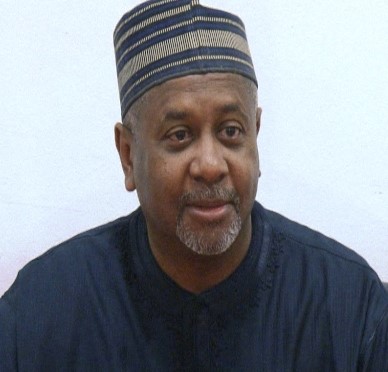
    Curiously, there were very few top functionaries who stood by me and showed support during the critical period of my life. Sambo Dasuki, the former National Security Adviser (NSA) was one of them.

    It was after attending a workshop organised by The Netherlands Embassy for security agencies where I presented a paper and also published an article (Debating Government Media Relations) that I received an invitation to meet with NSA. I wrote on that first encounter too with Dasuki: (Sambo Dasuki on Security Media Relations)

    During our first encounter, I was furiously criticising everything about President Jonathan and his administration. Dasuki was very attentive, probably thinking that my bitterness was informed by my sudden exit from the service.

    Dasuki attempted to influence my return into the service but I was reluctant. I had decided to rather work for government but not inside government so as to enjoy my liberty of self-expression and doing what I like rather than being another subservient civil servant. I nevertheless obliged his request that I should provide him daily media content analyses that should include suggestions and recommendations. I recruited highly brilliant, young but unemployed Nigerian graduates into my team.

    In the course of our occasional interactions, Dasuki was always open and transparent about information. He once told me how himself and two young military officers (they are still alive) travelled to Jos to brief Major General Buhari who was then the GOC of 3rd Armoured Division on the furtherance of the planning of the 1983 coup which made Buhari the major beneficiary of the ouster of the elected President Shehu Shagari. He even told me how Buhari expressed his bitterness about insinuations on his stewardship in one of the public institutions. Dasuki assured the then GOC not to worry about such reckless and mischievous insinuations.

    I asked why he participated in the ouster of Buhari just less than two years afterward. He simply answered that General Buhari should know whom he should blame.

    Probing further, I enquired how he treated Buhari on the day of the August 1985 coup. His exact response goes thus:

    “I always respect and dignify my seniors and those in positions of authority whether in service or after. Though a young officer, I was reluctant to be among those that arrested him. And I was not. I only met him afterward at Bonny Camp with Lawal Rafindadi. There is no way I could have maltreated him as being alleged in some quarters. I am glad most of the actors are still alive.”

    Dasuki told me the story of how himself and some others confronted late General Sani Abacha over June 12 election which was won by Chief Mashood Kashimawo Abiola (MKO). This led to their premature retirement. The persecution that followed forced him into exile where he teamed up with opposition elements struggling for the return of democracy in Nigeria.

    Apart from serving as Managing Director of Nigerian Security Printing and Minting Company (NSPMC) after the return of democracy, Dasuki had engaged in legitimate international businesses, mostly outside the country.

    On his roles in politics, Sambo Dasuki narrated how he supported the campaign aspiration of Muhammadu Buhari for Presidential elections in 2003, 2007 and 2011. In fact, he mentioned names of individuals who were also privy to his active involvement including respected Northern elements like Adamu Adamu, Bashir Kurfi, Wada Maida, Sule Hamman and Kabir Yusuf among others.

    The major shocker for me in his narratives was his campaign for Buhari to emerge the joint candidate of ACN and CPC in 2011. He disclosed how he pleaded with Asiwaju Ahmed Tinubu in the presence of Bisi Akande to accept Muhammad Buhari as the joint Presidential candidate for ACN and CPC. Dasuki stated that he knelt down begging ‘Baba Bisi Akande’ who was then Chairman of ACN that “General Buhari is a man to be trusted.”

    In their belief that Yorubas and South Westerners are never religious fanatics especially regarding politics, Dasuki and his group suggested that Tinubu should be a running mate to Buhari. When other elements opposed that proposition, Tinubu team therefore recommended a Buhari-Osinbajo ticket. Unfortunately, the ticket failed to stick as Pastor Tunde Bakare was eventually pushed forward by other forces.

    Watch out for Part II: The Spymaster and Soft Approach to Countering Terrorism and Dasuki’s support for President Jonathan

    Yushau A. Shuaib
    A Syndicate Writer and Blogger

  • Presidential Spokespersons: Between Publicity and Communication

    Presidential Spokespersons: Between Publicity and Communication

    By Yushau A. Shuaib
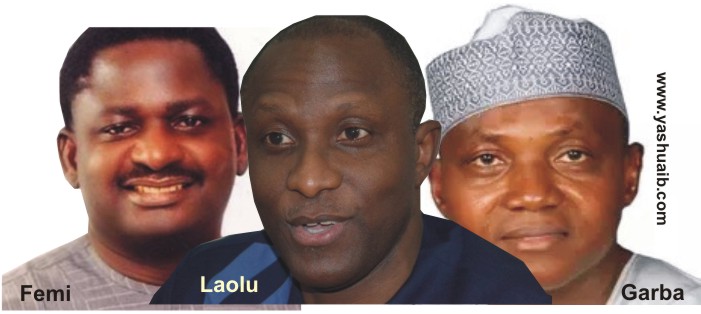
    Before the eventual announcement of Femi Adesina and Garba Shehu as spokespersons to the newly elected President Muhammadu Buhari, there had been wide speculations that either of the two would emerge.

    Their deserving appointments came with confusion and challenges. The two share the same portfolio but with different designations with Femi Adesina named as Special Adviser while Garba Shehu emerged as Senior Special Assistant both on Media and Publicity.

    This writer will deliberately avoid dabbling into the politics of the appointment and who is most senior by age, profession, qualification or on the current position. They have each been role models to aspiring journalists and writers.

    When I started writing as an undergraduate in Mass Communications Department of Bayero University Kano back in the late 1980 and early 1990s, there was no internet, email or any form of social media to share my opinions. Mallam Garba Shehu as Editor of the then popular Kano state-owned Triumph newspaper encouraged and published my articles.

    The channels available to deliver our write-ups then were either directly or through the post office. I delivered mostly directly and on such occasions, Garba Shehu made sure to provide me some token to defray transportation expenses. As he moved on to become General Manager of ALSCON and later Spokesperson to the former Vice President Atiku Abubakar, he had always provided moral and kind supports to my aspirations especially on special media projects. He knows how to attract the best team for every campaign.

    For Adesina, apart from being addicted to his weekly column in the Sun, I had been inspired by his style of writing in the Weekend Concord in the 90s. He is a brilliant writer who tackles sensitive and critical issues with fun and jokes, yet hitting the nail on the head in eloquent prose. As President of Nigerian Guild of Editors (NGE) and Chief Executive of a leading newspaper, he has intervened in saving difficult situations towards protecting the national pride and integrity. Most current Editors, especially of the traditional media, can attest to those unwritten code for stability in the polity.

    Being a PR person, I cannot begin to count the numerous special favours we derived from those great editors who put national interests ahead of the need to publish and be damned at a most tempestuous period in our nation’s history.

    The two gentlemen are not only highly qualified and well-experienced professionals they have served as Managing Directors of leading newspapers and at different periods were elected Presidents of NGE.

    While commending President Buhari for identifying great talents and professionalism in these two great Nigerians, he should nonetheless have assigned them different portfolios to avoid unnecessary tension and confusion by distinctively defining their roles for information management for the administration. While one may not envisage infighting between the two mature and responsible spokespersons, conflict may arise through the antics of so-called friends, tribesmen, professional colleagues and other interests. Clashes do occur even among Siamese twins not to talk of professionals from different background in term of education, region, political leaning among others.

    The President should redefine their portfolio by ascribing relevant nomenclatures to their beats. Apart from media and publicity, there are also portfolios worthy of consideration such as Public Affairs, Press Affairs, and Strategic Communication among others.

    Nevertheless, the officers may on their own decide on who among them should be responsible for Media and Publicity and Strategic Communication.

    The common role of a spokesperson is to serve as publicist, by providing publicity in timely and professional manners. A Publicity officer must be close to the principal; waking up before the boss and taking leave after the boss. Publicity officer merely acts as megaphone by issuing statements on actions and utterances of the principal. In fact his roles are typical of media reporter who reports what he sees, feels or told.

    On the other side, an officer in-charge of Strategic Communication does not require physical presence with the principal. From afar, a communicator is responsible for tracking and monitoring unfolding issues and provides professional advices in handling the communication process. Like media consultants, communication strategist is hardly seen or heard but facilitate the information flows. Whenever he speaks or issues statement, the message carries weight more than that of the regular releases from publicists.

    The clear demarcation between a publicity specialist and a communication strategist is like media reporter and media consultant. In ensuring harmonious relationship, the hidden persuader must operate behind the scene while public talker should be visible on the scene. It may be difficult and embarrassing if in current situation, either of the two spokespersons desires to combine the dual roles.

    Meanwhile with the appointment of a seasoned journalist, Laolu Akande as the spokesperson to Vice President Yemi Osinbajo, Garba Shehu or Femi Adesina may take the responsibility of managing the Presidential Publicity rather than Spokesperson to President Muhammad Buhari.

  • President Jonathan and Doubting-Thomases- Yushau A. Shuaib

    President Jonathan and Doubting-Thomases- Yushau A. Shuaib

    Doubting Thomases is the plural of a doubting Thomas. It refers to an incredulous or habitually doubtful person who is sceptical and refuses to believe something without proof.

    I learnt the expression is a reference to the Apostle Thomas in the Bible, who refused to believe that Jesus Christ had resurrected despite testimonies of his friends and the 10 remaining fellow apostles insisting that he would only believe after seeing.

    Going by experiences of Nigerians with their leaders especially on politics, there are many who will rather prefer to remain Doubting-Thomas. In fact some of the Doubting-Thomases are not ordinary individuals but highly placed personalities even among the the media.

    I do not judge a person by the group or party he/she belongs but by that person’s character and attributes. Remove Major General Mohammad Buhari from All Progressive Congress (APC) and President Goodluck Jonathan from Peoples’ Democratic Party (PDP) and what remain of the groups is same people that are of the same antecedents, character, dispositions and embodiments among others. These influence the wanton decamping from one party to the other because they lack ideological differences.

    I must declare from the outset that whoever insults General Buhari, a former Head of State must be psychotic; and whoever attacks President Jonathan of non-performance must be a prevaricator.

    Just to outsmart one another, the major political parties i.e. APC and PDP recourse to gutter politics to hoodwink not only the gullible public but surprisingly, even brainwash the supposedly enlightened individuals. It is surprising how people accept some conspiracy theories without questioning the rationality.

    Sometimes last year, a former top military officer and a governor issued an official statement accusing Federal Government of being behind terrorism activities in North-East. He even claimed that aircrafts were dropping food and ammunition to the terrorists in their enclaves. Many of his colleagues believed the arguments until the accuser was asked to substantiate the allegations at the meeting of Council of States. Those who had earlier believed his allegations were ashamed when he was unable to substantiate and was thus forced to recant.

    Sometime this year the National Security Adviser, Sambo Dasuki gave sincere advice that due to widespread insecurity in the North East as well as inability of Independent National Electoral Commission (INEC) to distribute permanent voter cards (PVCs), it was necessary to shift elections. The spirit of cynicism aka Doubting-Thomas took over and many Nigerians came up with theories of conspiracy. Just weeks after however, the same individuals who doubted the military’s excuse are now the ones commending Nigerians troops for liberating dozens of towns and villages from Boko Haram. Again, the rate of distribution of PVC has increased from about 50% on February 3, 2015 to 80% by March 3, 2015.

    While the debate on the postponement of elections raged, there were also allegations by Doubting-Thomases that federal government was planning to institute an Interim National Government (ING). The media was awash with insinuations despite the insistence by the Attorney General of the Federation, Mohammed Adoke that such contraption was illegal, unconstitutional and therefore, baseless.

    In the midst of the confusion came yet another allegation that the Chairman of INEC was in the process of being removed without running afoul of any laws or regulations. Government officials did not only deny the speculations but President Goodluck Jonathan himself was forced to publicly deny the speculations. According to him, “INEC is a very sensitive body… You cannot wake up and change INEC Chairman… I never told anybody that I will remove him”. The President is conscious that he lacked powers to unilaterally removed INEC Chairman just like any other constitutionally recognised commissions. There are some arguments that are neither morally or logically sound.

    Meanwhile, apart from politicians playing their games, there has been a deliberate ploy by certain individuals to bring security agencies into the fray. For instance, Doubting-Thomases raised false alarm that Nigerian Customs Service (NCS) and Nigerian Immigration Service (NIS) have been ordered to withdraw their personnel from some borders in the North-West without any cogent reason. One wonders what that action could have achieved. The timely response of Comptroller-General of Customs, Abdullahi Dikko and Comptroller General of Immigration, David Parradan in denying the allegations saved the situation from further controversies on same.

    Though Doubting-Thomases are still sceptical if security chiefs would allow the rescheduled elections to hold, the Chief of Defence Staff, Air Marshall Alex Badeh and Inspector General of Police Abba Suleman have assured eminent members of National Peace Committee on General Elections led by former Head of State, General Abubakar Abdulsalami that “the elections will be free, fair, credible and violence-free.”

    Not yet done, when the online news syndicate platform, PRNigeria reported that the military have been instructed to make every effort to capture the leader of Boko Haram terrorists alive, another allegation emerged. This time, the theory was that government was planning to arrest a fake terrorist and force him to implicate some leaders through false confessions and statements.

    Not even the operations of the Multinational Joint Taskforce (MNJTF) were spared in the antics of Doubting-Thomases. It was politicised. Rather than see the Nigerian troops as our people, the military is being portrayed as part of the ruling party because they serve the government. For that reason some critics would rather attribute successes and accomplishments of the Nigerian troops to the efforts of partnering countries.

    The painful irony is that Nigerian troops have been victims of the insurgents, victims of local collaborators within the communities who betray them, victims of a political class which castigates them unnecessarily and are also victims of social critics who refuse to commend their efforts when they do well but ridiculed when they fall to the bullets or daggers of terrorists.

    While some of us enjoy the friendship and brotherliness of patriotic and well intentioned officers and politicians, it will be disappointing and disheartening if either of the political parties play into the hands of enemies of progress and inadvertently help to truncate our hard-earned and cherished democracy.

    There are not much differences between the major political parties apart from the names of their flag-bearers. Our appeal therefore to partisan politicians, is that they should be conscious and mindful of what they do and say because Nigeria is bigger than individuals and institutions.

    The March 28 and April 11, 2015 rescheduled dates of elections should remain sacrosanct while the swearing in of the elected President on May 29, 2015 must be respected.

    Yushau A. Shuaib

  • INEC and Worrisome Statistics

    INEC and Worrisome Statistics

    INEC and worrisome statistics on voters

    By Yushau A. Shuaib

    There is anxiety in the land over this month’s general elections. To be sure, the presidential and national assembly elections will hold on February 14, 2015 while those of governors and state assemblies have been scheduled for February 28. Some of the fears though, especially about security and logistics challenges have been allayed by recent pronouncements and disclosures from security agencies and the Independent National Electoral Commission (INEC).

    The Forum of Spokespersons of Security and Response Agencies (FOSSRA), which has membership drawn from military, security, intelligence and response agencies, has pledged to remain professional, non-partisan and apolitical at all times while promising to ensure adequate security and fairness before, during and after the February elections.

    The assurance from the August body is very crucial because membership include representatives from Defence Headquarters, Army, Air force, Navy, Police, Department of State Services (DSS), Nigeria Security and Civil Defence Corps (NSCDC), National Intelligence Agency (NIA), Office of the National Security Adviser (NSA), Economic and Financial Crimes Commission (EFCC), Nigeria Immigration Service (NIS), Nigeria Customs Service (NCS), Nigeria Prison Service (NPS), Federal Fire Service (FFS), Federal Road Safety Commission (FRSC) and National Emergency Management Agency (NEMA).

    In its communiqué, which was signed by Major Gen. Chris Olukolade and Emmanuel Okeh, Chairman and Secretary respectively, FOSSRA members resolved that, through efficient and effective inter-agency collaboration, their respective agencies would ensure maximum security cover during the election period.

    On its part, the Independent National Electoral Commission (INEC), has also said that it has received all the necessary logistics and funding for the elections. Speaking at a one-day lecture organised by the African Policy Research Institute (APRI) on the forthcoming elections, the INEC Chairman, Professor Attahiru Jega said that the Federal Government had approved and released funds required by the commission to conduct the elections.

    The INEC boss was quoted to have said “Funding is always an issue, but I can say that for INEC in terms of our preparation, it is no longer an issue, anybody will always want to have more money but we believe that we have sufficient resources to be able to conduct the 2015 general elections. So, we can say that funding is no longer an issue for us as far as the election is concerned.”

    What may jeopardise the election, which most people insist must hold as scheduled is the inability of a significant number of prospective voters to obtain their permanent voters’ card (PVC).

    The statistics released by INEC to justify its level of preparedness calls for more concerted efforts, mobilisation and massive sensitisation campaigns to ensure that nothing is compromised towards fruitful elections.

    In its official analysis of the nationwide voter registration database, INEC had confirmed the registration of 73,528,040 of voters during the 2011 registration. Because of some defect in the total registration, the electoral body officially registered 68,833,476 voters for the elections in February 2015. The figure was arrived at after removing over four million voters that were allegedly engaged in duplicate registration. The removal was done through the commission’s AFIX and Business Rules for the printing of Permanent Voter Cards (PVCs).

    There is also the relocation of all Polling Units (PUs) from churches, mosques, private compounds and even veranda of schools so that all PUs would be inside enclosures in line with international best practices. Nigeria now has 119, 973 polling units nationwide for the elections.

    With the introduction of 145,000 Smart Reader Cards (SRCs) to check rigging or manipulation, INEC has insisted that it wouldn’t allow those with temporary voter cards to vote in the election. These Smart Reader Cards will authenticate the holder of any PVC, confirm his or her finger print and detect fake or cloned PVC.

    Most worrisome of the statistics is the data on registered voters and number of Cards distributed to voters. While the confirmed registered voters are 68,833,476, the number of cards distributed as at February 1, 2015 is 42,779,339 which gives 62.15% of the distribution.

    It is alarming that some states with larger population of voters, and curiously strongholds of the opposition are indeed backwards in distribution. For instance, states that are governed by the All Progressives Congress (APC) like Lagos, Kano and Rivers merely recorded 38%, 52%, 49% of Distribution of Voters cards while those under the ruling Peoples’ Democratic Party (PDP) like Taraba, Akwa Ibom, Kaduna states have high distribution rates of at least 80% each.

    On the relocations of poling units, INEC should as matter of urgency, educate and announce addresses of the new locations to voters to avoid confusion on election days.

    While adopting its Business Rule in removing over four million registered voters, INEC should realise that there is likelihood that some genuine names might have been removed by the AFTEX technology. It is therefore essential that those innocent potential voters that might have been affected should have the opportunity of redress. If necessary, they should be re-registered just like the Sultan of Sokoto was treated when he complained that his name was missing.

    While most of the major stakeholders have insisted on the conduct of elections on the stipulated dates, INEC should extend distribution of PVCs to the eve of elections rather than February 8, 2015 to allow more potential voters to receive their cards and avoid disenfranchisement of electorates. Though it could be cumbersome to combine the logistics involved in preparing for the real election with card distribution, INEC must ensure that every voter receives his/her card. A situation where an average Nigerian, who is not a politician, complains of not receiving PVC is quite worrisome.

    It is anticipated that there would be court cases after the elections and so INEC should take appropriate measures to avoid massive litigations and embarrassing protests over disenfranchising significant percentage of voters in some states.

    This article by Yushau A. Shuaib has been published in online and print media in February 2015

  • Boko Haram, Muslims and Northerners

    Boko Haram, Muslims and Northerners

    Boko Haram, Muslims and Northerners
    By Yushau Shuaib

    After the Chief Imam ended the prayer in the mosque, his deputy collected the microphone and delivered strong worded condemnation on insurgents for the killing of innocent people in the name of Islam. The deputy ended by saying “terrorists will roast in hell-fire!”

    Surprisingly, the Chief Imam retrieved the microphone from his deputy and declared to the bewildered congregation: “Salam Alaikum. I am the Chief Imam of the mosque. The man who just condemned Boko Haram ‘citizens’ is the deputy Imam and his house is the one painted in white and blue behind the Emir’s palace by the right-hand corner…”

    Sometimes the silence of Northerners and Muslims over monumental atrocities being committed in some parts of the North, is being viewed either as a sign of complicity or endorsement of atrocities being perpetrated by insurgents. The reality however, is that most of the victims of the attacks are actually Northerners and many are even notable traditional rulers and Islamic clerics who dared to condemn such activities just like the killing of Emir of Gwoza.
    On the contrary, challenges against complacency should rather be directed at the political class who have the resources and network to address the insecurity even during its infancy. It became clearly evident that there was trouble earlier on when there was proliferation of some groups that are now challenging our corporate existence.

    In a widely publicised article penned by this writer in March 2006 during President Obasanjo’s era titled “Killing in the Name of the Devil” which coincidentally was in response to an ethno-religious crisis in Maiduguri, Borno State following a controversial Danish cartoon, I pointed out that: “Probably out of fear and to sustain loyalty of followers, some leaders adopt subtle approach to comment on the mayhem instead of condemning it in the strongest possible terms. The holy scriptures have several verses that denounce those horrendous anomalies. Even our cherished cultures are rich in expressions that could be deployed at this moment of tribulation and vengeance.”

    Few years later, precisely in June 2011, in an article entitled “Asari Dokubo: Another View on Boko Haram”, this writer joined the maverick Niger Delta militant, in total condemnation of the extra-judicial killing of Mohammed Yusuf, his father-in-law and a former commissioner for Water Resources in Borno, Buji Fai who were murdered in cold-blood while in police custody.

    There is no doubt that leaders from the North have failed to tame excesses and recklessness of religious bigots and extremists, which have led to insecurity in the region. Rather than wake up from their slumbers and tackle the poverty, ignorance and insecurity in the region, some Northern political class and elites, deliberately cover their failures by spinning conspiracy theory that some groups and individual outside of the region are instigating the atrocities. It will be difficult for an outsider to manipulate a household whose members are disciplined and in the right frame of mind.

    There are various conspiracy theories being parroted about the crises being engineered by outsiders against the North and Northerners. This is a cheap argument that someone will use northerners to fight northerners in the North where ringleaders and arrested suspects are mostly Northerners without a trace of the so-called outsiders or Southern collaborators. It is also doubtful if top Northern security officers at the national level and commanders on the battlefields will be willing tools in the plan to destroy their own region. Could the so-called Northern conspirators intend to relocate to the South after the total destruction of the North? Some conspiracy theories don’t just make sense.

    As Northerners we should be wary of those playing politics with the life of our people and face the real challenges of good governance. We should realise that only very few states in Nigeria can survive without revenue from the Federal Government in the name of the Federation Account. We should question our leaders about what they have done with all the resources which are meant to address the stark backwardness of the Northern region. We should also urge them that rather than merely expecting monthly revenue from Cheap oil Money, they should diversify and invest in the productive sector that could improve the economic bases of their respective states and make our people self-reliant and independent from revenue from the central government.

    Our leaders should also stop flaunting ill-gotten wealth through accumulations of mansions and ostentatious marriage ceremonies to the envy of the uneducated and poor in the society which to some extent also provoke militancy.

    We should deemphasise debate on imaginary conspiracy theories by being constructive in our engagements as well as work on practical actions to tame widespread insecurity presently threatening to completely destroy our region. Our leaders should not exhibit traits that portray them as overly ambitious and selfish. We can’t continue to remain silent when this crisis is razing and may consume everyone.

    As a Muslim, I believe Islamic leaders need to do more to promote and protect the faith from activities of some followers that give a contrary image to the Religion of Peace. Common sense dictates that Daawah or preaching for good conduct and morality should start within by advocating religious tolerance and peaceful coexistence so that our great nation will not disintegrate by 2015.


    Yushau A. Shuaib

  • Kwara Politics: Between Loyalty and Performance

    Kwara Politics: Between Loyalty and Performance

    Kwara Politics: Between Loyalty and Performance
    By Yushau A. Shuaib
    Kwara State has witnessed unique brand of politics; the politics of political godfathers, godsons and even goddaughters. There is also the politics of anointing where particular individuals or groups determine and decide who should be what and where either at the state or at the federal level.

    The most prominent political figure in the state was the Late Baba Oloye Olusola Saraki who, during his lifetime was credited to singlehandedly anointed and influenced the elections of Governor Adamu Attah of National Party of Nigeria (NPN) 1979-1983, Cornelius Adebayo of Unity Party of Nigeria (UPN) 1983, Shaaba Lafiagi of Social Democratic Party (SDP) 1992-1993, Mohammed Lawal of All Peoples Party (APP) 1999 to 2003 and finally his own son, Bukola Saraki of Peoples Democratic Party (PDP) who served longest from 2003 to 2011.

    Bukola Saraki has also been credited with influencing the nomination and eventual election of the current governor Abdulfatah Ahmed against the candidature of his sister, Senator Gbemisola Saraki.
    The current administration in the state could therefore, be said to be an offshoot of the previous administration or a government of continuity of Bukola’s tenure.

    While Governor Abdulfatah has sustained the essential kernel of the erstwhile administration, he nevertheless introduced new innovations for the benefit of the citizenry. It is therefore not surprising when debate on his style of leadership and activities are made on the basis of loyalty and performance.

    During an Easter Break, this writer attended the annual meeting of Third-Estate Group in Ilorin, the capital of Kwara State. At the meeting, contemporary issues bordering on socio-cultural and economic development including youth empowerment and education were discussed.

    A day after the annual event, I honoured an invitation for one-on-one chat with Governor Abdulfatah Ahmed at the Government House, Ilorin. It was indeed an opportunity to interact as well as ask questions about economic development in the state.

    Rather than dwell on politics, our interaction focused purely on the administration’s developmental efforts in the state. The Governor disclosed that the state was investing heavily in road infrastructure to allow the smooth movement of goods and people especially as the state was moving from the age of subsistence farming to commercial agriculture where access smooth and clear access to market is a sine qua non.

    It came out that in the health sector the government has upgraded some of the health institutions including the Ilorin General Hospital with modern facilities . An international diagnostic centre has also been commissioned that would serve Kwara, Nigeria and West-Africa sub-region because of substantial level of partnership with the current operators.

    While not neglecting formal education, the state focuses more on the human capital development, especially incorporating the non-formal educational sector into a system whereby it will be properly monitored for growth and development. According to Governor Fatai, the state set up an international vocational centre in Ajase for skills acquisition that would be beneficial to students, unemployed youths and graduates. Graduates of the centre will be employable in marine, civil engineering, electrical and oil and gas industries.

    Some of the applicants are also compartmentalised into cooperatives under an entrepreneurship development scheme which creates a debenture where fund are made available by government, for onward lending to each of these cooperative groups on a revolving scheme basis. The funds are accessed through micro finance banks to enable the beneficiaries start their businesses and ensure sustainability.

    A bridge empowerment scheme introduced by the state has helped over 5000 youth to be engaged in public and private sectors of the economy. There are also other centres encouraged by the state but run by individuals and groups under an association known as Masters Trainer Association. The skills taught at these centres in form of apprenceship are captured as standards and certified by regulatory bodies.

    Kwara was one of the first states that embraced the minimum wage, because of the realisation that happy and contented workforce will ensure the success of government plans and programmes. The government has granted over N3 billion in car loans to civil servants. There exists a robust dispute resolution mechanism where aggrieved labour groups get redress through designated channels.
    Though a predominantly a civil service environment, new businesses springing and throwing up an emerging middle class. With the ongoing private sector-driven projects that are encouraged by government, the state currently generates about N900m monthly from Internally Generated Revenue (IGR).

    Meanwhile, due to the continued drastic reduction in monthly federal allocation, the governor said the state was in the process of accessing N23billion bond from the capital market to execute infrastructural projects. This is coming after successful completion and repayment of the N17billion bond accessed from the market in 2009.

    The new bond would be expended on the International Vocational Centre, Metropolis water reticulation, solar power street lights, and completion of on-going road projects. The bond would also be used for renovation of the Indoor Sports Hall, Olympics-size swimming pool, volley ball and handball courts at the state stadium complex in Ilorin.

    While some parts of the country are facing enormous challenges of insecurity, intolerance, illiteracy, poverty and disease, Kwara State seems to be one of most peaceful states where political class should avoid dirty politicking that could deprive the people the dividends of good governance.

  • Politics of Development: Between Jonathan and Kwankwaso

    Politics of Development: Between Jonathan and Kwankwaso

    Governor Rabiu Musa Kwankwaso and Yushau Shuaib in Government House, Kano
    Governor Rabiu Musa Kwankwaso and Yushau Shuaib in Government House, Kano

    Developmental Politics: Between President Jonathan and Governor Kwankwaso
    By Yushau A. Shuaib

    At an informal gathering a few months ago, discussants attempted a comparison between President Goodluck Jonathan and some of the governors in the break-away new Peoples Democratic Party (nPDP). While some argued that the President and the governors are birds of the same feather as typical of Nigerian politicians, others insisted that there is obvious uniqueness that defines their individualities.

    Rather than debating developmental issues, the argument dwelt largely on the characters of the individual political officers. Coincidentally, the debate came at a period when I had just published an article on an encounter I had with one of the gladiators of the nPDP, Governor Rabiu Musa Kwankwaso of Kano State after honouring an invitation extended to me by his hardworking and talented media aides, Baba Dantiye and Jafar Jafar.

    Therefore, when my friends requested my opinion about the issues being debated, I felt hesitant because of the unfortunate way a powerful lady had engineered my premature retirement from the federal civil service 20 years after I joined.

    The summation of my contribution is this: Many may have reservations about President Goodluck Jonathan, but I will not join the bandwagon of bashers of any government in power for attempting to be different. As a person, President Jonathan looks cool; his face reflects innocence, while his soft voice depicts harmlessness. His occasional promises are reassuring while his smile is infectious. Though he hardly swaggers like the big-guy, his simple gait portrays his humility.

    Jonathan could be credited for some successes in the political and economic front, especially the inter-party tranquillity. The only snag is the intra-party rivalry within the ruling PDP. If Federal Capital Territory should be used to assess his presidency, then good roads network, sprawling housing estates, stable fuel supply, apparent opulence with state of the art automobiles cruising on the roads and ongoing railway projects should be considered as a plus.

    Nevertheless, it is just unfathomable that his seeming charismatic demeanour and accomplishments are being rubbished by confrontational stances, inactions and misdemeanour of some of the major players in his admiration.

    On the other hand, because of the close encounter I just had with Kwankwaso, I told my friends that the governor is a down-to-earth personality and sincere in his frankness. Beneath the humour of his occasional jokes are loaded messages and lessons to be learnt. He leaves you with an impression that: you may enjoy the laughter but get the message.

    Having worked as an engineer for about two decades before becoming the governor of the state, Kwankwaso understands major developmental challenges in Kano which he frontally confronts in his second tenure. The hallmarks of his administration are developmental initiatives in the provisions of houses, scholarships, development of entrepreneurship skills among the youths, massive road projects and improvement of electricity supply for the benefit of the people.

    Unlike Abuja where the Ministry of Finance struggle to accommodate capital projects, Kwankwanso makes sure that capital expenditure in Kano takes the largest chunk of the budget. In 2012 for instance, 63 percent of the state budget was dedicated to capital, while only 37 percent was tied to recurrent. So far this year, 75 percent of the budget has been devoted for capital and the remaining 25 percent allocated to recurrent expenditure. His administration avoids frivolous expenditures by ministries, departments and agencies (MDAs).

    At the inception of his administration, Kwankwaso eliminated the allocation of security-vote to his office to block leakages. He also improved internally generated revenue from a paltry N400 million to N1.8 billion monthly. In addition to this, he reduced recurrent expenditures (from Government House, Deputy Governor’s office and all other MDA’s), thus saving up to N500 million monthly. To ensure transparency and accountability in governance, his administration now publishes weekly resolutions of the State Executive Council for wide dissemination to the populace.

    As a former legislator who was elected Deputy Speaker of the House of Representatives, one may understand why Kwankwaso believes in the rule of law and allows due process as the guiding principle of his administration. While attempting to ban street begging and motorcycles as means of commercial transportation in the state, the Governor followed all legal and due processes and the state is now enjoying the dividends of the actions.

    Not a person to be fooled by political scheming, the leader of popular Kwankwasiya political movement has a perfect understanding of Nigeria’s political dynamism having been a delegate to the 1994 Constitutional Conference. His involvement in the activities of progressive governors under the banner of nPDP is seen by his admirers as his quest to ensure equity and justice in the democratic process.

    The former Minister of Defence certainly has a mind of his own and so, it is understandable that he has refused to be an errand boy or a copy-cat. It is also possible  that his prudence and determination to conserve funds for serious projects that will benefit the greatest majority of the state indigenes is a reason why his faithful wife remains out of public glare without maintaining the prevalent but illegal Office of the First Lady even though theirs is a monogamous family.

    While some states are still facing enormous security challenges and political tension, Kwankwaso was able to curtail the excesses of religious fanatics and sectional politicians in the state due to some strategies he deployed as Chief Security Officer of his state. Some attribute his ingenuity to the experiences he garnered while serving as Defence Minister, Presidential Adviser on Dafur and Somalia and his membership of the Niger Delta Development Commission (NNDC) at various times.

    A few weeks after the debate, while attending a programme in the United States of America, I received a call from one of the friends present at the forum. He told me Governor Kwankwaso wanted to see me immediately. On my return, I proceeded to Kano where I met the Governor one-on-one for more than one hour discussing developmental issues and how his administration has so far impacted on the people. We chatted about related political and social stability in Kano and the various programmes being undertaken in other parts of the country.

    A surprising take-home for me from the discussion was the kind words the Governor had for President Jonathan despite the heated disputation among them. At a point, he described Jonathan as “a president who means well for the nation but I always wonder what other people do in his name.”