Category: Politics

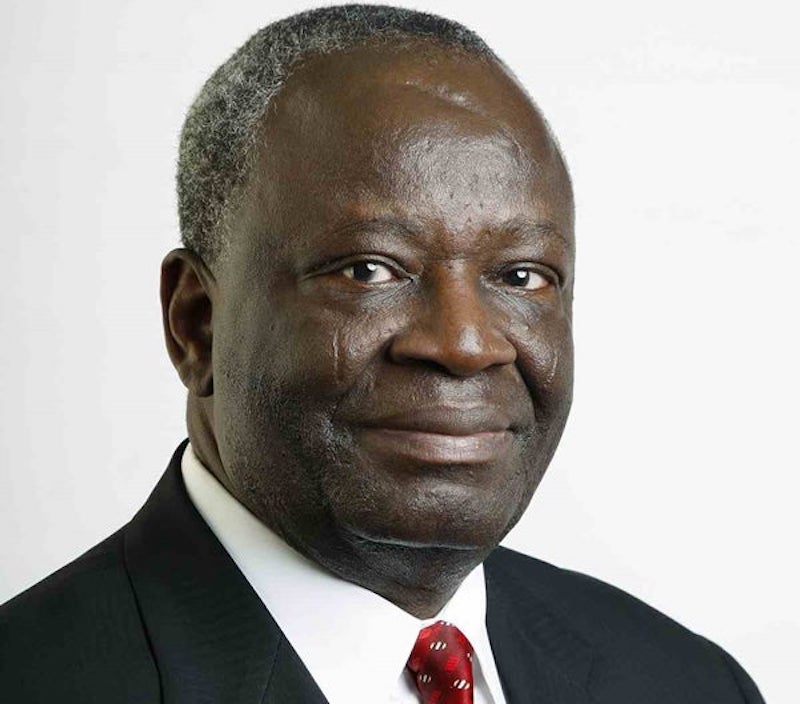
  • Prof. Gambari: A Global Diplomat from Nigeria-

    Prof. Gambari: A Global Diplomat from Nigeria-

    Professor Ibrahim Gambari of United Nations

    Prof. Gambari: A Global Diplomat from Nigeria-

    By Yushau A. Shuaib

    He is an African whose name is everywhere on international diplomacy: shuttling between tough terrains; mediating in crises; resolving conflicts as well as preaching the gospel of global peace. He is not only a black African but a global diplomat from Nigeria.

    Professor Ibrahim Gambari is one of the longest serving Africans at the top managerial positions at the United Nations (UN). He had successfully led Special Missions of the UN to trouble spots. Recently while addressing the Security Council in July 2010, he announced the safe release of some foreigners who were kidnapped in June 2010 after leading African Union-United Nations Mission in Darfur (UNAMID) as the Joint Special Representative (JSR). In the same period he was honoured with the ‘Umurinzi’, Rwanda’s Campaign Against Genocide Medal by the country’s president, Paul Kagame.

    Gambari is currently the most senior Nigerian in the United Nations and represents the rising profile of Nigerian at the United Nations. He has, in different capacities, work with four successive United Nations Secretaries- General (Pérez de Cuéllar, Boutros-Ghali, Kofi Annan and presently Ban Ki-moon), including as Under Secretary General for Political Affairs, Special Advisor and Envoy to the Secretary General on Mymmar and the Iraq Compacts Programme.

    Born in Ilorin Emirate of Kwara State, Nigeria, on November 24, 1944, Prof. Gambari attended Kings College, Lagos, as well as the London School of Economics where he obtained a B.Sc. (Economics) degree in Political Science with a specialty in International Relations, Professor Gambari received M.A. and Ph.D. in 1970 and 1974 respectively both in Political Science/International Relations from New York’s Columbia University.

    He had a brief stint lecturing at the City University of New York and the State University of New York (Albany) in 1969-74. He returned to Nigeria where he taught at the Ahmadu Bello University in Zaria and rose to the rank of Professor in 1983. He was Head of the Department of Political Science in 1982-1983, where he founded the first undergraduate Programme in International Studies in Nigeria.

    Professor Gambari was appointed Director-General of the Nigerian Institute of International Affairs in October 1983, a position he held until his appointment as the youngest ever Minister of External Affairs during Buhari/Idiagbon administration after the change of government in December 1983.

    He had served in various academic capacities: He was Visiting Professor at the John Hopkins School of Advanced International Studies, in Baltimore; lecturer at both Georgetown University and Howard University in Washington, D.C.; a Research Fellow at Brookings Institution, Washington, D.C and a Resident Scholar at Rockefeller Foundation Bellagio Study and Conference Centre, Italy.

    Prior to joining the UN Secretariat in December 1999, Professor Ibrahim Gambari holds the record of being the longest serving Ambassador/Permanent Representative of Nigeria to the United Nations (January 1990 to October 1999). As Nigeria’s Ambassador to the UN, he was a senior member of the Nigerian Delegation to ten consecutive sessions of the General Assembly (44th to 54th); he also served as President of the Security Council on two occasions (May 1994 and October 1995).

    Apart from chairing the UN Special Committee on PeaceKeeping Operations from 1990-1999, he led several United Nations missions, including the Special Committee against Apartheid and the Security Council missions to South Africa, Burundi, Rwanda and Mozambique. He served as member of the Board of Trustees of the United Nations Institute of Training and Research (UNITAR) from 1993 to 1999 and also as President of the Executive Board of UNICEF (January to December, 1999).

    Professor Gambari apart from publishing articles in national and international scholarly journals, he has authored globally acclaimed books which include: Theory and Reality in Foreign Policy Decision Making, Comparative Study of Regional Economic Integration; the Case of ECOWAS and The Domestic Politics of Nigeria’s Foreign Policy. Some of his forthcoming books include Africa’s Security Questions at the End of the 20th Century into the New Millennium and The United Nations in a Changing World Order: An African Perspective.

    In recognition of his distinguished diplomatic and scholarly careers, he was in 1985 became the first African to be conferred with the title of ‘Honorary Professor by Chugsan University’ which was founded by and named after Dr. Sun Yat Sen, leader of the 1911 Peasant Revolution and first President of Nationalist China. The University of Bridgeport (USA) awarded him the Doctor of Humane Letters degree (honoris causa) in 2002; the prestigious Johns Hopkins University elected him to membership of the University’s Society of Scholars in 2002 and the Government of Nigeria awarded him the national honour of Commander of the Federal Republic (CFR) in 2003. He was also honoured by various associations including the Nigerian Lawyer Association, New York in 2006.

    Professor Gambari is the founder of the Savannah Centre for Diplomacy, Democracy and Development, a non-governmental “think-tank” in Abuja, which is devoted to critical analyses of – and solutions to – the problems of conflict prevention, management and resolution, as well as democratization and sustainable development in Africa.

    This article by Yushau A. Shuaib was originally published in August 2010 on the websites of the Economic Confidential and Nigeria Village Square.

  • Any Good luck for Jonathan in 2011 Election?- YAShuaib

    Any Good luck for Jonathan in 2011 Election?- YAShuaib

    President Goodluck Jonathan General Muhammadu Buhari
    President Goodluck Jonathan General Muhammadu Buhari

    By Yushau A. Shuaib

    Nigeria’s president is Goodluck Ebere Azikiwe Jonathan; his first name is English with a very clear meaning…good lucks through destiny and God’s wishes. One of the middle names is of Ijaw which translates to ‘mercy’, Azikiwe is the name of one of Nigeria’s nationalist from the Eastern part of the country and it means full of vigour, while the last is a biblical name meaning ‘gift of God.’

    The story of this Goodluck is full of ‘lucks’ that are ‘good’ from unexpected and reluctant contenders, from a Deputy Governor of Bayelsa State to Vice President of the Federal Republic of Nigeria. In a twist of fate his bosses in the two powerful offices had to vacate their office untimely that enable him took over as a governor of the state and a president of the country without the electorates deciding on those choices. While his former boss, Governor DSP Alamieyeseigha was impeached for corrupt practices, President Umaru Yar’Adua died in office after a mysterious health-related problem. Goodluck is indeed a beneficiary of his name. With less than a year to the 2011 presidential election, the political pendulum is swinging.

    There are some aspirants that are real serious contenders in the next election likewise there are some political jesters attempting to make names for themselves as mere presidential aspirants. Anybody can take the title of an aspirant by their aspiration. When compared with his predecessors, Goodluck Jonathan has many things going for him as well as some obvious weaknesses. He may not be as endowed with diplomatic clout like President Obasanjo who was visible in international arena with intimidating aura of the African leader. Obasanjo bulldozed his way to the position of prominence among the world’s top leaders; he even took prime positions for group photographs at global summits where George Bush of USA and Tony Blair of Britain always stood by his side or at his back.

    So far, in his few foreign visits at the international arena, Goodluck’s has not exhibited any strong character among world leaders since he became Nigeria’s president. In his meetings with other world leaders, he has appeared like an obedient-servant-leader from Africa. No pun intended and I am not saying he behaves like a schoolboy.Goodluck also lacks the flamboyance and charisma of former President Ibrahim Badamasi Babangida (IBB) whose swagger, composure and dictions and in rhythm with that of his late wife Maryam were memorable attributes of that regime. Jonathan seems not to bother about those elements of sagacity as he tries to be sincere even his extemporal remarks at public forums indicate like of adequate rehearsals.

    Dealing with issues decisively is the remarkable feature of late General Mohammed Sani Abacha. A man of few words: his decisions are final; enemies and friends did not take him for granted. We could remember actions he took after his famous enough-is-now-enough address when he said: “We remain silent not because we are weak to act… Our deliberate silence is to give errant organisations and individuals time to do a rethink… since that is not the case enough-is-now-enough.” He was genuinely brutal rightly or wrongly once decisions were made. He neither sought for external loans nor visited foreign powers and the economy was in the right footing with Professor Sam Aluko in-charge of economic intelligence. Goodluck Jonathan sometimes seems to be too slow in taking decisive actions and occasionally revises his own decisions like the suspension of Super Eagle from FIFA activities.General Mohammed Buhari and his lieutenant Tunde Idiagbon could not be forgotten in haste as they tackled corruption and indiscipline head-on not minding individuals and institutions involved. The duo hit hard on the untouchables, that many years after Ribadu-EFCC was seen as a replica of that regime. The current President Goodluck Jonathan is slow to act on various anti-corruption reports on his table especially on the allegations involving a member of his family in money laundering, Halliburton scandal, Siemen scam and the rot in other systems.He shares some characteristics with his immediate boss, President Umaru Musa Yar’Adua: simplicity, sincerity and attempting to satisfy contending parties that are at variance on policy issues. Yar’Adua was colourless because of his health and the influence of the so-called cabals who surrounded him; nevertheless he was able to make some impacts which are obvious to Nigerians.An introvert to the core, Jonathan has made some remarkable outing worthy of commendations. In the last few months that he took over power as the President some of his utterances and actions indicate that he would not pursue a do-or-die agenda at winning in the next election. The appointment of a radical unionist and political scholar, Professor Jega as Executive Chairman of Independent National electoral Commission (INEC) is a pointer to his genuine intention for a transparent, free and fair election in 2011. He also made independent choice of Architect Namadi Sambo as his Vice President against recommended candidates by his godfathers and PDP machineries.

    It is doubtful if he will emerge as PDP Presidential Candidate going by the threats of some Niger Delta leaders like Chiefs Edwin Clark and Albert Horsfall daring the Northerners for the post in provocative postures. It is a fact that PDP governors who did not accord respect to Jonathan when he was Vice President and while acting as commander-in-chief during Yar’Adua’s hospitalisation are not likely to endorse his candidature for the election. With powerful influence over PDP primaries, apart from feeling betrayed by his recent choices in appointment and awards without considering their inputs, the governors are unhappy that he is not approving enough money for their states from the Excess Crude Account.

    Some of the Jonathan’s utterances too are not helping the matter as his bluntness exposes his party’s past misdeeds. Speaking at a meeting with Nigerians during a visit to Toronto in Canada, Jonathan said some chieftains of the People’s Democratic Party (PDP) tried to persuade him not to appoint Professor Attahiru Jega as INEC chairman because they feared Jega would block the party from manipulating election results. He said he resisted the pressure because of his commitment to credible elections.He also used the occasion in Canada to say that election results would be declared at the polling units, leaving no room for manipulations at the collation centres. He added that a tribunal would be set up to try electoral offenders irrespective of status or party affiliation.

    Not minding the recent pronouncement by the new National Chairman of PDP, Dr. Okwesilieze Nwodo that PDP had dumped zoning since 2002, northern political juggernauts are not taking the issue lightly. It is clear so far that if the retired generals who have declared their intentions for the forthcoming election could not have their way, a dark horse probably Mallam Ibrahim Shekarau of ANPP may spring a surprise at the Presidential election which could not be manipulated by the new INEC.President Jonathan’s disposition so far towards the election is quite remarkable. Though he is not a typical do-or-die politician, he could be a great leader if he refuses to get carried away by the euphoria of the office and sectional sentiments being expressed ethnic jingoists to push himself forward. Though he has more than 100,000 loyal fans on his Facebook, he should allow his party if not Nigerians to decide on his candidature for 2011 election rather than merely listening to praise-singers only. Great leaders leave the stage when the ovation is loudest, because they believe that holding a public office is not about how long but how well they serve the people.I wish our good looking, goodluck and humble President is smart enough to read the hand on the wall in setting a good record of himself, his Niger Delta region and Nigeria.

    This article was originally published in in July 2010 in some national media including Daily Trust, New Nigerian, Thisday, Sunday Tribune, Leadership, Vanguard and Daily Independent.

  • Still on El-rufai and Ribadu on President Umaru YarÁdua

    Still on El-rufai and Ribadu on President Umaru YarÁdua

    Why could hardened supporters of YarÁdua’s nomination for the Presidency suddenly turn to harshest critics of the same person they have known for several years?

    Nasiru El-rufai the former Minister of Federal Capital Territory (FCT), Abuja and Nuhu Ribadu the ex- Chairman of Economic and Financial Crimes Commission (EFCC) were top public officials and major campaigners, though secretly, for the recommendation and nomination of Umaru Musa YarÁdua as the sole candidate of People Democratic Party (PDP) to eventually become the President of Federal Republic of Nigeria in 2007.

    At a period when Nigerians were concerned about a possibility of Third-Term agenda for President Olusegun Obasanjo, and the fear of foisting corrupt person becoming the next President from a litany of aspirants in People Democratic Party (PDP) campaigning for the shot, the emergence of Umaru Musa YarÁdua to the scene was rude shock to many observers because he was neither popular in the national consciousness nor visible in various social and political scene.

    Recommending YarÁdua to the then President Olusegun Obasanjo who had made up his mind to either get himself endorsed for third-term or influence the election of one of his governor-allies in the South-South, was not an easy task but Elrufai and Ribadu succeeded in just doing that.

    Their supports were said to be motivated by YarÁdua’s recorded achievements in socio-economic growth and massive physical infrastructures developments in Katsina State as a Governor for eight years. He was said not to believe in cheap publicity and self-glorification as he provided a lot of road networks, estates, schools and hospital with promotional funfair like launching and commissioning of projects. Nigerians were also told YarÁdua was the only incorruptible governor in the last democratic dispensation.

    While the trio come from different states in the North; Kaduna, Adamawa and Katsina State, they all attended, at different periods, Ahmadu Bello University Zaria, an institution that has churned out most of the Northern educated elites in the country and situated in Kaduna State, notoriously known as the den of Mafia, whether ex-military officers or retired top public functionaries.

    Love them or hate them, Elrufai and Ribadu had created niches for themselves as the major actors in the last administration for adding colour to that regime with their passion for spontaneous actions and timely results in their respective agency’s mandates. It is necessary to point out it was to the credit of El-rufai that restoration of master-plan and beautification of Abuja became a model of fast-growing modern city. Not only did he demolish ghettos and shanties of poor dwellers, he also banished mad people, beggars and Okada riders from the city-centre. Those were some of actions that further endeared him to Obasanjo who assigned him into various panels including that on Privatisation of Public Institutions, Civil Service Reform, Monetisation Policy and Economic Teams. While Atiku Abubakar was busy in a battle of wit with his estranged master, Mallam Elrufai became defacto Vice President.

    On the other hand, the aggressive and massive campaigns against corrupt practices at by Nuhu Ribadu as the Boss of EFCC, similar to that of War Against Indiscipline (WAI) of Buhari/Idiagbon regime, received global recognitions, especially after parading some untouchable public figures as criminals. Some of the memorable incidents were the shaming of Inspector General Tafa Balogun of Nigerian Police and Governor Diepriye Alamieyeseigha of Bayelsa State for excessive lootings of public funds. He ensured that apart from jailing them, substantial amount of stolen funds were recovered as well as confiscating their assets worth billions of Naira.

    The reputation of El-rufai and Ribadu as indefatigable leaders was overshadowed by their obvious garrulousness in their frantic efforts to defend and carry out Obasanjo directives against some perceived opposition especially the then Vice President Atiku Abubakar. Interestingly for that reasons and for accomplishing assigned tasks promptly and decisively, Obasanjo entrusted with other responsibilities. They were in the inner-caucus-kitchen cabinet as the seen and unseen advisers to the President. Their opinions became laws: Ribadu’s list of corrupt Nigerians was a bible that automatically barred the politicians from contesting in 2007 Election likewise Elrufai-monetisation policy on sales of government houses became binding after the announcement.

    Their intervention in endorsing YarÁdua for the top position in the land was seen as justifiable in the face of the do-or-die policy of the ruling party since only PDP could win an election with an Iwu-INEC as the electoral umpire. Surprisingly YarÁdua seemed unenthusiastic to the proposition. He neither aspired nor lobbied for the ticket before he was dragged into the campaign orgy. He had disclosed his interest to return to the academia as a lecturer in Ahmadu Bello University after his second tenure as Governor of Kasina State. As if to send further signal of lack of interest for the ticket, he hardly spoke at most of the political rallies with his seeming lacklustre disposition. In fact he did not hide his ill-health during the campaign as he flew out of the country for medical treatment. To the bewilderment of Nigerians, during one of the Presidential campaign rallies, YarÁdua spoke to supporters through phone from hospital bed in Germany to say that he was ALIVE.

    There are many early warning signals from the outset on the electoral process but yet many individuals persuaded him to accept the nomination in the belief that failure to do so might force the regime at the centre and PDP machinery to provide ominous alternatives. There were insinuations that those persuading him for the Presidency had hidden agenda to use YarÁdua for their selfish motives. Surprisingly, immediately after his swearing-in, he dismantled some structures of previous administration and revised some decisions like the reversals of petroleum prices and proposed new taxation and he was widely hailed by Nigerian as an independent person.

    He proved that he was not a puppet even as there were rumours that El-rufai and Ribadu had either lobbied or were billed to take new appointments as Minister of Energy and Inspector General of Police respectively under YarÁdua’s administration. They could have made positive impacts in the portfolios if appointed considering their passion in righting the wrong. It is still baffling how they become estranged from their sole candidate. Probably they undermine other underground caucus close to YarÁdua

    While many leaders get to higher positions by fortune of being in a right place, at the right time with the right people, God also rewards people with leaders they deserved for their actions and inactions when things happen.

    While Elrufai is said to have joined others clamouring for a change of leadership at the top, asking or forcing YarÁdua to resign may sound easy, but the implication is better imagine when he still has extreme loyalists for various motives with the full support so far of the branch of the executive, legislature and by extension judiciary.

    Sure we are in a disturbing period with a confrontational stance of Niger-Delta militants publicly clamouring for instalment of Goodluck Jonathan, an Ijaw person they disliked and campaigned against during the last election. We have heard the voice Northern jingoists on “power must remain in the North for the remaining period.” The merchants of death are also praying for demise of Nigerian leader, God forbid. All these point to high conspiracy being coined to achieve hidden agenda to further confuse the polity. Interestingly, the military, which have been discipline and professional lately, would not fold their arms without protecting the territorial integrity of the Nigerian nation.

    It is quite impressive the disposition of Vice President Goodluck Jonathan who has remained ever loyal to his boss, by distancing himself from the antics of undesirable element, proving that he is not ambitious and greedy politician who in similar position would have done otherwise. He is as faithful as he was while deputising for Governor Alamieyeseigha before he was coerced to jettison his loyalty by threats from EFCC and elements in PDP influenced by power-that-be.

    With less than two years to the next election, let pray for our President’s good health and God’s guidance to do the right things in the remaining period. In 2011, as electorate, Nigerians should exercise their electoral franchise diligently without coercion and emotion. We are where we are today because some people somewhere, with power to influence changes, decided on our behalf. We therefore get what we deserved.

    This article by Yushau A. Shuaib was originally published in New Nigerian December 7, Daily Champion December 8, Leadership December 8, Daily Independent December 13, Peoples Daily December 18, Daily Trust December 21, Triumph , News Star December 21 and Thisday January 5, 2010

  • Saraki: the father, the Son and the only Daughter?

    Sarakis of Ilorin, Kwara State
    I have special admiration for three present governors in Nigeria: Raji Fashola for his amazing transformation and modernisation of some ghettos in Lagos State within his first tenure; Mallam Ibrahim Shekarau for his unassuming disposition in making Kano, the most populous state in Nigeria a peace haven to every Nigerian no matter their backgrounds after the past notoriety of Almajiris and Bukola Saraki one of the youngest governors for his uncanny initiatives and efforts especially in the rapid industrialisation of once rustic Ilorin.

    I must admit that while Lagos has the concentration of operational bases of most media in Nigeria by which it receives more news mentions, I frequent the other two states by virtue of my dual identities. My Parents were born in Ilorin, while I was born and brought up in Kano city.

    Of all the governors in Nigeria who were elected under the platforms of godfathers, not related by family affinity, Governor Bukola Saraki was singlehandedly nominated and sponsored by his own father, Dr. Olushola Saraki to occupy his present office.

    In Nigeria’s politics, the senior Saraki who holds one of the highest traditional titles, the Waziri of Ilorin, is truly a godfather and political tacticians that has remained relevant in every political era in the country. He is a professional political businessman, so skilful in ensuring that his candidates always have a place in every administration since his emergence in 1979 as the most powerful Senate Leader ever in the history of Nigeria.

    Saraki, the father who is presently the leader of the powerful Northern Union (NU), an elitist club championing the cause of Northern Nigeria by also consulting other sectional leaders, is credited to have successfully influenced the elections of past previous elected governors in Kwara State from Adamu Attah of National Party of Nigeria (NPN), Shaba lafiaji of Social Democratic Part (SDP), Cornelius Adebayo of United Party of Nigeria (UPN) and Mohammed Lawal of All Nigerians Peoples Party (ANPP) before pushing his son to Peoples Democratic Party (PDP) to emerge the governor in 2003.

    To prove to his opponents and other Nigerians that he is an undisputed political leader in the state, he nominated his daughter to be elected as a member of the Federal House of Representatives in 1999 under the platform of ANPP before moving her to PDP as a Senator representing the state. He even has another son, Adeolu Saraki appointed Special Assistant to President Umaru Musa YarÁdua, a promotion for the young chap who was Adviser to a former Minister of Housing and Environment.

    In politics, once he makes up his mind on candidates, he always has his way not that he had not had some setbacks. In the past apart from the turn-of events and no-love-lost relationship with godsons in the state, he had embarrassing encounters at national level especially with the Bafarawas when they were together in ANPP and unpronounced disagreement with some retired Generals from his hometown who were influential in previous administrations. They were late General Tunde Idiagbon, Late General Abdulkarim Adisa and the third was defacto assistant to OBJ in Presidential Villa retired General Abdullahi Mohammed Adangba. Most of them denied him some privileges and recognition on issues affecting the state.

    Many had expected that his past experiences with his sponsored governors in the state, who later turned against him or attempted to undermine his power of influence, would be repeated with his son on the saddle. Most of them might have been disappointed because the relationship of a father-and-son has continued to be strengthened and very cordial which makes one to wonder the possibility that they had an accord on each boundary limitations in the affairs of the state.

    Sentiments apart, Governor Bukola Saraki has impacted positively on the state and lives of the people by providing enabling environment for businesses. From turning some areas to agrarian communities through mechanized farming under the skilful eyes of competent foreigners, and infrastructural development in the areas of housing, road networks and aggressive pursuits of independent power generation in the state. He has never gotten carried away like a pampered child to mess up because of his daddy-godfather and never attempt to engage the all-powerful daddy in altercation that could have drawn public attention. He nevertheless seems to be a man of his own and independent in his resolve to make the state great by creating enough job opportunities unlike his fathers whose generosity is in doling out money free to old people and youths who do nothing but praise him.

    Trailing his father’s skilful art of networking, Governor Saraki has highly effective relationship with various political and social groups which influenced his unanimous nomination and election as the chairman of Governors’ Forum, an endorsement by other governors.

    Though not much may be heard of the daughter of the godfather in the Senate, Senator Gbemisola Saraki who chaired a committee of the Senate on Transportation, her good diction and foreign accent when she joined other senators during Obasanjo era to defeat the Third Term Agenda, made many, since then to believe that she is not just daddy’s pikin but an intelligent and responsible Nigerian. She was also billed for the position of Senate President which was zone to North-Central region but for the high wire politics, where David Mark was unanimously chosen.

    Recently, I had an opportunity to visit Ilorin, the capital of Kwara State and gauge the tempo of the ordinary people on speculated desire of the Saraki Family to ensure that after the tenure of the son-governor, the political equation on who gets what in the next dispensation for top offices would be purely Saraki Family Affairs.

    The game-plan, the opposition claims is simple: The political godfather would influence the election of the senate-daughter to be Governor in 2011, the young son who is presently Presidential Adviser to be moved to the Federal House of Representatives as a legislator while the present Governor would move to the Senate where he could likely emerge the Senate President, a position zoned to the North-Central.

    There is a big BUT in this simple arithmetic if truly that is the intention of the Saraki family.

    Politics apart, from a moral pedestal, propelling his children to high offices on behalf of the state in top executive and legislative arms, (I doubt if any of his other children read law to have been nominated in judicial arm as Chief Judge), is inappropriate as it looks as if governance in the state is entirely Saraki’s family affairs.

    As much as every Nigerian has the right to aspire to any position in the country, even though the success of such moves in our present politics is determined, to a large extent by influence of godfathers, the senior Saraki should by now, after being so blessed in having fanatical supporters even among our guardians and in and out of the state, soft-pedal in giving undue advantages to his children. A political godfather is not only a father of his children but a guardian of the entire people in his constituency including the so-called outsiders who have dwelt or contributed to the development of the society.

    Therefore, in his retirement age, though I learn politicians don’t retire, he should provide enabling environment for all aspirants and candidates to prove their worth through their records and be judged accordingly at the polling booths. Any attempt to force candidates, including those that are not related to him may not be appreciated by the larger society that believes in transparent democratisation devoid of systematic disenfranchisement of electorates.

    Therefore, since we are not practising monarchy or political dynasty associated with the Arab world where royal families control the resources and have the destiny of the citizens in their palms, political godfathers in Nigeria should encourage other citizens to aspire to public offices without exertive influence and coercion … a kind of generosity that will be remembered after they finally leave the stage.

    This article by Yushau A. Shuaib was originally published in Daily Trust August 11, Daily Independent August 13, Leadership August 13, National Life August 15, Triumph August 17, Vanguard September 3-4, 2009

  • Plights of Displaced in Warri 2009- An Eyewitness Account- YAShuaib

    Plights of Displaced in Warri 2009- An Eyewitness Account- YAShuaib

    AVM Audu Bida DG NEMA provides relief in Delta 2009Are all stories from war zone true when the media rely heavily on sources that are parties to the crises? Advanced technology through the use of phones and emails to obtain information has facilitated speedy news gathering from every corner of the earth but none is more credible than eye witness accounts from independent sources. Some reports are either exaggerated or underreported by media practitioners for lack of direct access to the flash spots and mostly due to their fear of venturing into risky adventures.

    This writer recently had an opportunity of travelling, on special humanitarian assignment, to Warri South West Local Government Council in Nigeria where the Nigerian military engaged the Niger Delta militants in arms raids after the latter’s abduction of some military personnel. The media have reported large scale destruction and casualties from the fracas, based on information obtained from members of the affected communities or from the militants themselves, especially from a group called, Movement for the Emancipation of Niger Delta (MEND) that has continued to claim responsibility for pipeline vandalisation, hostage taking and other similar outbursts signifying criminality.

    The opportunity to travel to the creek was provided when I joined a team from Nigeria’s National Emergency Management agency (NEMA) which is statutorily empowered to manage disasters including distribution of emergency materials to victims of natural and man-induced disasters and assist in the rehabilitation of the victims. It is also mandated to liaise with State Emergency Management Committees to assess and monitor the distribution of relief. In addition it coordinates the activities of all voluntary organisations engaged in emergency relief operations in all parts of the federation.

    As at the time the crisis began the Director General of NEMA, AVM Mohammed Audu-Bida, a retired airforce general with military experience in humanitarian and rescue missions in Iraq and Liberia among other countries was in the USA for an official summit. But interestingly as an emergency officer who is regularly in touch with his principal officers for any untoward development in the country, directed the deployment of a team comprising staff from Abuja, Enugu and Port-Harcourt zonal offices. Against all odds, the team moved into the area to assess the situation for humanitarian interventions.

    In the first day of our arrival there was no shooting wheresoever though the people in the communities ran away on sighting us until we were able to convince those courageous enough about our humanitarian mission. We let them know that NEMA does not discriminate against distressed people as only security personnel can determine criminals from innocents. After a lot of persuasions and healthy interactions, they accepted our overture. We started to reach out to the community leaders, youth leaders, women and children to assure them of the government commitment to guarantee their safety. The ordinary people of those communities looked innocent, humble and friendly from the negative impression created on them by various criminal activities being reported about the citizens. Though the officials of the local government were not available until a day after when we met a Legislative Leader of the council, Mrs Rose Tulu who took us round to meet some of the displaced people.

    Displaced People in Delta 2009As much as there were anxieties in the air, the ordinary people we saw were in high spirit. In fact some social services were uninterrupted including the schools except the general hospital in the council which was deserted a day before our arrival when it was alleged that some soldiers forced the people and the doctor away. We also saw some men enjoying themselves with kegs of local palm wine, while other businesses went on.

    Since the displaced people were scattered in different locations, we had to close a primary school to establish the first Internally Displaced People Camp (IDPC)which had a strategic proximity to most of the affected communities. We ensure foodstuffs were immediately provided while reassuring the people of their safety.

    It was after we created a temporary office within the camp that teams from the Red Cross and Doctor-Without-Border came in and we held a meeting to assess the situation and on how to provide succour to the people.

    Since in an emergency, speedy actions are required for effective humanitarian services, thus computers and phones became the office and documents to receive directives and carry out orders which facilitated a quick provision of bags of rice, beans, gari, salts, tea and cans of cooking oil. We also constructed emergency toilets. Unfortunately NEMA trucks from Enugu conveying mattresses, blankets, rubber mats, clothing, disinfectants, buckets and children shoes were arbitrarily intercepted by some security personnel on the highways which delayed the arrival of the relief items.

    We were informed by the community leaders that 25 communities were affected with most of the displaced people being reluctant to move to the designated camp for fear of reprisal attacks. We received a shock when we received a report that a woman who was leaving her hideout to meet us delivered a baby in the bush. Arrangement was made for her treatment and provision of the materials she needed.

    Because of the sensitivity and urgency of our assignment, Audu-Bida cut short his oversea assignment and flew to Warri to assess and supervise distributions of additional relief materials to the displayed and distressed people. Some of the women in the camp pleaded with NEMA boss to intervene in ensuring that the Joint Task Force allow them access their remote communities which were blocked by the military. They said that as much as NEMA’s gesture of providing relief materials and social amenities is a welcome development, home to them would always be the home than life in the camp or any other hideout.

    He also met Barrister Kingsley Otuaro, the Chairman of the Delta State Relief and Rehabilitation Committee and his members, and held a consultation with the community leaders, including the Chairman of the council George Ekpemupolo, who is said to be a brother to the most wanted man, Chief Government Ekpemupolo alias Tompolo. George who looked lanky and worried had emerged from his hiding to express his worry on the plight of his people.

    Based on the discussions, our team led by NEMA Boss visited the headquarters of Joint Task Force (JTF) to appeal for adequate security for the displaced people as the agency may open up more camps if necessary in areas worst affected by the crisis. He particularly sought the assistance of the task force to guarantee supplies of relief materials to displaced people in various communities and ensured the safety of lives and properties. He said being a retired general in the Air-Force himself, NEMA would not interfere in the mandate and rescue operations of the taskforce in their current mission, he urged them to ensure that innocent victims were not caught in the cross-fire. He stated that the concern of NEMA was not about just distributing the materials but to ensure that the displaced peoples were secured and reunited with their families as soon possible.

    The Maritime Component Commander of the Task Force who received the NEMA delegation, Commodore Azubuike Ajuonu, while appreciating the efforts of NEMA in reaching the displaced with relief materials said that the military would not shift its position in the search and rescue operations until they locate the missing officers and men of the Nigerian Army that were abducted by the militants. He added that it was unbecoming and regrettable that Nigerian soldiers who risk their lives to protect the nation’s integrity were being hunted by criminal gangs in the Niger Delta just because the army had been tolerating them all these while. He said the excessive criminality of the youths through kidnapping, sea-pirates, blackmail, extortion and killing of innocent Nigerians and foreigners was embarrassing the nation and its people which must end.

    The Task force was later magnanimous enough to concede to NEMA’s request as relief materials were delivered through a special committee comprising journalists, police red cross, SEMA and volunteer women to creeks of Gbaramatu Kingdom, especially in such communities as Opedebobor, Dobiyo, Ogborodo, Azama, Oporoza, Enekoroa, Igoba, Krutie and Kunukuruma. The committee used jetties in the various communities.

    The government of Nigeria has shown concerns, including the Office of the Vice President Goodluck Jonathan that supervises NEMA in ensuring that innocent lives are protected and catered for adequately. Unfortunately we cannot verify and authenticate figures of casualties except that of the displaced people, who mostly come to the camp to eat, get relief materials and go out again.

    I discovered to my bewilderment beautiful mansions built in the midst of some shanties, which I learnt were owned by individuals, some said including the militants. Warri is a big town, including its surrounding communities that have impressive road networks and other social infrastructures. I learnt contractors for projects in any areas must pay special fees to some leaders and special levies to area boys who behave like militants or the projects that would benefit the community would be abandoned whether mobilisation fees paid or not.

    NEMA officials in Gbaramatu 2009It was not surprising that the name of the most wanted militant is Chief Government Tompolo, because every gunrunner and person in possession or illegal arms in this part of the country here is a government and lord who can charge illegal levies arbitrary. I won’t confirm the alleged complicity of government officials and even some security personnel in making the so-called militants daring combatants by creating reciprocal relationships for selfish motives which now seems to consume the integrity of our nation. I am not authorised to deny baseless allegations or confirmed fictitious figures of casualties and level of destructions. But most of the information in the public domain are naked propaganda which are mostly exaggerated by parties in the conflict.

    This article by Yushau A. Shuaib was originally published in Economic Confidential June, New Nigerian June 2, Nigerian Tribune June 7, Vanguard June8, Daily Sun June 9, Daily Independent June 11, Champion June, The National Life June 13 and Leadership June 14, 2009

  • Aftermath: Visiting the Niger Delta Region

    Armed Robbers
    Niger Delta Militants
    After the anxiety and fear that gripped me before my official trip to the scary region of Niger Delta, I returned safely to my base in Abuja, without losing any part of my limbs or sense of sanity to faceless militants and kidnappers who have dent the image of peace-loving people of that part of Nigeria.

    At the instance of biannual meeting of the National Council on Information and Communication (NCIC) that held at Yenegoa, the capital of Bayelsa State, I was in the state between July and August 2008 and what I saw on ground erased some negative impressions about the development and the people in that region. Some expected delegates rather than take the risk of the trip to have a first hand experience about the environment, sent their representatives to the summit.

    From the outset the Minister of Information and Communication, John Ogar Odey told delegates that Bayelsa’s story should not be based on the primordial conjecture of people but on objectivity and fairness in line with the ethics of journalism. The governor of the state, Chief Timipre Sylva also told us that ‘Bayelsa is a very peaceful and peace loving, serene, green, tranquil and beautiful State.’

    Before discovering a seeming Ijaw’s War of dominance over other ethnic groups in the region, I took some daring adventures, quite exciting to satisfy my journalistic instincts. There are indeed natural problems of degradation of lands, oil-polluted streams, air-pollutions from flaring and non-availability of lands because of water level that require massive sand-filling for building or any construction. I was moved by painful irony of a deserted Oloibiri Community where Nigeria struck oil in 1956 and miraculous transformation of Odi to beautiful town after its alleged destruction in a retaliatory military attack in 1999.

    In a guided excursion to some sites and neighboring communities I could not see any militant only youths: boys and girls in high spirit and elderly people looking very innocent oblivious of outside bad impression of their community. I saw how ordinary Nigerians from different parts of the country living peacefully with their hosts and conducting their businesses unmolested. Most of the non-indigenes are into self-employment, though occasionally in menial jobs like Northerners who are water vendors, suya sellers and cobblers. I saw few Hausa women selling Tuwo and Miyan Kuka. The Yorubas are mostly the technicians and motor mechanics. The Igbos are the commercial traders and transporters. There is also religious harmony in this predominantly Christian city where I heard early morning calls of Muslim prayers from mosques.

    In the course of internet browsing at a café, a distance from my abode, I moved around in the night and saw lively and convivial atmosphere of this serene oil state. The crime rate in Yenegoa is very low because the people are conscious on the need to protect themselves. For security reason I won’t state how a suspected armed robber was summarily dealt with before the arrival of the police.

    Though I may not know the highways that constitute federal and state roads, from the Benin- Bye Pass, the road network to Yenegoa is superbly tarred. Only a few potholes dotted the route. Similarly most of the major streets in Yenegoa and adjacent communities are well-constructed. There are also amazing infrastructures like solar-powered street and traffic lights. Some of the infrastructures, I learnt, were undertaken and executed during the Alamieyeseigha-Jonathan tenure.

    We inspected some new projects that are being handled by reputable construction companies like Julius Berger PLc and Chinese Engineering Company. The projects include Ekoli bridge and other link roads to Oporoma in Southern Ijaw Local Government Area, Nembe-Brass, Tombia junction and customs road. Some ongoing projects in the state are 500 – Bed General Hospital, five star hotel, the Ox-bow Lake, the Yenagoa Gallery, Central Business District and Marina Projects, gas turbines, street lighting and water projects to serve clusters of communities with pipes to reach homes. While some of the projects are intended to boost tourism and create jobs for the youths, new infrastructural facilities at the Niger Delta University (Amassoma) is done to seek accreditation for Medical and Law Faculties. Some of the projects, because of the threats of the militants have been abandoned by the contractors.

    There are also structures and buildings provided by NDDC and oil companies operating in the state, especially at rural areas like schools, hospital, roads, portable water, recreational facilities, and parks. On the other hand there are sprawling classy business centres, eateries and sophisticated edifices that are owned by politicians and public officers. I noticed various intimidating mansions of different shapes dotting every corner of the capital city and even in remote areas amongst thatched houses of peasant farmers and fishermen.

    Most of the ordinary inhabitants admitted that they never come across the militants because they (militants) operate at the remote creeks. I gathered that most of the present militants were actually jobless youths who were recruited during electioneering to intimidate and harass innocent citizens to vote for their political manipulators who could not win in a free and fair election. They were engaged in ballot box snatching and papers stuffing. After election, realizing that they had been used and dumped by politicians, the thugs metamorphose into militants. I gathered that they engaged in deadly illicit dealings which include drug trafficking, oil bunkering, robbery and sea-piracy as they masquerade as freedom fighters. The most unfortunate discovery is that majority of those used for the dirty job of kidnapping and vandalisation of oil installations are poor and illiterate youths, who are manipulated by some faceless masterminds. Like robots, being run by a remote controlled device, the gullible youths who are children of the poor, mostly do not realize the futility of their action of taking arms against the state. The ringleaders mostly educated have their families living in cozy environments in big cities or abroad outside the mosquito-infested creeks.

    There are two new dimensions on the youth restiveness and militants’ aggression: a war of – supremacy of ethnic groups and struggle for sharing of oil wealth. Unfortunately unlike past struggles by respected youth leaders and activists like Isaac Boro and Saro-Wiwa towards a better condition of the entire people in the region, the present oil war is influenced by the greed of some few who extort the states and the oil companies through intimidation, kidnapping and blackmail. As they pocket millions of local and hard currencies from nefarious activities, their communities and the poor people, they claim they fight for, remain in abject poverty. The money that could have been deployed to further develop their areas is used to acquire highly sophisticated weaponry, purchase assets outside their localities and engage in aggressive media propaganda through online and foreign media.

    It is noteworthy that past military administrations in the country especially that of IBB and Abacha in their deliberate policy of giving the minority groups in the then South-Eastern Nigeria sense of belonging cleverly carved out their areas which largely produce oil from the dominance of Igbo and to prevent any secessionist tendency. The South-South (or Niger Delta) region came to existence from that policy which gives the axis six states while the Igbo -speaking South East has only five states, the least in any of the six geo-political zones. Unfortunately, the fear of single sectional dominance as reared its ugly head again as the Ijaws, who are mostly the arrow-head of militancy have hijacked noble struggle for justice and fairness in the polity by dominating other nationalities in the oil-producing region. The Ijaws have silenced other minorities like urhobo, Oro, Ogoni, Bini, itshekiri, kalabari, Ibibio, Efik, Isoko, Ogoni, Ilaje, Ikwerre, Anang among others.

    Through their one-man-show antic s, some Ijaws always threaten that the militants’ attacks would continue unless their demands are met. One of their recent demands is on creation of another Ijaw state to accommodate their kith and kins from neighboring states of Ondo, Rivers, Edo and Delta. They are presently clamouring that the proposed Ministry of Niger Delta and its minister should be located and appointed from their zone respectively. These arrogance postures of the militants and their patrons are quite unbecoming considering the fact that there are many Ijaws in top positions of responsibility in the nation’s hierarchy including Vice-President Goodluck Jonathan, Minister of State Petroleum, Odein Ajumogobia and Chief Executive Officer of NDDC, Chief Timi Alaibi and the recently retired Chief of Defence Staff, Gen. Owoye Azazie among other top officers.

    I believe the governors in the Niger Delta can still do more for their people considering the enormous resources being allocated to the states from oil companies, intervention agencies and the monthly revenue from the Federation Account. They should create enabling environment for industrialization and job creation through peaceful atmosphere by calling the bluffs of few undesirable elements in the name of so-called militants.

    As much as President Umaru Musa Yar’Adua remains aloof to any aggression on the militants to avoid making peaceful and innocent souls victims of military actions, the gangsters should be cautioned on their intimidation of the Nigeria army with childish rhetoric and misguided provocation. They should not undermine the patience and underrate the prowess of our well-trained and gallant army who have records of outstanding performance in foreign operations.

    As much as the government continues to treat them with kid gloves hoping they may have a rethink, the true patriotic people of the Niger Delta must come out to condemn them and cooperate with the relevant forces in dealing with the criminally-inspired armed struggles.

    The governments of the states should also not only be involved in physical projects but reorientation of their youths from negative vices. In addition they should create skill acquisition centres across all the local government areas where they can learn different talents to make them even self-reliant and self-employed through soft-loans facilities to be guaranteed by their local chiefs. No person will be a willing tool to be exploited by undesirable elements for their selfish agenda when the government provides opportunities for its citizens.

    In conclusion, I must mention that I enjoy the company of young men who are very proud and passionate about their state and took me to places of sight attractions. A mention must be made of a corps member Tonye Soroh and a driver Dennis who took the risk of guiding my movement in Bayelsa State. Indeed the ordinary people there are quite wonderful just like the rest of us desirous of peace and positive development in our country. The Niger Delta, is a story of region that has ample potentials and opportunities to be great but is unfortunately drawn back by the antics of few in their midst.

    This article by Yushau A. Shuaib was originally published in New Nigerian October 13, Daily Trust October 15, Triumph October 18, Sunday Tribune October 19 and Thisday October 20,2008

  • If President Yar’Adua Doesn’t Die- YAShuaib

    If President Yar’Adua Doesn’t Die- YAShuaib

    President Musa Yar'Adua
    President Musa Yar’Adua

    By Yushau A. Shuaib

    The above headline is not intended to play pun or be mischievous but rather is a response to worrisome feelings amongst Nigerians on the plight of President Umaru Musa Yar’Adua over the sensationalism making the rounds on his ill health. The debate over his purported ill-health overshadowed all other critical socioeconomic matters taking place in the country.

    From the hushed tones, to private discussion and even in places of worship the issue generated genuine concerns, and even beer parlor analyses rented the air which further prompted disturbing headlines seeming to ask: “if President Umaru Yar’Adua Dies!” In fact some of the insinuations are scary speculations over likely consequences that may befall the nation. The nation has witnessed so many crises that we won’t pray for a repeat of issues of national tragedy.

    Considering some of the fears expressed, many would have anticipated arrival of a coffin from the Presidential Jet, but President Umaru Musa returns safely to the country from the officially disclosed Lesser Hajj and unofficial announced medical check-up in Saudi Arabia.

    As President of the country, Umaru Yar’Adua obviously cannot govern alone without having and relying on able lieutenants who are in his cabinet to assist him in the discharge of constitutional responsibilities. That was demonstrated in his absence as the nation was not grounded by ineptitude of any of the ministers.

    During his stay abroad, there were many developments that require public attention but which were not made issues of national importance. For instance, within the weeks of his absence, over N78billion was released from Excess Crude Account to augment statutory allocations of August 2008 to federal, states and local governments. That was after over N360billion was shared to the tiers of government and agencies. Likewise at one of the Federal Executive Council meetings which was chaired by Vice President Goodluck Jonathan, a whopping sum of N13billion was approved for various projects across the country which covered power, education, science and technology, transportation and Federal Capital Territory. In fact breakdown of the contracts which was detailed in an online economic intelligence journal, the Economic Confidential, list of the beneficiaries, the contractors, specific amounts and places for the executions were stated. Yet not many Nigerians bother to know of these projects and enquire how they would positively impact on the nation and its people.

    The most painful experience from the saga of the two weeks foreign trip, were confusing announcements and counter announcements from oppositions and government officials respectively on the true condition of the President. In fact when official channels were not forthcoming with accurate, timely and reliable information, Sahara Reporters an online news agency feasted on the vacuum by regularly releasing incredibly detailed reports from alleged highly reliable sources. Surprisingly, the online portal, gained more visitors and strangely became the most cited news media on the president’s whereabouts.

    While the Information Minister and spokesperson of the president, John Ogar Odey and Olusegun Adeniyi respectively, tried to manage the issue and boost the image of the president through their cautious and occasional official releases that did little to douse the mounting tension they were accused of being too conservative with the truth. As much as I must avoid unnecessary bashing from the public in an attempt to defend their approach, it must be pointed out that personalities being managed by publicists most times determine and give directives on how their profiles should be projected and protected. Since such principals may not realize the implication of refusing professional advice, they learn the hard way from bitter experience.

    Although no one may know exactly what interacted between the president and his image managers, it is necessary that the public should always be adequately informed on public figures that influence direction of government. Nigeria’s president is like a father of large family, the nation which is his primary constituency and responsibility. A situation where spokespersons seem to be gagged and viewed by professional colleagues as weaklings in performing their responsibilities, their actions and inaction would affect their credibility and dent the reputation of the institutions they represent. That is the truth without any pretext.

    Though there could be implications for breaking Hippocratic confidentiality even on the health of an ordinary individual, especially in divulging the nature of one’s ailments, I doubt if there is anything wrong in stating that one has gone for medical check-up and seek the understanding and prayers of the public. That could have been a very open and transparent public disclosure to prevent unnecessary controversies and second guessing.

    The situation has forced some people in some quarters to nurse grudges and feel bitter on the entire saga as some section of the media felt sideline or betrayed after exhibiting patriotism in their professional conduct. The government may need to reassure the citizens on its continuous commitment to uplift their wellbeing and where necessary tender apology for erring in the entire episode.

    I feel pity for President Yar’Adua who, I believe strongly, means well for the nation, in his humble ways of doing things. We could recall how he was persuaded and cajoled to contest when he had already made up his mind to become a university lecturer after his second tenure as Executive Governor of Katsina State. We could remember the fear over his health during the campaigning. His staunched supporters and campaigners in high places did not even allow him the opportunity to speak out his mind as they told us he was strong and capable of leading the nation to prosperity and greatness when he was described as the only incorruptible governor in Nigeria who developed his state to the admiration of others. So far he has demonstrated some leadership qualities and taken extreme courageous steps even against his mentors, especially for not shielding anyone from probes and prosecutions.

    Every individual has a weakness and limitation; we should understand his constraints and appreciate his strength, will-power and efforts he has made so far in stabilizing the economy and sustaining peaceful coexistence amongst all the ethnic groups. We should even commend him for not dealing decisively with some treasonable felons who indirectly wage war on our collective nationhood but rather give them enough time to do a rethink and retrace their criminal steps before saying “Enough is Enough.”

    Since the President has not died, against the alleged permutations and calculations of invisible elements to realize wicked agenda, we should support the administration to successfully deliver the promises made to electorates including the most talked about Seven-Point Agenda, to at least complete the first tenure which is half-way.

    We have seen healthy looking rulers whose behavior and pronouncements including dictatorial tendencies clearly indicate their grievous infirmity, while the lanky and frail-looking leaders like Mandela remain great icons of democracy. We have also seen strong people dying in lesser strenuous exercise, even in bedrooms, while the presumed weak persons living longer in active service to their people. Please no one should wish our president otherwise.

    This article by Yushau A. Shuaib was originally published in Daily Trust September 9, New Nigerian, September 10, Leadership September 10 and Vanguard September 11, 2008

  • Visiting the Niger Delta Region

    Armed Robbers
    Niger Delta Militants
    My hands are still shaky… my voice quivers as I watch my dear family in sober moods over my present predicament. I wonder if I had offended anybody that the worst deserving punishment to be meted out to me is to be asked to travel to that scary zone. One thing I know my boss would not wish my bad luck. For some days since I received an instruction to proceed to the volatile Niger Delta region in Nigeria for an official engagement, I and my family have had to wear mournful looks just as I keep on having nightmares. Sometimes I see Mujaheed Asari Dokubo, Tom Ateke and Henry Okah giving me assurance. Assurance!

    The Niger Delta is a zone that makes global news headlines for its notoriety in incessant rates of kidnapping, armed attacks and destruction of infrastructures, especially oil pipelines. It is a region where those in white skin are not safe from professional abductors; likewise the Nigerian soldiers are being hunted and killed like preys in the forest.

    So why me… I ask why me…? I am not in the military or paramilitary services where one could have signed documents before recruitment to kill or be killed. Knowing that the easiest official job to one death is the army or police, I refused the temptation to join any of the services. I work in a civilian institution where physical attacks or death in the course of our works could not be contemplated. As a very emotional person who shudders over mere sight of blood… red human blood… I can’t even afford to work in medical outlets like hospital to attend to human casualties: mingled body parts, broken bones, smashed skulls and decomposed corpse without regretting such an encounter in months. But here I am about to go to an area described by some media “a war-zone.”

    Today is the deadline for our movement to the Niger Delta, though not on humanitarian assignment which can be scary too, but for a meeting which may also include sight-seeing (I pray it won’t include a courtesy call to the CREEKS). Imagine a meeting in the lion’s den when we have the comfort of abundant peaceful cities in Nigeria from other regions: Abuja, Ebonyi, Kano, Osun, Yobe, and Kwara amongst others. I have consulted my spiritual leaders, Imam and a pastor who is a colleague in the office to pray…pray very hard for my safety. If I were a rich man I could have recruited the service of marabouts popularly used by politicians and extremely wealthy individuals who want to live long and sustain their societal influence.

    I am black in complexion by all imagination but my wife wants to apply a local bleaching cosmetic called Lalle to tone my entire skin to look darker and darker so that I won’t just look black but blackest to delude the Niger Delta militants from kidnapping me. She was aware that not only are white expatriates being kidnap in the region for ransoms but even healthy looking ordinary poor citizens like me have fallen victims. The abductors had in the past erroneously captured albinos who were mistook for whites and kwashiorkor victims whose pot-bellies were misconstrued as signs of well-fed before they realized that their hostages are from poverty-stricken families.

    As much as I would wish to identify myself as a promoter of the nation’s image, in the case of any eventuality, I remember the kidnapping of relations of Nigerians making exploit in foreign lands. Recently the brother of an international footballer Joseph Yobo was kidnapped with heavy demands for ransom with necessitated other international players like Nwanko Kanu to recruit the service of security personnel, including the police to protect their aged parents and siblings from the clutches of the local investors in kidnapping enterprises. Many of their people abroad are scared stiff to the marrow of visiting homes for holidays. I wonder if my peasant family could pay any ransom on my behalf from their meager resources when I am not the only child.

    I only hope they could spare me if I run into them because I am thousandnaires (my salary is a few thousands in Naira) unlike most of them who are millionaires. It is an open secret that some of them are multi-millionaires considering their acquisitions of sophisticated weapons and speed boats for their highly coordinated operations. And those of them that have repented after claiming to fight on behalf their people, cruise around towns in exotic automobiles with body guards to complement that could be the envy of oil sheiks in the Arabian Peninsula.

    It was alleged recently, in the media, that the Nigeria National Petroleum Corporation (NNPC) paid $6 million to Niger Delta militants as “protection fee’ monthly. The disclosure was allegedly made by the Group Managing Director of the corporation, Engr. Abubakar Lawal Yar’Adua at the House of Representatives Committee on Finance investigating the alleged non remittance of revenue collected by government agencies from 1999 to March 2008.

    It is not only the NNPC that is being forced to pay huge ransoms. Stories abound about such huge “unreceipted” allocations being paid by multinational firms operating in the region while some of their state governments too do the same from public treasuries to protect top functionaries from abductions, especially parents and children of public figures from the same environment. It is being alleged there is an organized cartel specializing in the negotiation, payments and settlement of commission through in a well-orchestrated connivance with some officials in government with militants during such abductions or after a threat to attack oil installations. While officers are said to be recruited or assigned specifically in dealing with militants, there is a refined and modernized process through a so-called professional consultants on Niger Delta Affairs. Monetary inducement is said to be shared fairly and justly in a special allocation formula between the official insiders and external blackmailers. I won’t be bothered about their sharing. It is their own money if only the ordinary citizens could benefit from developmental efforts in their localities.

    While I am about to take the risk of going to the Niger Delta without an escort, workers of oil companies and other contractors are deserting the region in a large number even when some of them have heavily armed security bodyguards. I only pray the area will not turn to ghost town due to the activities of the uncontrolled few.

    The seeming peaceful states in that region are those with little oil reserve and least recipients from the monthly national revenue. For instance in the June monthly allocation from the Federation Account the hotbeds: Rivers received N22.9bn, Akwa Ibom N16.5bn, Delta N11.9bn and Bayelsa N10.4bn, while peaceful states devoid militants’ attacks in the region: Edo State received N4.8bn and Cross River State N5.3bn. The question here is: could more oil reserve and more money be a curse? I am just baffled.

    As I attempt to apply some method to disguise myself properly, I realize that I have to put my trust in God Almighty, because it doubtful if my trick could work. I had attempted to learn a popular language of the zone to disguise myself properly only to realize that they don’t have a major spoken language unlike other regions. In the North for instance Hausa is spoken widely; in the West, Yoruba is accepted; in the East, almost everybody speaks Igbo but in the South-South, which constitutes the Niger Delta, different languages are spoken in different localities: Urhobo, Ijaw, Itsekiri, Ibibio, Kalabari, Benin etc.

    I am fascinated by the motherliness of Niger Delta women, who are hardworking and peace loving as demonstrated in their occasional peaceful rallies against acts of criminality in their cities. They could have been recruited to serve as suicide bombers, like in other similar unpredictable environments, they chose to advise their youths from the illicit dangerous trade just as they resist the temptation to join the bandwagon of primitive armed struggle.

    What could be my major pre-occupation? Probably the visit would afford me the opportunity to study the developments and other positive strides towards the improvement of people’s condition and feel the feelings of the inhabitants. The major point of debate on that region. Hoping it would be an exciting experience.

    As I pick my baggage to begin the journey, my body trembles once again and I look at my baby who is crying, probably sending me a coded signal which I can’t decode. I console myself by observing that we cannot be mouthing patriotism if we can not stake our life and take risk of showing loves to our brothers and sisters no matter the condition towards bringing peace to the land and lasting solution to our problems. I wish I will have the opportunity to tell an exciting story on the situation in the Niger Delta if I return the way I go. So help me God.

    This article by Yushau A. Shuaib was originally published in Leadership July 30 , New Nigerian July 31, Economic Confidential August 2008, Daily Trust August 1, Vanguard August 4-5, National Life August 9, Sunday Tribune August 10, Daily Independent August 12 and Guardian August 31, 2008.

  • Still on Indigene and Federal Character Principles

    Professor Oba Abdulraheem of Federal Character
    I had a strong feeling of bereavement when the pictures of the Asagba of Asaba, Professor Chike Edozien appeared in some national dailies under obituary. It was after going through the story that I realized it was another professor of science, Chike Obi the renowned mathematician of international repute that died.

    My sentiment was borne out of the fact that the Asagba is one of detribalized traditional rulers in Nigeria who does not discriminate amongst the residents in his domain from diverse ethnic and religion backgrounds. I had witnessed, as a corps member in Delta State a decade ago, how the revered traditional ruler provided the needs and protected young corpers from other parts of the country serving in his province. During Islamic festivals for instance, he hosted Muslim corpers from different states, especially from the North to special feast and showered them with gifts. We felt at home-away from-home through close interactions with him and his fatherly roles in our lives. It was not surprising that some of us even went ahead to cart away pretty spouses in marriage while other got automatic employments in the Niger-Delta State. I was lucky too to have worked briefly in Government House Asaba as a civil servant away from my place of birth and origin.

    Could we have bothered about indeneship and federal character principles if similar gestures and respects as mentioned above are replicated in our various communities?

    The issue of indigene and politics of state of origin which influenced the adoption of federal character principles in our national polity has remained as contentious as ever. Lately eyes brows have been raised on alleged lopsidedness in federal appointments by various groups which pose a serious challenge to the new Chairman of the Federal Character Commission, Professor Oba Abdulraheem Shuaib, who was former Vice Chancellor of the University of Ilorin. He is being described as a detribalized Nigerian who is also married to an Edo woman. Sometimes one wonders if the sectional debate is not being manipulated by the elites to sustain their hegemony and hoodwink ordinary Nigerians from facing the reality.

    We have witnessed negative effects of indigeneship/settlership imbroglio that alienate other Nigerians from freedom in their host communities and even ancestral places. The painful irony on this unnecessary dichotomy had resulted to bloody communal conflicts among groups within the same geopolitical environments with attendant lost of lives and properties. It is still fresh in our memory the Jukun-Tiv conflict in the North East, the Zangon Kataf debacle in the North West, Plateau’s Hausa-Burom clash in the North Central, the Ife-Modakeke crisis in the South West, the Umuleri-Aguleri conflict in the South East and Urhobo- Ishekiri rivalry in the South South.

    In some states not only were the so-called strangers being denied the right to own businesses, build houses, get employment, obtain scholarship and free medication, they are even taunted like outcasts. And yet the governments of those localities benefit and survive from the free monthly allocation from the federation account that is derivable mostly offshore on criteria that include the population of the people in the states including the so-called non-indigenes. Won’t it be unfair to collect extra revenue on behalf of people on the basis of population and yet deny them equal right?

    Since there is neither a historical document to prove that Adam and Eve were created in any part of Nigeria nor is there a record that a human germinated from the soil, the claim of origin of a place is deceptive. We are all naturally settlers by virtue of our forefathers’ emigration to the part of the world we now claim. While there are some advantages over the application of federal character principles due to our peculiarities as a nation of multi ethnic and cultural complexities, the issue of indigenes and settlers should be reexamine and discarded if they are in our laws. Citizenship and residency rights of all Nigerians in wherever they are through economic empowerment and political rights should be encouraged to promote rapid development of the communities they live.

    Nigeria could adopt residency rights for its citizens with some refinements by examining the conventional process of acquisition of citizenship of a country through parents, place of birth and naturalization to suit our peculiarities.

    The basic requirement for residency rights may include a stipulated years of residence in the host communities, ability to speak the local language, intermarriage consideration, community development, payment of taxes and other civic responsibilities to entitle the person to all the rights and privileges of a place he/she resides. These conditions will further encourage national integration and reduce tension associated with ethnicity.
    One of the glaring omissions in the 7 Point Agenda of President Yar’Adua is non-inclusion of programme of action towards national integration and cohesion for the promotion of national unity and social citizenship.

    In as much as the Federal Character Commission is charged with the responsibilities of ensuring fair and equitable distribution of posts in the public services throughout the federation, its central concern should not be limited to appointments but also to play statutory roles in fair and just distribution of economic amenities to various communities in the country, even if from the controversial excess crude account. This idea was shared by President Umaru Musa Yar’Adua at the inauguration of the body. In his speech read by the Secretary to the Government of the Federation, Ambassador Baba Gana Kingibe, he charged the Commission to ensure equitable distributions of socio-economic amenities because they impact more on the society than that of appointments which only benefit individuals. He also urged the body to ensure effective and fair representation of women and youths, the physically challenged and other disadvantaged groups in the workforce.

    Towards this background the government should spread locations of industries, public institutions, security and infrastructure evenly amongst the states, local governments and even wards respectively that could create more job opportunities and development of such areas. Likewise programmes of poverty-reduction and mass literacy should be undertaken in the same patterns.

    We can take a cue from developed nations that have progressed rapidly through their culture of assimilation and policy of integration where appointments are based on merit but development efforts are spread evenly. In fact many Nigerians have been appointed, elected into public offices abroad … in fact some of them even serve in the armed forces in other nations. It may sound strange to sectional leaders to realize that one of the great contenders for the presidency of the United States of America in the present dispensation is Senator Barack Obama, a son of an African Muslim. It is not about ethnic representations it is about whom the cap fits to develop a nation.

    While some states like Lagos and Kano have shown good example in their deliberate policy of appointing and electing non-indigenes into their respective public offices to give other ethnic groups sense of belonging, lets hope that we would soon witness an Igbo person as an elected senator from Sokoto, an Hausa as democratic governor of Enugu, a Yoruba as a minister representing Borno, Ijawwoman as chairperson of local government in Kwara, Kanuriman as a commissioner in Rivers and Fulani as a Speaker of the State Assembly in Ogun. While the topmost post of the president should go to a stateless Nigerian. Do I hear you say amen or you are still debating my summation?

    This article by Yushau A. Shuaib was originally published in Economic Confidential June, BussinessDay June 10, Vanguard June 12, Daily Champion June 21, Weekend Triumph June 21, Sunday Trust June22 and Leadership June 22, 2008

  • What of Al-Mustafha Bamaiyi and Others?

    Major Hamza Al-Mustafha
    This is about morality, fairness, precedence and justice on criminal cases, no matter the ethnic backgrounds of those involved. Lately the judiciary has granted bails to suspects charged with treasonable felony. Some of the beneficiaries of judicial magnanimity included Ganiyu Adam and Frederick Fasehun of the Odua Progressive Congress (OPC) in the South-West, Asari Dokubo and Ateke Tom of militant Niger Delta groups in South-South and now Ralph Uwazuruike of the Movement for the Actualization of the Sovereign State of Biafra (MASSOB) in the South-eastern Nigeria. The only political detainees yet to be released after more than 8 years in cells are the security officers who served the Abacha regime and mostly from the Northern Nigeria.

    Those security officers who were charged for attempted murder, an offence committed more than 10 years ago and yet to be released are the former chief of army staff, General Ishaya Bamayi; former Security Officer to Abacha, Major Hamza Al-Mustapha; former Commissioner of Police, Mr. James Danbaba; former military administrator Colonel Jubrin Bala Yakubu and former Chief Superintendent of Police, Mohammed Rabo Lawal. They were officers of the Federal Republic of Nigeria, and whose actions, as security personnel, could have been officially sanctioned by the State through directives from their superiors. Probably, in the spirit of popular military parlance “obey-before-complain,” they could have been excessive and overzealous in their duties.

    The charges against some of the ethnic militia, who have been hailed by some of their people, revolve around serious criminality like extortion, abduction, political gangsterism, treason, inciting secession, kidnapping, hostage-taking, killing and possession of sophisticated fire-arms in the name of struggles for self-actualization. They are so loved by their people that after their release, they have been accorded heroic reception, bestowed with chieftaincy titles and honour and in some cases hosted by the government for rendezvous even when their cases are yet to be dispensed with in the court.

    While we keep on commending the judiciary for some of its actions so far, the pressure groups and the media play significant roles in persuading public perception, which by an extent could influence legal decisions with further evidence. It is noteworthy the political sagacity of members of legislature and executive arms from other geopolitical zones in the country who stoutly stand and defend their own even if they don’t believe in the approach of their wards. Unfortunately the Northerners are not sophisticated in the game of political lobbying, invention of pressure groups and deployment of aggressive media campaign to draw attention to the sorry plights of those officers.

    Unlike other regions in the country that are associated with particular languages and religions, the Northern Nigeria is an amalgamation of different religions and languages beyond Hausa-Fulanis who cherish their cultural value and distinctive political heritage. For instance while Al-Mustafha and Rabo are Muslims, Bamaiyi and Danbaba are Christians.

    While some Nigerians still believe in ethnic chauvinism, like the recent harshest criticisms over effort of Mubarak Muhammad Abdullahi, a young undergraduate of Bayero University who was reported by foreign media for fabricating a helicopter, it is interesting to note that some patriotic Nigerians from other sections of the country, especially the detribalized Igbos recently mounted a campaign on the internet for the freedom of those detained officers. This is indeed a worthy cause that reinforces the uniqueness of Nigeria as an indivisible entity no matter our differences.

    While President Yar’Adua may be cautious of intervention in the cases involving political detainees from his geopolitical zones, there is nothing wrong if the administration allows, not directs, its counsels (lawyers) in charge of the cases to toe the line of similar cases that give the militant leaders their freedom. No matter the offence of the Al-Mustafha, Bamaiyi, Danbaba and co, the unnecessary politicization of their cases gives a sinister impression in the minds of average Nigerians.

    We should not deceive ourselves that the silence of the Northerners is a sign of satisfaction with the incarceration of their kith and kin, they believe in the total obedience to the rule of law. But a situation where the law has preferential disposition to some suspects on the basis of pressure from their people, it creates worrisome and agonizing feelings to others. Since the justification for the release of the militant ethnic leaders were for medical treatments and to mourn their families, most of the incarcerated security officers too have developed serious ailments, injuries and lost their beloved ones and therefore deserved to be set free. What is good for the goose is also good for the gander.

    We cannot deny the callousness and atrocities committed by the ethinic militia in their struggles and also some of those security officers in their duties, we may need to forgive the past misdeed and work towards genuine reconciliation in promoting national unity. We must unite in the campaign for the freedom or amnesty for those security officers and all unjustly detained suspects on prolong trials even if our politicians, our legislators, our youths and our traditional rulers cannot make incessant noise to draw attention to their plights.

    I feel pained having to make allusion to the North and South in this piece, but what could have been a better case for consideration of a concerned Nigerian over this seeming selective justice? Like my concerned Igbo brother, Hank Eso said: “Since they were arrested (Al-Mustafha and Co) they have essentially remained untried, un-sentenced, un-bailed, un-convicted, un-acquitted, and un-vindicated.”

    While we commend concerned Nigerians for voicing out, my question to sectional jingoists is: Were we to come from other parts of the country can we stand by some of the parochial arguments and ethnic sentiments? I believe even among the devils, the lesser evil deserves some compassion.

    This article by Yushau A. Shuaib was originally published in New Nigerian October 30, Weekly Trust November 3, Leadership November 5, Vanguard November 13, Triumph November13, Daily Sun November 14, Sunday Tribune November 18 and Thisday December 2, 2007