Category: Politics

  • President Yar’adua: Our Gain Our Fear- YAShuaib

    President Yar’adua: Our Gain Our Fear- YAShuaib

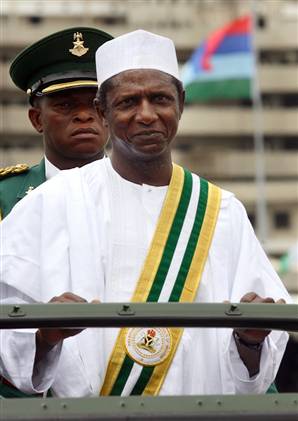
    President Umar Musa Yar'Adua
    President Umar Musa Yar’Adua

    By Yushau A. Shuaib

    The emergence of Umar Musa Yar’Adua as president may not be as clean as majority would have expected, especially going by the outpouring of condemnations of the electoral process from different angles. The interesting development is that the politicking was devoid of sectional sentiments, ethnic chauvinism and religious bigotry. We may recall the way some political stalwarts, who for their selfish agenda had desired to fuel the ember of hatred amongst Nigerians when they deliberately instigated agitations on South-Versus-North for the Presidency. We could remember the our-turn-campaign by geopolitical regions with smart politicians bandying documents for and against purported early agreements over power shift. The Enugu Conference of Southern leaders in 2006, just like the Third Term imbroglio for instance, made right-thinking Nigerians to wonder where the country was heading.

    Many commentators have refrained from tacitly endorsing the last elections that brought to the most exalted office in Nigeria the seeming reluctant President Yar’Adua who was said to have secured an appointment to lecture in a university after his tenure as governor of Katsina State and his quiet deputy Jonathan Goodluck who could have been contented as governor of oil-rich state of Bayelsa. Their endorsements if not carefully crafted may be used against them in future. I find myself in that dilemma recently when a special publication of the TELL magazine devoted to eulogize Obasanjo’s administration took a phrase in one of my articles published in 2002 without reference to the date. Though the TELL publication is said to have been sponsored, the phrase lifted from the said article of 2002 portrayed me as sycophantic. How were TELL readers to know that I had subsequently published other articles with contrary views? My consolation is the realization that highly respected Nigerians, Agbakoba of NBA, Olu Falae, Atiku Abubakar, Dangiwa Umar, Prof. Omoruyi, and Senator Ken Nnamani amongst others were also quoted praising President Obasanjo in glowing terms.

    I won’t join others who claim Chief Obasanjo didn’t achieve ANYTHING in his eight years in office, rather I believe some of his achievements were overwhelmed by his deep involvement in political wrangling and later day unpopular policies. We should give credit to him on the debt relief and huge foreign reserve for instance; likewise we shouldn’t pretend that all is well with the recent increase in the fuel price in the face of high profit in our crude oil sales in the international market; and the increase in VAT rate in spite of huge monthly returns from the service of Inland Revenue Board.

    Therefore, to avoid a situation where one may further be misquoted in future, I write this piece with extreme caution on the new President Yar’Adua. With his emergence as the first elected university graduate to mount the top leadership position in Nigeria, our gain from the first civilian-to-civilian transition has a comma, unless we must all pretend. The legitimacy of the administration is still in contention by oppositions in the court; the likely existence of moles within his party and system to distract his attention; apprehension of ardent supporters and genuine critics over his alleged health problem and the nauseating fear of his ability to address the mammoth problems confronting the nation. The real question now is: Does Musa Yar’Adua deserve the support of Nigerians?
    Stories have been built around him like riddles that he is a Marxist who believes in positive changes without making noises about it: that he doesn’t attract pomp and fanfare not even on his executed gargantuan projects in Katsina state; that he is so humble he chooses to pray amidst the ordinary worshippers instead of taking vantage position in the mosque; that his cheap costume is a reflection of his simplicity; that he crosses the road to even personally buy a pastime stick; that he disallowed the use of electricity generator by his family whenever there was power failure during off-office hours to enable his household share in the pain of other citizens of the state; that he is so incorruptible and confident of himself so much that he willingly declares his assets before its demand; that he doesn’t talk too much but strike appropriately to provide the necessary changes; that even his political opponents don’t mistake his meekness as sign of weakness because he always has his way; that he was so radical and was always in the progressive/opposition group instead of the family’s elitist camps and that he is so healthy to play tasking games of squash and polo at a stretch.

    As striking as some of this information frequently provided by those close to him and the people of his state is, it is obvious that he was indeed a successful governor going by the evidence of physical infrastructures in his state: massive road networks, schools, hospitals, development of the hinterland and scholarships amongst others.

    Some believe without the massive electoral manipulations, which he did not in anyway influence, Yar’Adua MIGHT have made it to the Presidency if he had received the genuine support from his colleague-governors with adequate campaign strategies that would highlight his manifestoes and his antecedents.

    The unfolding development so far, after the swearing-in is the new singsong, to give Yaradua a chance. In fact the public discourse now is on the challenge of new government in providing necessary changes through his professed 7 points-agenda. Most editorials and commentaries are heading on with this line of thinking. We should at this stage remember the past and think about the future. We could easily recall the political intricacies that emanated after the freest and fairest election in Nigeria that brought about Chief MKO Abiola as the president-elect, the annulment that followed, the constitution of the Shonekan Interim Government; the master-coup that ushered in Abacha’s regime and the demise of MKO Abiola and General Yar’Adua in controversial circumstances. That was a gory past we shouldn’t pray for it recurrence.

    General Muhammad Buhari and Alhaji Abubakar Atiku as the major contenders at the last Iwu’s election are personalities that command immense respect amongst Nigerians and have close relationship with Umar Yar’Adua, who is more like their younger brother. The two gentlemen are truly heroes of democracy by their conducts and acts so far. For instance, while Buhari remains an indisputably principled and honoured leader, Atiku was able to correct some of the erroneous impression and allegations against his person. They have, most especially Atiku, provided precedence for the growth and development of the legal profession in the cases they took to the courts and would forever remain reference points in what lawyers call stare decisis, ratio decidendi, obiter dictum and locus clasicus.. The two leaders would therefore not be expected to encourage actions that may have negative consequences on our polity like strikes and violent protests that may question their leadership potentials. They should know how to do that and look forward to legally pursuing their grievances with the best of intentions for our nation, without overheating the system.

    They have the right to protest the outcome of the alleged rigged-elections as they are presently doing in a mature and decent manner through the legal process. The judiciary has not failed Nigerians lately in its landmark verdicts. Having the no-nonsense Justice Kutigi as the Chief Judge of the Federation at least would test the ground to avoid future reoccurrence of bastardization of the electoral processes at all stages while the incoming legislators work out practical and realistic electoral reform. They, like every Nigerian should also think about the best way to move the nation forward, especially towards the sustenance of democracy and ensuring that the nation is not remotely controlled by behind the scene hands.

    As a Muslim, my religion teaches me that we should pursue equity, peace and justice bearing in mind that the holy Quran reminds us (in Q3 V26) that ‘God gives power to whom He wills and takes power from whom He wills.’ Predestination does not prevent us from working to achieve greatness and progress for our society. If I need to add anything – May God give us the courage to tell our leaders the truth without fear of misrepresentation.

    This article by Yushau A. Shuaib was originally published in Daily Trust June 5, New Nigerian June 6, Vanguard June 8-11, The Guardian June 12, Daily Independent June 12 and Punch June 13, 2007

  • Those Tribal Marks on Naira Notes

    Naira Note
    We thank God that there is no agitation for application of federal character principles on pictorials on the Naira Notes and their assignments to particular values of the currency. Probably the alleged marginalized minorities are satisfied with the presence of their statesmen on our highest denomination. The minority tribes and the Igbos have leaders from their areas conspicuously present on our highest legal tenders. The pictures of Dr. Clement Isong of Ibibio and Alhaji Aliyu Mai-Bornu of Kanuri tribes are on the N1000 note while that of Dr Nnamdi Azikiwe of the Igbo ethnic group appears on the N500 note. When you sum up the value of all other currencies, they are less than N500. Chief Obafemi Awolowo is on N100, Sir. Ahmadu Bello on N200, The Symbol of Wazobia is on N50, Gen. Murtala Mohammed on N20, Alvan Ikoku on N10, Tafawa Balewa on N5 and Herbert Macaulay is on N1 (now coin).

    The above may sound logical and instructive, but debating economic issues on the basis of sectional affiliation in a united country is not worth it, especially when it won’t add value to our means of livelihood and promote peaceful coexistence.

    When the new Naira notes and coins were formally launched by the Central Bank of Nigeria (CBN) in February 2007, it received wide excitement. The beauty, durability, compatibility and strong security features make the currencies a pride of our nation. The reintroduction of coins for lower denominations is also a welcome development that would address the problem of divisibility in transactions and make for appropriate legal tenders for the kid’s pocket money and for professional beggars. Manufacturers too may be forced to produce products and goods to encourage the use of the coins unless they want to be economic saboteurs.

    As commendable as the new local currencies are, there is controversy over the removal of Arabic inscription from the notes and replacement with descriptions of the value of each denomination in the major Nigerian languages that are mentioned in Section 55 of the 1999 Constitution i.e. Hausa, Ibo and Yoruba. Other tribes, as popular as some may be, are in the class of the minority and were excluded. Fulani, Ibibio, Ijaw, Nupe and others are in the class of the over 300 ethnic minorities in Nigeria.

    The campaign for the removal of the Arabic inscription on the Naira notes which past administrations had ignored had been going on for a very long time. In fact a popular web portal nigeriaworld.com has a dedicated space on the debate on its site for a very long time which sustained campaign for its removal. Unfortunately many still believe that the inscription is Arabic language while others see it as Islamic symbol. Neither of the two is correct. The inscriptions, though in Arabic letters, were Ajami which is wording in Hausa language. It is the same way one employs English alphabets to write in Igbo, Yoruba and other languages. The Ajami is not Islamic just as there is no feature on our currencies that depict anything religious. We don’t have such message as “in God we Trust” of American dollar or “there is no gods but God” of Saudi Riyal. So why is the brouhaha over the removal of Ajami?

    Surprisingly some of our very enlightened brothers like the respected Northern columnist, Mal. Haruna Mohammed passionately defended the retention of Ajami. Erudite Islamic scholar and Director of Muslim Rights Concern (MURIC), Dr. Ishaq Akintola read religious persecution into the removal of the Ajami. In fact Dr. Akintola, a Yoruba from the Southern Nigeria, is quoted in a statement to have said that “Government has no right to remove Arabic from the nation’s currency.” He added that he was “surprised Obasanjo’s administration can contemplate such a dastardly crime against the Muslims of the country despite all our sacrifice in the interest of peace and unity.”

    The emotion may be justified in the face of reckless accusations and allegations that Hausas and Muslims are foisting their interests on Nigeria. Professor Wole Soyinka, according to Haruna Mohammed is the leader of this group that seems to have shown disdain for anything North or Islam. He quoted some of the remarks of Nobel Literature laureate that: “among its (North) crimes were that the region had imposed Arabic and its coat-of-arms on the country’s currencies.”

    I think the defenders of Hausa and by extension the North and Muslims and by extension Islamic religion should look at how to explore our economic potentials to our advantage. It is regrettable that today the North and Muslims are backward in almost every economic index. Check the list of capitalized banks, private institutions of learning and privatized public institutions and yet there are abundant unexplored economic resources that can be harnessed for our economic prosperity.

    There are things we shouldn’t state in the public arena such as a piece like this but since one cannot reach each and every intended target, there is nothing wrong in baring it all: at least to make the point for redemption.

    It is utterly unfathomable that, Central Bank of Nigeria (CBN) under Soludo attempted to write off the bad debts of the Bank of the North, one of the few oldest, just to make sure it retains its name and heritage. Internal wrangling and politicking of Northerners make the North to lose its identity as it now has other financial institutions, outside its catchment locale merging to make Unity Bank while some banks that were established a few years ago made the list and retained their names. The free monthly allocations that accrue to some of the Northern states from the Federation Account could have been deployed to the neglected agricultural sector and other profitable and potentially productive sectors to diversify their economies. It is pathetic to note that most of the factories in the North that were booming in the past are moribund due to harsh economic conditions that could have been addressed if their governments had intervened, especially in the provision of Independent Power Project.

    If CBN must be castigated it should be on its directive to banks to shed governments’ share holding in excess of 10% as part of the monetary reform. This, I strongly believe, is a wrong agenda that would discourage governments from salvaging their institutions and creating employment for their people. Must we privatize everything to few private individuals whose only credentials are powerful connections and boardroom politics? There is a need for rethinking on directives that prevent government from wise investments.

    Aside from economic empowerment, little interest is shown by wealthy individuals in assisting our people as is the case in the other parts. I was appalled to read the emotional rendition of Prince Bola Ajibola, former attorney general of the federation and a philanthropic Muslim, on an occasion he organized for supports towards his project, Crescent University, the first registered Islamic higher institution in Nigeria, which is situated in Ogun State. Instead of full attendance by highly affluent Muslims in the society, it was witnessed by ordinary Nigerians and even Christians who made generous donations to the project. If we don’t invest wisely in education like our counterparts, how could we have educated and enlightened youths that would receive and propagate the true message and be easily empowered economically and politically?

    We can’t keep on alleging conspiracy theories when we have our people too in powerful positions in government. Or could they be holding sensitive public offices for their personal interests? We don’t need to wait for our turn to make changes for our people. After all, what did our immediate past leaders do to make us truly economically empowered for the future? Next time when we debate, let’s face the reality by discussing how our youths would have access to right education, gain full employment and ways and means of revitalizing our industries and exploring our abundant mineral resources instead of blaming others for the inadequacies of our leaders. I wonder if ordinary Nigerians would mind if they remove all the tribal marks on the Naira notes on the condition that the monetary value would be felt by all the households regardless of status. It may not be strange to read agitation by a group asking that their tribal mark on the Naira note should be on prominent position. I guess where could that be: left or right; up or down?

    This article by Yushau A. shuaib was originally published in Daily Independent April 18, Leadership April 22, Thisday April 23 and The Punch April 30, 2007

  • POPULATION: Lagos Versus Kano

    National Polulation Commission nigeria
    The first meeting of the year of the monthly Federation Account Allocation Committee (FAAC), where disbursements are made to all tiers of government in the federation was held on January 19, 2007 in Abuja. From the figures released, Lagos State received a total sum of N5.1billion while Kano State got N5.0billion. It may be necessary to state that some states like Rivers, Akwa Ibom and Bayelsa even received higher amounts: N11.5billion, N7.6billion and 5.9billion respectively. What may surprise many Nigerians is that Cross River State where there is ongoing gargantuan TINAPA project, which is also within the Niger Delta region received a paltry sum of N2.7 billion. The point I am trying to drive at here is that even though Kano has a higher population (5,810,470) than Lagos (5,725,116) in the existing 1991 Census figure, the latter received more revenue than the former. The indices being used for revenue allocation will be stated in this article.

    The recently released 2006 census figures have elicited controversial comments and debates that are generally based on sentiments and parochial considerations. Instead of providing concrete and statistical evidence, the arguments have been narrowed to Lagos versus Kano, not minding the fact that the exercise is for national planning and development. Most of the arguments, laden with emotional undertones, expectedly could not address the salient points.

    Lagos and Kano are, interestingly, unique states in Nigeria that host more people from different parts of the country than others. The politics of that notorious indigenship does not play prominent role in these two cities as is the case in some states. It is in Lagos state that non-indigenes are appointed to sensitive political offices as the case of the recent appointment of an Igboman as commissioner of economic planning and yet some of them are either exported or on their own return to their original states to contest elections. It may be unfair to mention names of public figures and elected officers who are not from Kano and even foreigners but are recognized and accepted as indigenes of the state. Through the dynamic administration of the humble and godly governor of the state, Ibrahim Shekarau, non-indigenes have been offered political appointments and a good number were recruited into the state civil service. There are large concentrations of non-indigenes in some localities in the state so much so that you wonder if you are not in some of the southern states.

    These two commercial centres do not breed the unfortunate son-of-the soil syndrome, where so-called indigenes carry arms against the so-called settlers, except for the notorious and jobless area boys and vagabonds who unleash their rein of terror against defenceless citizens for ulterior motives just as Niger-Delta militants have turned their reverine areas to Kidnappers’ haven for extortion of foreigners and Nigerians alike.

    Interestingly in the last three years, neither of the two states has witnessed any political upheaval that may have warranted mass exodus of people because of the dynamic leadership of the two peace-loving governors, Ahmed Tinubu and Ibrahim Shekarau. I say this because it was within these periods that campaigns, test-trial and real census exercises were conducted by the National Population Commission.

    Now to the debate: While Lagos before the exercise engaged in extensive media campaigns with intimidating messages as if it would turn to a ghost town, Kano officials were involved in grassroots sensitization campaign to the nook and crannies of the state on the census exercise; while Lagosians are mostly monogamous with single wife and few children, the majority of Kanonians are polygamous with many wives and large number of children; with the modern trend that has seen to late marriages amongst Lagosians and by extension southerners, Kano like other Northern states promotes early marriage amongst the sexes to guard against promiscuity; because of its small landmass and higher costs of living, Lagos is invaded by influx of workers everyday who reside in towns from neighboring states (like Iju Ajuwon, Alagbado, Alakuko, Sango Ota, Ibadan etc), workers in Kano reside within its vast landmass and due to affordable costs of accommodations; while some districts in Lagos are strictly commercial and industrial with restrictions on residential (e.g parts of Apapa, Ikeja and Victoria Island that are usually deserted on weekend), such districts in Kano have permissible and safe residential outlets; while between the last figure of 1991 Lagos has ceded its former status as the nation’s capital which depleted its workforce and consequently improved the population of residents of Abuja from 371,674 in 1991 to 1,405,201 in 2006, Kano has remained intact and no state was created out of it since the 1991 Census; while it is glaring that the population density in Lagos is due to its limited land space, the density in Kano may not be prominent because of its spacious savannah comparable to a density of the same number of people in a small hall and a big stadium.

    Decoding the above facts is a clear response to the seeming antagonistic reactions on the census figures as regards Kano’s population vis-a-vis that of Lagos State. Another incomprehensive argument parroted is the use of the word “ARID” to refer to the North when it is a common knowledge that the region is blessed with fertile land and abundant resources. There is also a reference made to the creation of Jigawa from Kano State as if Jigawa was not in existence before the 1991 Census. Jigawa’s population in the 1991 Census was 2,875,525 people.

    While some states in the Southern part of the country also cried foul over the result of the exercise, it is essential to note that censuses the world over, are the results of the number of people counted or who allow themselves to be counted and not necessarily the number of people existing. Many communities refused or protested against being counted due to their convictions. The Movement for the Actualization of the Sovereign State of Biafra (MASSOB), Movement for the Emancipation of Niger Delta (MEND) and some clerics advised their people against submitting themselves to the enumerators due to perceived and alleged marginalization. There were cases of kidnaps and attacks against some of the census officials during the exercise mostly in the South-East and the South-South areas.

    Knowing the antecedents of similar exercises in the past, in its determination to avoid struggle for supremacy by the use of the census figure, the National Population Commission had excluded religion and ethnicity from the census questionnaire because sectional groups might have used them to declare their numerical superiority and argue for more revenue from the federation account and political representation. Unfortunately many do not realize that the basis for higher allocation from the federation account is not only about population which is insignificant when compared to other indices used to compute the disbursement like derivation principle. Other factors apart from equality, landmass and population density include the efforts of states in boosting their internally generated revenue (IGR), hospital beds and school enrolments. In the proposed revenue allocation formula it includes road networks, inland waterways, amongst others.

    By the way, assuming most of the critics were from the other side of the country, could they have discredited the exercise? We cannot, as individuals, be wiser than our elected representatives, credible groups and experts that have so far endorsed the 2006 Census figures. The exercise which was conducted with the deployment and application of latest technologies under the supervision of foreign observers and donor agencies has received the blessing of the Federal Executive Council, National Council of States and lately it was officially received by the National Assembly.

    My argument in this piece, however, is not to justify the desirability or otherwise of astronomical rise in the nation’s population against the slow pace of economic development. It is to disabuse the mind of commentators who take delight in discrediting the figure on the basis of their sectional alliance. I believe instead of states relying on manipulation of indices to attract more revenue from the centre, they should use their human resources in internal revenue generation through diversification of their economy to massive investments in productive and agricultural sectors. A population is worthless if it does not contribute to economic growth and standard of living as it may breed a populace that is risk to the society.

    Since population is considered for planning and the possibility of its usage for an increase in revenue allocation, we should concentrate our debate and comments on the need for states to stop discriminations against the so-called non-indigenes/settlers in scholarship, recruitment, service delivery and aspiration for top public offices. From whatever backgrounds, Nigerians should have the freedom and pride to call their places of abode other than their states of origin true HOMES. That is what happens in developed countries where our citizens even changed their nationality to receive equal rights in their adopted countries. Let us promote that principle in our argument and face the reality instead debating on sectional lines.

    This article by Yushau A. Shuaib was originally published in Economic Confidential February, Leadership February 1, Businessday February 2, Weekly Trust February 3, The Guardian February 4, Sunday Tribune February 4, Sunday Trust February 4, New Nigerian February 5, Daily Champion February 6, Daily Independent February 7, Thisday February 18, 2007

  • Killing in the Name of the Devil

    Killing in the Name of the Devil- By Yushau A. Shuaib
    The victims are clearly innocent. Trembling all over, wonder what they could have done wrong after living peacefully with their hosts for years… With fear written on their faces, tears forming in their eyeballs and trickling down their cheeks, they look in horror at their tormentors who are menacingly wielding dangerous weapons. Before they could say their last prayer for God’s mercy, the heartless vagabonds mercilessly descend on them with clubs, sticks, machetes and guns. They are killed like snakes, rats or thieves and their places of worship and abode are not spared from flame.

    The marauders have once again rained an orgy of violence, not in the name of the Almighty God or any just cause, but in the name of the devil, probably influence by undesirable godfathers, selfish elites, drug addiction, illiteracy and endemic poverty. The devil has registered itself as a major contender for the nation’s future by the dastardly acts in Maiduguri and Onitsha cities in Northern and Southern Nigeria.

    The erroneous impression that the genesis of the crises was as a result of protests over provocative Danish cartoons on Prophet Muhammad (PBUH) couldn’t be tenable because, respected Muslim and Christian clerics had condemned the controversial pictures. In fact renown pastors had described the cartoons as blasphemous while professed sharia states in Nigeria, especially Kano, had previously staged peaceful demonstration with official sanction on Danish goods and services before the latest development.

    Any religious person must be very pained by those associating religion of peace with killers of Maiduguri and other places. As a proud Muslim, I can affirm that my holy Quran does not promote this senseless and un-Islamic attitude. In fact Nigerians, wherever they are must also feel terribly disappointed at the reprisal killings of fellow citizens in Onitsha. Having lived amongst the Igbos at Asaba, an axis to the commercial city during my service year, I can attest to their hospitality and friendliness. Nobody should therefore allow parochial attachment to becloud their sense of reasoning to associate those ferocious acts with any religion or ethnicity.

    The Devil needs another name but not religion or tribe to hoodwink the world. It is unfathomable that the resultant deaths from few days of altercation in Nigeria are counted in three digits, while casualties put together in other parts of Arab, Asia and even European countries, over the cartoons, recorded fewer deaths. That is strangely abominable.

    Unlike past retaliatory attacks, which used to draw somewhat proportionate casualties, the current attacks in Onitsha were far more in number than those which attracted the reprisals. This unfortunately has clear coded signal that nobody, be it individual or group has the exclusive monopoly of violence to be unleashed on innocent souls whenever they are bloodthirsty in their attempt to loot.

    If it is not the work of the Devil, how come the incidents coincided with the week of intense debate on Third Term imbroglio and the Public Hearing on the Review of the 1999 Constitution? Why should it happen in the very week the police were rumoured to embark on strike and at the time hostage-takers kidnapped nine expatriates in the Niger-Delta?

    The innocent victims of recent massacres, unlike the VIPs of our nation who prefer to live in highly secure and protected cities of Lagos and Abuja or abroad, are patriotic Nigerians who left their places of origin to live in other towns, far away from home, to further strengthen the bond of our mutual coexistence. Most of them, as poor as they might be, have dwelled in their host communities for ages, promoted intermarriage and established their presence as law-abiding residents.

    The marauders too, are unfortunately victims of morally corrupt environment that is occasionally remote-controlled from dubious and suspicious quarters. They are the victims of poor family background who could not provide them with basic education; they are victims of broken homes, whose parents could not bring them up properly; they are victims of fake preachers of dooms, who quote outside the scriptures; they are victims of drug addiction, that influence their level of insanity; they are the victims of sectional leaders who manipulate them to settle scores with opposition and above all they are the victims of a system that could not rehabilitate them adequately as they remain tools of political godfathers who deploy them to wreck havoc during electioneering. They have become monstrous and useless vagabonds that are better consigned to life in jail than allowed in a decent society.

    Surprisingly most of the suspects and the victims are neither the children of the rich and mighty nor relations of highly respected citizens and custodians of our culture because the selfish elitist groups know how to protect their wards. That is if they live within the vicinity.

    Probably out of fear and to sustain loyalty of followers, some leaders adopt subtle and cheap language to comment on the mayhem instead of condemning it in the strongest possible terms. The holy scriptures have several verses that denounce those horrendous anomalies. Even our cherished cultures are rich in expressions that could be deployed at this moment of tribulation and vengeance. The constitution gives every citizen the right to live in any part of the country, as they desire. We should be able to distinguish those who love our nation and can protect its oneness from those that have hidden agenda and surreptitiously clamour for its disintegration.

    We must all rise with one voice to protect our nation from the antics of the devil who always desperately looks for the cover of creeds and other cleavages to wreck havoc. Let every right-thinking person condemn the senseless killing in the North and the reprisal attack in the South. Until when we have the guts to voice out publicly against those devils and the system to have the courage to quickly mete out hardest punishment on the perpetrators, our nation may not be safe from incessant reckless violence from vagabonds and looters.

    Muslims and Christians must know that the religions preach mutual coexistence and brotherhood. We need to understand the true teaching of our faiths and that of others to appreciate the true words of God on unity and tolerance, not only to guide us spiritually and morally but as weapon for the day we may likely run into ambush of rioters where we could convincingly disguise to escape an untimely death.

    The Punch March 1, Leadership March 1, Daily Sun March 3, Vanguard March 6, Financial Standard March 13, Daily Trust March 14, Daily Champion March 14, 2006

    Please read the rejoinders by clicking RE: KILLINGS IN THE NAME OF DEVIL

  • Reforming the Nigeria’s Public Service

    Reforming the Nigeria’s Public Service – By Yushau A. Shuaib

    “The service was often perceived as corrupt, outdated in technology, lacking in creativity, slow in responding to issues and structurally weak…”
    – Alhaji Mahmud Yayale Ahmad, Head of Service.

    The observation above coming from a defender of Nigeria’s civil service and the current Head of Civil Service of the Federation, as reported in the front page of the Guardian of Thursday December 23, 2004. His observation is the home truth, which reinforces the need for urgent reform of the public service.

    In the past, the civil service was the darling of applicants who saw it as a place to make contributions towards good governance and economic growth of the nation. Many joined the service because of job security, efficient career progression and self-contentment from realistic wage. It still remains the pillar towards sharpening the direction of national goals and aspiration.

    Lately the system has been bastardized with the incessant victimisations of victimization and their sudden retrenchment for no just cause by the powers-that-be. As it is the public service is vulnerable to political interference and very weak to give genuine advice and sincere recommendation on policy issues.

    When examined closely, the various socio-economic reforms introduced by the present government are intended to change the way the civil service has operated and inimical to economic rejuvenation, efficient service delivery and professionalism. The ongoing reforms, if successful executed, will reduce the level of corruption and promote transparency and accountability in public and private sectors of the nation’s economy.

    President Olusegun Obaanjo has inaugurated a team, which is a mixture of respected technocrats with different ideologies to serve in the engine room for the reform. Alhaji Mahmood Yayale Ahmad, a fine core civil servant believes in the old conservative and unpolluted public service; Mallam Nasir Elrufai, is a dogged advocate of efficient service delivery that is profitable in all sense and Chief Effort Ekaette, a midpoint between the two extreme who had tasted the 3Ps at top level i.e. public, private and political life.

    It is always difficult to appreciate aggressive and revolutionary changes for better society without facing stiff challenges and condemnations. Therefore misconception and misgiving on some aspects of the reform programmes are not unexpected. Most painful is that the civil servants as members of the conservative institution of government hardly express themselves publicly due to fear of official sanctions and reprimand. It is probably due to the timid nature in the service that President Obasanjo initiated and participated in an interactive forum with selected representatives of the civil service, mostly top management staffs, to express their views freely and to voice out on likely pitfalls in executing the policy.

    The public service is driven by the public officers who are either elected or appointed and is managed by the civil servants who are employed through rigorous exercise. While the Public/political officers have authority to give final approval on policies and programmes, civil servants execute the directives.

    I believe reforming the public service requires the reengineering of all aspects of the civil service: from recruitments to termination of appointment; from salary to promotion; from contractor to political interference, and from training to other motivational packages. As timely and desirable the reform is, it needs to be guided by procedure that will make it effective. It is either it is undertaken head on with full force or implemented in gradual steps because of the level of decay in the system.

    Many wonder if the legitimate earning of an average civil servant is adequate for sustenance so as to disabuse his/her mind from temptations of corrupt practices. Some may wonder whether the salary of a public servant, from the junior cadre to top management can sustain their basic needs in term of feeding, accommodation, transportation, medication and schooling of the wards. The monetization policy introduced by the government for civil servants, like that of Public officers, should be based on economic reality so that the remuneration is commensurate with their works and position as to minimize, if not to totally eradicate, the level of corruption in the polity.

    Rightsizing as against downsizing in the service is a welcome development if the unutilized servants are retrained and reassigned to suitable roles where their qualifications and experiences can be used for productivity. It is non-deniable the fact that the service is over-bloated with redundant and idle staff collecting salary monthly apart from tales of remuneration for ghost workers. Since the government is emphasizing on the need for partnership with the private sector, new and privatized companies can be encouraged to absorb staff disengaged from the service to discourage them into engaging in acts and actions detrimental to national security and economic advancement. As developed countries employ Information Technology to drive their economy, a worst scenario may evolve in Nigeria if the government embraces full computerization policy that will invariably allow computers, which are cheaper to acquire and maintain, to take over the job of human workforce without making provision for those to be eased out.

    With the reform geared towards creativity and efficiency, recruitment and promotion exercises should not be based on parochial considerations but purely on performance and merit after due consideration of qualifications and experiences of the officers. Sometimes lack of qualified and experienced civil servants encourage some personal aides to chief executives, especially Ministers, to take over the jobs of core civil servants who are considered ill equipped and inexperienced to discharge sensitive and technical matters. While it is unfair the rate at which retinue of aides easily take over the jobs of some directors and departmental heads, the civil servants should be encouraged and motivated to perform to desired expectations.

    Unlike in the private sector where merit is the keyword for promotion, in the public service, it takes some hardworking staff many years to be considered. It seems without the death or termination of appointment of workers, vacancies for elevation may be elusive because the senior and aging civil servants consistently update their ages backwards to remain in the service by refreshing their birth documents and dyeing their hair. The attitudes of those true “Senior Servants” delay others’ promotions and deny fresh recruitments. Even if vacancies for promotion are declared, it appears the essential requirement is long-years-in-service as against exceptional performance and outstanding achievements. It is therefore not surprising to see brainy applicants cutting corner by getting rapid promotions from some agencies or other tiers of government and afterward seek transfer to the federal service on higher levels.

    While it appears easier for one to move into the public service with ease from the private sector, the civil servants are not allowed to enjoy such progressions which may help them gain further experience outside the service. If only the civil servants can be allowed on secondment and transfer of service to the private sector, on return such officers would inject new positive skills acquired into their jobs.

    Every senior civil servant is proud to reiterate the rules and ethics of the service and can easily quote the sections that dwell on every corrupt and unethical tendency, but experience has shown that the byelaw is tactfully manipulated for selfish interest and for vindictiveness. Since the rule forbids staff from private practices, it is baffling the allegations that some civil servants amassed huge wealth, own properties, send their children to foreign schools and live highly ostentatious life. How possible could that be, if the rules and regulations are pragmatic and realistic?

    It seems only medical workers and academics are allowed to undertake private practices and consultancy services respectively, while the core civil servants are disallowed. If the salary and allowances cannot be enough to sustain them, the government may allow those in the service to undertake other professional practices that could not undermine their official integrity after office hours. They may also be permitted to trade and even drive personal vehicles for commercial purposes to boost their legitimate earning.

    It is unfortunate that while the government encourages training and retraining for further empowerment and skills acquisition, some civil servants see the gesture as opportunities to make extra money. Apart from making management development and capacity building mandatory, the government should sponsor staffs to acquire professional membership of relevant bodies for the purpose of updating themselves on the latest trends in their field.

    The major beneficiaries of the civil service in monetary terms are the contractors and consultants. The Financial Regulations permit contractors and consultants to serve as the major executors of government jobs, even when some of such services can be handled successfully by highly experienced and qualified staff who are abundant in the service. One wonders what disqualified a supply or store officer from purchasing items directly from producers and manufacturers. What prevent a clinical pharmacist from procurement of drugs from wholesalers? What stop PR Officer from organizing International Press Conference and producing informative publications? What denies Maintenance officer from fixing equipment and working on capital projects? What prohibits a legal officer from defending a case in the competent courts? If competent professionals are available in the service to handle programme and projects at relatively cheaper cost than inflated quotations from contractors, they need to be encouraged to boost their morale and save the nation from profligate spending.

    Probably due to the fact that the civil servants know the true value of inflated quotations, with or without Due Process, they are compelled to demand for unwholesome gratifications from contractors who are mostly without fixed business addresses. Though there is no moral justification for bribery in whatever guise, it may be necessary for the service to recognize genuine manufacturers, producers and their representatives for award of contracts, than the use of middlemen in the name of contractors to undertake such assignments at outrageous cost. That will also curb the attempts by civil servants to award contracts secretly to themselves and their cronies.

    It is extremely difficult to deny the existence of corruption in the service or to exonerate oneself from the endemic syndrome; every Nigerian must support the reform in the public service to reclaim its lost glory and for sanity in our nation. There is nothing that encourages hard work, commitment and patriotism than enabling environment and realistic wage that make one gratefully indebted to the nation. Anything less is balderdash.

    This article by Yushau A. Shuaib was originally published in Daily Champion Jan.4, Leadership Jan. 30, New Nigerian Feb. 5, Nigerian Tribune Feb.11, The Punch Feb 17, Thisday Feb21, Daily Trust March 1, *African Renaissance March-April 2005

  • Legislative Slaps and gender equality

    Nigerian Legislators in scuffle
    Nothing in recent time demonstrates devastating gender equality in Nigeria than the cross-gender legislative slaps from National Assembly. Almost all the local and foreign media sources made breaking news of the blow and counter blow from those elected to represent Nigerians in lawmaking. The subsequent news items and global commentaries on the incidents, have boost the image of our political class and give them deserved rating.

    It is no more news that a slapping session, pioneered by a distinguished single-blow from Senator Isa Mohammed on his Committee Chairman on State and Local Government, Senator (Mrs.) Iyabo Anisolowo is now going round in the National Assembly.

    As usual, the offender cited the devil as the influence for his objectionable act, but female activists and chauvinist went to town calling for Senator Mohammed’s head. Not only that, in an incredible and unprecedented feminine solidarity, an unseen hands of women folk, the political leadership and government of the state of the slapping senator condemned the act immediately and threatened to recall the man as if he had committed a treasonable offence.

    To those who have been following feminine conspiracy theories and antics since the end of Beijing Women Conference of 1995, the period for tit-for-tat was sooner. While the tempo of denunciation against the male senator was gathering momentum, a woman representative in the House of Representatives, Honorable (Mrs.) Iquo Minima Inyang proved to the whole world that women are no more the biblical weaker sex as she rained the fastest and electrifying legislative slaps (with plural S) on her Chairman of the committee on police affairs, Mr. Emmanuel Bwacha. It was easy for her too, to declare that the devil had once again sneaked through the back door of the National Assembly to inspire her honorable mannish smack. The innocent and seeming weakling male member not only lost his eye-glasses with blood gushing out from his nostril, he had bloody eyes too.

    Those childish and dramatic scenes happen regularly among elected public officers especially in the legislative arm at the federal, state and grassroots’ levels. We could recall the disappearance of mace, abduction of members, scuffle over monies and non-challant attitude to people oriented programmes and public yearnings. Having proved themselves as subservient to the other arms, through their actions and deeds, most of legislative houses have remained the avenue for comic relief through their debate and resolutions.

    Apart from the fact that the recent altercations among members of political class, are rooted on purely pecuniary and selfish interest as in the past, the latest slapping saga has proved that women are indeed catching on fast in their drive to outshine their men. It is now clear that what a man can do, including legislative slaps, a woman can do worse.

    For those who have sympathy and are in solidarity with women in their campaign for gender equality, they need to do a rethink and reflect on our cherished culture and tradition which give women prominent roles in the sustenance of the home and children upbringing. Feminine activists have consistently and effectively campaigned against male dominated world with bias and slogans that portray the men as animal and devil reincarnate. They voice out against women battering by men as if the likes of Hon. Inyang do not exist in matrimonial homes; they talk of sexual harassments while they entice their gullible male victims with indecent dresses and pretentious invitations; they expand the scope of rape offence to include a desperate husband’s love advance to his wife; they chatter over marginalization when in true sense they do not love themselves, just imagine in-fighting between two women ministers in a Women Affairs Ministry. They babble on women empowerment, when they can not resolve the age-long and inherent detestation between mothers-in-law with daughters-in-law. They desire equal employment opportunity when they are in the habit of absconding from office with full pay in the name of maternity leaves, while the men are denied paternity break.

    Though men by virtue of their superior spirit, as ordained by God, may not admit of being victims of their women’s arrogance, domestic violence and humiliation, it is time the women folk are tamed to respect our culture and tradition on gender issues. Some enslaved men who were forced to buy fashionable items and jewelries for their spouses, regretted to see that such regalia are not used to make them attractive at home but for outbound rendezvous.

    Experiences have shown that when a woman is given a minimum freedom, she unlike Oliver Twist, forces her way to excesses. If they receive support and encouragement to brighten the future of the family, they pay back in off-putting ways, apart from attempting to takeover men’s ordained roles. The more powerful, rich and influential the woman becomes, the more she seeks disengagement and complete detachment from her partner. A former deputy speaker in one of the states in the last dispensation not only abandoned her matrimonial home but also got impregnated by a yet to-be-identified person.

    Some pertinent questions must be asked here: how many women in powerful political positions still give their husbands that traditional and religious respect? how many women in the forefront of women’s liberation campaign obediently obey the dictates of their husbands as ordained in our Holy Books? How many men are forced to the world beyond by their wives cantankerousness and betrayal? How many men enjoy peace under bossy women? What have they done with all the free funds for their feminine NGOs apart from using it to bash and castigate the men endlessly instead channeling them to just cause?

    It is necessary to make a call that in the next Sovereign or National Conference, we should make sure an agenda on gender equality is tabled to iron out the level of equality between men and women on the basis of religious injunctions and our cultural heritage. There is indeed the need for a national dialogue on coexistence between men and women to minimize excessive slaps and over-blows as retaliation for a single, innocuous strike on the face. We may allow them to be involved in formerly men dominated games like football, boxing etc for our amusement, they may even be tolerated to head religious grouping just as some have emerged as Bishops, but we should not tolerate disrespect, disobedience from women folks. Even for those still crazy of being seen and called single mothers just in a bid not to be under masculine control, we may force them to adopt babies as we should deny them the use of our God-gifted fruit.

    If the men want to retain their ordained title as breadwinners of the family, it is time to check women incursion into men’s core duties. A man, who allows his wife to participate fully in politics to be slapping and to receive slaps, should look forward to receiving legislative slaps in the presence of family members and friends from his (un)provoked wife.

    God save us from generational slaps of women.

    This article by Yushau A. Shuaib was originally published in Daily Sun Nov 4, Nigerian Tribune Nov 5, Daily Independent Nov11, Financial Standard Nov22, DI Opinion Nov 16, 2004

  • Between Foreign And Nigerian Legislators

    National Assembly, Abuja
    Nascent Democracy . . . Nascent Democracy . . . It seems the word NASCENT is used by political leaders to excuse their failure in governance; to excuse their nonchalant attitude to the yearnings of the citizenry and as an excuse for their naked brigandage and abuse of the rule of law. The regular frivolities exhibited, most especially by our lawmakers, have done enough violence to our hard earned democracy.

    The above was the impression of a friend about our legislators. I told him I hold our lawmakers in high esteem and could commit local hara-kiri or suicide bombing to protect their name, because the Constitution of Federal Republic of Nigeria explicitly vests enormous power on them to make law for the peace, order and good governance. As a patriotic Nigerian I respect them even if they lead us astray since we elected them to represent us.

    But for my friend, that the legislators, at Federal and State levels have not lived to expectation is to repeat the obvious. He couldn’t see what they have done with their constitutional power to the benefit of the citizenry. He told me that recently a respected columnist stated that he would never glorify criminals on his page alluding to the repeated embarrassing activities going on in the legislative chambers. He noted that while more than 600 Nigerians, human beings in flesh and blood, were mercilessly massacred in Shemdam, a village in Yelwa Local Government Area of Plateau State in an expected security-protected zone, the Senate of Federal Republic of Nigeria was busy plotting and counter plotting impeachment against its leadership for selfish and petty reasons as one of the plotters later confessed to bewildered Nigerians. Even though most Americans including the legislators approved the spending of billions for the execution of the Iraqi Project, he noted that they still have the sense of dignity to condemn their executive arm for betrayal over the atrocities perpetrated by their forces in Iraq.

    At this point I felt like punching my friend, but I allowed him to continue so that I could fully understand where he was driving at. He looked at me and continued his diatribe with the passion of a yuppy preacher. “At the time the American Senate was drilling the Secretary of Defence Donald Rumsfeld over the abuse of Iraq Prisoners, with all candor and sense of responsibility to protect their country’s battered image, members of Nigerian House of Representatives were also busy to reenact or surpass what their senior had curiously nibbed in the bud.”

    He added that the behavior and character of some of our elected representatives could pass for such high level melodrama that could put our local clowns and comedians out of the humour industry. “That show, at the Senate and the attempted repeat of it by the House, if displayed by kindergarten pupils would have attracted some lashes of big koboko on their bare buttocks to serve as deterrent.”

    I was surprised at his effusions as he talked so disdainfully about our lawmakers. I told him he was going too far. He looked at me for a while and continued by stating that at the time the British Parliament was challenging their Prime Minister on how to better the lot of their people through flexible taxes, interest rate and pension schemes, our legislators at all tiers are working out a sharing formula to share amongst themselves part of our statutory funds, as their budget, for frivolous foreign trips, ridiculous allowances and welfare packages.

    I interjected by informing him that Nigeria is a black African country, so he should restrict himself to African or local context in the discourse and face the reality on the ground.

    How many legislators from other West African countries travel abroad frequently for medical checkups as their counterparts do in Nigeria even when we have better medical facilities in our country? He asked as he ignored me. He continued by saying that the issue of check and balance is thrown into the dustbin due to the greediness on the part of the legislators. They are not contented with their official jumbo pay packages but seek for personal favours and palm-greasing from their victims that include the executive arms at the respective tiers. “Why do you think the leadership at the executive arms were able to easily and successfully pocket most of the legislators and even dictate who should lead the house and who should be suspended?” he queried.

    Instead of answering his question, I asked him in turn to be specific by naming the problems the legislators could not address. His reply was straight as he pointed out that the unemployment is at an alarming rate, with graduates taking to robbery, young girls into prostitution, the elders into ethnic and religious crises and the polity bedeviled by endemic corruption. Little is being done by the legislative houses to tame the social and political malaise. He even predicted that they may not care about the rampant vices, as they may soon pass a resolution for the supply of bulletproof vests and armored cars to be attached to them and their families.

    As interesting as some of the disclosures were, I was not impressed. I could not associate the image of our flamboyant representatives that I watch in TV with the contemptible things he said. I nevertheless allowed him to continue.

    He put his jaw on his palms dejectedly and said that it is only in our legislative houses that lawbreaking is clearly covered-up while lesser criminals are investigated, prosecuted and jailed. The legislators have always shielded their own in the name of caucus resolution, executive intervention and party endorsement. It was not surprising that they denied the Independent Corrupt Practices Commission (ICPC) the needed power, which renders it a toothless bulldog that barks but not bite. “Anything goes in Nigeria, once one belongs to the big league,” he spat out.

    This my anti-legislator-friend baffled me so much so that I asked him whether the legislators do not perform any of their statutory responsibilities. He replied that few Nigerians could recall the last time the legislators really fought for their interests. The news from the legislative houses are glaringly anti-populace, self-serving, and above all self-centred, he added. He mentioned that because of their greed for power amongst themselves, they often engage in physical combat to the stupor on the floor. Regularly they create unnecessary tension with threats of impeachment for monetary inducements. He said most Nigerians have come to identify the legislators as professional schemers for additional budgetary provisions to service their welfare.

    Does it mean there is no distinction amongst the legislators in regards to their conduct? He laughed at me for my question as if I talked childishly. He said that nothing was more worrisome than the activities of senators from the South-Eastern Nigeria, who spearheaded the recent threat for the removal of their own as Third man in the country, adding that it was laughable that one of them, who claimed to be the most senior senator publicly disclosed that the aborted impeachment was his attempt to play political chess game to see how gullible his colleagues were and how cheaply they could fall into his usual traps of deceits, deception and for fun. For the other regions, he said some Northern legislators passed the Sharia law to convict the poor and hapless people, but not the rich and the powerful. The South-South legislators were freely enjoying the derivation funds for holidays abroad and sponsoring their wards to foreign schools. While the Afenifere areas are busy with petitions and debating the infighting of their governors or with their deputies and at the same time recognizing miscreants as their states’ law enforcers.

    With all the wild accusations and allegations I asked him what he wanted the legislators to do.

    “If the Nigerian legislators have ever gauged public opinion and rating of their representation, many of them could have resigned voluntarily from positions, except of course, that they have no honour,” he declared, concluding that “they have woefully failed to perform their oversight functions as the watchdog of the nation’s treasury as they pursue contracts for selfishness; they have portrayed Nigerians in bad light . . . they portrayed themselves as bunch of cro. . . .

    “My friend, you better stop this!” I shouted angrily at him. “I don’t want any more of your baseless and unpatriotic allegations about our elected representative!”
    I ended the debate but wondered whether he was wrong. We were neither at the beer parlour nor pepper-soup joint where it could have been reasonable to question his sense of judgement. I take consolation in the fact that everybody has the right to personal opinion. I wish to remain a patriotic Nigerian who sees the good and the bad but remains steadfast by keeping silent on unpleasant situations. But am I fair to my self and the country as I join the bandwagon of onlookers?

    This article by Yushau A. Shuaib was originally published in Daily Trust, May17, New Nigeria May17, Nigerian Tribune May17 and Punch May18, 2004.

  • PR Analysis of Fani-Kayode’s Rejoinder on Dangiwa Umar

    PR Analysis of Fani-Kayode’s Rejoinder on Dangiwa Umar

    “As long as I remain in this government, I will reply him fire for fire” -Femi Fani-Kayode

    Fani Kayode and Obasanjo
    Fani Kayode and Obasanjo

    Fire for fire has no place in public relations practice just as fire brigade approach to public issues. This piece is not intended in whatever way to join the debate in the media war between Colonel Abubakar Dangiwa Umar, a retired military officer and Lawyer Femi Kayode, Special Assistant to President Olusegun Obasanjo on Public Affairs. It is a PR analysis of the contribution of an officer responsible for public affairs as epitomized in public relations practice.

    Though in the Code of Ethics of Nigerian Institute of Public Relations (NIPR), it is recognized that each person has the right to reach his own judgement and in doing that he should respect the right of parties in a dispute to explain their respective points of view. Col. Umar received tremendous spotlights in the media by virtue of his past activities as a military governor and activist while Fani Kayode came to limelight by his past critical views and for being a son of prominent politician in the First Republic. Let me admit from the outset that President Olusegun Obasanjo is a man who appreciates constructive criticism laced with fact and data and cannot be easily cowed by harassment and intimidation.

    Therefore the immediate response of his aide on public affairs, which generated a lot of furore, need to be critically examined from the professional angle. Public affairs as a unique aspect of public relations, is employed to establish goodwill and maintain mutual and beneficial relationship between an individual or an entity with its entire publics. The publics are therefore in the best position to assess and judge the impact of a message from the messenger whether it receives goodwill or ill feeling.

    Since Col. Umar is a retired military man who may not be trained or assigned the responsibility for image laundering, I am constrained to comment on his Open Letter. But since Barrister Fani-Kayode is presently an image-maker of the government, this review is to examine his rejoinder whether it meets ethical and professional standard. It would not delve on the private and personal life of the SA, especially on the alleged escapades with a lady who threatened the life of Thisday Editor, Mr. Segun Adeniyi. In the lengthy article by the Special Assistant to President on Public Affairs, one may observe the use and misuse of high-sounding derogatory remarks such as ‘pathological liar, treachery, ingratitude, destructive fake, suffer form of delusions of grandeur and misguided sense of self-importance. These are not appropriate words to clear policy issues as they are against the Code of Ethics of International Public Relations Association (IPRA), which says a PR person ‘shall not employ method tending to be derogatory of others.’ It is only in propaganda, an instrument of defending the indefensible that one can exercise the right to distract and intimidate others to total submission.

    The rejoinder also tends to join others with the petitioner in total condemnation, though without mentioning names. Mr. Fani Kayode referred to a former military leader, whom many thought is in the good book of the President in unfavorable terms. He mentioned that Col Umar “continues to manifest an inexplicably high degree of love and intimacy for the man that annulled June 12 and brought democracy to a halt, adding that it is the kind of affection that only a dutiful wife should have for her husband. He goes on to point out that, that is the obvious moral degeneration that Umar has now been afflicted with.” Those phrases to rational public may indicate that the retired military officer is either not married or involved in stunning and satanic intimacy with a man. Though such impression is disgusting, morally and spiritually objectionable.

    The Public Relations Society of America (PRSA) warns an officer from using any manipulative methods or techniques designed to create subconscious motivations which the individual cannot control of his own free will. The media attack could not spare the suspected mentor and the petitioner over public misconduct, where the Public Affairs manager queried a donation of $5million USD by the said military leader to Col Umar to start his ostrich farm as whether the amount is not from those looted from Nigerian treasuries. He pointed out that Col. Umar could be counted as one of the principal beneficiaries of the rampant corruption that took place between 1985 and 1993.

    Professionally, it is unfair and unjust to join a person and group in official rebuttal when they are not involved in the petition. Other disclosures, which are irrelevant to national discourse, were dropped in espionage bombshells. In fact from the revelation in the article, Gen. Abacha received good mention when the writer states that ” despite his (Umar) nuisance, Abacha did not lock up Abubakar Umar or, at worst, have him eliminated.” One start to wonder whether Abacha is not glowingly portrayed as a responsible and compassionate leader who rather than react negatively to perceived enemies he remained focused to avoid distraction.

    The publicist seems to foreclose some personalities that may not be relevant even in 2007 when he said that “he (Umar) and the small group that he holds brief for, will never smell power in Nigeria again” It is not difficult to suggest those categories of personalities from the proceeding outburst. But surprisingly towards the end of the write-up, the writer was more professional as he states the obvious, that “as regards the specific issues raised by Umar in his open letter, we shall, at appropriate time, answer them point by point with facts and figures and not with sentiment and emotion.” It is expected that the rejoinder should have addressed the specifics instead of being temperamental. Since public relations is about goodwill and friendly humour, the rejoinder has a plus where it narrated the past existing rapport between the President and Col Umar with the latter taking the former to even peppersoup party at Chief Audu Ogbe’s house in a cordial affinity. Such humours are useful if only to retain friendship and brotherhood. As there were recapitulations on inexplicable love to somebody so also is on the allegation of Umar looking for contracts and for appointment as chairman of a government agency.

    The most unfathomable is the way the lawyer rained a big curse from the Book of Proverbs where he said “‘He who repays good with evil shall never leave his household’ And so it shall be for this ungrateful, bitter and vengeful soul who goes by the name of Abubakar Umar” The Special Assistant should have been advised to update himself and broaden his scope of knowledge on the rudiments of public affairs’ practice. It may not be too late to learn the code of conduct and professional ethics of public relations even though he declared that “I am not the least bit concerned by what Umar or anyone else says or writes about me as long as I am doing my job . . . it is certainly not for Umar or anyone else to tell me how to do it.” Even as a lawyer, there are sanctions for flouting strict rules of professional bodies and regulatory authority. A successful publicist is not judged by power of oratory, expensive regalia and appearance with bodyguards, but by his ability to analyze critically with inquiring mind and sound editorial judgement. Amiability, humility and openness to criticisms, are not weakness but attributes of a good listener with a mission. The impression that Umar may not appreciate the biblical concepts because he is a Muslim is like playing religious sentiments. You don’t need to be a follower of particular religion before you appreciate their faith. Other Muslims who overwhelmingly support the President may feel unease with that intuition from the spokesperson. As a believer, Mr. Kayode should not have restricted his argument with quotations from the Bible but with the Koran too since his rival, a Muslim substantiated his argument from the two holy books. Balance and objectivity are desirable in healthy debate. It is regrettable that the style and approach adopted by Mr. Kayode are unprofessional, diversionary and so cheap that may impact negatively on the image of other public affairs officers and the profession.

    Professional values according to PRSA provide foundation for Members’ Code of the Ethics and set the industry standard for the professional practice. These values are fundamental beliefs that guide on behaviors and decision-making process.

    The professional values are vital to the integrity of the individual and profession a whole. The Senior Special Assistant to the President (Media) Mrs. Remi Oyo and even the sacked Villa Publicity Aides Garba Shehu and Dr. Stanley Makebu, could not exhibit that level of immaturity in handling public discourse. Had it been Barrister Fani-Kayode is assigned the portfolio of Special Assistant on Legal Affairs by his academic qualification or Special Adviser on Perceived Political Enemies by his present skill, those of us in PR profession would not have bothered.

    The British Institute of Public Relations (IPR), in its Code of Professional Conduct advises spokespersons to have positive duty at all times as to respect the truth and avoid disseminating misleading information knowingly or recklessly which may frequently occur inadvertently. But it is not late for the officer to learn from others or be tutored on Ethics of the profession from Nigerian Institute of Public Relations or similar professional bodies to polish himself and the image of our dear President. The profession that does not require qualification and experience is propaganda…real propaganda to hoodwink gullible publics.

    This article by Yushau A. Shuaib was originally published in New Nigeria Feb18, Nigerian Tribune Feb19, Daily Trust Feb23, Thisday February 24, Daily Champion February 25, Sun Feb26, Daily Times Feb25-26, 2004

  • The Politics of Revenue Allocation Formula

    The Politics of Revenue Allocation Formula- By Yushau A. Shuaib

    Hamman Tukur
    Hamman Tukur, Chairman RMAFC
    “The new Revenue Formula is scientifically collected, statistically analyzed and systematically presented devoid of emotion, sentiment and political hanky-panky” Engr. Hamman A. Tukur Chairman RMAFC

    It seems another political impasse may brew over the recent request of President Olusegun Obasanjo to withdraw the Revenue Formula he had submitted to National Assembly due to the allegation of circulation of its fake Bills. Already there are discontent tunes from some tiers and also bewilderment amongst leadership of legislative arms. The commotion over contentious fiscal issue is unnecessary if there is full comprehension of the political economy of revenue allocation formula.

    The issue of revenue sharing, which has been generating heated public debate, remains a constant feature of discourse in our nationhood even before our independence. The sharing of proceeds from natural endowment, though not from exploration by host communities, has weakened development of other natural resources by the citizenry, as the desire is to partake in the national cake. It was in view of the persistent grievances by federating entities that several ad-hoc bodies were assigned to fashion out equitable sharing formula for economic empowerment and peaceful coexistence. Reports of some of these panels were implemented, some halfway while others were dumped in the archives for probable references. Notable reports were received from Raisman Commission 1958, Aboyade Technical Committee 1977, Okigbo Panel1979 and National Revenue Mobilisation Allocation and Fiscal Commission 1992.

    On the inception of the new democratic dispensation, after several years of civil rules, the 1999 constitution is very explicit on the issue of revenue sharing with Section 162(2) states: “The President upon the receipt of advice from the Revenue Mobilisation Allocation and Fiscal Commission, shall table before the National assembly proposals for revenue allocation from the Federation Account… provided the principle of derivation shall be constitutionally reflected in any approved formula as not less than thirteen percent of revenue accruing to the Federation Account directly from any natural resources.” Also the Third Schedule (N) of the same Constitution empowers the Commission to “…review from time to time the revenue allocation formulae and principles in operation to ensure conformity with changing realities.”

    It was in view of the above constitutional provision that on its inauguration in September 1999, the Hamman Tukur-led Revenue Mobilisation Allocation and Fiscal Commission (RMAFC) earnestly started the process of devising a new revenue formula by undertaking a study of relevant literatures and experiences of other federations. This was followed by publicized request for public memoranda from the stakeholders, interested groups and general public for necessary inputs towards achieving maximum public participation. It would be necessary to state that the 1992 Revenue Formula, backed by Decree 106 was in place and used into the new era of democracy, but could not address changing realities like the increase in numbers of states (6), local government councils (185) and the constitutional provision that increases derivation principle from 1% to 13%. The formula, which existed for almost ten years, gave Federal Government 48.5%, State Government 24% Local Government 20% and Special Fund 7%. The Special Fund that was managed by Federal government gave FCT 1%, Ecological Fund 1%, Stabilization 1.5% and Development of Natural Resources 3%.

    By first quarter of year 2001, the RMAFC had received more than a million pages of memoranda, through tours, visits and submissions from stakeholders at Federal, States and local government councils. There were also physical representations where President Obasanjo in his characteristic humility left the cozy state house and led the federal government delegation for an open interaction with RMAFC to present a case for fair revenue. Similar visits were paid to the Commission by states’ governors and Chairmen of Local government councils through the then ALGON. Considering enormous lobbying through the written and oral submissions, the Commission had to seek the service of professionals for systematic and scientific analyses of the collated data. The consultants were chosen from reputable academia and credible institutions across the country.

    By the time collations were made and analysed, a critical study on constitutional responsibilities of each tier was done to assigned commensurate indices through percentages to the beneficiaries. It was therefore not surprising that it took the Commission almost a whole year to submit its first proposal to President Olusegun Obasanjo in August 2001, which was subsequently passed to the National Assembly in its original form. That initial proposal gave FG 41.3%, States 31%, LG 16% and Special Fund 11.7%. The Special Fund was subdivided as follow FCT 1.2%, Ecology 1%, National Reserve Fund 1%, Agric/Solid mineral fund 1.5% and Basic education and Skill Acquisition (BESA) 7%. The burden of funding primary education by Local Government councils, which resulted to rampant cases of Zero-allocation, necessitated the transfer of that responsibility to BESA for direct funding under Special Fund. That gesture was intended to completely eradicate the zero allocation syndromes.

    That proposed revenue formula remained with National Assembly for almost eight months before the Supreme Court Verdict of April 2002 on Resources Control nullified the Special Fund in the existing formula, which invariably affected the fate of the pending formula with legislators. Considering this development, there was an urgent need to address the issue to avoid dislocation in the monthly federation account disbursement and to also recall the then new formula to reflect changes as result of the apex court ruling.

    While the Commission attempted to devise a temporary measure to avoid unnecessary fiscal vacuum, the federal Government through an Executive Order, took the initiative by taking over items on Special Fund to manage on behalf of the Federation. Therefore by May 2002, the share of FG became 56% while State and LG maintained their 24% and 20% respectively. But due to outcry from other tiers, the FG in July 2002 through second Executive Order magnanimously ceded 1.32% from its allocation where a new picture emerged with states receiving 24.72% and LGcs 20.60 while FG receives 54.68%.

    Since an Executive Order, as authoritative interim measure which was legalized by a subsequent ruling of Supreme Court, the Commission had to devise another strategy in making sure that the revised formula is fair and just without emotion or sentiments. It therefore withdrew the early submission from National Assembly and asked for fresh inputs from stakeholders and general public on how to apply the Special Fund. The response was also very overwhelming in the sense that, Federal Government representatives led by the Secretary to the Government of Federation made written and oral submission just as did the states. But regrettably, the local Government councils could not make representations because appointees of State Governors have replaced most of their elected officers at the grassroots. Therefore, in the absence of democratic government at the lower tier, the states made case for them.

    With the Special Fund, as the new bone of contention, the Commission meticulously reexamined fiscal responsibilities of the various tiers of government and existing revenue allocation system in the country towards revising the formula. It also undertook detailed investigations of various functions of the tiers as enshrined in the Constitution in assigning percentages on responsibilities to respective tiers. It also considered, for just sharing, vertical indices such as population, equality, landmass, social development and internal revenue efforts amongst other important parameters. It therefore took the Commission another hectic and tedious journey in proposing a final revenue formula, which it finally submitted to the President in December 2002 who in turn graciously tabled it to the National Assembly in January 2003. The final formula with the National Assembly since then gives FG 46.63%, States 33% and LGs 20.37%.

    Some of the features of the new revenue formula include treatment of FCT as if it were a state and its areas council too, to be treated like local government councils in the statutory disbursement. The implementation of derivation funds in the proposal, will involve the participation of host communities and traditional institutions. There is also a compulsory prorated contributory fund to address problems that are common and peculiar sources of discontent among the tiers. That fund will be used to fund ecology, technology research, solid mineral development, national reserve and national agricultural development.

    It can be said that before the Commission proposed the new formula, it considered different views, scientifically used deductive analysis from collected data but temper the expected rigidity to accommodate socioeconomic and socio-political nature of the exercise. At the end, mix analysis was employed to satisfy the principles of Pareto Optimality and conforms to the utilitarian concept and policy of the greatest happiness for the greatest number of the stakeholders. While the Commission may have submitted its advice in form of a proposal, no one really knows who is responsible for drafting the bill that is generating anxiety presently.

    In conclusion, it could be said that the proposed new revenue formula will ensure that the current resources are distributed fairly, equitably and justly to all beneficiaries, while it would enhance national growth, development and cohesion. But one serious question that needs to be asked is whether this tasking and consuming exercise can be tempered with or altered without recourse to its technical formulator?

    This article originally appeared in Comet Nov15, This day Nov17, New Nigeria Nov18, Daily Times Nov18, Nigerian Tribune Nov19, Sun Nov20, Financial Standard Dec15, 2003

  • Between Obasanjo, Atiku and the Media by YAShuaib

    Obasanjo
    Obasanjo

    By Yushau A. Shuaib

    Democracy is appreciated by the roles of political office holders whose activities are beamed efficiently to the public through the media. In our political system, the executive, legislature and judiciary, have been amplified as sensitive arms of government, while the media is recognized, even if not constitutionally, as the fourth estate of the realm, by serving as watch dogs over other branches of the bureaucracy.

    When President Obasanjo recently asked his vice, Atiku Abubakar to take over negotiation over the increase on fuel pump price, after the attendant workers’ strike which engulfed the nation, many were dumbfounded by the seeming generosity of the president to his partner in the face of strong insinuations on their no-love-lost-relationship. Though, the media widely reported the request cum directive for Atiku to lead the technical committee set up to resolve the fuel crisis, but not without varied headlines that suggested many interpretations on strained relationship between the landlords in Aso Rock. The misconception over the relationship was borne by the way the media portrayed the two leaders.

    Public analysts and commentators have severally dealt with the roles of the Media since the inception of democracy in the country after decades of military intervention in our nationhood. But nothing has been highlighted other than the purported disagreements and rancour between the political leadership. It could be recalled that in the struggle for the enshrinement of democracy, especially during the regime of General Abdulsalami, the press played laudable roles in the emergence of Chief Olusegun Obasanjo, also a General, as the candidate of the People Democratic Party and by extension, made case for a moderate and liberal personality as his running mate. Atiku Abubakar who had already won a gubernatorial seat in Adamawa State, was invited to be the vice by the then President-in-waiting as the best alternative. Almost towards the end of the first tenure of the administration the president had a healthy and cordial relationship with his vice, this cannot be said in the case of most Governors whose first tenure did not end without unfortunate scenarios, in which some deputies attempted to dethrone their bosses from office.

    Though the press may not participate in the vigorous campaign for public office or seek for political appointment, it is a vibrant and outspoken arm for change and radical transformation. It is truly a representative institution, endorsed by large patronage from viewers and readership who express themselves through the platforms and contribute to the media sustenance in the marketplace. But unfortunately, the media, which is used by the office seekers to metamorphose into elected representatives of the people, are reused to fractionalize the polity, thereby overheating the system.

    Just before the last party primaries, the President and his vice were aloof over alleged frosty alliance. The media were awash with behind the scene rivalry between the two powerful men that at a stage they created an impression that the boss had to passionately plead with his junior partner to save him from the emerging likely humiliation from powerful opponents. The messages to the electorates during the period were centred on the growing antagonisms amongst the political class, while issues bordering on mission statements and manifestoes of the political parties which are vital instruments to equip voters rationally in exercising their franchise were highly neglected at the expenses of the system.

    One might have expected that at least after the election, when the supposedly warring parties must have established a clear unity of purpose, the media would concentrate on advocating for social changes and developmental efforts, but the media instead, concentrate and act as an instigating referee, who incites bloody fights. To buttress this further, a magazine recently published a damning report, which may likely estrange the public officers. The journal probably in its quest to win laurels or crave for breaking news, indicted the presidency, as it consistently did over the years with each administration. The publication, which carried two strange paid adverts of a former military leader it had attacked in the past, seems to recreate the infighting between the present occupants of the Presidential Villa. In the same edition, a governor who was recently sworn in after being cleared before the election was accused of forging educational qualifications, which couldn’t add anything constitutionally to his aspiration to govern a state. The scandalous media scrutiny has necessitated some office seekers to attach video and pictures of their academic background to academic credentials.

    The moral question one asks in this situation is, if the electorates voted by the influence of the media campaign, as represented in editorial commentaries and sponsored spotlight, would it be fair to condemn the elected officers immediately before undertaking any activity in their new tenure? Were the allegations, though trivial, not belated when they could have been used effectively to forewarn the electorates? There may not be any thing wrong in condemning bad policies and programmes of government, but a lot is wrong if the public is fed with personality clashes and scandalous insinuations which neither are significant to the administration of a state nor have direct connections to performance in office.

    Even if Obasanjo and Atiku’s camaraderie of regular convivial exchange of banters is a pretext before the cameras, they have never betrayed any emotion of hostility. This is a clear distinction from the animosity that existed between some governors and their deputies over flimsies. It is regrettable that when the masses are distraught with hardship in the early stage of the tenure, the disputations are speculated as part of the struggle for plum offices in 2007, as if they know who may survive and be relevant tomorrow.

    It is a well-known fact that politicians with egocentric ambitions encourage and finance anonymous and destructive stories against political opponents, even within the same party. The activities of such faceless politicians in collusion with some sections of the media are total disservice to the poor and innocent electorates who suffered the negative distraction over alleged power tussles of the titans.

    The excessive coverage and reporting on political office holders in media against special focus on the populace have deprived competent and well-intentioned Nigerians to vie for public office. For instance, out of the thirty registered political parties in the country, the few reported are those involved in clownish presentations and combatant remarks. The reasons are not far-fetched as the press, especially the electronic media, commercialize most of their services which are hardly affordable to the ordinary citizens but exclusively utilized by those in power and the moneybags. This unfortunate stand seems to justify, to some extent, the craving for campaign donations by some candidates. But unfortunately, it is the elites and those in power who benefitted from organised jamborees, which are largely viewed as morally incomprehensible and politically objectionable.

    In addition, due to high level of sensationalism, where conflicts, sex and diseases constitute the element of newsworthiness, the public is wary and extremely selective on media products. No one in his right senses would call for the regulation of the press despite the activities of few practitioners who are beclouded by sectional allegiance and promoted discord in the society. Regulation would no doubt encourage editorial interference and political pressure, rendering the press with no teeth to bite and remains a mere rubber stamp in endorsing the interest of those in power, even where its decision is against the public interest.

    While at the national level, the battle is fought in the private and public media, the states wholly control the press at that level which are mostly owned by the government. Most electronic and print media at the second tier, as used by respective public figures, are not in any way instruments of empowerment and rationality, but means of sidelining the public whom they intended to protect. That was why some corrupt officers were returned because the public media is used to manipulate mass-opinion, undermines public right to self-expression, perpetuates the rotation of illegitimate and unconstitutional acts and promotes selfish interest of the few. This attitude is defeatist and that is why the selling and competitive state owned media that were not challenged could not measure up to the circulating strength of private media.

    As the media become a football to be dribbled forth and back by the politicians who accused it of partisanship, while the public becoming disenchanted over non-representation, the role of media in democracy has therefore, called for a reassessment. The media in a democratic system must represent the voice of the voiceless, the artisans, market women, students, labour, activists, traditional institutions, religious bodies, organized sectors, and every segment of the society, by bringing to the fore their positions and plights. As the public watch dogs they must oversee the activities of government as related to its impact on the society and facilitate general debate on issue of national importance by participating in the resolution of conflicts for the benefit of the society. It should check the excesses of government and protect the public interest through constructive criticisms and patriotic commentaries that encourage flow of investment thereby boost revenue even through tourism.

    Since Aso Rock has magnanimously appointed two former Presidents of Nigerian Guild of Editors, Remi Oyo and Garba Shehu as spokespersons to Chief Obasanjo and Atiku Abubakar respectively, the Media representatives in government should guide their bosses on the manner and mannerism that may not be misinterpreted in the editorials and public views as distraction from social reforms towards better society. As Professor James Curran says “free market media inform citizens from a variety of view points; they keep open the channels of communication between government and governed, and between different groups in society; they provide neutral zones for the formation of public opinion. In short, the processes of the market are central to exercise of popular sovereignty.”

    This article by Yushau A. Shuaib was originally published in Guardian July14, New Nigeria July15, Daily Trust July17, Nigerian Tribune July21, Daily Champion Aug5, Daily Times August 28, 2003

Latest News
End the Apartheid of Indigeneship: Why Nigeria Must Adopt Residency-Based RightsKwara 2027: The Chess Game of Sarakis PDP and AbdulRazaqs APC by YAShuaibNkechi Ali-Balogun: The African PR Amazon @70 By Yushau A. ShuaibKishiya: Between Ribadus ONSA and Famadewas Homeland SecurityConsensus Fraud: When Governors Usurp the Voters MandateTo Wike: It Is Wickedly Wicked to Convert Wuye's Public Hospital into a Private EstateProfs Adamu & Pate: Gentle Giants of Communication ScholarshipCan AtikuObi Unseat TinubuShettima in 2027?The Gombe Succession: Who is Afraid of the Pantami FactorShettiman Dukawuya @30: Linking Three Regions and GenerationsThe Trials of Dasuki and Malami A Study in Nemesis: What You Do Unto OthersEnough Is Enough: After Bashar Sanis Death, the North Must Finally Confront Its Own Monsters2027 Elections: The Fear of Trump, Werekaci and Nigerian Politics By YAShuaibBetween IGP Disu and DIG Mba: A Personal ReflectionTo DSS Boss: What Was Good for Ese Oruru Must Also Be Good for Walida Abdulhadi