Category: Media/PR

  • Self-Censorship and Security Reports- YAShuaib

    Self-Censorship and Security Reports- YAShuaib

    media self-censorship
    media self-censorship

    Self-Censorship and Security Reports
    By Yushau A. Shuaib

    Self-censorship by the media is a moral act of repressing, limiting, holding back or classifying information from public disclosure through mutual understanding. In most cases, editors exercise control over what to investigate and report despite the news value and commercial benefits.

    Imbibing the practice of self-censorship also protects journalists and media organisations from prosecution or persecution in the event of negative consequences of their disclosure. For instance, in the evening of April 23, 2015, a credible piece of news on terrorists was issued by PRNigeria, a press release platform. Less than an hour later, the platform sent an SMS to Editors requesting them to embargo a segment of the story that had ‘Thuraya’ with an updated version. The media complied with the ‘directive’ and the intelligence operation was successful.

    Several instances abound where self-censorship, through systematic collaboration between the media and security agencies contributed to the success of military operations in Nigeria. Such restrictions serve common interest, especially in promoting best practices, moral standards as well as protecting life and property. For instance, when Nigerian troops had misunderstanding with their GOC in Maimalari Barracks on May 14, 2014, intelligence officers privately appealed to the media to be mindful of the danger of using the strong word ‘Mutiny’ as against a lighter word ‘Protest.’ Mutiny, according to them, is punishable by long jail-terms or death. At least a section the media were considerate enough to substitute the word in attempt to save the career and lives of the soldiers.

    Self-censorship has been used in battle of wits among parties in conflicts, not necessarily against the main enemies. There were attempts by some neighbouring countries to rubbish the integrity of Nigerian military by insinuating that our troops displayed cowardice. There was an incidence at a border town in August 25, 2014, followed by an embarrassing media leak from a neighbouring country to disgrace our troops. The then Defence spokesperson, General Chris Olukolade swiftly responded by issuing a statement with military jargon of ‘Tactical Manoeuvre’ which was widely used and celebrated by the media. Surprisingly, few months later the troops involved in the ‘tactical maneuver’ succeeded in launching aggressive military assaults and recovered the border town. While the enemies and ignoramuses might be laughing at the drama and the jargon, the military tacticians were focused on victories.

    Meanwhile, between the months of January and April 2015 there were series of interfaces between the media and security agencies on planned strategies to recover occupied territories from Boko Haram when Sambo Dasuki was the National Security Adviser. The media bought into the idea of self-restraint over some classified information on the counter-terrorism campaign. As patriotic stakeholders in Nigerian project, most editors became more conscious and prevented the inadvertent revelation of military secrets. While some of the journalists deliberately omitted terrorists’ propaganda from their bulletins, others suppressed news that could be injurious to national security. Till today many Nigerian are yet to know how over 20 towns were recovered in Adamawa, Borno and Yobe States within the short-period of election postponement and before the handing over to Buhari administration in May 29, 2015. The media protected the military strategies and supported our troops throughout the period.

    The point here is that while security agencies use weapons to confront criminal elements, the media use their pens to frame the public perceptions on those efforts. The positive media narratives on the counter-insurgency operations, not only boosted the morale of the troops and built the public confidence, the anti-terrorism editorial policies also weakened the fighting spirits of terrorists.

    However, conflicts sometimes brew between security agencies who desire to control information and the media that dig for fresh facts and newsworthy information from credible authorized and anonymous sources.

    The role of the media is basically to promote public awareness; shape public opinion; influence decision makers and mobilize support and resources for public good. On the other hand, critical institutions are mandated to provide services, gather intelligence and respond to emergencies and educate the public amongst others.

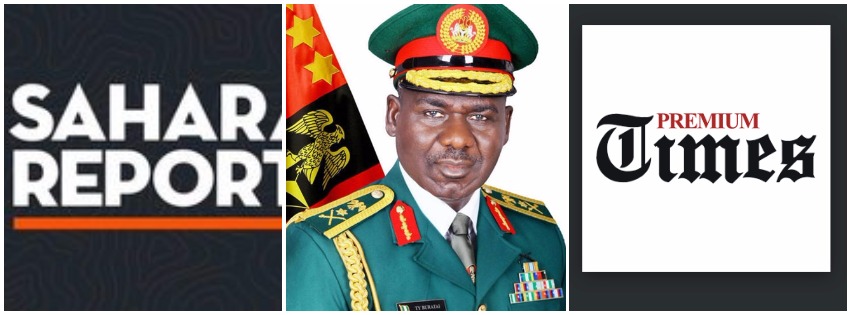
    The recent mistrust between security agencies and the media over the arrest of publishers of the Sahara Reporters, Sowore Omoyele and that of the Premium Times, Dapo Olorunyomi is unwarranted and worrisome. More disturbing is the involvement of Nigerian Army in the latest fracas. Surprisingly, the Nigerian Army under the current Chief of Army Staff, Lt. General Tukur Buratai has received tremendous media goodwill and publicity than any branch of security sector in Nigeria. The positive media exposure on the Army is so overwhelming that other branches like Defence Headquarters, Airforce, Navy and other intelligence organs get lesser mentions in the press.

    More painful is the fact that the name of General Buratai, one of the finest and humble officers is frequently mentioned in the impasse that the Federal Government and even the Nigerian Army, as an institution disassociated themselves from the legal tussle.

    It is also funny that one of the lawyers denounced attempts for a peaceful resolution of the impasse and even threatened to invoke cybercrime law against the media. Cybercrime law was signed by the previous administration to tackle fraudulent and criminal elements not for intimidating the media who have continued to save the military and other security apparatuses from ridicule and imminent exposure to danger.

    The Chief of Army staff should be wary of busy-body consultants and lawyers who may wish to profit from the crisis by instigating him to take irrational steps against the media. No one fights the press publicly, especially credible media, in attempt to enforce censorship, not self-censorship, and get away with it unscathed. The security agencies and the media need one another towards ensuring sustainable peace and progress and stability of the polity.

    Yushau A. Shuaib
    www.YAShuaib.com
    [email protected]

  • YAShuaib’s Presentation on Online PR

    YAShuaib’s Presentation on Online PR

    YAShuaib on Social MediaPlease see attached the Paper Presentation on Online PR for Social Media by Yushau A. Shuaib (YAShuaib)

    Please click this: YAShuaib Online PR for Social Media PDF

  • Gen Buratai: An Encounter with Soldiers’ Soldier- Yushau A. Shuaib

    Gen Buratai: An Encounter with Soldiers’ Soldier- Yushau A. Shuaib

    COAS, Gen Buratai when CCC paid a visit to Army HeadquartersOn December 12, 2015, my phone displayed missed calls from the Army Spokesperson, Colonel Sani Kukasheka Usman. Such missed calls from security spokespersons, can signify ‘fire on the mountain.’

    I had been in Maiduguri the previous week on a special assignment where I encountered a team of Lt General Tukur Buratai, the Nigeria’s Chief of Army Staff. They had been regular in the North-East zone probably in anticipation of meeting the presidential deadline to rout Boko Haram terrorists by December 2015.

    There is this general impression of Buratai from not only his team but ground troops and the local community who refer to his exemplary conduct of humility, simplicity, probity and integrity. A son of a soldier, General Buratai is a Soldiers’ Soldier who is passionate about soldiering. I gathered that he hardly stays in the cosy Army Headquarters but at the battlefield coordinating military offensives against terrorists. Rather than merely directing the commanders, he leads in some daring military campaigns of pursuing terrorists, recovering villages and rescuing captives from Boko Haram’s dens.

    His troops have become accustomed to his trademark infectious smile and can readily vouch for its genuineness. They are also at home with the fact that his words are constantly reassuring and his promises especially on welfare are kept. In the thick of the battle, he stays close to his troops, interacts, eats and sleeps with them – a risky undertaking for his rank and position. But like a leader who matches his words with actions, he does that to prove his sincerity and share in their critical moment of sacrifice for the nation.

    When I returned the missed call on that Saturday, Colonel Usman Kukasheka narrated an incident that happened in Zaria when the convoy of Chief of Army Staff on a courtesy visit to Emir of Zazzau was obstructed by protesters. As we were talking his line went off and I could not reach him again.

    I reached out to an embedded journalist in the convoy who narrated the incident. He said that some miscreants blocked the convoy of the Chief of Army Staff and that they remained adamant despite the pleadings and admonitions of Col Usman and other senior officers who pleaded that they allow the convoy a passage. The journalist disclosed that General Buratai had cautioned his team not to shoot but to plead even when the protesters were shouting and brandishing arms like Knives, catapult and clubs, in most provocative manner against the military convoy. He added that “The officers prevented the Army Chief from stepping out of his vehicle, to avoid being harmed by the protesters…”

    I therefore sent a text to Colonel Usman requesting for an official Press Release on the incident for syndication by PRNigeria which he obliged with photos and video clips from the incident.

    After the episode of December 12, 2015 with fewer casualties, the following days witnessed unfathomable confrontations that claimed over 300 lives of men, women and children, based on official estimates by Kaduna State government.

    Many had expected an immediate response from the government. In the previous administration of Goodluck Jonathan where similar incident occurred in July 2014, the former National Security Adviser and Sokoto Prince, Sambo Dasuki led a government delegation to empathise with the community, sympathise with the victims and condole Sheik Ibrahim ElZakzaky whose children were also killed then. At that time, the then opposition leader, Nasir Elrufai tagged the incident “Genocidal Jonathanian Army kills Once Again” on his facebook page. But as a governor of the state one year after, his (Elrufai) state officials were prompt in demolition of residence, institutions and places of worship belonging to the Shiite group.

    Meanwhile before the December incident in Zaria, there were some official releases by the Army that cautiously warned about attempts by undesirable elements to frustrate the war on terror. For instance, the Army Press Release of September 8, 2015 disclosed that it had “uncovered plans to thwarts efforts on War on Terror” by some organisations to create situations for human right abuse. In another Press Release of September 25, 2015, the Army warned “prominent individuals and political groups who hailed from Borno State in particular and North East generally… over plans to undermine and scuttle the fight against terrorism and insurgency in Nigeria.” It went further to state that the individuals and groups “are employing the services of marabouts and other unethical means in order to frustrate our efforts and the operations in addition to campaign of calumny.”

    Similarly, there was also a final warning to terrorists in October 20, 2015, where the Army cautioned “All Boko Haram terrorists wherever they are, to desist from all acts of terrorism, surrender themselves and face the law (and that) … failure to surrender will result in serious consequences as our troops have closed up on them.”

    Finally, on November 23, 2015, the Army issued an alert on impending smear campaign by some disgruntled elements. The release clearly stated that “The Nigerian Army has received report of some elements both within the Nigerian Army and outside… to ridicule the Nigerian Army and the person of the Chief of Army Staff for reasons best known to them. They intend to execute this plan as from next month, December 2015, using all means possible….”

    The release also alluded to the existence of fifth columnists in the system when it added that “the Nigerian Army has identified some of the officers involved and their collaborators. The officers are being investigated to unravel their motive and motivation.”

    Going by those warnings and alerts, could it not be possible that some undesirable elements infiltrated the protesters in Zaria by acting the ugly script since the Shiite group are claiming that they had been holding such processions and demonstrations for more than 30 years? Can the speedy action of Kaduna State Government in the demolitions of Shiite’s places have other motives? Apart from the military presence could there be some unknown forces remotely triggering the reported carnage? Were some members of the community who are now blaming the Shiites for nuisance in Zaria be directly or indirectly involved in the whole shoddy incident?

    I was delighted to accompany the management of Centre for Crisis Communication (CCC) on a visit to the Chief of Army Staff in Abuja last week with the hope that General Buratai would say something on the issue. During our interaction however, the quintessential General narrated the successes of the military campaign in the North-East and other initiatives on human right compliance in the armed forces. When the issue of Zaria incident came up, his countenance changed: his head bowed with jaws resting on his hands. For some seconds the room was silent.

    When he raised up his head, looking towards our direction, his smile had disappeared, and with emotion, he merely said: “I don’t want to join issue with anyone…. But I must state that by our culture and professional training, soldiers don’t just attack anyone arbitrarily without provocation and justification. We abide by the rules of engagement which guide every action we take. We have a responsibility to protect our citizens from insecurity and impunity.

    “We have been fighting terrorism with all our might, spirit and energy and would avoid anything that will distract our efforts.”

    “How can anybody accuse a responsible armed agency of government of murder? On the contrary, the people were attacking the soldiers with petroleum bomb and other weapons. In actual fact, not all of them knew how to handle Molotov they were trying to use against the Army and it back fired on them.”

    After his words, I realise that there is an urgent need for a thorough, independent and unbiased investigation on Zaria carnage to unravel the mystery behind the sad incident.
    Yushau A. Shuaib
    www.yashuaib.com

  • Open Letter to Presidential Spokesperson, Femi Adesina

    Open Letter to Presidential Spokesperson, Femi Adesina

    Yushau Shuaib with General Olukolade, Air Commodore Yusuf Anas, Garba Shehu, Chris Okeh during a visit to the Aso VillaFrom Yushau A. Shuaib

    Dear Femi Adesina

    Since I am a victim of association to one of the most vilified and scandalised Nigerians through media trial, this Open Letter is the best opportunity for me to put some issues in proper perspective following some of your public remarks about your old friend.

    As you are aware, I have been actively involved in cementing relationship between the media and security agencies in the recent past. Immediately after my premature retirement from the public service by the Jonathan administration, I was invited by the Office of the National Security Adviser (ONSA), under Col. Sambo Dasuki (retired), to help in changing the negative media narrative on Nigeria’s counter-terrorism campaigns. It was at a period when the Boko Haram was having the upper hand in the propaganda campaign of the war against Nigeria with a section of the foreign media castigating Nigerian troops as “cowardly” “undisciplined” and “ill-trained.”

    Among other things, I have the responsibility of consulting for the Forum of Spokespersons of Security and Response Agencies (FOSSRA), then Chaired by Major General Chris Olukolade, which has membership from critical public institutions including the military, security, intelligence and response agencies. We also created and sustained web portals for providing accurate and timely information to the public.

    I must commend Mr. Femi Adesina for playing greater roles on the success of our campaign because as the President of Nigerian Guild of Editors, you also encouraged Editors to support our activities through occasional self-censorship to manage negative terrorists’ propaganda.

    Being one of the closest Editors to former National Security Adviser, you were always sincere and frank when you met and discussed with Dasuki. You never hid your hardened support for the candidacy of General Buhari of All Progressive Congress (APC). I remember your annoyance over security clampdown on the media and when you sought Dasuki’s intervention for compensation for media organisations over their loss rather than engaging in prolonged court cases. I was with you on that occasion in his office.

    Apart from interfacing between FOSSRA and media representatives at different levels and locations, which you encouraged, Sambo Dasuki too, as National Security Adviser occasionally hosted Media Debriefing sessions where sensitive information was disseminated with supported photos and video clips. Many of such sessions were classified, not for publication, where atrocities of terrorists; the gallantry of the Nigerian troops and sophisticated equipment deployed for counter-terrorism operations were disclosed or shown.

    I am glad that not only were you adequately informed of those success stories of Jonathan administration’s war on terror, you even took the pain to pen an opinion article eulogising Dasuki for keeping to his promise of clearing all known terrorists’ camps before the handover to the new government.

    As a respected columnist, your article of May 1, 2015 on the back page of the Daily Sun with the title “A little Late But Not too Late,” clearly exonerates Dasuki from some allegations and also reveals some concrete facts of achievements that were not being reported in the media.

    It is therefore, baffling that the same Femi Adesina, could brazenly contradict himself shortly after gaining public office in his official statements. Some of us who know your cordial relationship with Dasuki and information at your disposal are indeed baffled by your dramatic turn-around in so short a time.

    Meanwhile, it is necessary to point out that not all funds in ONSA are meant for arms procurement. As you are aware, under its Special Service Office (SSO), funds are expended on training, espionage, communication, special interventions for special causes including NGOs. One of the successful programmes under ONSA is Soft-Approach to countering terrorism, of which deradicalization without the use of force through economic empowerment, education, communication, rehabilitation and counselling were part. The Presidential Initiative on North-East (PINE) was conceived from the Soft Approach.

    As a media consultant who has distributed over 1000 releases on behalf of the military and security agencies, I can state the following as a fact from official documents and releases:

    On August 6, 2015, through PRNigeria, Dasuki named and provided pictures of sophisticated weapons bought for the military, which included: “Alpha jets, Armoured Personnel Carriers (APCs) APCs, Mine-Resistant Ambush Protected (MRAP) vehicles, advanced artillery pieces, assorted arms and ammunitions, highly sophisticated surveillance drones, T72 Battle Tanks and modification of F7 supersonic jet fighters.” Even in his official response to your statement against him on November 18, 2015, Dasuki mentioned official acknowledgements of delivery of some of the equipment by the security chiefs.

    It is therefore laughable when critics claim that no weapons were purchased when a video from Boko Haram leader Shekau displayed captured sophisticated weapons after alleged mutinous soldiers fled Baga

    At the twilight of Jonathan’s administration more than 22 towns in Adamawa, Borno and Yobe states were recovered and confirmed with video and pictorial evidences through military press releases. Some of the towns recovered before the coming of President Buhari included: Abadam, Askira, Baga, Bama, Biu, Buni Yadi, Damboa, Goniri, Gujba, Gulani, Gwoza, Hong, Konduga, Kukawa, Marte, Madagali, Michika, Monguno, Mubi, and others. A clear testimony to some of the accomplishments was the official DHQ release dated March 16, 2015 with reference No: DHQ/ABJ/901/32/DDI and a title: “Troops Finally Rout Terrorists from Bama and Last Stronghold in Yobe.”

    Even though when you confirmed in the same article while you were still a columnist that “Sambisa Forest is falling” it was actually stormed by Nigerian troops where about 300 kidnapped women and children were rescued with video evidence before the emergence of the current administration.

    In an attempt to indict Sambo Dasuki, some media leak unethically expose expenditures of sensitive agencies like National Intelligence Agency, Department of State Service and others to public ridicules. This is unfair. It was for sensitive nature of issues that we guarded the recruitment of Special M Forces to help in the air while Nigerian troops recaptured the ground. Some would rather call our technical Advisers as South-African mercenaries. Even when Nigeria financially supported some neigbouring countries to participate in the Multi-National Joint Taskforce (MNJTF) it was deliberately done because they were initially reluctant as foreign powers were not helping Nigerian troops.

    Since Dasuki and others are now being arraigned in court, rather than the continued media trial and planned secret trials, let the trial commence in open court to enable prosecutors and accusers present their arguments to remove facts from fictions and reality from illusions.

    Sir, as you know that I have tremendous respect for you, I strongly urge you to use your good office to protect the integrity of critical institutions like security and the media from public ridicule as some patriotic officers, media organisations, and publishers are already being indicted without fair trial in the court of law.

    While I vouch for your professional integrity, you know for a fact that Dasuki is kind and obediently loyal in and out of office. You know that for sure, Mr. Femi.

    As we end 2015, I pray the year 2016 will not be one of media circus but one in which the rule of law will determine official actions and suspects of all kinds will have their rights under the constitution respected. This is my last article on this issue and I do this with the best of intention to protect our institutions.

    Yushau A. Shuaib

    [email protected]

  • Interview: PRNigeria Links Newsmakers with Newsmen- YAShuaib

    Interview: PRNigeria Links Newsmakers with Newsmen- YAShuaib

    We thrive on getting difficult-to-access information to the media’
    By Onimisi Alao, Sunday Trust October 31 2015
    Mallam Yushau Shuaib, Chief Executive of PRNigeria, a public relations outfit which links newsmakers with newsmen to put out ‘critical’ information to the public, says the outfit thrives in relieving organizations of their information dissemination burden and fulfilling the public’s right to know.
    What do you set out to do with PRNigeria and what have you been doing in reality?
    We are the first press release syndicating organisation in the country and we make our impact by encouraging agencies and organisations to be transparent, honest and timely in putting out vital information. Many organisations find it difficult to come out and interact with the public till they have a crisis and it becomes even more difficult to come out with information. Currently, some of my clients are principal agencies of government: the military, the intelligence agencies, and security agencies. We also process press releases from federal ministries and MDAs. That’s what we have been doing in the last two years.
    What exactly does your work entail, because almost anyone could gather and distribute press statements?
    We generate these releases. Many of the organisations we work with handle very sensitive tasks, such that ordinarily they would not come into the open with what the public needs to know. They are reluctant to make certain information available, but we tell them there is a way to bring out this information and no one will be hurt. We tell them you can’t keep the public in the dark about this. So, it becomes a win-win thing. The agencies are encouraged to provide the information and the media have access to the information and get it to the public. In essence, we provide media coverage and review the impact. We undertake media tracking, online monitoring and strategic communication solution as we review at least 20 print media and 25 online media daily to guide our clients. We provide an average of 100 press releases monthly on behalf of our clients through the PRNigeria platform. We are therefore a media outfit with a difference combining traditional media, integrated marketing communication and best online practice through public relations.
    How do you find relevance among organisations that patronise you, considering that they typically have their respective in-house public relations departments?
    It’s a long story. Before the spread of the social media: face book, twitter and the rest of them, when I was still in public service, we established PRNigeria Online Forum for PR Practitioners. That time, we had almost all the Who is Who in public relations in both public and private sector in the fold – whether you were a director of public affairs or public affairs manager, press secretary, director of press, chief press secretary, director of communication, SA media – such designations. They were in that platform where we discussed issues to do with being a spokesperson: how you can deliver information to the public. Our emphasis was how to increase the skills of members in that forum. That’s how we started. People like Garba Shehu (Senior Special Assistant on Media to President Muhammadu Buhari), Kabiru Dangogo (former Head of Union Bank Public Relations Unit), Shegun Adeniyi (Special Adviser on Communications to President Umaru Yar’adua from 2007 till Yar’adua died in 2010), and former minister of information John Odeh were all in that platform. We were working to establish better ways to do our job. Now after the abrupt end of my service with NEMA (National Emergency Management Agency, as the spokesman), I decided that since the service no longer wanted me, what should I do? I decided that since I know the spokespersons of organisations, I could go full time into the business of helping them deliver information to the mass media. We, PRNigeria, now became a platform whereby information comes to us from PR officers, which we work on and send, on their behalf, to the media houses. Many bits of critical information you get from the media come from PRNigeria. I feel proud to say that we have issued thousands of news releases since we started and none of them has ever been denied. Instead, there have been instances when some organisations which issued press releases and had challenge, ran to us and we sorted things out.
    What is the general attitude of media houses to your work?
    Editors can tell you that we get quite a lot of content to them. I don’t really want to mention names but yesterday (about two weeks ago), we had press releases from the EFCC for instance, we had one from the Police, for instance…
    You sound like you are taking PR department from organisations…
    No, no, we’re not taking any job from anybody. We are just assisting them. In the course of our work we are encouraging organisations to be more open, more transparent and more timely with information dissemination. Most of the challenges we face in the country arise because people don’t get information at the right time. If information is given out responsibly and in good time, a lot of misgivings are ironed out and a lot of stresses avoided. In our setup here, we believe there should be nothing like ‘no comment’ in any organisation. A journalist will come to you to clear doubts and you say ‘no comment’. There is nothing like ‘no comment’. What is the issue? That’s what the reporter wants to know. You clarify the issue. Even in the most sensitive of situations, in the highest levels of crisis management, there will be a way you can process information for the understanding of the public via the media. Our own is to make sure the information you are sending is accurate, fair and done responsibly.
    As a press release syndicate, how do you go about dissuading organisations from the ‘no comment’ stance?
    We don’t lie back in our office and wait for press statements to be passed through us. As much as we don’t want to say that we influence the release of some information, on several occasions we ginger or trigger organisations to speak. If they are scared, if they are reluctant, we suggest to them, why not take this perspective, why not do it this way? We give them ideas on how to go about it and in the end they issue the release. Now, we are going beyond just issuing press releases for organisations. Sometimes, we speak to them; they give us information and we issue it.  It’s a gradual process and very soon, we will start reporting activities and events for our stakeholders.
    You already have a publication, Economic Confidential, published by Image Merchants Promotion which you are a part of; meaning that you have the structure. What stops you from reporting as you are suggesting, using the reportorial crew of the magazine?
    Economic Confidential is a monthly magazine concentrating on public finance and is the only publication that, in the last eight years, has consistently been publishing the figures of the Federation Account Allocation Committee to all the tiers of government: federal, state, and local government councils. It is the most authoritative publication covering the committee. But it is not structured as a daily news gathering and printing publication.
    This interview was published in the Sunday Trust October 31, 2015
  • Interview: Media managers must be media-friendly – Shuaib, PRNigeria

    Interview: Media managers must be media-friendly – Shuaib, PRNigeria

    By Blessing Ekum, Nigerian Tribune October 24, 2015
    Alhaji Yushau Shuaib is the publisher of Economic  Confidential magazine as well as the founder of PRNigeria and MediaNigeria news portals.  In this interivew with BLESSING EKUM, he speaks on his experience managing the media for several Federal Government agencies and also on what it takes to be successful on the job.
    You were the PRO to several Federal Government agencies, notable among them are NEMA and RMAFC, how would you describe the job?
    Public relations as a management function is quite an exciting profession for those that strongly believe in relationship building, reputation management, crisis management and similar endeavours towards mutual and better understanding. Therefore, I can simply say the job requires in-depth understanding of issues, analytical thinking, creativity and speed in delivery, which means timely response. The job of a PR person is beyond mere media relations and issuing press releases, press conferences and interview. Critical thinking and creativity in what you do also count.
    Did you find yourself in PR by accident?
    No. I love friendship and love communicating. I therefore studied Mass Communication at Bayero University Kano. I started practising public relations when I was elected PRO of Mass communication Students Associations (MACOSA) in 1991. Also, after winning state and national NYSC awards, I was offered automatic employments first as PRO in Government House, Asaba, Delta State and also as Information Officer, Federal Ministry of Information before my eventual posting as Press Secretary at Federal Ministries of Finance, Health, Revenue Mobilisation Allocation and Fiscal Commission (RMAFC) and National Emergency Management Agency (NEMA). Like the job itself (PR), the secret behind the awards and the automatic employments where through the recognition of my opinion writings and basic PR skills of researching, planning, executing and reviewing programme of actions.
    Was there anytime you felt threatened or felt like resigning?
    I accepted offers of automatic employment in the state and federal service in the belief that I would continue to contribute to better understanding of issues through writings for the media. I must appreciate the fact that it seems I was one of the most tolerated civil servants for consistently writing features and opinions that are supportive and also critical towards a better society. On several occasions, some managements were not too comfortable with my constructive criticism, I always insist that writing is my hobby while PR is my profession. Sincere only a mad person would write to himself as hobby. I write to inform and educate the public through the media. Surprisingly some bosses would like to be glorified rather than be advised. To glorify a boss or the organisation in the media, one must pay for space because editors only accept newsworthy, objective materials for publication. In that case to balance between what the editors want and what the organisation and the boss want, one must also balance between the two: a bit of hot-and-cold. In my 20 years in public service, I had never received a single warning or query until when the so-called and overexaggerated Coordinating Minister reported me to former President Goodluck Jonathan that I should be sanctioned for one of my opinions after she had spoken to me on phone. Probably she wasn’t comfortable with my bluntness in our conversation. I must be sincere and have no reason to pretend that I have never been intimidated by someone’s position. Not every civil servant is docile. I have no respect for those that look down on others. I don’t cross paths with such individuals because respect begets respect.
    Can you restate the story surrounding your premature retirement from service? Any regrets?
    After the encounter with the so-called super minister, those that were not comfortable with me insisted I should be retired prematurely from the Federal Civil Service. I have no regrets  serving and doing all I did in the 20 years of civil service career. Since the so-called retirement, which I am contesting in court, I am better and better off today outside the public service than inside the service. God Almighty has been so kind and merciful to me. I currently manage a PR firm in Abuja, Image Merchants Promotion, whose staff strength after my so-called retirement in 2013 was less than five staff has grown to over 15 competent, young and vibrant staff. We specialise in crisis communication, reputation management and publication for private and public sectors.
    We also notice you are involved in a number of online media activities, what drives you in that area?
    I am very passionate about writing, communicating and sustaining friendship. I always look out for new innovations and new techniques that would ensure the message gets to the right audience at the right time. When internet technology was emerging, I underwent some studies at home and abroad which encouraged me in creating list server, also known as group mailing list. There were no Facebook, Twitter or Instagram that time. The seeming social media platform that time was yahoogroup. I created a group for all federal press secretaries known as Resident Information Officers (RIO); I created another for PR practitioners and spokespersons known as PRNigeria where we debate and discuss issues on the job. In fact all the who-is-who in PR in Nigeria were in that group. We even had Emeka Opara of Airtel and Salisu Suleiman, current Principal Private Secretary to the Kaduna State governor, among the moderators; I later created MediaNigeria, where all major editors of local and international media covering Nigeria are listed. Each of these groups and platforms serves different purposes on information sharing. Therefore when I was prematurely retired, I integrated their functionality for news release syndication platform known as PRNigeria press release website. You can track any press release from our clients on the pages…. especially press releases from the military, security, intelligence, response agencies and other federal ministries, departments, agencies (MDAs).
    You have never been in the mainstream media, how come you have so much affinity with journalists?
    The success of any PR person relies, heavily on his relationship with the media. After my family, journalists are my immediate constituency. In fact through my public service, all my press releases and opinion articles were published for me free. I mean this but many may not believe this I enjoy establishing and sustaining relationship with the media when there is no problem. Media relations is free but sustaining it can be expensive because it requires integrity, sincerity and responding to their enquiries and ensuring you do the right things always. Talk about phone calls, visits, facilitating engagements, attending to their enquiries and programmes 24/7. And guess one thing, never ever get provoked with media enquiry. In fact if they criticise objectively, I acknowledge and appreciate their concern. I realise that being friendly with them before you have crisis is most cost effective strategy to sustain their loyalty and support. A sincere journalist would never abandon you in your moment of need. The greatest asset of any person managing the media for institution and public figure is sustained and improved media relationship.
    You are the face behind the online platform, PRNigeria, can you tell us how you came to be intimately linked with the military?
    After my disengagement from the service, many institutions gave me employment offers, but I insisted on providing consultancy services. I am presently the Chief Consultant to Forum of Spokespersons for Security and Response Agencies (FOSSRA), under the auspices of the Office of the National Security Adviser (ONSA). About 20 spokespersons are currently members of the forum. The forum gave birth to the Centre for Crisis Communication (CCC) which has membership from the military, security, intelligence and response agencies. We provide services that do not compromise national security and national interest.
     This interview was published in the Nigerian Tribune October 24, 2015
  • Presidential Spokespersons: Between Publicity and Communication

    Presidential Spokespersons: Between Publicity and Communication

    By Yushau A. Shuaib
    Before the eventual announcement of Femi Adesina and Garba Shehu as spokespersons to the newly elected President Muhammadu Buhari, there had been wide speculations that either of the two would emerge.

    Their deserving appointments came with confusion and challenges. The two share the same portfolio but with different designations with Femi Adesina named as Special Adviser while Garba Shehu emerged as Senior Special Assistant both on Media and Publicity.

    This writer will deliberately avoid dabbling into the politics of the appointment and who is most senior by age, profession, qualification or on the current position. They have each been role models to aspiring journalists and writers.

    When I started writing as an undergraduate in Mass Communications Department of Bayero University Kano back in the late 1980 and early 1990s, there was no internet, email or any form of social media to share my opinions. Mallam Garba Shehu as Editor of the then popular Kano state-owned Triumph newspaper encouraged and published my articles.

    The channels available to deliver our write-ups then were either directly or through the post office. I delivered mostly directly and on such occasions, Garba Shehu made sure to provide me some token to defray transportation expenses. As he moved on to become General Manager of ALSCON and later Spokesperson to the former Vice President Atiku Abubakar, he had always provided moral and kind supports to my aspirations especially on special media projects. He knows how to attract the best team for every campaign.

    For Adesina, apart from being addicted to his weekly column in the Sun, I had been inspired by his style of writing in the Weekend Concord in the 90s. He is a brilliant writer who tackles sensitive and critical issues with fun and jokes, yet hitting the nail on the head in eloquent prose. As President of Nigerian Guild of Editors (NGE) and Chief Executive of a leading newspaper, he has intervened in saving difficult situations towards protecting the national pride and integrity. Most current Editors, especially of the traditional media, can attest to those unwritten code for stability in the polity.

    Being a PR person, I cannot begin to count the numerous special favours we derived from those great editors who put national interests ahead of the need to publish and be damned at a most tempestuous period in our nation’s history.

    The two gentlemen are not only highly qualified and well-experienced professionals they have served as Managing Directors of leading newspapers and at different periods were elected Presidents of NGE.

    While commending President Buhari for identifying great talents and professionalism in these two great Nigerians, he should nonetheless have assigned them different portfolios to avoid unnecessary tension and confusion by distinctively defining their roles for information management for the administration. While one may not envisage infighting between the two mature and responsible spokespersons, conflict may arise through the antics of so-called friends, tribesmen, professional colleagues and other interests. Clashes do occur even among Siamese twins not to talk of professionals from different background in term of education, region, political leaning among others.

    The President should redefine their portfolio by ascribing relevant nomenclatures to their beats. Apart from media and publicity, there are also portfolios worthy of consideration such as Public Affairs, Press Affairs, and Strategic Communication among others.

    Nevertheless, the officers may on their own decide on who among them should be responsible for Media and Publicity and Strategic Communication.

    The common role of a spokesperson is to serve as publicist, by providing publicity in timely and professional manners. A Publicity officer must be close to the principal; waking up before the boss and taking leave after the boss. Publicity officer merely acts as megaphone by issuing statements on actions and utterances of the principal. In fact his roles are typical of media reporter who reports what he sees, feels or told.

    On the other side, an officer in-charge of Strategic Communication does not require physical presence with the principal. From afar, a communicator is responsible for tracking and monitoring unfolding issues and provides professional advices in handling the communication process. Like media consultants, communication strategist is hardly seen or heard but facilitate the information flows. Whenever he speaks or issues statement, the message carries weight more than that of the regular releases from publicists.

    The clear demarcation between a publicity specialist and a communication strategist is like media reporter and media consultant. In ensuring harmonious relationship, the hidden persuader must operate behind the scene while public talker should be visible on the scene. It may be difficult and embarrassing if in current situation, either of the two spokespersons desires to combine the dual roles.

    Meanwhile with the appointment of a seasoned journalist, Laolu Akande as the spokesperson to Vice President Yemi Osinbajo, Garba Shehu or Femi Adesina may take the responsibility of managing the Presidential Publicity rather than Spokesperson to President Muhammad Buhari.

  • Still on Nigerian Military and Online Media

    Still on Nigerian Military and Online Media

    This is indeed a critical period of our national life when a raging war on desperate terrorists has kept military operations in North-East and others parts of the north in persistent media spotlight. And as would be expected, the subject now dominates the country’s online media content.

    As it is, online media, which capitalise on rapidly developing and changing new technology unlike its well established traditional media counterpart, is still evolving and ethics and regulations that will guide its conduct and practice are yet to be standardised.

    Nonetheless, online media have the advantage of accessibility, cost effectiveness, longer lifespan, and interactivity, speedy and updated knowledge. It is therefore, not surprising that traditional media have also added online platforms even though they still strictly adhere to the traditional code of ethics of journalism practice. History relates that the media, as the alternative government is always viewed with suspicion by governments because of its responsibility of keeping governments on its toes but since the ultimate beneficiary is the citizen, both governmental actors and media practitioners tolerate themselves for the lofty end of attaining the desired society.

    This writer was therefore, greatly alarmed by the recent turn of events following hot exchanges of missives between the Nigerian Army and a very popular online medium, Sahara Reporters on issues bordering on the war on terror. The accusations and counter accusations were indeed unnecessary if only the two parties attempted a review and re-examination of their existing relationship.

    From Public Relations perspective, one can easily sense the growth of mutual suspicion and mistrust between the military and some online media, which is quite a disturbing trend that should be addressed in the national interest.

    There are many factors responsible for the mistrust. For instance, when the media alleges that Nigerian military is ill-equipped, it ignores the fact that most of the weapons used by insurgents were actually captured from fleeing Nigerian troops; when the press accuse soldiers of fleeing from battle field (a treasonable action), the Fourth Estate of the Realm shies away from recommending stringent measures against cowardice troops; when the military high command passes judgments on mutinous soldiers as deterrents, the press still condemns such verdicts which invariably could erode discipline in the barracks.

    Also in desperation for exclusive stories, the media consciously or unconsciously promote terrorists’ agenda by publishing unethical gory videos and alarming statements of the groups which depict horror with the potential to scare the military and frighten citizens. Such media exposures of terrorism occasionally weaken the morale of troops and boost the confidence of insurgents.

    On the flip side however, in their attempt to manage information, the military oftentimes horde stories rather than providing timely and adequate information to reassure the public. The military, apart from being accused of displaying partisanship to the party in power is also faulted on media selectivity (unwholesome preference) rather than treating them equally. While it is true that some media are financed and funded by politicians, the military erroneously assume that the media serves only the interests of their proprietors rather than national interest.

    It is unfortunate that, while the military views constructive editorial contents as attacks by enemies and the opposition, the media also view every genuine action and statement from the military with scepticism as mere propaganda.

    It is clear that it is not only those in the security services that are concerned about national interest. The media have also shown greater concern for national security by penning editorials to ginger those in authority to do more in protecting the territorial integrity of our nation. We have seen how the media widely celebrates military accomplishments and feat against terrorists with wide screamers in prominent pages and premium spaces without courting favour and commercial patronage. And so, editorial contents should not be seen as condemnation but rather as wakeup call to improve military and governmental operations in the protection of citizens.

    If public officials must take the pain to respond to each and every media criticism, most of which are quite unnecessary, one may ask: how often have they acknowledged and responded to positive reports with the same speed and zeal? If spokespersons don’t respond in equal measures to positive report like critical editorial, they therefore, have no justification to criticise the same media for bias.

    Meanwhile not all perceived negative reports require official rebuttals when appropriate actions can easily douse the tension and resolve misconceptions. It is the antics of typical politicians to issue provocative statements in response to media provocation. In fact, proactive and timely measures can solve many issues.

    One message, I learnt as a PR person, is never to underrate or underestimate any medium not to talk of one with repute and wider audience. Each medium has its unique audiences. The only way to win the hearts and minds of those targeted audience is through sustained and improved media relations in order to benefit from mass communication platforms.

    My appeal to Sahara Reporters and other online media that are concerned about insecurity in the country is to continue to be focused in supporting the military in its war on terror, while the military should also recognise the fact that the war is not only won by armoured tanks and troops but by the media and the information they provide though their platforms.

    This article by Yushau A. Shuaib has been published by Nigerian print and online media between December

  • Nelson Mandela: An Embodiment of Public Relations By Yushau Shuaib

    Nelson Mandela: An Embodiment of Public Relations By Yushau Shuaib

    Nelson Mandela Embodiment of Public Relations PR
    Nelson Mandela Embodiment of Public Relations PR

    Nelson Mandela: An Embodiment of Public Relations By Yushau Shuaib

    “Mandela was filled with humility, forgiving spirit and the ability to unite people, sharply contrasted with the utterances of some politicians who speak as if ‘Nigeria is their bedroom’ from where they make proclamation and intimidate others.” – Goodluck Jonathan of Nigeria.

    When President Goodluck Jonathan made the above praises after the demise of Nelson Mandela, the weight of the message was not realised until after a leakage of a letter addressed to him from former President Olusegun Obasanjo.

    Meanwhile in his tribute Chief Olusegun Obasanjo stated that “we all have the opportunity to act nobly in whatever position we find ourselves. When we teach our children the lessons for tomorrow, let us be reminded of the lessons Mandela gave the world in forgiveness and forbearance.”

    Those who read between the lines, considering the rapid turn of events within the period, would realise that beneath the tributes are political grandstanding and Public Relations (PR) strategies by leaders in their deliberate effort be relevant and be so recognised. President Barak Obama of America seemed to outshine others in his tribute and actions during the memorial on Mandela in South Africa.

    Nelson Mandela was an embodiment of great public relations: charming, charismatic, eloquent and convincing in his approaches. While protecting the interest of his people, he was harassed and jailed for 27 years before his eventual freedom and election as President of his nation.

    He was a great communicator who used his power of oratory and conviction to mobilise and move his people to action. He dignified himself in and outside the office, such that he eased the task of reputation managers. Ironically, in other climes such reputation managers who go with such titles of spokespersons or media advisers deserved to be managed from wrecking havocs on the image of their principals and organisations.

    Going by the International Public Relations Association (IPRA) code of Conduct, the anti-Apartheid icon, who died at the age of 96, exemplified all the attributes of PR person. The IPRA Code is an affirmation of professional and ethical conduct for communicators. The new Code which was adopted in 2011 consolidates the 1961 Code of Venice, the 1965 Code of Athens and the 2007 Code of Brussels.

    The code urges communicators to observe the principles of the UN Charter and the Universal Declaration of Human Rights and act with honesty and integrity at all times so as to secure and retain the confidence of their people. During his life time, Nelson Mandela insisted on the human dignity and respect for human right which engineered his struggle for the emancipation of his people from colonialism.

    While PR communicators are enjoined to establish the moral, cultural and intellectual conditions for dialogue, and recognise the rights of all parties involved to state their case and express their views, Mandela garnered more friends as he embraced his adversaries wholeheartedly. It was indeed ironic that all those who had fought him and called him terrorists were among those singing his praises while he was alive and after his death.

    While IPRA urges its members to be open and transparent, and to avoid any professional conflicts of interest, Mandela’s reluctant to seek for extension of tenure was one of the indicators that he had no hidden agenda. In some countries, especially in Africa leaders perpetuate themselves in office for immunity from prosecution for their misconducts. He was a selfless leader, who rather than making money for himself as a lawyer and politician, he was busy counselling the world on the necessity of living peaceful.

    The IPRA code of conduct strongly admonishes communicators to honour confidential information provided to them. As a former President of South Africa, Mandela must have had the privilege of accessing information on those involved in his incarceration and the killing of blacks during the war against apartheid and colonialism. He never allowed those privilege information to influence his sense of judgement as a leader who was neither petty nor vindictive.

    Deception and misleading information for political patronages are attributes of propagandists who led their followers and communities astray, Nelson Mandela was a sincere and honesty communicator who bare his mind openly without any aura of arrogance and intellectual supremacy.

    Mandela avoided unnecessary controversies as a man of peace. He was very mindful of his utterances, actions and the kind of friends and allies he related with during his sojourn on earth. As a global role model, every word he uttered was loaded with lessons and power to mobilise people to good causes.

    He is being celebrated not only for being a freedom fighter but for his spirit of public relations and communication skills. We can obtain any qualification such as Law, Accounting, Medicine, Engineering, journalism, architect, politics among others, but we may need to imbibe elements and principles of Public Relations like Nelson Mandela to communicate truthfully and convincingly to win the supports of our targets.

    Indeed Mandela, the pride of African and black race was truly a PR Man of the Century.
    Yushau A. Shuaib

  • Debating Goverment-Media Relations

    Debating Goverment-Media Relations

    Yushau A. Shuaib (YAShuaib) debating the concept of Government-Media Relations at Responsibility to Report Seminar (2)Debating Government-Media Relations
    By Yushau A. Shuaib

    The debate over whether the government and the media are friends or foes was rekindled at a recent interactive seminar on Responsibility to Report (R2R) organised by the Development Research and Project Centre with funding from the Dutch Government in Abuja.

    The seminar was similar to the recently concluded National Civil-Military Dialogue, where the National Security Adviser, Sambo Dasuki sought the cooperation and understanding of Nigerians on the ongoing military’s intervention in fighting insurgency in the country.

    Unlike the Military-Civilian where former Heads of States and top public functionaries were in attendance, participants at Responsibility to Report were mostly spokespersons from emergency response agencies like the military, police, NEMA and volunteers. The media too were adequately represented with editors, producers and bloggers in attendance.

    I had the privilege to be one of the facilitators that included Abdul Raufu Mustapha of Oxford University, and Ms. Femke Van Zeiji from The Netherlands.

    Prof. Ralph Akinfeleye the respected Mass Communication scholar, was the Keynote Speaker who dropped the bombshell that triggered a lively interaction throughout the programme. While attempting to be neutral in his assessment of the relationship between the government and the media, the academic dwelt on the power of the media, its influence in the society and the inherent loophole in the freedom of information law among others.

    The Editor-in-Chief of Premium Times, Dapo Olorunyomi, who was also a facilitator agreed with most of the arguments raised by the Professor and further echoed non-transparent nature of government and the alleged shabbiness in the implementation of freedom of information law in Nigeria.

    They both reinforced the general belief that the media is powerful as the Fourth Estate of the Realm, while I also responded that the government seems to be more powerful because all the other Estates: the Executive, Legislative and Judiciary are within its realm (government.)

    While the two argued that government and the Media cannot be permanent Friends but LOYAL OPPONENTS, I advanced the view that the spokespersons in government can be friends with the media on behalf of their organisations through mutual respect and dignified reciprocal relationship.

    Professor Akinfeleye emphatically supported the submission of former America President, Thomas Jefferson who said that if he was to choose between a Government without a Press, or a Press without a Government,Amb Bert Ronhaar of the Nertherland in Suit flanked by participants at the Responsibilit to Report Seminar in Abuja he would not hesitate to choose the latter! This submission I argued, cannot hold if every person is investigating and probing into one another as a reporter, without a law by legislators to protect the people, and the existence of the judiciary to adjudicate over disputes and the executive arm to check excesses and unethical practices. Such a society, I pointed out can only exist in a jungle, where there are no rules of law but animalistic interpersonal relationship.

    There is no problem with any government. Antics of some characters in government create the negative perceptions about public institutions. Added to the unbecoming and petty behaviours of some officials in government is the reality that public information management is very weak largely due to unskilled manpower, ill-equipped departments and political interference where a seeming straightforward and truthful information is deliberately distorted for egocentric ambitions of principals. In fact the Freedom of Information Act (FOI) could not have been a necessity if the public information officers have been allowed to discharge their roles responsibly and professionally.

    A study and adherence to basic principles of Public Relations could be a clear guide for spokespersons rather than the fire brigade approach and combatant posture of such image managers to simple issue management.

    Therefore spokespersons, as the intermediaries between the government and the media, should not only rely on prerequisite and relevant qualifications and experiences but should have humane temperaments and friendly dispositions while discharging their responsibilities.

    While a well-trained and well-behaved public officer can easily court friendship of the media and earn the respect of the public, journalists too should imbibe the PR instinct and principle by initiating cordial relationships with officers in government to minimise mutual suspicions and misgivings.

    At the end of the seminar, participants issued Guidelines for Communication in Times of Conflict for Government, Media and Civil Society in which they recommended that the media should always separate facts from opinion while urging journalists to be mindful of public and national interest in providing honest, factual and accurate information at all times.Editor-in-Chief of Premium Times, Mr. Dapo makes a presentation at the Responsibility to Report Seminar in Abuja

    While participants agreed that there are presently neither laws nor regulatory bodies to monitor and check online and Social Media in Nigeria, they strongly recommended capacity building and training on the use of latest technology for effective communication by those in government and the media.

    Public officers and spokespersons were advised to establish and sustain a mutually respectful relationship with the media, which should be professional and transparent.

    On the other hand, media owners were urged to improve the working conditions of their employees, while journalists were cautioned that “regardless of the circumstances, they should not expect, accept or offer inducements to publish reports.”

    The interactive session was not only lively, the active participation of Director Defence Information, Brig-General Chris Olukolade and Police Force Public Relations Officer Frank E. Mba at the event created the enablement for frank and sincere talks between the spokespersons in government and the representatives of the media that included online bloggers.

    One message is clear: whether in government or out of government we must protect and promote public and national interests for the economic growth not minding the misdemeanour of few individuals in the media or in public office.

    The message in all these which was also conveyed at the Civil-Military Dialogue is the need for harmonious relationship in Nigeria where the citizens live peaceful without fear of misrepresentation which could lead to hatred and unwarranted attacks.Group photograph of participants at Responsibility to Report Seminar in Abuja

    This article by Yushau A. Shuaib has been published by online partnering media and these print media: Economic Confidential Daily Trust, National Mirror, Blueprint, People Daily, Punch, Thisday, Guardian, Nigerian Tribune and Vanguard in July 2013