Category: Features

  • That Peaceful Protest At Baze University

    That Peaceful Protest At Baze University

    It was supposed to be a visitation for enquiry on new courses when this writer bumped into peaceful protest by students of Baze University, an Abuja-based private institution over an increase in tuition fee.

    As the Director Academic Planning of the university, Mr. Mani Ibrahim was taking round on inspection tour on some of the facilities on the campus, I saw some students sitting by the entrance to the school. I felt something was amiss.

    During the short inspection, I admire the quality academic buildings; hostel accommodation; a Mosque and a Chapel for worshippers. There are also well-situated shopping Mall, Bookshop, Cafeteria and a Bank. The sports arena accommodates football, basketball, squash, volley-ball, badminton, table tennis and gyms.

    Also I discovered that apart from fibre-optic broadband Internet with Wi-Fi connection to all Campus buildings, there also internet access to over 16,000 full-text on-line academic journals.

    Baze University is an institution founded by a forward-looking and progressive young Northern entrepreneur, Senator Datti who would rather invest in education than engage in the usual business of contract and supply of average Nigerian businessman. Interestingly, whereas there is an abundance of private universities already established by southerners, Baze University is one of the very few established by Northerners.

    Since the university was established, Senator Datti Baba-Ahmed has devoted his energy, time and resources into the development of the university which is strategically located in the heart of the Federal Capital Territory, Abuja.

    Apart from creating job opportunities for a great number of Nigerians, the academic institution now has over 1,500 students pursuing various courses of study. Some of the students actually transferred from some local and foreign universities.

    Modelled after British university system, many faculty members were trained in the United Kingdom including the Vice Chancellor Professor Michael Hood. The university currently offer courses in Financial Management, Computer Technology, Arts, Science, Law and is scheduled to launch programmes in Medicine and Engineering by September 2015.

    As we were rounding up, I was surprised to see some of the protesting students spotting designer clothing, and blocking a street on the campus with exotic automobiles. Upon inquiry, I was made to understand that the students were protesting an increase in their tuition fee from N1.65 million to N1.8 million annually with effect from January, 2015.

    Some of the students displayed placards carrying different inscriptions with the central theme of telling the university to maintain the prevailing tuition fees.

    Even in the midst of the protests, Senator Datti who is also pro-chancellor emerged from his office, calming the students and assuring them that their concerns would be carefully assessed. As a former active student myself however, I cautioned him against getting too close to the hot-headed students. During students’ demonstrations, anything can happen.

    The strikingly suave gentleman politely brushed my observation aside, insisting that he had to move around to ensure that young individuals don’t resort to actions that could be injurious to their lives or the inflict harm on others. It was my delight to accompany and observe him while moving around to calm his wards and prevailing on them not to take their protests outside the institution’s premises.

    I jokingly pointed to one of the students wearing a rather expensive wrist-watch and shoes that he was obviously in a position to afford the about N200,000 increment. Hear his retort: “Not all hands are equal. Please don’t judge everybody by the privileged few.”

    One student informed me that his mother actually borrowed money to pay for his tuition fees while his elder sisters contributed money for his other expenses like accommodation and feeding. Another claimed that his younger ones are desirous of coming to the school but that outrageous fees might discourage his parent for the sponsorship.

    The proprietor took the pain to explain to some of them the necessity of the increase. He pleaded with them to understand that the school was struggling to be one of the very best in Africa and reminded them of university rule mandating students to issue a one-week notice before embarking on any form of protest. This is so that authority can arrange for adequate security coverage for maximum protection of protesters.

    He explained that the current regime of fees was introduced over three years ago but that inflation has escalated costs by 31.8% due to falling value of the Naira. He said it was vital for the university to maintain standards and quality, by being able to continue to improve facilities, attract high-quality staff, employ key international scholars, bring external examiners from the UK and enhance research.

    While regretting management’s decision to reluctantly increase fees, Datti told them that by September 2015, the university will commence degree programmes in Medicine and Engineering, which are also capital intensive courses.

    One other highlight of the exercise was the maturity with which leader of the students’ union, Muazu Yahaya and other members of his executive handled the protest, which ensured that the entire exercise remained peacefully till the end. The student leaders continued with a form of shuttle diplomacy between their aggrieved colleagues and management.

    Yahaya said “As university students, we are adult who are entitled to express our grievance to the authority to find solutions to them. Everyone is feeling the economic crunches. As the university cries so also are our parents.”

  • An African’s Memo to Arabs and the West

    An African’s Memo to Arabs and the West

    An African’s Memo to Arabs and the West
    By Yushau A. Shuaib

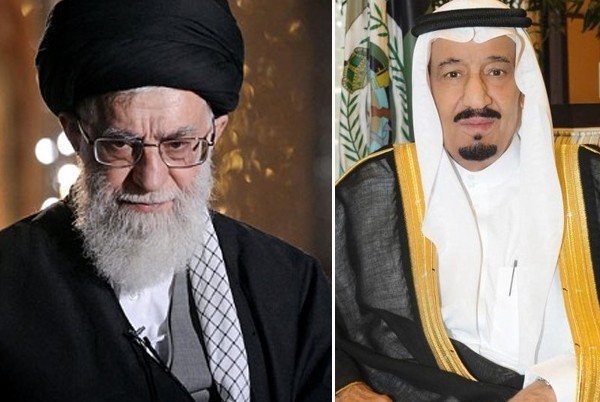
    Western Power and Arab WorldI am in a state of total confusion by the way and manner global affairs are being shaped by largely activities of Arabs World and the Western Powers.

    You may appreciate my bewilderment only if you tune in to any broadcast channel from these two axis. What we see on daily basis are cold blooded shedding of human blood for spurious reasons ranging from attempts to enthrone democracy, propagation of religion and enforcement of rigid ideologies.

    We are living witnesses to how notoriety and barbarity is now becoming the feature of normal modern lives: the use of swords and knives to behead human beings; mass-execution of citizens, aerial bombardments of innocent souls among various other atrocities that only depict scenes from horror movies.

    A careful analysis of these developments will clearly reveal that they have their genesis in certain activities emanating from Arabia and Western powers.

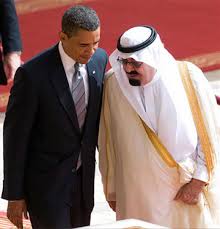
    Probably realising the gravity of the danger that these recent developments are posing to our world especially considering situations in Syria, Iraq and other parts of the Arab world, President Barack Obama of the United States of America (USA) recently sought an alliance with some Arab leaders towards eliminating the emerging challenges from the Islamic State in Iraq and Syria (ISIS) a group that has already occupied some large territories of those beleaguered countries.

    The Arab World and Western Powers should realise that the world was saner until the unfortunate incident of September 11, 2001 infamously referred to as 9/11 in the United States where over 3000 citizens from different countries around the world perished in a terror attack masterminded by Al Qaida.

    Almost all the suspects and those that admitted complicity in the attacks were Arabs.

    In a desperate attempt to redeem its image against intelligence in the build up to that event and reassert itself as superpower, the American government led an alliance that invaded Afghanistan, the haven of Al-Qaida and its leaders. Thousands of lives were lost in that expedition.

    While many would support the attacks on Afghanistan because it is the home of Taliban, subsequent incursions into other countries by the West were quite inimical to world peace and global survival. At that period, Iraq was relatively peaceful and there has been no evidence that it was involved in state terrorism since the defeat of Sadam Hussein since the end of First Gulf War.

    Just like a tide from the blues, America and Britain brought allegations that Iraq under Saddam had stockpiled Weapons of Mass Destruction (WMD). The allegation were engineered and triggered by some leaders in the Arab world who despised Saddam so passionately not minding that they were those arming him decades earlier to fight the Iranians who are non-Arab.

    Within a short period, Iraqi leadership were destroyed, their military bastardised, their people mercilessly embarrassed and killed in various activities, which were also supported by some Arab countries who provided western powers the base for the attacks on Iraq.

    Not done, Libya, a peaceful African-Arab country, with better welfare for its people under Muammar Ghaddafi later became another country that was attacked through the influence, collaboration and conspiracy between the Arabs and the West by instigating the revolts by citizens who became rebels against their government. We recall the noise from western powers, especially the Britain and France before the aerial bombardment of Libya by allied forces. Ghaddafi was brutally murdered in cold blood and the Libyan the military and police, like the case of Iraq were also bastardised and humiliated.

    Not done with experimentalism of military adventures, Syria became another target where the Arab World and Western Powers again sponsored rebellions against the state in desperate efforts to remove Assad.

    Before the early protests in Damascus, Syria was one of the most peaceful governments under democratic rule in the Arab world. It is an open secret that Arab leaders are publicly supporting illegal oppression of Syria through the sponsorship and promotion of rebels against the Syrian government and its military.

    While Western powers claim that their intervention is to enthrone democracy most of their Arab allies who are supporting the rebels in Iraq, Syria and Libya and other places are not democratic.

    I am bemused when some of the crises are linked to religious propagation and enthronement of democracy. The fallacy of the islamisation theory or conspiracy is easily exposed in realization that the affected Arab countries that are predominantly Muslims witness the killing of Muslims by Muslims. Arguments about democratisation in the Arab World is easily defeated as most Western allies in that region are monarchical rather than democratic as they are ruled by Kings and their families.

    As the world faces challenges of insecurity, we must call on Western powers and their allies in the Arab World to give the rest of the world the peace we desire for the survival of the universe as events in Africa are pointing to similar clandestine interruptions through insurgency and terrorism with clear support from global players.

    May I appeal to Western Powers and the Arab World to kindly spare the continent of Africa the kind of barbaric atrocities being perpetrated daily and over the years in the Middle-East in the name of Islamization and enthronement of western democracy.

    As an African from Nigeria, I tend to smell rotten fish that if Africans refuse to face and squarely address the current insecurity in the continent, our land may become the next arena for deadly experimentation through bloodshed in the name of religion and democracy.

    As an African Muslim with many Christian friends and even non-believers in faiths, I am fully convinced and aware that no religion, creed and culture promote animosity, hatred and criminal violence. My prayers is therefore for our leaders and people to learn from this history in motion while we appeal to the Arab World and Western Power to give us breathing space.

  • Bamidele Aturu: Another Senior Advocate of  the Masses

    Bamidele Aturu: Another Senior Advocate of the Masses

    Bamidele Aturu: Another Senior Advocate of  the Masses

    By Yushau A. Shuaib

    “No religion condones injustice as the Holy Scriptures abhor oppressors and condemn injustice. Check your Holy Book for guidance.” – Bamidele Aturu

    That was a direct quotation from the late anti-corruption, anti-impunity and an honest human rights advocate, Barrister Bamidele Aturu while responding to my initial disposition to leaving oppressors to the judgement of Almighty God. To him, powerful elements in the society would rather wish to be taken to the courtyard of God than be sued in the court of law because of their arrogance and power intoxication.

    As a legal practitioner who was familiar with Sharia legal system, even though a Christian and pastor at that, Aturu quoted copiously from the Holy Quran, and some sayings of Prophet Muhammad (SAW), known as Hadith to convince me to go to Court since I am a Muslim.

    In his attempt to persuade me to take the right course, he offered to defend my case free of charge in prosecuting a legal battle against my powerful opponents (individual and institutions) who would later hire Senior Advocates of Nigeria (SAN) to defend them in the case.

    He personally took responsibility for his flight tickets, accommodation and transportation and occasionally that of lawyers that he assigned to attend to my case in Abuja, before he later assigned a dedicated young lawyer to pursue the case on his behalf. Despite his tight schedule, he always took time to call and give me updates on the case.

    It is undeniable the fact that impunity and injustice trigger corrupt practices, nepotism, terrorism, robbery, kidnapping and other criminalities. Those who encourage such negative vices and oppressions should face the legal consequences of their actions which will be lessons in humility and justice.

    The satisfaction of going to the court afterward was indeed an eye-opener. It exposes the hypocrisy in the civil service and mediocrity in the public office. In fact from documents tendered and other revelations since made, I now know that those who should protect your interest are the very ones who always work against you. In that process some leaders that should be adequately advised are unconscionably misled to take irrational decisions based on frivolous innuendoes and accusations. There are many stories for another day.

    As one of the beneficiaries of his philanthropic legal service, the death of Bamidel Aturu came to me as a rude shock. Few days before his demise, the gentleman informed me that my case had been further adjourned to October 2014. There was never a premonition he would die soon. The last time we met in his Abuja hotel room, he was so vibrant, energetic and always eloquent in his delivery. A leading authority on labour laws in Nigeria and author of law books, we discussed media and publishing venture which we were both passionate about. In fact while going through my recent initiatives in the publication of Spokesperson’s Digest and Emergency Digest magazines, we mooted the idea of publishing the Lawyer’s Digest focusing on activities of legal practitioners.

    Before his legal representation on my case, I had had memorable encounters with him at several workshops/conferences towards promulgation of laws on transparency and accountability in government, especially those organised by Civil Society Legislative Advocacy Centre (CISLAC) as well as Media Right Agenda (MRA). At such fora, he provided legal insight towards the establishment of some institutions like NEITI, BPP and FOI.

    Since his death on July 9, 2014, many tributes have been written eulogising his uncanny humility, courageous posture, fearless mien, exemplary conducts and above all his excessive generosity as the voice for the voiceless and defender of defenceless across the Niger.

    Born in October 1964, Bamidele Francis Aturu was reported to have abandoned a career in the military to train as a scientist before he became a lawyer. As a brilliant student, he came out in flying colours in all his academic pursuits, carting awards at every stage as best graduating student. He did same at University of Ife and Nigerian Law School. During National Youth Service Corps (NYSC) programme, Aturu refused an award of the best corps member of the NYSC 1987/88 batch because he didn’t want to shake hands of the military administrator of Niger State, Lawan Gwadabe, in protest against military rule.

    He was later to become one of the fearless leaders that mounted campaign against military dictators, Ibrahim Badamasi Babangida and Sani Abacha. He frequently was harassed and detained by security agencies.

    A son of policeman who was regularly transferred around the country, Aturu understood the complexity of Nigeria and therefore, developed a better understanding of various cultures, tribes and religion of the people. Beneficiaries of his benevolence can be found among Nigerians of different backgrounds, religions and tribes. It is no wonder that he was regarded as another Senior Advocate of the Masses (SAM) like the late legal luminary, Chief Gani Fawehinmi.

    It may be surprising for many Nigerians to realise that in a country where eye-service, lips-service and excessive love of money are the order of the day, there are still individuals who will stand by you, fight for you and never expect a dime from such efforts. Their only reward is the smiles and happiness returned to the faces and hearts of fellow human beings in place of despair and despondency. They are determined to ensure equity and justice in our fatherland.

    Bamidele Aturu’s intervention in my life and that of numerous others who suffered immense injustice in a clime beclouded by vainglory through pro bono legal services was a sure sign of a brighter future for Nigeria because no matter how long it takes, the element of goodness will eventually overpower those of darkness.

    It is a sad commentary that a man who devoted his life to fighting for the oppressed in the society did not get a reciprocal gesture in time of need. A public hospital to which he was rushed during a health crisis rejected him because once again, medical doctors had proceeded on another of their never ending strikes.

    This article by Yushau A. Shuaib has also appeared in the print editions of the Vanguard, Nigerian Tribune, Trust, Leadership, Guardian, Blueprint, Sun, People Daily, Thisday and the Economic Confidential in August 2014

  • Boko Haram, Muslims and Northerners

    Boko Haram, Muslims and Northerners

    Boko Haram, Muslims and Northerners
    By Yushau Shuaib

    After the Chief Imam ended the prayer in the mosque, his deputy collected the microphone and delivered strong worded condemnation on insurgents for the killing of innocent people in the name of Islam. The deputy ended by saying “terrorists will roast in hell-fire!”

    Surprisingly, the Chief Imam retrieved the microphone from his deputy and declared to the bewildered congregation: “Salam Alaikum. I am the Chief Imam of the mosque. The man who just condemned Boko Haram ‘citizens’ is the deputy Imam and his house is the one painted in white and blue behind the Emir’s palace by the right-hand corner…”

    Sometimes the silence of Northerners and Muslims over monumental atrocities being committed in some parts of the North, is being viewed either as a sign of complicity or endorsement of atrocities being perpetrated by insurgents. The reality however, is that most of the victims of the attacks are actually Northerners and many are even notable traditional rulers and Islamic clerics who dared to condemn such activities just like the killing of Emir of Gwoza.
    On the contrary, challenges against complacency should rather be directed at the political class who have the resources and network to address the insecurity even during its infancy. It became clearly evident that there was trouble earlier on when there was proliferation of some groups that are now challenging our corporate existence.

    In a widely publicised article penned by this writer in March 2006 during President Obasanjo’s era titled “Killing in the Name of the Devil” which coincidentally was in response to an ethno-religious crisis in Maiduguri, Borno State following a controversial Danish cartoon, I pointed out that: “Probably out of fear and to sustain loyalty of followers, some leaders adopt subtle approach to comment on the mayhem instead of condemning it in the strongest possible terms. The holy scriptures have several verses that denounce those horrendous anomalies. Even our cherished cultures are rich in expressions that could be deployed at this moment of tribulation and vengeance.”

    Few years later, precisely in June 2011, in an article entitled “Asari Dokubo: Another View on Boko Haram”, this writer joined the maverick Niger Delta militant, in total condemnation of the extra-judicial killing of Mohammed Yusuf, his father-in-law and a former commissioner for Water Resources in Borno, Buji Fai who were murdered in cold-blood while in police custody.

    There is no doubt that leaders from the North have failed to tame excesses and recklessness of religious bigots and extremists, which have led to insecurity in the region. Rather than wake up from their slumbers and tackle the poverty, ignorance and insecurity in the region, some Northern political class and elites, deliberately cover their failures by spinning conspiracy theory that some groups and individual outside of the region are instigating the atrocities. It will be difficult for an outsider to manipulate a household whose members are disciplined and in the right frame of mind.

    There are various conspiracy theories being parroted about the crises being engineered by outsiders against the North and Northerners. This is a cheap argument that someone will use northerners to fight northerners in the North where ringleaders and arrested suspects are mostly Northerners without a trace of the so-called outsiders or Southern collaborators. It is also doubtful if top Northern security officers at the national level and commanders on the battlefields will be willing tools in the plan to destroy their own region. Could the so-called Northern conspirators intend to relocate to the South after the total destruction of the North? Some conspiracy theories don’t just make sense.

    As Northerners we should be wary of those playing politics with the life of our people and face the real challenges of good governance. We should realise that only very few states in Nigeria can survive without revenue from the Federal Government in the name of the Federation Account. We should question our leaders about what they have done with all the resources which are meant to address the stark backwardness of the Northern region. We should also urge them that rather than merely expecting monthly revenue from Cheap oil Money, they should diversify and invest in the productive sector that could improve the economic bases of their respective states and make our people self-reliant and independent from revenue from the central government.

    Our leaders should also stop flaunting ill-gotten wealth through accumulations of mansions and ostentatious marriage ceremonies to the envy of the uneducated and poor in the society which to some extent also provoke militancy.

    We should deemphasise debate on imaginary conspiracy theories by being constructive in our engagements as well as work on practical actions to tame widespread insecurity presently threatening to completely destroy our region. Our leaders should not exhibit traits that portray them as overly ambitious and selfish. We can’t continue to remain silent when this crisis is razing and may consume everyone.

    As a Muslim, I believe Islamic leaders need to do more to promote and protect the faith from activities of some followers that give a contrary image to the Religion of Peace. Common sense dictates that Daawah or preaching for good conduct and morality should start within by advocating religious tolerance and peaceful coexistence so that our great nation will not disintegrate by 2015.


    Yushau A. Shuaib

  • Sharia Trial of Iranian Billionaire: A Case for America and Nigeria

    Sharia Trial of Iranian Billionaire: A Case for America and Nigeria

    Sharia Trial of Iranian Billionaire: A Case for America and Nigeria

    By Yushau A. Shuaib

    Honestly and sincerely I never believed there is endemic corruption in developed countries including United States of America, especially in politics and corporate world, until I read thousands of comments after the execution of Iranian Billionaire, Mahafarid Amir Khosravi, over N2.6bn bank fraud. The execution came after Iran’s Supreme Court upheld death sentence on the billionaire based on Sharia Law.

    The media had reported that Khosravi, the billionaire businessman was executed at Evin Prison, North of Tehran for involving in a $2.6 billion state bank scam, the largest fraud case since the country’s 1979 Islamic Revolution.

    Also known as Amir Mansour Aria, the billionaire’s fraud involved using forged documents to get credit at one of Iran’s top financial institutions, Bank Saderat, to purchase assets including state-owned companies like major steel producer Khuzestan Steel Co. His business empire included more than 40 companies from mineral water production to a football club and meat imports from Brazil.

    There are many defendants that were also convicted on the same case. Four received death sentences, two got life sentences and the rest received sentences of up to 25 years in prison.

    The trial and execution raised questions about corruption at high levels in various countries. Surprisingly many comments and likes on the story on Social Media, especially in Yahoo platforms where from Americans, Britons and other Europeans who wish such harsh punishment could be applied in their nations to deter corrupt politicians and businessmen.

    The comments show complicity of political and judicial systems for the rot in the financial system where many CEOs became overnight millionaire and billionaire, not by dint of hard work but by being acting above the law.

    Some of the suggestions that received thousands of likes include a remark by a Briton that “CountryWide, Merrill-Lynch & a few other former CEO’s should be sent to Iran for what they lied about… Frauds like theirs would stop overnight… instead, they get bonuses.”

    Another post states that “This is how we, in the USA, should have handled all of the scams that the banks did that caused our recession. Instead, Congress voted for a bill to bail those criminals out, and ‘We the People’ have to pay that bill (along with our children and grandchildren), all the while the top brass in those companies got bonuses, while a handful of them chose “patsie” to serve a little time in some golf resort community prison (not too bad since they all know that their big money awaits them upon their release for ‘good behavior’). Yup, if we could do the right thing and hang all of those criminals and the ones who support them (Congress), I bet we could get the USA back on track and out of debt. For once, I’m actually a fan of Iran.”

    Another American wrote that “Too bad we do not do that in the USA. In the USA the crooks are in with the politicians and a lot of the times they are the politicians. I think a death penalty for fraud is a just penalty. I wish they would have executed the wall street scammers and the pyramid schemers and the heads of companies that cook the books to defraud their employees of rightful retirement. Bernie Madoof should be hung along with any other convicted of fraud. The banking system in the USA defrauds innocent people every day and the government overlooks it. I do not agree with Iran’s politics but I do believe in the justice carried out in this instance.”

    Back home in Nigeria. Few years ago, crooked bankers and capital market operators in connivance with some regulatory bodies destroyed thousands of people’s lives when they crashed the capital market. They ruined the entire investments of growing up companies, pensioners, retirees and entrepreneurs. Many of their victims are yet to recover from the shock while thousand others who were reluctant to commit suicide died of heart attacks.

    Those that survive the devastating effect of the market have to start their businesses all over again from exorbitant interests on loans from shylock and corrupt financiers.

    The Iranian Sharia-law system that has harsh punishment that could serve as major deterrent to corruption, cannot succeed in many countries because politicians and judges in existing political and legal system are deeply entrenched in the illicit practices and could therefore not make such system see the light of the day.

    If executions should be carried out on the basis of corruption in high places, we may end up not having officials at Federal, State and Local government levels. In fact traditional rulers, religious leaders, human right activists and even some school operators would have gone to heaven not to talk of contractors and politicians.

    I believe white collar crimes that ruin others’ lives require, at least, strict prison time and not any monetary fine that the perpetrators can easily offer and return to the old habit. This should also include locals and international collaborators who deliberately trigger conflicts to benefit from the crises.

  • Sambo Dasuki on Security Media Relations

    Sambo Dasuki on Security Media Relations

    Sambo Dasuki on Security Media Relations
    By Yushau a. Shuaib

    “The National Security Adviser to President Goodluck Jonathan, retired Col. Sambo Dasuki, is a prince of the Sokoto Caliphate… you hardly hear him or see him throw his weight around…”
    -Ochereome Nnanna, Vanguard Columnist.

    Within a week, last week to be precise (March1-7, 2014), the name of the National Security Adviser to President Jonathan suddenly became an item in opinions and features. Most of them actually wanted him to be visible and outspoken on security operations, especially over the barbaric atrocities being committed in a section of the country.

    Some respected columnists also questioned the silence of NSA over recent security challenges.Writing under his weekly column in Thisday, Olusegun Adeniyi asked if Sambo Dasuki has a phone number of any editor in Nigeria, while Steve Osuji in his column in the Nation simply asks: “Boko Haram: Where on earth is the NSA?”

    Since they are not faceless writers, their articles were well-intentioned and wakeup calls on security situation in the country though some of the assumptions on the person of the NSA were on wrong premises.

    This writer has a memorable encounter with Sambo Dasuki by virtue of being a syndicate writer. Sometimes last year I honoured an invitation to speak at a Media Seminar organised by Netherlands Embassy for top security spokespersons, media practitioners and right activists. In attendance were Gen. Chris Olukolade of Defence Headquarters, Frank Mba of the Nigeria Police, Dapo Olorunyomi of Premium Times, Manir Dan Ali of Trust, online bloggers including Tolu Ogunlesi and Japheth Omojuwa among many others. Immediately after, I penned my experience in an article on Debating Government Media Relations which was widely published.

    Surprisingly, a week later, I received an invitation from a top security officer to meet the NSA. Having been careful of avoiding any ‘Wahala’, I am conscious of my writings on security. While I asked for the prayers of my family for safety, I did an online search on Sambo Dasuki.

    What I found out were revealing: The American trained security strategist, Dasuki was Aide-de-camp (ADC) to Military President Ibrahim Babangida. Former Military Governor of Kaduna, Col. Abubakar Dangiwa Umar in an interview with the Punch last year narrated how some forces aborted his attempt with Dasuki to install Chief MKO Abiola, the winner of June 12 election. He also disclosed how they jointly confronted General Sani Abacha from playing hanky-panky with Nigeria’s destiny.

    Along the line, Dasuki escaped from Nigeria and lived in exile when he was hunted for his audacity and refusal to take an offer in the administration of General Sani Abacha. His millionaire father, Ibrahim Dasuki who was the Sultan of Sokoto and the most powerful traditional ruler in Northern Nigeria, was deposed by Abacha and banished to Kaduna for the ‘sin’ of his forthright son. The father, who clocked 90 year last year, is still alive.

    All his life, as a royal prince, Dasuki has never been ambitious and would rather take a bow than playing dirty. He voluntarily resigned his appointment as Managing Director of Nigeria Security, Printing and Minting Company (NSPMC) when he was not comfortable with President Olusegun Obasanjo’s attempt to privatise the firm against security implications.

    At the time of his appointment in June 2012 by President Goodluck Jonathan, the Boko Haram insurgency was very active in Abuja, Kano, Kaduna, Niger, Plateau, Kogi and most states in the North-East with attempted incursion towards Southern parts of the country. With emergence of Dasuki, the activities of the insurgents have been restricted to a few states in the North-East. An active advocate of constructive dialogue and engagement with different groups towards peaceful resolution of crises, Dasuki nevertheless believes decisive and aggressive confrontations are inevitable against rampaging and brutal undesirable elements.

    After the online search, I sought the advice of members of Media and Information Committee on Emergency Management (MICEM) where I was once the Secretary. The verdict was similar: Sambo Dasuki doesn’t believe in cheap publicity; he will rather expand resources in facilitating positive public perception on other security arms who are expected to be active and visible on the field. He hosts occasional interactions with critical stakeholders including civil societies, media and politicians for better understanding on security issues. In such encounters, he sincerely expresses his positions on realities on the ground, while charging his audience to be responsible and responsive in their information against undermining national security and national interest. A stickler to time, he can never be late to any assignment. In fact most time, I learnt, he arrived long before the commencement of events.

    With those information, I had the courage to honour the invitation. To my comfort I wasn’t the only person invited to the meeting. There were some activists and members of NGOs too. When he looked at me, he asked: “Why are you very critical in your write-ups?”

    I responded that writing is my hobby and PR is my profession. I am therefore conscious of whatever I write. At the end, he appealed to us to be fair and kind in our comments and writings and that we should always consider the nation first. He urged us to always channel our grievances and recommendations on national issues to appropriate authorities including his office whenever necessary.

    Dasuki is polished and eloquent as he talks passionately about the Office of the President which he believes “deserves the respect of every Nigerian as the symbol of our nation and integrity.” He holds the view that there is nothing wrong with opposition politics if it is geared towards the sustenance of democracy and devoid of destructive antics that may create confusion and security breaches in the land.

    Since then I have interfaced with some of the NGOs and the media towards a better understanding of security operations in the country. The recent inauguration of Forum of Spokespersons in Security and Response Agencies (FOSSRA) under his office has so far reduced to the barest minimum the inter-agency rivalry in information management and encouraged designated security spokespersons to be proactive and timely in providing updates on security situations.

    Professional security strategists do not need to be garrulous to prove that they are working but must work behind the scene to facilitate accomplishment of tasks. In fact respected Intelligence chiefs all over the world do not make much noise in the public because of the sensitive nature of their assignments. Even in this country, only a few Nigerians know the intelligent Director General of the Department of State Security (DSS/SSS), Ekpenyong Ita who delegates a professional Public Relations expert, Marilyn Ogar to do the necessary talking with timely updates.

    In this challenging period of our life, we should encourage our security officers to do their job maturely and professionally while the designated spokespersons and political office holders do the talking.

    This article by Yushau A. Shuaib was published in the print edition of  Economic Confidential, Thisday, the Nation, Nigerian Tribune, Daily Trust, National Mirror, Blueprint, People’s Daily, The Sun, Leadership and Vanguard in March 2014

  • Nelson Mandela: An Embodiment of Public Relations By Yushau Shuaib

    Nelson Mandela: An Embodiment of Public Relations By Yushau Shuaib

    Nelson Mandela Embodiment of Public Relations PR
    Nelson Mandela Embodiment of Public Relations PR

    Nelson Mandela: An Embodiment of Public Relations By Yushau Shuaib

    “Mandela was filled with humility, forgiving spirit and the ability to unite people, sharply contrasted with the utterances of some politicians who speak as if ‘Nigeria is their bedroom’ from where they make proclamation and intimidate others.” – Goodluck Jonathan of Nigeria.

    When President Goodluck Jonathan made the above praises after the demise of Nelson Mandela, the weight of the message was not realised until after a leakage of a letter addressed to him from former President Olusegun Obasanjo.

    Meanwhile in his tribute Chief Olusegun Obasanjo stated that “we all have the opportunity to act nobly in whatever position we find ourselves. When we teach our children the lessons for tomorrow, let us be reminded of the lessons Mandela gave the world in forgiveness and forbearance.”

    Those who read between the lines, considering the rapid turn of events within the period, would realise that beneath the tributes are political grandstanding and Public Relations (PR) strategies by leaders in their deliberate effort be relevant and be so recognised. President Barak Obama of America seemed to outshine others in his tribute and actions during the memorial on Mandela in South Africa.

    Nelson Mandela was an embodiment of great public relations: charming, charismatic, eloquent and convincing in his approaches. While protecting the interest of his people, he was harassed and jailed for 27 years before his eventual freedom and election as President of his nation.

    He was a great communicator who used his power of oratory and conviction to mobilise and move his people to action. He dignified himself in and outside the office, such that he eased the task of reputation managers. Ironically, in other climes such reputation managers who go with such titles of spokespersons or media advisers deserved to be managed from wrecking havocs on the image of their principals and organisations.

    Going by the International Public Relations Association (IPRA) code of Conduct, the anti-Apartheid icon, who died at the age of 96, exemplified all the attributes of PR person. The IPRA Code is an affirmation of professional and ethical conduct for communicators. The new Code which was adopted in 2011 consolidates the 1961 Code of Venice, the 1965 Code of Athens and the 2007 Code of Brussels.

    The code urges communicators to observe the principles of the UN Charter and the Universal Declaration of Human Rights and act with honesty and integrity at all times so as to secure and retain the confidence of their people. During his life time, Nelson Mandela insisted on the human dignity and respect for human right which engineered his struggle for the emancipation of his people from colonialism.

    While PR communicators are enjoined to establish the moral, cultural and intellectual conditions for dialogue, and recognise the rights of all parties involved to state their case and express their views, Mandela garnered more friends as he embraced his adversaries wholeheartedly. It was indeed ironic that all those who had fought him and called him terrorists were among those singing his praises while he was alive and after his death.

    While IPRA urges its members to be open and transparent, and to avoid any professional conflicts of interest, Mandela’s reluctant to seek for extension of tenure was one of the indicators that he had no hidden agenda. In some countries, especially in Africa leaders perpetuate themselves in office for immunity from prosecution for their misconducts. He was a selfless leader, who rather than making money for himself as a lawyer and politician, he was busy counselling the world on the necessity of living peaceful.

    The IPRA code of conduct strongly admonishes communicators to honour confidential information provided to them. As a former President of South Africa, Mandela must have had the privilege of accessing information on those involved in his incarceration and the killing of blacks during the war against apartheid and colonialism. He never allowed those privilege information to influence his sense of judgement as a leader who was neither petty nor vindictive.

    Deception and misleading information for political patronages are attributes of propagandists who led their followers and communities astray, Nelson Mandela was a sincere and honesty communicator who bare his mind openly without any aura of arrogance and intellectual supremacy.

    Mandela avoided unnecessary controversies as a man of peace. He was very mindful of his utterances, actions and the kind of friends and allies he related with during his sojourn on earth. As a global role model, every word he uttered was loaded with lessons and power to mobilise people to good causes.

    He is being celebrated not only for being a freedom fighter but for his spirit of public relations and communication skills. We can obtain any qualification such as Law, Accounting, Medicine, Engineering, journalism, architect, politics among others, but we may need to imbibe elements and principles of Public Relations like Nelson Mandela to communicate truthfully and convincingly to win the supports of our targets.

    Indeed Mandela, the pride of African and black race was truly a PR Man of the Century.
    Yushau A. Shuaib

  • Flying Machine: Muslims Inventions in Forgotten Islamic Golden Age

    Flying Machine: Muslims Inventions in Forgotten Islamic Golden Age

    Flying Machine by Abbas ibn Firnas
    Flying Machine by Abbas ibn Firnas

    While some Muslims may be associated with negative developments, Islam has history of great inventors, scientists, philosophers, astronomers and other great men and women who influenced the cause of history. It was the period of Islamic Golden Age of Science and Technology over a thousand year ago.

    Some early inventions towards discovery of aircraft, surgery, calculation, university education, toothbrush among others were influenced by Muslim scholars and scientists. This forms part of knowledge sharing from an email I received from a friend.

    The report which was first published on CNN.com, provides insight into golden age of Islamic civilisation at the period of Dark Ages of western civilisation.

    The report was compiled by Professor Salim Al-Hassani Salim T S Al-Hassani an Emeritus Professor of Mechanical Engineering and an Honorary Professorial Fellow at the Faculty of Humanities at the University of Manchester. He is Chairman of the Foundation of Science, Technology and Civilization (FSTC), founder of the academic portal www.MuslimHeritage.com.

    Enjoy the Al-Hassani’s Top 10 Outstanding Muslim Inventions

    Yushau A. Shuaib
    Excerpt from Al-Hassani’s top 10 outstanding Muslim inventions:
    1. Surgery
    Around the year 1,000, the celebrated doctor Al Zahrawi published a 1,500 page illustrated encyclopedia of surgery that was used in Europe as a medical reference for the next 500 years. Among his many inventions, Zahrawi discovered the use of dissolving cat gut to stitch wounds — beforehand a second surgery had to be performed to remove sutures. He also reportedly performed the first caesarean operation and created the first pair of forceps.

    2. Coffee
    Now the Western world’s drink du jour, coffee was first brewed in Yemen around the 9th century. In its earliest days, coffee helped Sufis stay up during late nights of devotion. Later brought to Cairo by a group of students, the coffee buzz soon caught on around the empire. By the 13th century it reached Turkey, but not until the 16th century did the beans start boiling in Europe, brought to Italy by a Venetian trader.

    3. Flying machine
    “Abbas ibn Firnas was the first person to make a real attempt to construct a flying machine and fly,” said Hassani. In the 9th century he designed a winged apparatus, roughly resembling a bird costume. In his most famous trial near Cordoba in Spain, Firnas flew upward for a few moments, before falling to the ground and partially breaking his back. His designs would undoubtedly have been an inspiration for famed Italian artist and inventor Leonardo da Vinci’s hundreds of years later, said Hassani.

    4. University
    In 859 a young princess named Fatima al-Firhi founded the first degree-granting university in Fez, Morocco. Her sister Miriam founded an adjacent mosque and together the complex became the al-Qarawiyyin Mosque and University. Still operating almost 1,200 years later, Hassani says he hopes the center will remind people that learning is at the core of the Islamic tradition and that the story of the al-Firhi sisters will inspire young Muslim women around the world today.

    5. Algebra
    The word algebra comes from the title of a Persian mathematician’s famous 9th century treatise “Kitab al-Jabr Wa l-Mugabala” which translates roughly as “The Book of Reasoning and Balancing.” Built on the roots of Greek and Hindu systems, the new algebraic order was a unifying system for rational numbers, irrational numbers and geometrical magnitudes. The same mathematician, Al-Khwarizmi, was also the first to introduce the concept of raising a number to a power.

    Al-Qarawiyyin University, First Islamic University
    Al-Qarawiyyin University, First Islamic University

    6. Optics
    “Many of the most important advances in the study of optics come from the Muslim world,” says Hassani. Around the year 1000 Ibn al-Haitham proved that humans see objects by light reflecting off of them and entering the eye, dismissing Euclid and Ptolemy’s theories that light was emitted from the eye itself. This great Muslim physicist also discovered the camera obscura phenomenon, which explains how the eye sees images upright due to the connection between the optic nerve and the brain.

    7. Music
    Muslim musicians have had a profound impact on Europe, dating back to Charlemagne tried to compete with the music of Baghdad and Cordoba, according to Hassani. Among many instruments that arrived in Europe through the Middle East are the lute and the rahab, an ancestor of the violin. Modern musical scales are also said to derive from the Arabic alphabet.

    8. Toothbrush
    According to Hassani, the Prophet Mohammed popularized the use of the first toothbrush in around 600. Using a twig from the Meswak tree, he cleaned his teeth and freshened his breath. Substances similar to Meswak are used in modern toothpaste.

    9. The crank
    Many of the basics of modern automatics were first put to use in the Muslim world, including the revolutionary crank-connecting rod system. By converting rotary motion to linear motion, the crank enables the lifting of heavy objects with relative ease. This technology, discovered by Al-Jazari in the 12th century, exploded across the globe, leading to everything from the bicycle to the internal combustion engine.

    10. Hospitals
    “Hospitals as we know them today, with wards and teaching centers, come from 9th century Egypt,” explained Hassani. The first such medical center was the Ahmad ibn Tulun Hospital, founded in 872 in Cairo. Tulun hospital provided free care for anyone who needed it — a policy based on the Muslim tradition of caring for all who are sick. From Cairo, such hospitals spread around the Muslim world.

    Source: http://edition.cnn.com/2010/WORLD/meast/01/29/muslim.inventions/

  • I Cease to be A Civil Servant- Yushau A. Shuaib

    Asagba of Asaba, Professor Chike Edozien is a detribalised and patriotic traditional ruler
    Yushau A. Shuaib with First Class Igbo Traditional Ruler, the Asagba of Asaba, Prof. Chike Edozien during a special event in the King’s Palace in 1993

    Exactly 20 years ago in October 1993, I received the Best Writer and Researcher Award while serving as a member of the National Youth Service Corps (NYSC) in Delta State. Impressed by some of my writings and research efforts, Governor Olorogun Felix Ibru consequently offered me automatic employment in the Government House, Asaba as Public Relations Officer in the state Civil Service.

    A few months later, another double award of automatic scholarship and NYSC National Honours Award was announced for me by the Federal Government of Nigeria. The honour by the Federal Government also went with an offer of automatic employment in the federal civil service that was not subject to either federal character principle or space availability.

    Since then I had found myself working in various organisations as either Press Secretary or Head of Public Relations as I continued to write official Press Releases and personal opinion articles. Some of those organisations include Federal Ministries of Information, Finance, Health, National Assembly, Revenue Mobilisation Allocation and Fiscal Commission (RMAFC), National Press Centre and finally National Emergency Management Agency (NEMA).

    Since April 2013 when I was recalled from NEMA due to the influence of Nigeria’s Finance Minister, Dr. Ngozi Okonjo-Iweala who had earlier spoken to me on phone alleging that I accused her wrongly in one of my writings, I had made up my mind about the civil service that I had served diligently and professionally without allowing myself to be influenced or intimidated by anyone.

    In the course of these past months, my salary was suddenly stopped without any official notification to that effect. I had been summoned, issued letters of queries and confronted with verbal threats in the vain hope that I would retract the write-up and tender an apology. Of course, I stood my grounds in the same way that I had politely declined the minister’s request during the telephone conversation.

    Finally on Thursday October 3, 2013, I received a letter of retirement from the Federal Civil Service, which was backdated to June 20, 2013. Though the letter erroneously referred to me as Assistant Chief Information Officer (ACIO) (because as of fact, I had been promoted a Chief Information Officer (CIO) with effect from January 1, 2012), it contained the charge that I was retired for criticising a public officer.

    After consultation with my family members, all of who believe that my life is more precious than political and administrative scheming, I accepted my disengagement from the civil service effective today (October 9, 2013) leaving my traducers in the ultimate court of the creator.

    I must extend my gratitude to the government of the state where I started my journey in the civil service and its people and to the Federal Government for finding me worthy to be a civil servant of the Federal Republic and allowing me to serve in various capacities in the last twenty years. I have received tremendous support and encouragement from editors of both mainstream media and publishers of online media across the country all of who also showed keen interest in the recent development. I will never be able to show enough gratitude to you all.

    I understand the weaknesses inherent in the public service but must express tremendous appreciation for the concern and understanding displayed by some officers in the public service and top members of the Federal Civil Service Commission. For personal reasons, I declined to accede to their friendly advice that I should take certain actions that might enable me keep my job in the service but which I believe would assail my conscience.

    Finally, I thank all my colleagues, friends and admirers who have been my pillars of support. I put my trust in God Almighty and rest assured in the solemn belief that Nigeria shall be great.

    Yushau Shuaib

  • That Nigeria’s Quest for Membership of UNSC

    Nigeria's Coat of Arm
    Nigeria’s Coat of Arm

    That Nigeria’s Quest for Membership of UNSC
    By Yushau Shuaib

    At 53 Nigeria has faced some challenges of nationhood, similar to what other great nations had or have faced. While one is concerned by the recurring disturbing and negative trends that dampen the spirit of writing positively about the country, Nigeria’s greatness is in its abundant human and material resources.

    Having had the opportunity of travelling to some great countries, I am amazed by accomplishments of Nigerians who are highly regarded in various spheres of human endeavour. We are not unmindful of the fact that very few vagabonds among the citizens give the nation a bad name due to their corrupt tendencies and criminalities that, to some extent, exacerbate insecurity in the land.

    Meanwhile, not minding what others will say about Nigeria’s quest to becoming a member of the United Nations Security Council (UNSC), the country has made positive impact in international diplomacy and peacekeeping operations. This argument was re-echoed by President Goodluck Jonathan when asked world leaders to support the country’s quest to be a member UNSC.

    Speaking at the 68th Session of the General Assembly of the United Nations in New York, President Jonathan said Nigeria’s commendable performance on previous occasions when it held a non-permanent seat on the Security Council should assure the global community that the country deserved to be elected to the council again for the 2014-2015 session. He also called for faster action towards the democratisation of the Security Council as many countries are concerned about the lack of progress in the reformation of the United Nations.

    A casual observer may not attach significant importance to the clamour for special seat at the United Nations, after all, only few countries call the shot on global political arena in the United Nations in the name of Veto-Power. The permanent members who have the veto power are America, Britain, China, France and Russia. They solely wield the so-called “veto power”, enabling them to prevent the adoption of any “substantive” draft Council resolution, regardless of the level of international support for the draft. With such power they can do anything no matter what other nations consider and propose.

    The Permanent Members top the list of countries with the highest military expenditures as they spend an average of US$1 trillion combined annually on defense, accounting for large percentage of global military expenditures. They are largest arms exporters and the only nations officially recognised as “nuclear-weapon states” under the Nuclear Non-Proliferation Treaty (NPT), though there are other countries believed to be in possession of nuclear weapons.

    There is also G4 Nations of Germany, Japan, India and Brazil who are clamouring to become members too. Meanwhile two seats are to be reserved for Africa, where Nigeria is in contention with Egypt and South Africa for the coveted membership.

    Apart from the five permanent members, there are ten non-permanent members, elected by the General Assembly for two-year terms who take turn at holding the presidency of the Security Council on a monthly basis.

    Sentiments apart, Nigeria deserves the membership than any other African country because of its significant roles in global politics. It is the largest single contributor to UN global security engagements in Africa. It played greater roles in the ending colonialism in several African countries including Angola, Namibia, South-Africa, Zimbabwe and still remains the main force in the regional ECOWAS/Ecomog, which actively intervened in resolving and stabilising war-ravaged Liberia and Sierra Leone and Cote d’Ivoire.

    In addition Nigeria’s military have been deployed as peace keepers under UN and ECOWAS arrangements in former Yugoslavia, Angola, Rwanda, Lebanon, Somalia, Iran-Iraq, East Timor, Dafur-Sudan, Congo and Sierra Leone and later Mali. In some of the foreign operations, Nigerian officers served as chiefs of defence in other countries or Command Officer-in-Charge of military operation.

    The country has unique and enviable demographic position, human and natural resources, which are brought to bear on sub-regional, continental and global affairs. The country is Africa’s leading oil and gas producer and with population of over 170 million making it the most populous black nation on earth and seventh most populous country in the world. It is a plural society with multi-ethnic and multi-religious diversity.

    I believe Nigeria should adopt an appropriate strategy in pursuing the quest for a permanent seat at the UN Security Council. Since it has received the endorsement of the Economic Community of West African States (ECOWAS) and the African Union (AU), Nigeria should work with other regions for strategic alliances for the success of the campaign

    We have always being a big brother, this is the time for others to support our aspiration.

    This article by Yushau A. Shuaib has been published in the print editions of Blueprint, Vanguard, Leadership, People’s Daily, Thisday, Guardian …

Latest News
End the Apartheid of Indigeneship: Why Nigeria Must Adopt Residency-Based RightsKwara 2027: The Chess Game of Sarakis PDP and AbdulRazaqs APC by YAShuaibNkechi Ali-Balogun: The African PR Amazon @70 By Yushau A. ShuaibKishiya: Between Ribadus ONSA and Famadewas Homeland SecurityConsensus Fraud: When Governors Usurp the Voters MandateTo Wike: It Is Wickedly Wicked to Convert Wuye's Public Hospital into a Private EstateProfs Adamu & Pate: Gentle Giants of Communication ScholarshipCan AtikuObi Unseat TinubuShettima in 2027?The Gombe Succession: Who is Afraid of the Pantami FactorShettiman Dukawuya @30: Linking Three Regions and GenerationsThe Trials of Dasuki and Malami A Study in Nemesis: What You Do Unto OthersEnough Is Enough: After Bashar Sanis Death, the North Must Finally Confront Its Own Monsters2027 Elections: The Fear of Trump, Werekaci and Nigerian Politics By YAShuaibBetween IGP Disu and DIG Mba: A Personal ReflectionTo DSS Boss: What Was Good for Ese Oruru Must Also Be Good for Walida Abdulhadi