Tag: Arewa

  • On Early Marriage and the International Women’s Day by YAShuaib

    On Early Marriage and the International Women’s Day by YAShuaib

    On Early Marriage and the International Women’s Day
    By Yushau A. Shuaib

    In preparation for the 2021 edition of the International Women’s Day, Hawwah Jiddare, a vocal feminist from Northern Nigeria and Chevening Scholar, requested if I could recommend any person to discuss the rampant cases of early marriage in Arewa, Northern Nigeria.

    I told her that not only in Northern Nigeria but also across Africa, a lot of educated people and political leaders are products of early marriages. I added that beyond the hysteria and negative denotations around early marriage, many of these experiences could be narrated from proper and more positive perspectives.

    In her response, Hawwah who runs “Sheroes”, a publishing platform for women’s empowerment, advocacy and documentation, requested my participation as one of the panelists.

    “As a journalist, writer, author and Public Relations practitioner, your role is to give us an objective rationale behind a situation where 59% of girls are married before the age of 18 in Northern Nigeria, even though it does not guarantee them having an education…” she added.

    While mulling my proposed participation in the webinar, whose agenda pertaining to the theme of discussion was not immediately clear to me, Hawwah added that, “What is the rationale behind such beliefs and actions in the North?”

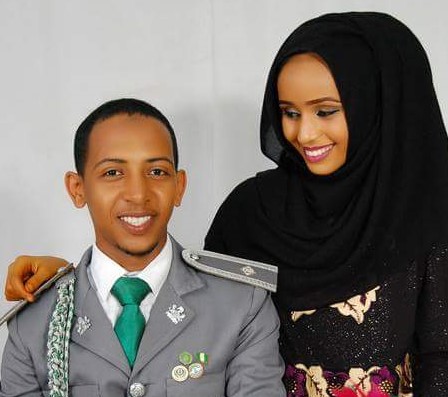
    Yushau A. Shuaib and Parents 2019

    I suspected that she asked the question as a way of goading me and inciting my interest in the discussion. It was a fairly emotional issue for me, not only because of some of the misconceptions that have come to be attributed to the issue of early marriage, but also because I am a product of parents who married early. Yet, the experience of my family has been nowhere near the predominantly negative narrative being peddled around. I can say the same for a number of families I know. My father evolved to become a distinguished scholar and academic, who is now retired, while my mother is a trader, who is now a remarkable matriarch of our family. They both remain strong, physically and mentally till date.

    I decided to accept the invitation to be a member of the panel on early marriage and girl child education, as a way of offering my lived perspective to the issue of early marriage in the North.

    During the webinar on March 8, the International Women’s Day, I came into the same discursive space with other panel members who had contrary views to mine, including a legal practitioner, a gender activist and a medical doctor.

    Since I had the opportunity to speak first, my argument set the agenda of the discourse.

    I insisted that early marriage, as distinct from child marriage, should be tolerated and encouraged in society. Since a marriage is a union of two people who have met certain conditions set up by different cultures, customs, religions and legislation, then it should naturally lead to a legal and legitimate companionship.

    The designation of legal adulthood and the marriageable age in many countries is 18 years; however, the marriageable age may be older or younger in other countries. Still, cultural traditions may override legislation, as many jurisdictions permit early marriage with parental consent or in special circumstances, such as teenage pregnancy.

    Meanwhile, in exceptional cases, apart from parental consent, authorisation from the court and religious laws allow for marriages below the age of 18 to hold.

    A report of the United Nations Population Fund (UNFPA) shows that in 2010, 18 years was the minimum legal age for marriage for women, without parental consent or approval by a pertinent authority, in 158 countries; also, in 146 countries, state or customary laws allow girls younger than 18 to marry with the consent of their parents or other authorities. Still, in 52 countries, girls under the age of 15 can marry with their parental consent.

    Most religions forbid the marriage of a female before the onset of puberty and maturity. In fact, disputes regarding physical maturity are often resolved by a scholar or a judge, potentially after examination by a female expert witness. In addition, many religions also vehemently prohibit sexual intercourse outside marriage; therefore, they establish a minimum age for marriage in one way or another.

    Early marriage allows a couple to experience adult life, while still young and strong.

    Obviously, there are other factors responsible for early marriage, which include the promotion of a sense of responsibility, the guarantee of security and prevention of social decadence. The unfortunate cases of baby factories where young girls are made to reproduce essentially for illegal adoption could be avoided even when such adoptions are common and encouraged in some developed countries.

    During the webinar, I pointed out that early marriage provides a safety net against poverty and deprivation, which could lead some to prostitution and drug addiction. It also protects the female, especially, from sexual violation and insecurity, particularly for those who live in or find themselves in slums and crisis zones.

    We should also be mindful and aware of the fact that political and financial alliances between parents, beyond poverty and insecurity, are also rampant among the Northern elites, who seal these relationships by arranging marriages for their children.

    Meanwhile, in most states in Northern Nigeria, newly married wives are becoming homemakers and home-entrepreneurs through skills acquisition. They now engage in tailoring, food catering and snacks making services, among others, from the comfort of their homes. Surprisingly, some of the skills being utilised and deployed are acquired through online programmes on credible social media platforms, websites and webinars, and not necessarily from conventional schools, particularly during the coronavirus pandemic.

    While age can occasionally be a wrong indicator of physical, emotional and psychological maturity, some good insight can be gleaned from how in these modern times, young people are emerging as very successful entrepreneurs, who are creating huge business enterprises and empires early in life. Interestingly, some highly successful entrepreneurs have been found out to be even school dropouts. The stories of Mark Zuckerberg of Facebook, Matthew Mullenweg of WordPress, Catherine Cook of MyYearBook.com, Blake Ross of Mozilla Firefox and even Justin Bieber, a singer and performer are proof that with focus, starting things early in life can only serve to enhance one’s potentials.

    The advocacy for early marriage, rather than child marriage, is one that hinges on the promotion and encouragement of reciprocal love, affection, alongside mutual respect and understanding, as against a union formed through compulsion or the forceful yoking of two people.

    It is necessary to urge partners who are candidates for early marriage to be strong, confident, and supportive of each other in achieving their personal and career goals. They should also seek to be always level-headed, thoughtful, and with senses of maturity in managing their emotions. Quite unfortunately, many even above the age of 40 cannot exhibit the same level of maturity displayed by a number of young people.

    While the other panel members were not comfortable with some of my submissions, one of them even made bold to suggest that the best age for marriage should be between 35 and 40 years! Nevertheless, the point I reiterated in the webinar is in support of early marriage and not child marriage.

    On this occasion of the International Women’s Day, we must acknowledge women for making all of us in society aware, appreciative and proud of their fundamental and remarkable contributions to our development.

    Yushau A. Shuaib
    www.YAShuaib.com
    [email protected]

  • Between Nigerian Igbos and Biafran Agitators – A Northerner’s Perspective

    Between Nigerian Igbos and Biafran Agitators – A Northerner’s Perspective

    Arewa Biafran Relocation
    Arewa Biafran Relocation

    Between Nigerian Igbos and Biafran Agitators – A Northerner’s Perspective
    By Yushau A. Shuaib

    The sweet memory of my youth service year in an Igboland of Asaba, Delta State in the 90s, is what I have continued to relish whenever a discourse on tribalism, sectionalism and the likes are on the front burner in my beloved country, Nigeria. As non-indigenes, especially young Northerners, we were well-received, accommodated and accorded respect and dignity. In fact, we freely walked into the Palace of the Paramount ruler, the Asagba of Asaba, Professor Chike Edozien for supports and guidance whenever the need arose.

    Since then, I have had a proper perspective and understanding of the Ndigbo whom I have as friends. In this tension-soaked period where various sectional groups issue reckless and unguarded threats, it is necessary to further distinguish between a peace-loving Nigerian Igbo from a Secessionist Biafran agitator.

    The Ndigbo, as I know them, are spread across every nook and cranny of Nigeria. The Igbo speaks local dialects and respects the culture of the host communities. He believes every part of Nigeria is a home away from home and adopted same as the place of residence. Experience has shown that if you go to any community and you cannot find an Igbo person there, your best bet is to leave that town immediately. Any city without an Igbo person is not business-like. On the other hand, a Biafran agitator is not exposed to other parts of Nigeria besides the Igboland and might have grown in the diaspora where he only learns the distorted history of Nigeria from myopic and eccentric points of views. The agitator hates other Nigerians and possibly believes in violent confrontation towards the actualization of his dream of the Republic of Biafra.

    Meanwhile, the successes of an Igbo entrepreneur is more visible outside the shores of Igboland with enormous investments in hospitality, housing estates, spare parts, automobiles and manufacturing industries among others in different regions of the country. However, the business enterprise of a Biafran agitator is restricted within his ‘Biafra-land’ without a vision for expansion outside the South-eastern region. The primary activity of an agitator is in constant pursuit of hate speeches through empty threats and arrogance posture. This is not the Ndigbo that I know so well.

    An Igbo Politician is a bridge builder, who establishes and sustains friendship across the Niger. The likes of Uzor Kalus of Abia, Rochas Okorochas of Imo, Peter Obis of Anambra among others are clear examples of successful Igbo businessmen who transcend geographic boundaries of Nigeria in wise investment in the productive sector, before venturing into politics to support the Igboland.

    Unfortunately, the Biafran agitator has completely lost touch with the reality of our existence. The secessionist has forgotten that the map of the South-Eastern region of the 60s has completely changed in the new millennium where the minority tribes are no longer in that realm but in mostly Niger Delta region of the South-South. The Biafran Politician fantasises on annexing other resource-endowed territories by visualising Ijaw, Urhobo, Kalabari, Ibibio, Ikwere, Efik, Igala, Idoma and Edo into the illusionary Biafran Republic. Some of these ethnic nationalities have in recent times come out to dissociate themselves from the so-called Biafra agitation.

    The Nigerian Igbo believes in oneness and indivisibility of Nigeria, he speaks Nigeria, breath Nigeria and will never leave Nigeria. An obvious example is the fact that Igbos in Kano populate the vast Sabon Gari District whose population is more than most big cities in the South-East. Apart from occasional sectional skirmishes which may not necessarily be their faults, the Igbos in the North are well loved by Northern leaders even protected by Arewa youths.

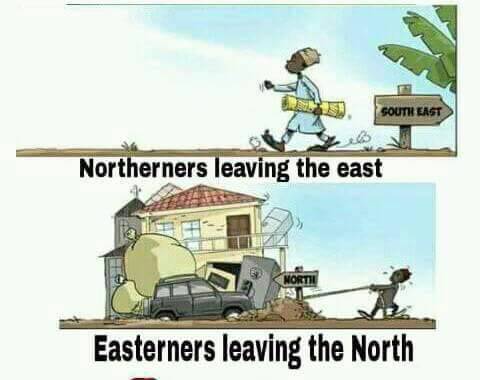
    The Igbos are allowed to acquire properties and establish businesses in every Northern part of the country, but the Biafran sympathisers have continuously denied outsiders from owning lands for business related activities in the South-East. This glaring discrimination currently creates the disparity of inequality of business ownerships where an average Northerner can quickly relocate without losing a dime, while the sheer volume of investment of a South-Easterner can never be easily recouped or transferred even in decades.

    It is necessary to point out that the modern day’s Biafran agitators hate Nigeria and Nigerians and have described the country as a zoo. The main agitator and Supreme Leader of Indigenous People of Biafra (IPOB) known as Nnamdi Kanu has not only publicly threatened to wage war against Nigeria in a bloody and violent confrontation but has also described any Christian that attends “a Church with a Yoruba Pastor as an idiot, imbecile and not fit to be a human being and worse than Boko Haram.”

    In series of his videos and audios, available online, Nnamdi Kanu engages in lousy intimidation and nauseating statements. It is just ridiculous, however, that rather than condemning him and bringing him to order, some respected Igbo leaders, who have themselves built bridges across the length and breadth of this country, celebrate and even stand behind him over his treasonable case in the court.

    While the rantings of Biafran agitators had gone on for a while without a reply, it was the reckless declaration of the ultimatum issued by the so-called Arewa Youths as counterbalancing response to the inciting statements that reawakens the consciousness of Nigerians to the danger of hate campaigns.

    While it may be justifiable to unleash a ferocious dog against a neighbour’s untamed mad dog, we should nevertheless tame the fury of Arewa youths who may have the exact mindset of Kanu’s IPOB. Some may not issue empty threat, they can just misbehave like the mad dogs.

    As Nigerians, we should deploy common sense through dialogue to resolve the contentious issues of our nationhood. After all the hullabaloos and threats, I am so sure that no one is going anywhere. We should remain united and stop the dirty politics of ethnicity, widely played by sponsored and misguided youths. The ill-advised agitators from both parties must have read slanted history books since they were not witnesses to the history.

    Yushau A. Shuaib
    www.YAShuaib.com
    [email protected]

Latest News
End the Apartheid of Indigeneship: Why Nigeria Must Adopt Residency-Based RightsKwara 2027: The Chess Game of Sarakis PDP and AbdulRazaqs APC by YAShuaibNkechi Ali-Balogun: The African PR Amazon @70 By Yushau A. ShuaibKishiya: Between Ribadus ONSA and Famadewas Homeland SecurityConsensus Fraud: When Governors Usurp the Voters MandateTo Wike: It Is Wickedly Wicked to Convert Wuye's Public Hospital into a Private EstateProfs Adamu & Pate: Gentle Giants of Communication ScholarshipCan AtikuObi Unseat TinubuShettima in 2027?The Gombe Succession: Who is Afraid of the Pantami FactorShettiman Dukawuya @30: Linking Three Regions and GenerationsThe Trials of Dasuki and Malami A Study in Nemesis: What You Do Unto OthersEnough Is Enough: After Bashar Sanis Death, the North Must Finally Confront Its Own Monsters2027 Elections: The Fear of Trump, Werekaci and Nigerian Politics By YAShuaibBetween IGP Disu and DIG Mba: A Personal ReflectionTo DSS Boss: What Was Good for Ese Oruru Must Also Be Good for Walida Abdulhadi