Category: Profiles

  • Voice of Nigeria and the Challenge Before Jijiwa

    “The rejuvenation of VON is part of our effort to correct the global imbalance in broadcasting industry which has been in favour of the more powerful nation.” – Atiku Abubakar.

    These are the words of Nigeria’s Vice President Atiku Abubakar while confirming the Federal Government commitment and aspiration to propagate our values and enhance our national interest and that of the African continent in the global scene through the Voice Of Nigeria (VON), the nation’s external public broadcasting organization

    The popular public service broadcasting stations at national level in Nigeria are the Nigerian Television Authority (NTA) and Federal Radio Corporation of Nigeria (FRCN). But to Nigerians in Diaspora and other foreign listeners to broadcast media, the Voice of Nigeria remains the global voice of Nigeria in promoting our culture, tradition, heritage and social values.

    Before the announcement of the disengagement of Mr. Taiwo Allimi as the Director General of VON, he was able to record notable achievements, which were confirmed by his able lieutenant, Mallam Abubakar Jijiwa who was the most Senior Director in the agency and appointed as Ag. Director General. Mr. Jijiwa disclosed that he would build on the noble achievements of Mr. Taiwo Alimi, which nobody can throw away. Though, he admitted, they may have different styles, Mr. Taiwo performed well in the area of securing a lot of partnership and collaboration with other foreign organizations.

    Voice of Nigeria is modeled after external services of other powerful nations like the Voice of America, British Broadcasting Service, Radio Moscow, Radio Australia, and Deuswelle amongst others. Voice of Nigeria provides radio broadcast services for global reception in foreign and local languages.

    Though founded and commissioned by late Prime Minister Tafawa Balewa in 1961 as the External Service of the then Nigerian Broadcasting Corporation, the station fully became autonomous on January 5, 1990. As the tradition with most external service public media, VON does not carry commercial advert or sponsored announcement but carry for fee programmes approved for international broadcast by United Nations’ agencies. Some of its programmes focus attention on indices of viable platform for major development in areas of industrialization and agricultural potentials; cultural heritage that create a well-ordered society with due respect for the rule of law.

    Before the age of Information Technology, where internet service provide timely report, Nigerians abroad and other foreign interest rely on programmes from Voice of Nigeria as it broadcasts globally on different short wave frequencies to nooks and crannies of Africa, Europe, United States, South America and some part of Asia.

    The appointment of Alhaji Abubakar Jijjiwa as the Acting Director General after more than 10 years as the Director of Finance in the corporation did not come to many as a surprise. He had a distinguished career in the print and broadcast media with additional experience as seasoned financial expert and as an accountant who was also former Commissioner of Finance in Adamawa State.

    But the challenge before the new Acting Director General is very enormous having garnered more experience in media establishment and for being the only Northerner, presently to head one of the information machinery of the federal government. The other Federal outfits include Nigerian Television Authority headed by Tony Iredia, Federal Radio Corporation of Nigeria under Eddie Iroh, and News Agency of Nigeria which has Mr. Akin Osuntokun as the Managing Director.

    Born on March 15, 1961, Alhaji Jijiwa has a degree in Accountancy and has received several certificates in Broadcast and Media management both at home and abroad. As a man who is interested in the media world, he started off as Staff Writer with New Nigerian newspapers before moving to News Agency of Nigeria as Head of Accounts. Some of his other working experiences include General Manager/Chief Executive of Gongola Broadcasting Corporation, Director General /Sole Administrator Adamawa Broadcasting Corporation, Assistant General Manager, News Agency of Nigeria before moving to Voice of Nigeria in 1993 as Director Finance and Supplies. He was also Commissioner of Finance, Economic Planning and Budget in Adamawa State.

    One may not expect him to perform miracles overnight in the agency that have wider foreign audience, but he should focus the station’s programming on the Nigerian Image Project initiated by the detribalized Minister of Information and National Orientation, Chief Chukwuemeka Chikelu. Syndication of the programmes to other partner foreign radio stations is desirable in sharing ideas and information vital to promotion of our image and sustenance of democracy.

    It is widely known that the overall radio listening audience is larger than the television viewers as it is not only targeting specialized audiences but coincidentally too, the general populace. Therefore external radio services should provide a wealth of cultural diversity across frontiers. Statistics indicates that foreigners and non-Nigerians enjoy some of the varieties of VON’s programmes especially on our indigenous musical rhythms and sports exploits.

    Mr. Jijiwa should also realized that VON’s website which was launched not long ago needs to be regularly, on daily basis, updated with news items from their programmes in the major global and local languages. A visit to the website would indicates that, it lags far behind compared to other such media, where one does not need to tune to their stations to get the gist of latest development.

    While it is easy to tune to VON within some selected location in Nigeria through the two Short Wave frequencies 7255KH and 1512KH, there is need to upgrade the equipment for clearer reception and signal to all parts of the country.

    His experience as former Commissioner of Finance in Adamawa State, where he distinguished himself as manager of men and material should enable him to design programmes and welfare packages to boost the morale of the staff in the unsung media outfit.

    While one may wish that his confirmation would be announced as soon as possible to strike a balance on the federal character, it would also be a fulfillment of desire of staff in government institutions who pray to reach the peak in their establishment through career progression.

    This article by Yushau A. Shuaib was originally published in Guardian Sept 10, New Nigerian 11, Champion Sept 14, Tribune Sept 14, Daily Trust Sept.22, 2004

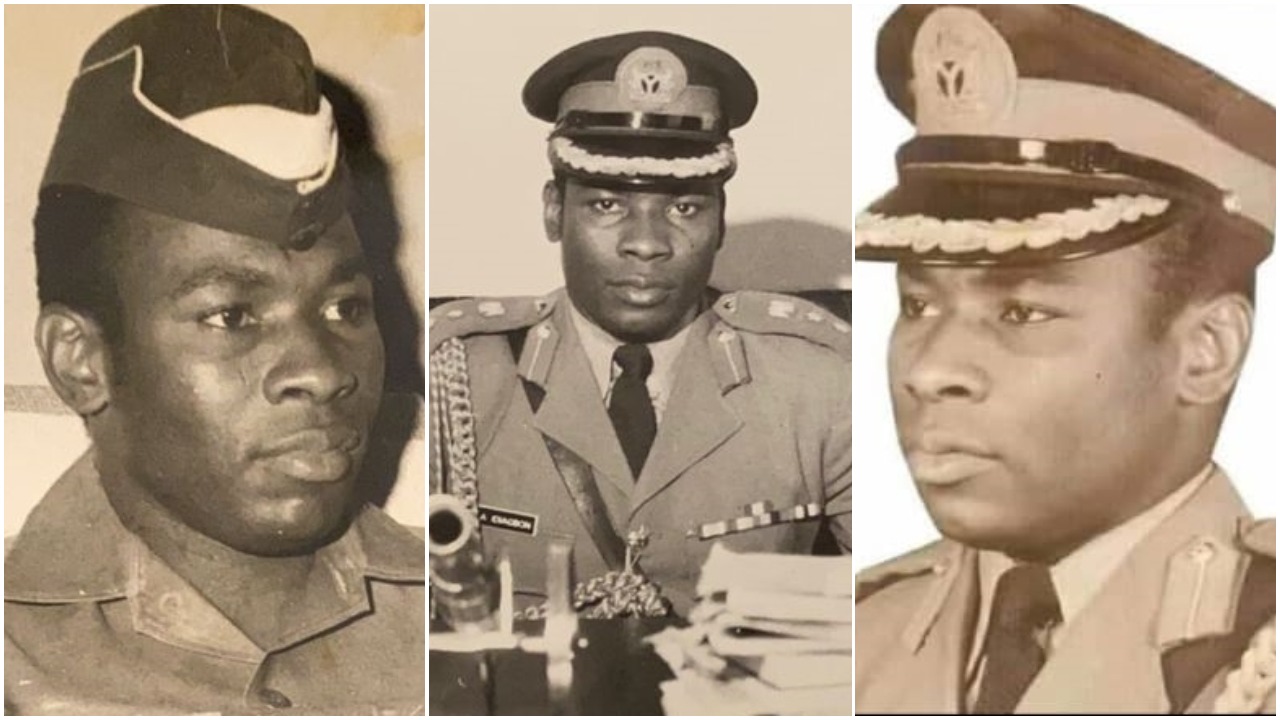
  • Idiagbon: Where are the Patriot and Compatriots by YAShuaib

    Idiagbon: Where are the Patriot and Compatriots by YAShuaib

    Idiagbon: Where are the Patriot and Compatriots by YAShuaib (first Published September 2004 and in media mentioned at the bottom)

    “It is a pity that Tunde Idiagbon’s regime was destined to collapse, in spite of all its patriotic zeal and vigour, in words and action” – Major General Christ Ali (Rtd)

    The above is from a brilliant and intelligent officer of the Nigerian Army who retired as Chief of Army Staff and presently is the Administrator of Plateau State. It is quoted from his best selling book on military coups and incursion into Nigeria’s politics with the title “The Federal Republic of Nigerian Army: The Siege of a Nation”

    The dilemma of any public commentator, especially our editors, is the fear that some opinion or commentary on a topical issue may be misconstrued and linked to our electoral process. But luckily enough this piece is not on a gladiator still alive but in memory of late Gen. Tunde Idiagbon, the former Chief of General Staff, Supreme Headquarters and Deputy to Former Head of State General Mohammad Buhari. The almost forgotten disciplined and patriotic Nigerian military officer whose quest to salvage the nation from perpetual negativities was truncated for no just cause and died some years ago unsung.

    With his close relationship and having worked directly under Obasanjo and Buhari one may wonder whom between the two he would have supported in the last election. It should be recollected that the trio participated actively in the Otta Farm Forum, where issues of national and international importance dominated their discourse. In fact there were speculations that Obasanjo would have brought in Idiagbon to his government immediately after the 1999 election but for the unnatural death that began from a sickness in Abuja on his way back to Ilorin his hometown. He was born on September 14, 1942. He would have clocked 62 years this year if not for the death that took his life on March 24, 1999 just two month to the swearing in of the President Obasanjo into the first tenure as democratic president.

    Though no one would wish to publicly admit the positive side of military government especially when one savours the beauty of democracy, the regime under which Idiagbon served at the topmost level still remains the most principled, disciplined, corrupt free and agrarian period of our nationhood. As a brave and courageous soldier who had nothing to hide, he insisted on coming back home from Saudi Arabia where he was on pilgrimage immediately after the Coup, not minding whatever the new Junta wished to do with him. But the scared plotters refused to grant his request until some days later.

    Even after some years in detention, he could not be pinned downed for committing any offence or crime against the state. His unconditional release after years in detention was not surprising. He remained reserved and close to God rather than dabbling into State matters until he died suddenly.

    Just as his stern visage would not admit of smiles, so was his administration’s dogged refusal to tolerate corruption, indiscipline, dishonesty, disloyalty and unpatriotic tendencies. The major victims of that regime were not the ordinary and innocent masses, whose rights we were told were trampled upon, but the shylock businessmen, drug pushers, armed robbers and corrupt politicians of the preceding political era.

    Of all coups in Nigeria, the Buhari/Idiagbon coup had clear persuasive and convincing justification even though it were a little exaggerated but the removal of the regime was without any reasonable justification apart from the claim that they were stubbornly principled which in every sense meant the duo refused to allow others the chance to come and chop the national cake.

    Within just One and Half year, the regime in which Tunde Idiagbon was given a free hand to change the way we think, got Nigerians to appreciate, perhaps for the first time, the meaning of discipline and honesty in the polity through the War Against Indiscipline campaign. He was able to instill discipline making for orderly queuing, environmental sanitation, appropriate market price for goods and pride in our nation through campaigns on Nationalism and patriotism.

    The formulation of policies and promulgation of decrees to fight some of the cankerworms like the Miscellaneous Offence Decree No 20 of 1984 that clamped down on economic saboteurs; the adoption of stricter austerity measures to further revamp the economy; the deportation of illegal aliens who constituted major criminals and prostitutes in rural and urban areas; the tackling of smugglers and bunkerers with heavy penalty and confiscation of such goods; the increase in Nigeria’s oil production quota through a major concession from OPEC; the discipline of untouchable personalities including politicians, businessmen and traditional rulers for breaking the laws of the land; the growth of local industries through the policy of substitution of imported raw materials with local raw materials; the back to farm policy that encouraged massive agricultural food production; change of the colour of the Nigerian currency that curtailed money laundering, inflation and volume of currency in circulation; the public execution of armed robbers and drug barons which reduced crime rate to the lowest in the countries history and above all the reorientation of Nigerians to love their country through practical steps and leadership by example. These were what stood that regime out and constitute a record no one has matched especially with the War Against Indiscipline (WAI) campaign.

    Today, years after his demise, nobody, no institution, no government and no group has come out to immortalize his name for his contributions to our dear nation not even through a brief annual lecture. I learnt that a patriotic group by name Third Estate is planning to have a programme to commemorate the death of this enviable patriotic Nigerian but they nurse a fear that the programme may be given a different political coloration.

    Nigerians would not bother whatever interpretation it may be given. Let Nigerians, true Nigerians, come out and identify with the exemplary role played by this illustrious son of ours. Let the Federal Government do something to immortalize his name, at least we have seen centres and institutions built to immortalize some of our leaders dead and alive. Let his state do the same. Let’s have an Idiagbon Centre for Discipline and Patriotism. Let us borrow a leaf from the decisive ways and manner they fought corruption; let’s lead by example and propagate the campaign of loving and staying in our nation by not jetting out the Andrew’s way; let’s put politics aside and give Idiagbon his due; let’s also put envy aside, after all even if he were alive he may not have scuttled the aspirations of anyone as he was never interested in partisanship. The proof is there.

    This article by Yushau A. Shuaib was originally published in New Nigerian Sept. 24, Vanguard Oct. 6, Daily Trust Oct. 6, Nigerian Tribune Oct.8, The Punch Nov 16, 2004

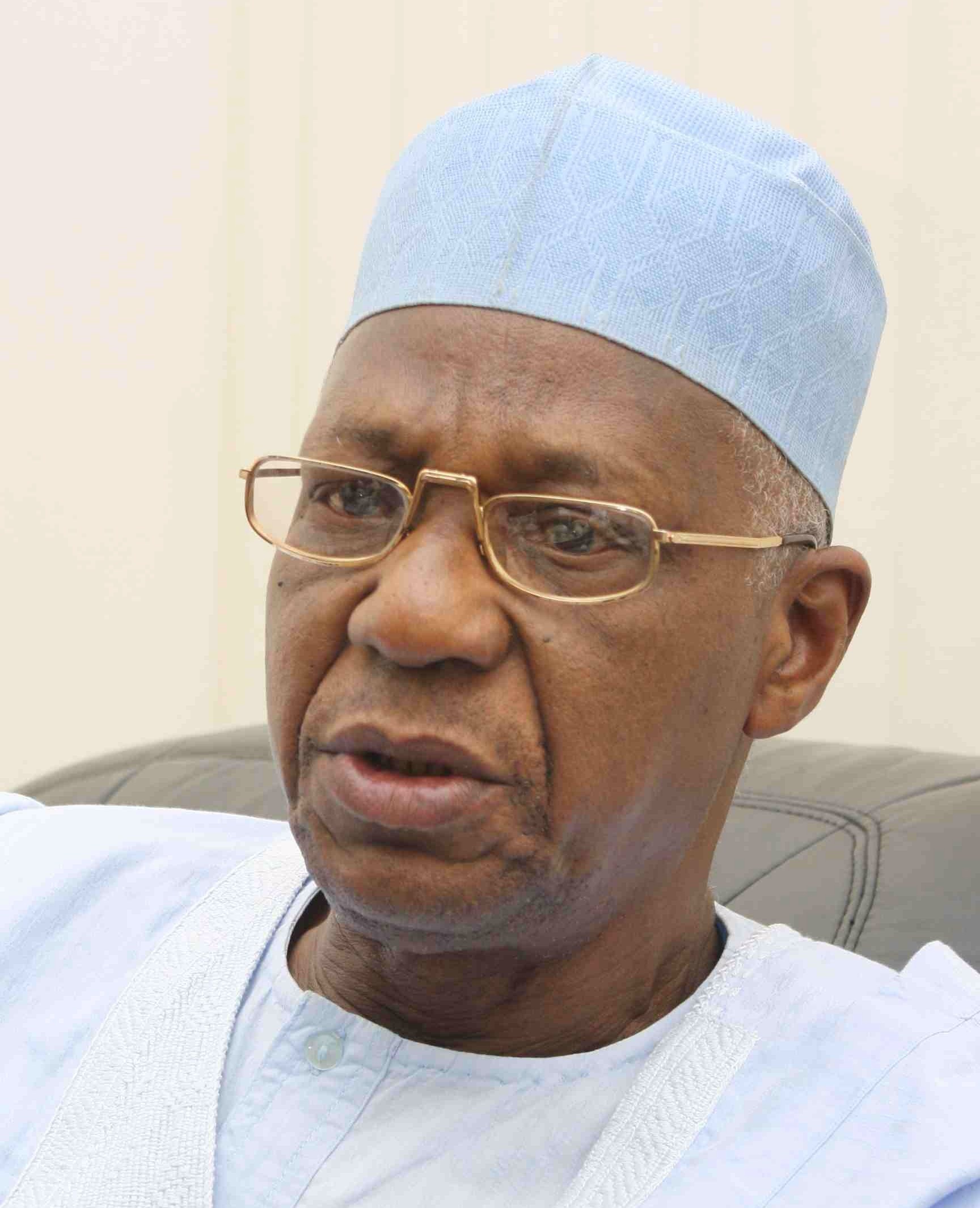
  • Hamman Tukur and the National Honours

    Hamman Tukur and the National Honours

    Hamman Tukur
    Hamman Tukur

    For those conversant with the Nigerian economy in the present democratic dispensation, a constitutional agency has created tremendous awareness and public participation on issue bordering on public finance such as monetisation policy, revenue generation, federal allocation and fiscal efficiency. The agency is the Revenue Mobilisation Allocation and Fiscal Commission, under the leadership of humble and courageous Engr. Hamman Tukur who was recently named for the conferment of national honours of the Order of Federal Republic (OFR).

    Though some leaders have received a lot of accolades from fair commentaries, chieftaincy titles, honorary degrees, sponsored advertorial and solidarity rallies, there are some achievers whose introverted disposition of refusing to blow their trumpets are not widely acknowledged. Engr. Tukur falls in this category. Even though various groups and individuals have nominated him for traditional titles and awards, he often humbly refused such honours that are usually attached to monetary values, unwholesome reciprocation and objectionable conditions. Not all honours are bad but the rate at which honours are dashed to wealthy and public office holders without any commensurate contributions and achievements made the motives of such exercises questionable.

    Tributes are also not intended to praise-sing but highlight some emulative sterling qualities and selfless sacrifices made by individuals and organizations towards a better and prosperous society, not to eulogize selfishness and accumulations of wealth. Having been close to the chairman at official and personal levels, due to the nature of my professional calling, I may say that Nigeria is truly blessed with people of high integrity, honesty and piety.

    It may surprise many to note that, under his leadership the Commission received tremendous support from the stakeholders, especially from President Olusegun Obasanjo who has magnanimously endorsed most of its recommendations for economic rejuvenations. It is within the first term of the democratic dispensation that the Commission introduced monetisation of public officers’ pay to reduce wastage of funds and instill discipline in the management of public properties; it resolved crises over disputed oil wells among states in the Niger Delta; it proposed fair and just revenue allocation formula and created awareness on the need for transparency and accountability in the oil and non-oil sectors for more revenue to the federation account for the benefit of Nigerian populace. It serves as a forerunner in the campaigns for financial independence of the tiers and constitutional panels. The Commission also successfully reconciled federal and states’ external debts and by extension recommended better measures of managing those debts.

    As a man who doesn’t believe in cheap publicity to boost any egocentricity, the deployment of this writer to the Commission on its inauguration in 1999, as Public Relations Officer was received with skepticism. Afterall since the establishment of the Commission in 1988, there never existed Public Relations Department in whatever nomenclature. It took some level of reasoning for the consideration of the officer that information dissemination in a democratic era is vital for maximum public participation in policy formulation and success of people-oriented programmes. The acceptance of the officer also coincided with the decision of the Commission to marshal out best strategies to seek for public contributions through submission of memoranda on some of its constitutional roles and requirements.

    As a man who appreciates excellence no matter from which tribe, religion and age, Engr. Tukur allowed this writer to provide full machinery for the Public Relations Unit and to also recommend relevant and qualified officers to beef up the unit without allowing godfatherism and sentiments into the exercise. This was also extended to state representatives in the Commission to recommend experienced and qualified staff from their localities to boost its manpower through a recruitment exercise. The Chairman’s relationships with the committees and departments in the Commission are exemplary.
    On personal note, in Public Relations Unit, where the young staff benefitted from regular training to enhance their professionalism, the chairman neither subjects their press releases to his scrutiny nor interferes with media strategies in unethical ways. The environment is so conducive to practice public relations that the officers do have the opportunity to engage the Chairman in hot and cordial debate on public issues on one-on-one basis. To sustain the integrity of the Commission whose activities cut across the tiers and arms of the government, Engr. Tukur initiates an open door policy of listening and attending fairly to issues brought before the Commission. As an avid reader of most national dailies, he studies public moods, accepts constructive criticisms, and acts on those relevant to the workings of the Commission. As a man who values the importance of a well-informed public, the press have access to information that would better the lot of Nigerians and is straightforward in discharging his responsibilities.

    Though being the chairman of the Commission, he doesn’t allow his position to becloud his sense of reasoning as he sees himself like every other member. Every session of the Commission is a reflection of Market of ideas where members armed with relevant materials, like lawyers, to debate and take up issues through factual presentations, historical perspectives, legal and constitutional provisions devoid of political undertones and fables. It may surprise many Nigerians that for the past four years as the Chairman, he has never travelled outside Abuja or abroad on official assignments. As a dynamic leader who delegates responsibilities, he prefers members to represent the Commission at most of the public fora. Though he has a higher respect for politicians, but due to his stubbornly principles, he has a strict reservation to partisan politics and sectional alliances. It is in the account of this that he abhors political solutions in place of laid down rules and procedures to resolve sensitive fiscal issues.

    Even though to those in the business of mass-communication, goodwill is expensive, not in monetary terms, the chairman created and sustained it through honesty and open interaction with stakeholders. In fact being a constitutional body, the Commission under him does not treat issues and policies based on sentiment, emotion and politics but purely through acceptable technicalities and constitutional provisions for fair judgments.
    How come he was able to carry out his roles so meticulously and succeeded? The answer is not far-fetched. He had garnered a lot of experience from the academic circle, bureaucratic environment and structural consulting at different stages of his life. For many years he was the Rector of Kaduna Polytechnic, Managing Director National Electric Power Authority, Director General Ministry of Power and Steels and that of Petroleum Resources and was on retirement when the government of President Olusegun Obasanjo invited him to serve in the Revenue Mobilisation Allocation and Fiscal Commission.

    Though Engr. Hamman Tukur was shocked on learning of the award, he nevertheless credited it to the united family of the Commission, where some of its members like Otunba Ayora Kuforiji-Olubi, General AB Mamman (Rtd), Chief Bayo akinola and Alh. Salihu Jega have received similar awards. The Order of the Federal Republic award to this dynamic Nigerian is truly deserving and timely for his selfless service, patriotism and loyalty to the nation.

    This article by Yushau A. Shuaib was originally published in Daily Trust Dec11, New Nigeria Dec12, Daily Champion Dec19, Daily Times Dec22, 2003, Saturday Times Jan 17, 2004

  • Nzeribe for Senate President?

    “Nzeribe to become a Muslim!”
    That was the headline of the lead story in the Triumph, a Kano-based newspaper sometime in the early 90s, when the maverick politician hoodwinked the people that he had received inspiration from God that Islam is the religion that could lead him to posterity. The paper at that time was edited by the former President of Nigerian Guild of Editors and presently a General Manager with ALSCON, Mallam Garba Shehu. The Muslim community was agog over the big catch, even though few were skeptical on the motives of the new convert. Unfortunately as the Muslims thronged in a large number to the Emir’s Palace on that Friday, they received the rude shock that the radical businessman could not turn up for the spiritual conversion where flimsy excuses were given.

    This is just a brief of numerous melodrama scripted and executed by Senator Francis Arthur Nzeribe, a Senator representing Orlu (Imo West) Senatorial District, since he ventured into national limelight few decades ago. The same man whose name reminds one of mercenary by his exploits in some African countries, is being widely publicized in recent time as gunning for the exalted position of senate president of Federal Republic of Nigeria.

    One may wonder his credentials and experiences to deserve the topmost position in the legislative arm of the most populous black country in the world. For long, before now, he was associated with the popular FAN Milk, the company had to disclaim the notion. There was also the impression of him being an Engineer by qualification, until when the recent security report, published in a national daily recently (Thisday May 10, 2003) stated that he only possesses WAEC Certificate. Interestingly few days after the disclosure he admitted not possessing any academic qualification apart from the School Cert. The same Security report also indicated that he was found guilty by the Lagos Zone 2 of the Failed Bank Tribunal on charges of fraud and dishonesty on his role in the liquidation of ALFA Merchant Bank Plc.

    On the political scene, the Senator from the industrious Ibo tribe, plunged the nation into its worst political experience, when he used his infamous Association for Better Nigeria (ABN) to abort one of the acclaimed freest and fairest election on June 12, 1993. The aftermath effect was the battered image of Nigeria and the loss of lives including the death of prominent Nigerians like Chief MKO Abiola who died in pursuit of his mandate.

    The school leaver Senator, who was claimed to have become a millionaire at the age of 29, was also active during the Abacha regime. After scheming himself to be elected a Senator, invited elected legislators to a meeting where they intended to collectively endorsed General Sani Abacha as a consensus President, through a draft resolution.

    At the emergence of the present democratic government, the Oshiji of Oguta has continued to exhibit his fluid character, like the chameleon, by the way he exhibits and performs in the legislative house. For example, he was the first lawmaker to nurse the idea of sacking elected officers at National Assembly through a threat of impeachment against the first Senate President, Chief Evan Enwerem who also hails from South-Eastern Nigeria for an allegation of being subservient to the Executive arm. He also played prominent roles in the impeachment of another Ibo Senate President, Dr. Chuba Okadigbo and attempted the impeachment of President Olusegun Obasanjo, before he was strongly cautioned by the Yoruba leaders who were quick to declare him persona non-grata in their domain, before he was finally tamed and subdued from the reckless rampage.

    But surprising as if to lend credence to the notion that Nigeria is a country that anything goes, the Federal High Court, Abuja recently quashed the suspension placed on him by the members of the upper house for acts considered anti-democratic and anti-senatorial tendencies after his explosive confession that he bribed some of them with huge amount of money for a cause. To add to the bewilderment, the Code of Conduct Bureau, which had early preferred charges of false asset declaration against the Chief withdrew the charges without bothering to disclose the reason for the change of mind.

    Senator Nzeribe for those conversant with his antecedents is a man who enjoys any good thing at any moment but can rock the boat when he is dissatisfied. He had, during the military eras, either called for the continuation of a military regime or campaign for the transformation of military dictatorship to civilian leadership.

    Apart from active participation in the public fora, the same “distinguished” senator was recently in the news when he took as a wife a woman whose husband claimed he never divorce her. The marriage which was shown on a network programme was fully reported by a human-angle tabloid, the Glitterati, a weekly insertion in Sunday Thisday Newspaper. The publication narrated the story of a dejected and lonely man, Mr. Harry Mosco who swore that his wife and mother of his children was never divorced but couldn’t know how to get her back. This brought to the fore the saying that when a rich man snatches your wife, you can at best retreat to sanctuary for spiritual contentment since you do not have the means to win her back.

    Though the seat of the Senate Presidency may be zoned to the South East, most of the aspirants to the exalted seat are found to be very controversial. For example what can one say of Senator Adolphus Wabara, who was defeated at the PDP Senatorial Primaries by a young lawyer and a federal commissioner in RMAFC, Barrister Emeka Wogu, in the morning only for his name to be presented as Senatorial candidate in the evening. What about the admirable political propagandist, Chief Uche Chukwumerije, who played a leading role in the past military era or Senator Ifeanyi Ararume, who is said to be mentioned in Kuta’s Report on Contract Award and was once suspended for taking the Senate to Court.

    Though the Ibo-Speaking Zone has the right to bring anybody it wishes to hold forth as the next Senate President, it should however, be cautious and wary of those that would make the seat embarrassingly the repeat of the ‘turn-by-turn syndrome’ where more Senate President may emerge within a short while. They should also be careful not to nominate a character who may wish to take over the Aso Rock by attempting to remove the President and the Vice President simultaneously to pave way for easy ascension to the First Office.

    Though each constituency in Nigeria has a right to nominate and elect any character befitting their demeanor and mannerism to represent it at the National Assembly, but Nigerians from all constituencies have the right to know and make a choice through their representatives, of a credible and principle personality to represent our good image and the whole federating units.

    This article by Yushau A. Shuaib was originally published in Nigerian Tribune May21, New Nigeria May22, Daily Independent May22, ThisDay May25, The Monitor May28, 2003

  • Bola Ige: A Northerner’s Perception

    The death of Chief Bola Ige, like the death of any Nigerian leader, especially as it came through a gruesome assassination, was received by many with rude shock. His last service to his fatherland has proved to chauvinists and enthusiasts that he was a distinguished personality, an enigma in the Nigerian contemporary politics.

    I have to admit that I never had any close contact with him, but I almost had the opportunity of working with him when I received a message from Mallam Sani Zoro, the detribalized former National President of the Nigeria Union of Journalists. The message to meet Mr. Zoro was conveyed to me by the President of the Students union, University of Abuja, Comrade Mohammed Kari.

    Mr. Zoro asked me a simple question when I met him. He asked what I could say about Chief Bola Ige. It was a few months after the latter’s appointment as the Minister of Power and Steel. As one born and brought up in the North, with the knowledge of the different derogatory remarks made by the Chief against the North, it did not take me time to respond that Chief Ige was a tribalist, sectionalist and a leader of anti-north sentiments. As a respected columnist, his campaigns went further in his weekly column in the Sunday Tribune, which was seen largely as the page for merciless bashing of northern leaders.

    Mr. Zoro could not take further vituperations on the man who was seen as the reincarnation of Chief Awolowo on an enviable political standing, as he abruptly asked me what the practice of most leaders were when they claim to have a constituency. He also asked about yardsticks by which tribal and sectional groupings judge their leaders and what earned such leaders more followers? I was a little dumbfounded. To cut the story short, I was asked if I could be recommended to work with the late Senior Advocate of Nigeria. I asked for some time, which was used judiciously to read and study the late legal luminary through some of his articles and interviews. In fact, I had to meet some officers and journalists covering his then ministry (Power and Steel), like Mallam Shuaib of News Agency of Nigeria. It was afterwards I discovered a different Ige from the views and little study I conducted which rubbished some of my earlier wrong perceptions.

    From the little I gathered, I can say that Ige had accomplished his dream as a legend in his political life. He was an erudite and distinguished lawyer; courageous and active politician; fearless and principled columnist; a teacher’s teacher and a good disciplinarian to the core, who called a spade a spade.

    There were those rumours that he wouldn’t last with President Obasanjo because they would disagree on many issues and that he might lash out at the President in public and that he would fight against the interest of the North and make it worse off. But what did we see at the end of the day? Knowing his weakness that he couldn’t see evil and keep mute, he must state it point blank in his column, he suspended contributions to his Tribune column. That and his other silence on sensitive state matters were no sign of weakness, but a political strategy, which made him more receptive to all and sundry.

    He was a friend to many northerners and open to criticisms. Many were surprised at the kind of grand reception accorded him by the government and people of Zamfara State during an official visit when the so-called imbroglio on Sharia was still raging.

    As a nationalist, a lover of the youth, he fought to make sure that his party, the Alliance for Democracy, was not seen further as the party of the Yoruba race, but an all-embracing national party that would accommodate others from different parts of the country. This singular act earned him many enemies in his region. It was most unfortunate that some young thugs in the palace of the Monarch of Odua, in the presence of Yoruba politicians and leaders, embarrassed and humiliated the statesman, their very own, in their midst. Such shameless acts would neither be condoned nor allowed to happen in the North, especially when the victim was a septuagenarian.

    While he was fighting to see a more united cohesive Nigeria, tribal warlords would not give him a breathing space. But he remained calm, and resolute and yet he was killed in their midst by the same bigots who would have wished he was murdered in places like Zamfara, Kano or even Abuja so that they would have waged another campaign of calumny. Were El-Mustapha and Bamaiyi released, a new conspiracy theory would have been prominent in their analysis. Even with the sequences of gory events of attack on this humble orator, which were widely believed and confirmed as politically motivated, cacophonous singsongs would have rent the air. If not that Nigerians are more matured and understand their antics, the country would have been hot with the so-called list of assassin targets in their circulation.

    Even though some may still have their reservation about the person of the chief law officer of the federation, it is a taboo in the North to pass uncomplimentary remarks on the dead. The northerners are among the teeming populace who condemned the nature of his demise and pay condolence visits to the family. The most senior political officer from the North, Vice President Atiku Abubakar, is said to have wept, while the most respected northern icon and social critic, Alhaji Wada Nas, has extolled the quality of the man who has contributed the best he could to promote the unity of this great nation.

    We should strive to appreciate those values and action that unite and promote our oneness instead of engaging in diversionary and trivialized sentiments that create a sense of vendetta and acrimony in the polity.

    Cicero of Esa-Oke is gone and is at present highly missed but he left behind a legacy, which is adored by many. I pray he would be immortalized by naming the University of Ibadan or the Airport or both after him.

    This article by Yushau A. Shuaib was originally published in National Interest January4, New Nigerian Jan 5, Thisday Jan 6, Nigerian Tribune January 9, 2002, Daily Trust January 7, 2002

  • Ahmed Musa: Gone but not Forgotten

    “I’m home; I’m the son of the soil; I’m truly grateful to God that we truly belong to him and to Him we shall return.”

    The above is the short statement made by Alhaji Ahmed Musa, the Walin Misau when he was asked to make a remark at a dinner party hosted by the Bauchi State Governor, Alhaji Adamu Muazu. I replayed the videocassette several times and wondered whether my emotional feeling at the news of Wali’s death was deceiving me. Again and again, the few words above were what re-echoed from the video recording of the event.

    It is said that the average life span nowadays is 60 years. The dream and prayer on the lips of the present young generation are to live a long and fulfilled life worthy of emulation by all. But the long life still eludes us and seems to be unattainable. It is a tall dream in Nigeria today when viewed from the perspective of political instability, murders through the hands of unscrupulous elements, reckless driving, deadly infectious diseases and various other terminal ailments that rear their ugly heads in this age.

    That Ahmed Musa died at the age of 71, peacefully, in his hometown, is a fulfilled dream of our era. It is gratifying to note that the deceased lived a memorable and dynamic life whose impact is felt throughout the nation by virtue of his immense service to his fatherland through the several public positions he held, even beyond the normal expected life span on earth.

    Until his death, Alhaji Ahmed Misau was an active and humble commissioner in the Revenue Mobilisation Allocation and Fiscal Commission, Abuja. One of his last public assignments and official outings was at the last retreat organized by the RMAFC at a conducive hideout, away from the hobnobbing of the city of which he contributed a lot to its success.

    When the Commission was about to submit its final work on the new revenue formula, there were intensive political lobbies from the likely beneficiaries, which cut across the arms and tiers of government. Therefore, when the Chairman, Engr. Hamman Tukur and the commissioners from all the states and Abuja, concluded all the meetings and consultations with stakeholders with additional memos received from interested groups and individuals, a conducive environment was sought, where they would digest, analyze and determine, in its totality, the new revenue formula, away from prying eyes.

    The venue of the retreat was the Yankari National Park, Bauchi. The choice of the place was deliberate, to avoid distraction, unnecessary lobbies and at the same time, maintain a high level of confidentiality in taking decision on the sensitive and delicate constitutional issues of revenue sharing. Being the commissioner whose state was to be used for that epoch-making event, Walin Misau did a lot of moving around and sacrificed his leisure time to make sure that adequate arrangements were on ground for his colleagues to have a pleasurable stay in his state. In fact, he saw to it that all facilities and security at Yankari National Park were in place to enable the members have a healthy and smooth deliberation.

    In company of Engr. Tukur, he led other members on a visit to the Governor of Bauchi State for a dinner party. He was reluctant to sit at the high table, as the commissioner from the host state, preferring instead to sit among his colleagues, who, however, refused, insisting that he should take the platform reserved for the men of status and achievement.

    It was at that forum which turned out to be his last known public engagement that he made the remark which remains a puzzle and is at present interpreted as imperceptible farewell to all his colleagues at the federal and state levels where he served diligently and honorably in different capacities.

    On learning of his death, a powerful delegation, comprising Alhaji Magaji Muazu, Chief John Mankilik, Alhaji Bello Kwari, Alhaji Yakubu Muhammad, and others, was quickly dispatched to commiserate with the state and the family over the irreparable loss. The death occurred on Saturday, 16th June 2001 at his home state.

    Born on 22nd November 1930 in Misau, Bauchi State, Alhaji Musa started his education at a very tender age in the popular Elementary/Middle School, Bauchi between 1938-47. He combined the formal Western education, which was very rare in the then Northern Nigeria, with Quranic instruction. His educational pursuits took him to higher institutions at home and abroad. He was at the Institute of Administration, Zaria between 1947-48, where he obtained a Diploma in Accountancy from ABU Zaria in 1958 and attended a senior management course at Royal Institute of Public Administrations, London in 1977.

    He began his public career as a Clerk in Misau local government in 1950 from where he steadily rose to hold several positions in the then regional government before he became a Commissioner of Internal Revenue in the Northeast in 1971. He was appointed Permanent Secretary between 1976-79.

    In view of his meritorious service and commitment to excellence, the then Federal Government of Alhaji Shehu Shagari appointed him a Federal Minister of Housing in 1979-82. Due to his impressive performance in the ministry, he was saddled with an additional portfolio as he was asked to combine the Ministry of Housing with Environment. That was in 1982-83.

    Before his death, Alhaji Musa had served as Chairman and member of several government agencies and organizations, among which include Chairman, Bauchi State Revenue Collection and Tax Review Committee, Chairman, Misau Emirate Development Appeal Fund, Chairman, Misau Community Bank, among other several appointments at the state and national level.

    The Chairman of the Commission, Engr. Tukur, described the deceased as “a humble and active member of the Commission whose contributions in the constitutional workings of the Commission would be missed by the Board, management and staff of the Commission.”

    This article by Yushau A. Shuaib was originally published in Daily Trust June 28, 2001, New Nigerian November 10, 2001

  • Ojo Fadumila: The Prince is Gone

    The day started like any other day, until when the thunder-like news came. The entire big complex that accommodates political juggernauts and seasoned public and private brains assumed an air of melancholy.

    The chief executive officer was struck in bereavement. For hours, Engr. Hamman Tukur could not attend to regular visitors, not even the several official engagements billed for the day. With his head in his two palms, eyes fixed on the roof of the office and feet tapping the floor, he clearly cut a picture of one greatly pained.

    Dr. Emmanuel Nsan and Alhaji Abu Gidado, former ministers, Chief A. A. Abam, a former super permanent-secretary and Alhaji Mohammed Lamin, once Constituent Assembly member and other members of the Revenue Mobilisation Allocation and Fiscal Commission, were heart-broken when they learnt of the death of their colleague, Chief Ojo Fadumila, one time Deputy Governor of Kwara State. Until his demise, he was an active member of the independent revenue and fiscal body

    The commission which boasts of who-is-who from each state and the FCT, received the rude shock with the consolation that the deceased lived a fruitful life with his commitment, and dedication to work and personal contribution to humanity.

    Since the inauguration of the Commission in September 1999, Prince Fadumila had been an effective member. Due to his track records in the public service, the commissioner was found worthy to be a member of the constitutional committee on the non-oil sector, which ensured prompt collection and full accountability of funds, apart from monitoring revenues from all non-oil sector sources, especially the Nigeria Customs Service, Board of Inland Revenue and the CBN.

    Because of his love for education, which characterized his 32-year teaching experience, he was also a member of an in-house committee on training and welfare, advocating manpower development of the members and staff of the commission for optimal productivity and improvement in intellectual output. One outstanding attribute of the late chief was his down-to-earth humility. He interacted with his fellow commissioners in the same way and manner he related with the management staff, even the junior ones. On several occasions, you would see him freely sharing jokes with members of staff.

    I recall a day discussing with him when an elderly visitor who was having difficulty entering the commission’s premises engaged the security men in an argument. Prince Fadumila intervened and instead of directing the elderly man to the office he was looking for, held the old man’s hand and led him up to the office. This was a demonstration of the unassuming nature and charisma of the Prince of Kwara. It was due to the respect and high regard which the chairman had for him, that a powerful delegation of the commissioners and some staff was sent to Fadumila while he was ill. The last of such concerns was the chairman’s instruction that the Secretary of the Commission, Deacon Emerhana, should feed him back regularly on the old man’s health. Just as people thought Fadumila was recovering, death suddenly struck with its cold hands and took away this illustrious and patriotic son of Nigeria.

    Born on 15 June, 1938, in Omu Aran, Kwara State, Prince Fadumila held several positions and received numerous chieftaincy titles and honorary awards which included principal of several schools, Member, Board of Kwara State Town Planning and Development Authority, Councilor, Irepodun Local Government, Atun base of Olla Land, Babatolu of Oke-Opin, Grand Patron of Jerusalem, honorary member, Rotary Club, among others.

    Apart from Kwara State where his performance as a public officer was unprecedented, he also recorded some successes at the national level. He was a party to the success story of the recommended remuneration package for political office holders, which is seen as a step to minimizing corruption in high places. He was also part of the decision to introduce the direct percentage of federation account, which he described during his presentation to the stakeholders in his state as simple, uncomplicated method by which beneficiaries from the federation account will determine actual revenue due to them.

    Even though the commission will miss him, most especially now that it is about to submit the new revenue formula for implementation, his successful contributions to the arduous task of the body will forever remain indelible in the minds of all.

    It was no wonder that the chairman of the Commission, Alhaji Hamman, described the statesman as an indefatigable, amiable and supportive member of the Revenue Commission. He added that the entire management and staff who received the news of his demise lacked the right words with which to express the sudden loss of the commissioner, on their sorrow. He also prayed to the Almighty God to grant the family and people of Kwara State the courage and fortitude to bear the colossal loss. Adieu, Prince of Kwara.

    This article by Yushau A. Shuaib was originally published in the New Nigerian May 26, 2001

  • Zahradeen: BUK New VC and Challenges Ahead

    The Bayero University community and Kano state in general waited desperately for the outcome of the Vice Chancellor-ship election that produced two competent educationists who scored the same number of votes. Announcement ceased to come on time and that gave way for rumours to be peddled by its mongers.

    The word came at last from the First Citizen and the Visitor to the university who is also the Commander-in-Chief of the Armed forces of the Federal Republic of Nigeria, President Ibrahim Babangida, that the appointment of Professor Mohammed Sani Zaharadeen as the new Vice Chancellor of the University had been approved and to take immediate effect.

    The euphoria had however been burning before the formal report was published in the Bayero University official bulletin on Thursday 2nd May 1991.

    In his more than 20 years of academic activism and leadership in many organizations, Professor Zaharadeen emerges as one of the most familiar names in the country and has served nationally and internationally. If we haven’t forgotten, he served as member, Political Bureau in 1986. He was Chairman, Kano State Committee on Destitute; a founding member, Nigerian Association for Religious Tolerance (NARETO) and a member, Board of Governors, Kano State Polytechnic.

    The personality of Professor Zaharadeen was exemplary and his status endeared him to his many peers and contributed to the many leadership positions he has occupied within the university community. From Faculty Examination Officer in 1970-72, he was Chairman, Investigation Committee on Examination Irregularity in the Faculty of Education. He was Chairman I and J Staff Committee; Chairman Staff School Management Board, elected Dean of Faculty of Art and Islamic Studies and held the headship of the Department of Islamic Studies in 1976 to the time of his recent appointment. Under him, his department earned the appellation of being the best Islamic Studies department in the whole of West Africa.

    He is active and hardworking due to his commitment to human welfare as well for being very religious. All these are coupled with his tenacity, sagacity and sincerity of purpose, just like that preacher, Ahmed Deedat. For some good reasons, he was called to serve as Executive member of the International Association of Islamic Universities; Secretary to the Advisory Committee on Hajj Affairs, patron, Muslin Students Society of Nigeria; member, Council of Ulamah; patron, Islamic Youth League; indeed, the list is endless.

    Being a man of highest level of dignity, he has demonstrated leadership qualities in terms of in-depth knowledge of social activities, politics, all seen in many of his services outside the Bayero University community when he was appointed as Kano State Commissioner of Education in 1976. He also worked as external examiner for some Nigerian universities, including Universities of Ibadan, Ilorin, Jos, Maiduguri and Sokoto. He was at one time an External Examiner in Ghana and was a visiting professor at University of Bayreth, West Germany.

    Being a fundamental researcher and skilled speaker, he is one of the authorities in comparative study of religion, politics and social affairs. He has several publications to his credit and participated in several television and radio programmes, as well as in public lectures.

    Born on 22nd June, 1940 in the ancient city of Kano, his early education started with the Qur’anic school, a basic in the upbringing in the Northern Muslim State. He later embraced western education that took him to the Kano Provincial Secondary School. Like his colleagues in the academia, such as Professor Suwaid, Professor Munzali and Dr. Yadudu, Professor Zaharadeen attended that prestigious law school known as School for Arabic Studies. After passing out in flying colours, he went to the then Abdullahi Bayero College, ABC (known as Bayero University) and came out with a First class degree in Arabic and Islamic Studies. He didn’t waste time as he got into another educational bandwagon as a postgraduate student in the University of Khartoum and Mc-Gill University and later Montreal Quebec, Canada from where he bagged a Ph.D in his field of specialization, Islamic studies. Indeed, no doubt, his recent appointment is a true testimony of his relentless effort at keeping the flag of the country flying.

    In spite of all his achievements and having suppressed many attempts by students to embark on demonstration via his fatherly advice, eyes are on him to discover if he will allow himself to be carried away by a particular group or club in the university community.

    As patron of one of the powerful societies on the two campuses, total liberation of students from the suppression of other students must be his priority. This is one of the serious loose ends that should be scrutinized and rectified for total peace to be achieved on the campuses.

    The new Vice Chancellor’s exemplary life, to all without discrimination or segregation; and justice without fear or favour and real devotion to assignment, are needed in tackling Ustaz-Comrade imbroglio on both campuses and other known issues disturbing the students like the transportation problem. A stitch in time will indeed save not only nine, but prevent many student commotions.

    There is also the need for the completion of the abandoned projects in the university. The proposed, yet to be completed new site library is one example and the construction of hostels to accommodate some of the many off-campus students whose spirits are dampened by the off-campus burden are also essential. There are also other problems to be addressed, which include shortage of water supply, electricity failure, transportation, just to mention a few.

    Of great concern is also the mass communication satellite dish that fell down sometimes ago after a heavy rainstorm and which tore it into pieces a month after it had been installed. The purpose of having the satellite was to enlighten the public on current happenings across the globe. Quick repair of the apparatus will help a lot in entertaining the university community and broadening their knowledge on international issues. Financial mismanagement, lopsided staff recruitment, shortages of qualified lecturers, as well as mass exodus of qualified staff from the university community need to be looked into as a matter of urgency and to bring out a lasting solution as to ensure a smooth administration.

    In conclusion, for B.U.K. to come out of seclusion in the research field and publication and bring to the school the glory of being one of the best high institutions in the country, not only as it is known in Arabic Language, Islamic studies, Mass Communication and Hausa, but also in other fields being offered in the university, including medicine, science, technology, law and other fields, the Vice-Chancellor has to provide adequate teaching materials, and qualified staff to embark on that objective.

    Indeed, the new Vice-Chancellor faces many challenges. Any step he takes will be judged in that manner by the people. My advice, therefore, to the new Vice-Chancellor and other contestants whose determination to serve the university is recognized but who failed, not for lack of good qualities or competence in the bid but of chance, is to employ tenacity, patience and perseverance in their acts and deeds. These will indeed help Bayero University grow better than expected.

    This article by Yushau A. Shuaib was originally published in The Pen May 31, 1991 and The Democrat June 4, 1991