Category: Profiles

  • Appointment: Between Sanusi Lamido and Steve Orosanye

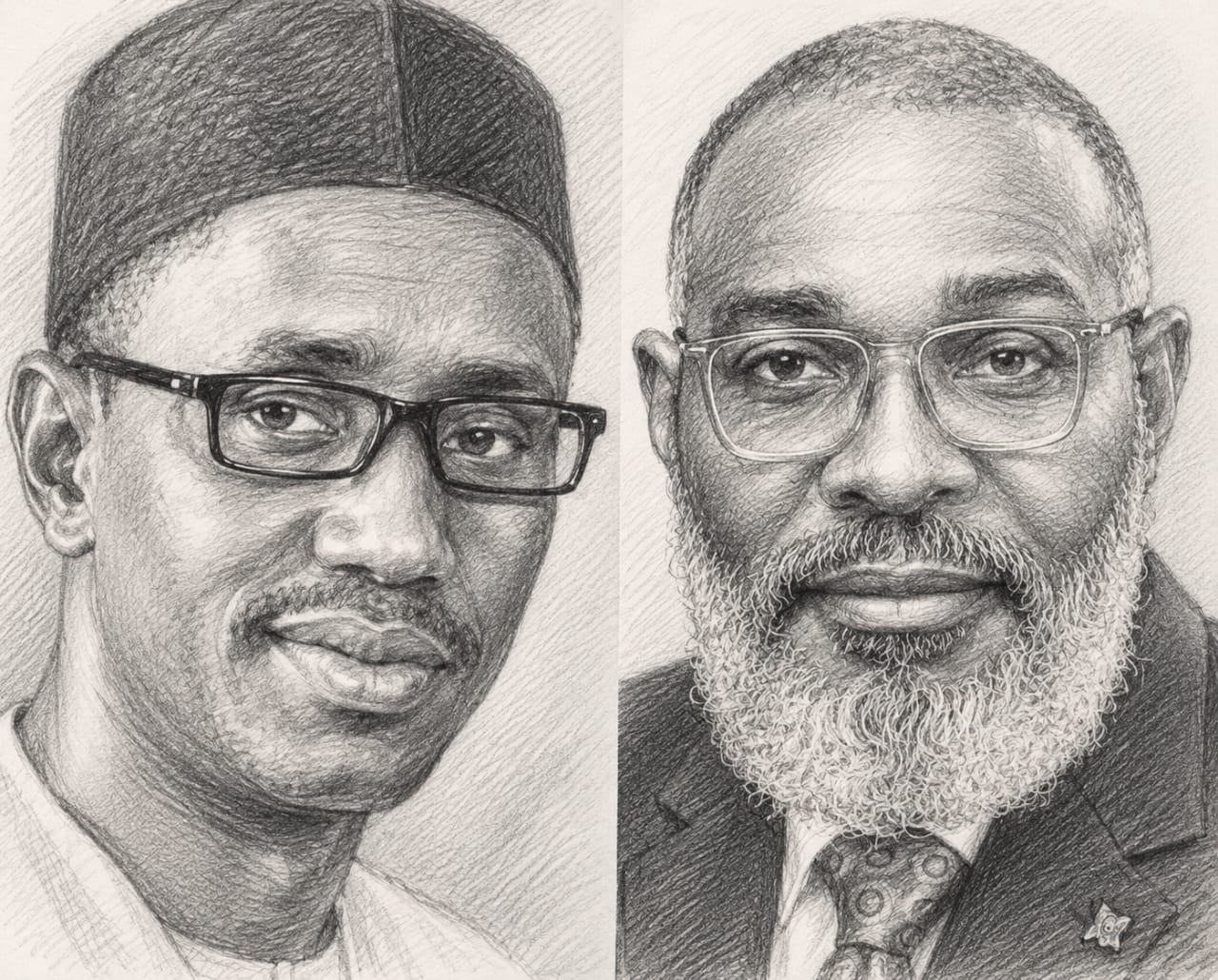
    Stephen Oransaye, Head of Service
    While there was intense hullabaloo over the appointment of Sanusi Lamido Sanusi as new Governor of Central Bank of Nigeria (CBN), that of Steve Osagiede Orosanye as the Head of Service of the Federation did not create any fuss even though the two offices they now occupy are very sensitive in the public service.

    The Central Bank has statutory mandates as apex monetary institution in Nigeria to regulate the financial sector while the Office of Head of Service of the Federation determines processes of appointments, postings and promotions in the federal public service. Therefore, the helmsmen of these two institutions are indeed very powerful. They may not have cabinet ranking but they are very influential as they are among the few public office holders apart from ministers that attend the Federal Executive Council meeting.

    Federal appointments, especially to very sensitive offices are based on criteria that include conservative idea of federal character principle, seniority and age in addition to the basic yardsticks of qualifications, working experiences and professional recognitions.

    One interesting thing about those personalities was that they were in the private sectors for years before venturing into the public service.

    Steve Oronsaye, a Catholic who was born on November 16, 1950 only joined the federal service in December 1995 when he was appointed Director Special Duties in the Federal Ministry of Finance after several years as a partner in the accounting firm of KPMG Nigeria, which was reputed at the time to be the largest accounting practice firm in Nigeria and one of the top eight in the world. He actually qualified as a Chartered Accountant in 1978 at the age of 28. It was in 1999 after the emergence of democratic era he was appointed Principal Private Secretary to President Olusegun Obasanjo, a position equivalent to Federal Permanent Secretary.

    On the other hand, Sanusi Lamido an economist who was born in 1961 started off his working career as an academic at his alumni, ABU, Zaria before moving to the banking sector, first with Icon Limited (Merchant Bankers) to UBA and later First Bank of Nigeria where in January 2009 was made the first Northerner to be CEO in the bank’s more-than-a-century history. A grandson of the 11th Fulani Emir of Kano, Lamido was not only born a Muslim but also a believer by conviction who strangely went for further studies, not at Harvard or Oxford or any of the highly rated international universities but to a University in Sudan. And to THE bewilderment of his admirers in the financial sector he opted to study, strangely too Shari’ah and Islamic Studies. Yet, before his present appointment, being a respected intellectual, he had been invited by some of the best academic institutions in the world to be a visiting lecturer and guest speaker on contemporary global issues: economic, politics, governance, religions amongst others.

    No one would therefore doubt the competence of those two senior officers for their new enviable positions against parochial consideration of states of origin, political leaning, ethnicity and religion.

    Apart from carrying out assigned fiscal duties and reconciled the nations foreign reserve accounts, Orosanye as Director Special Duties in the Finance Ministry was also writing incisive and well-researched speeches for some of the ministers especially Chief Anthony Ani and Alhaji Abu Gidado. While he spearheaded a Committee for the re-introduction of ASYCUDA in the Nigeria Customs Service, he also participated in the bilateral reconciliation of Paris Club debts and in the establishment of the BMPIU (now BPP). An introvert to the core who would rather remain unseen and unheard, he was actively involved in various policies formulations and programme executions during the Obasanjo’s administration. He was one of those instrumental to the establishment of the Debt Management Office (DMO), where his close friend and colleague in Finance Ministry, Akin Arikawe was appointed pioneer Director General. As Principal Private Secretary to President Obasanjo he was the next most powerful officer in the Presidential Villa after the then Chief of Staff, Gen. Mohammed Abdullahi.

    Sanusi Lamido is an outspoken personality whose past public comments while still in a commercial bank cost his bank to lose huge deposit from Kano state government during the tenure of Governor Musa Kwankwaso. Sanusi who had criticised his governor on policy issue in the state was asked to apologise, but he bluntly refused and preferred to resign based on principle and conviction. His bank believed in him and stood by him. He doesn’t hide his feeling just as his bluntness on issues not only put him on dagger drawn with the establishment especially Northern leaders who play politics with the lives of their masses. In fact he did not spare religious leaders too, because of his verse scholarship; he often engaged them in the hottest debate, especially on true Islamic perspective that a popular cleric, late Sheik Adam Jafar of Kano questioned Sanusi’s faith and identity.

    Sanusi is an economist to the core and risk manager in all sense of it; he believes one must deservedly earn what he gets with no room for profligacy. He is reputed to have put in place effective mechanism for credit risk management in all the banks he had worked against corrupt practices. As general manager at UBA, Sanusi was said to have anchored the transformation of the credit and risk management division into an enterprising risk management sector, and spearheaded UBA’s Basal 2 focus by establishing the framework, policies, processes and systems necessary for compliance with the guidelines of the new capital accord. The same principle he applied at the First Bank where he championed remarkable developments in enterprise, risk and management control mechanisms.

    One may not read the minds of Stephen Orosanye, yet he always succeeds in having his ways. Contrary to the notion that chartered accountants are tight-fisted, while in Federal Ministry of Finance as Director Special Duties Orosanye was regarded as Father Xmas due to his excessive generosity to staffs during seasonal periods to celebrate festivities. In fact, junior staffs did walk to his office for assistance in paying school fees, marriage and naming ceremonies which were not accommodated in archaic civil service rules and financial regulations.

    While Sanusi can be controversial and very decisive on issues like a combatant, he cracks jokes at social events but which convey messages. During an annual Business Editors Seminar organised by Central Bank in 1998 which was held in Enugu, Sanusi who was the Guest Speaker dressed in clownish manner when he put on resources-control cap (associated with Niger-Deltans) on well-tailored suite with his traditional butterflies neckties. He told his audience that he could have been a northern militant being a member of Fulani whose cattle in the Northern Nigeria are potential revenue earner that can produce enough dairy, meat and skin for domestic consumption and for export to generate foreign currencies had it been the Federal government invested extensively in agricultural sector like it has continued to do in the oil sector.

    There is high expectation from the public on these two officers as everyone looks forward to positive changes they would bring forth for the benefit of the country.

    The new CBN governor must realise by now that he is no more a player but a regulator of monetary sector which by effect has impact in the economy. As a risk manager he should ensure that the banking sector remains vibrant and active in supporting the economy especially the productive sector. Since he is frugal by his disposition which not be acceptable to most CEOs of banks who live ostentatious livelihood, he should ensure they protect depositors’ funds. He should also avoid sentiments and bias against any of the banks considering the fact that he was once a player in the competitive environment.

    The civil servants expect more from the new Head of Service especially in the area of wages. We must not continue to pretend that the civil servants are immune to corrupt practices when their meagre remuneration can hardly pay for rents not to talk of other necessities. The only motivation and consolation that can effectively check corruption in the public service is by fixing realistic salaries that can adequately cater for their the basic needs and afford them the comfort of living above poverty.

    This article by Yushau A. Shuaib was originally published in Economic Confidential July, Daily Trust July 7, New Nigerian July 8, National Life July 11, Thisday July 12, Daily Independent July 12, Leadership July 13, Daily Sun July 21, 2009

  • Fatima Usman: When A Mother Departs with Children

    A Muslim Woman
    When it comes knocking, it doesn’t expect the consent of victims before it snatches away souls to the world beyond. Every death has a cause and every living must taste its pang. Death, the five-letter word is dreaded by every mortal and yet, is inevitable when we know that many generations before us had lived and gone eternally and many would come and go after us.

    Hajia Fatima Usman was a very hardworking housewife, mother and career woman. She had a wholehearted support from her husband, Architect Usman Abdullah who, considering the conservative over-protective nature of Northern-men over their women where some confine their wives into purdah, he graciously endorsed her career in the public service. She rose to the position of Zonal Coordinator North-East region of National Emergency Management Agency (NEMA) supervising Adamawa, Bauchi, Borno, Gombe, Taraba and Yobe States . Her dynamic leadership and proactive approaches on disaster management were attributed to reduction of human-induced disasters in the zone through her regular advocacy programmes and visitations in sensitizing the public on precautionary measure against road accident, fire, bush-burning, floods and communal crises. Her major stakeholders, the target of her campaigns were mostly community leaders, traders, youths, journalists, response agencies amongst others. She had also led teams of NEMA to distribute relief materials to disaster victims. But on Sunday April26, 2009 something very tragic happened…

    Her first daughter, Ummi (Halima) who just graduated from the University of Maiduguri had several things in mind, most especially to be a successful woman like her mother: a fulfilled job, a faithful husband and wonderful children. Though the job and children could not be predicted, there was an indication she had a plan for bliss matrimony after her service with an educated person.

    Hajia Fatima’s last child, Khalifa, a boy of about 5 year was very innocent and jovial fellow that every parent would be proud to have because of his exciting playfulness typical of kids of his age. He was a child that needed all pampering and he got it from the parent who saw in him a great leader of tomorrow. Between him and the senior sister, Ummi are other children of Hajia Fatima. But on that April 26, 2009 one single incident happened that would forever remains unforgettable in the minds of the family, friends and staff of NEMA.

    Surprisingly on that day I was in the office with a bachelor friend, who is well-educated and a management staff in an agency also responsible for disaster management when a call was made that an accident had occurred along Bauchi-Maiduguri road involving Hajia Usman. The officer said it couldn’t be possible because he had spoken to her daughter some hours ago and even displayed to me one of her last text messages that Ummi had sent to him that read “We are about to leave Bauchi now.”

    He quickly rushed to call Ummi gsm number to confirm if truly her mother was involved in an accident. Her phone rang but was not picked… rang… rang… and rang it seemed nobody wanted to answer. Our friend was closed to the daughter as he continued to call the number before it was switched off.

    Later he got across to someone close to the family who narrated everything that had ensued.

    I looked into our friend’s face, the fears were written all over him: the trembling lips, the twisted nerve around the neck, the speechless mouth, though agape and reddened eyes were confirmation that something awful had happened.

    That day the journey from Bauchi to Maiduguri began when Hajia Usman decided to drive the car with two of her children mentioned above and three other passengers. She didn’t normally drive for such a long distance. The journey was smooth… very smooth because the car was in good condition and on normal speed… but for a careless commercial driver who overtook other vehicles recklessly from the other direction… the inevitable just happened.

    “Oh… God… Allah…Allah…!” Hajia Fatima, her daughter and passengers in her car proclaimed in submission to the will of God as vehicles too close to call crashed. The eyes closed, breath stopped… vein went off, bodies remained motionless and after the clicking of the vehicle, the car’s engine also dead. Without any courtesy of announcing its arrival the fatal accident through the misdeed of the reckless driver, the death picked its new victims abruptly. Hajia Fatima, her first daughter Ummi, her last child Khalifa and others become stories in past tense.

    While the Director General of NEMA, AVM Mohammed Audu-Bida (rtd)had described Hajia as a very hardworking, committed and sincere civil servant whose contribution in disaster management were felt, her husband, Arc. Usman Abdullah said he couldn’t not query God as he believes in His will and power over every soul. He thanked God for giving him Hajia Fatima for making positive impacts in his family. He also declared that her other children are well and would imbibe the spirit of their mother who led an exemplary life.

    Hajia Usman and two children have gone forever physically… Their deeds and attributes while alive will remain indelible in our minds as the only consolation to their memory. I am very proud of the life she lived as she was humble, religious and very kind to others. She didn’t begrudge others as she mind her business doing it with all honesty and sincerity. That was why tears rolls from some those who know her.

    While we plan ahead and struggle for survival in this competitive and confusing world, we should be aware that every grave we passby contains a person that once lived like us. Which means sooner or later we will join them whether we like it or not. We should use today by planting good as if there won’t be tomorrow.

    This article by Yushau A. Shuaib was originally published in Economic Confidential May, The Guardian May 2, Sunday Trust May 2, Nigerian Tribune May 2, Leadership May 2, New Nigerian May 6, 2009

  • General Akilu and Philanthropic School of Moral

    In this maddening period where schools’ proprietors are charging fees that are out of the blue, when governments at all tiers fail to provide quality education; where teachers in public schools take children for ransom with incessant and reckless strikes as top public officers prefer exorbitant private and foreign alternatives for their wards, there are few individuals in Nigeria, who in the spirit of patriotism and philanthropy are funding education for the benefits of our children’s future.

    Indeed we are in an era where schools in Nigeria are judged not on its quality of the teachers or on any performance index but on how costly the fees are. It is disheartening that some embassies and foreigners establish expensive schools here and recruit the service of local teachers are doing better than government owned and some other private schools. In fact such schools are promoted by large patronage they receive from top public functionaries and by extension public treasury.

    In some of the highly exorbitant private schools, students are treated to monarchial luxury: air-conditioned rooms, meals of their choice, servants for their laundry, in fact the only service they are not provided is to be cleaned up in the toilet. On the other hand, some public schools are no more than slums with dilapidated infrastructures and demoralized teachers who enslave their students to run errands for their domestic and personal needs during school hours.

    The dichotomy between the rich and poor is further widen which ugly impressions that children in expensive schools are special breeds while those in free or affordable schools are seen as social outcasts.

    In between these two extreme, are not-for-profit schools that are funded by private individuals for the benefit of other children in accessing better education in conducive environments. This writer was in Kano recently during the teachers’ national strike where public and private schools were forced to close down. One of very few schools that were not invaded by the striking teachers in Kano was school founded and funded by the retired military intelligence officer, General Haliru Akilu who was once Director of the Nigeria Military Intelligence for several years. The founder thwarted the threat of the teachers by mobilizing adequate security for the protection of the students. He succeeded and the school remained in session till the strike was called off. General Haliru Akilu would rather expend his wealth to education of students from different backgrounds where parents only make token monetary commitments to the school.

    With other interesting stories built around the boarding school for boys, like an inquisitive reporter, this writer took a trip to the school, “Alhaji Akilu Comprehensive Islamic Secondary School” situated in Madobi Local Government Council about 37 kilometre from the ancient city of Kano. What he discovers further reinforced the belief that not all private schools are truly for commercial and profit making.

    Located in a very serene environment, the school consisting of well-structured blocks of storey buildings in high-fenced wall accommodates a mosque, classrooms, hostels, dinning hall, administrative offices, laboratories and library. Adjacent to the main building is a big football pitch where on that this writer watched two team of the school playing a match. Apart from having strong football team players, there are other sporting facilities for table tennis, badminton and volley ball. For learning through social interactions, there are also social clubs that include Literary and Debating Society, Young Farmers Club, Muslim Students and Quranic Recitation Society.

    Because of its limited boarding facilities, admission process could be described as though and strictly on excellence performance through comprehensive entrance examination and interviews to test the candidates’ communicative ability.

    One would have assumed that with Islam in the name of the school only Arabic and Islamic would be taught. But to the surprise of this visitor, the school has Science and Arts Classes which a student or his guardian can choose. In the Arts Class for instance, subjects being offered include English Language, Mathematics, Biology, Geography, Government, economics, Agricultural Science, Hausa Language, Computer Science and Islamic Studies. The Science Class has Physics and Chemistry in places of Government and Economics.

    Probably to be in sync with the orientation of the proprietor’s military discipline, the school has strict daily routine that must be observed by all the students between their waking up time of 5.30am to bed check and light out at 10pm. The routines include prayers interval, sanitation, meal, lessons, siesta, and games. Everyday they are fully occupied with academic works and social activities.

    One just has to observe the obedient of students to their teachers to realize that the school is truly established to imbibe discipline, inculcate sound moral character and instill spirit of brotherhood with the fear of God in daily dealings of students. It was therefore not surprising that since it establishment in 1997, the school was never reported in negatives vices like fighting, bullying, theft or vandalisation of property just as social vices like smoking and use of distasteful language are strictly prohibited.

    To ensure that the school does not divert from its mission, members of the Board are respected educationists in Nigeria which include scholars and officials of Ministry of Education. It also has other committees to oversee matters bordering on education, discipline, teachers and students welfare in addition to effective Parent Teacher Association.

    While we must acknowledge the contributions of wealthy and influential individuals in our society who are intervening in restoring battered education system through philanthropy, special foundations and scholarships for benefit of our children, the government can still revamp the sector by compelling its ministers, commissioners, judicial officers, legislators and others to send their children to public schools or in alternative make commitments to schools in their localities.

    I wonder if any of our leaders today went through expensive schools to reach the peak of their ambitions as they seem not to bother on the present dilemma of average Nigerians and their children desirous of good education.

    This article by Yushau A. Shuaib was originally published in New Nigerian September 23, Leadership September 14, 2008

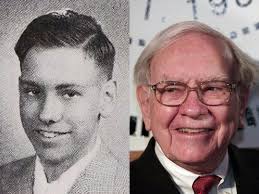
  • Warren Buffet: Humblest Billionaire on Earth

    Warren Buffet: Humblest Billionaire on Earth

    Considering my environment as an African where most of the rich in our society think more about themselves and immediate members of their family, I tumble on the story of humblest billionaire whose humility is stranger than fiction and so his generosity to worthy causes. This is not a billionaire in Naira and Kobo. He is a billionaire in hard currency, US Dollar. He is not a billionaire whose investments are through borrowed funds. In fact he is reputed to have recently donated $30 billion to charity to fight disease, extreme poverty and conflict across the globe. While most local rich men believe in the intimidation of their workers and people in the communities with their greediness and avarice through excessive accumulation of earthly and flamboyant personal effects, Warren Buffet an American investor and businessman is a lesson on humility and philanthropy. In spite of his huge wealth, Buffett is renowned for his unpretentious and frugal lifestyle.

    After a recent interview he granted CNBC, Warren Buffet, the third richest man on earth as at September 2007 (behind Carlos Slim and Bill Gates) becomes a topic of discussions on various online fora on his bizarre though emulative lifestyles.

    He still exudes humility and simplicity even as a billionaire in dollar’s term. Unlike typical new money bags, popular referred to in some neighborhood’s parlance as money-misses-road; he doesn’t show off with flashy cars and intimidating mansions all over the place. According to a report, he lives in the same small 3-bedroom house in mid-town Omaha, which he bought after he got married 50 years ago. He says that he has everything he needs in that house.

    Amazingly, it is reported that he drives his own car everywhere and does not have a driver or security people around him. Because of his genuine love and tremendous financial and moral supports he offers to the needy and humanity around the world, he doesn’t fear danger as his house does not have a wall or a fence. The report adds that “he does not socialize with the high society crowd. His past time after he gets home is to make himself some pop corn and watch Television”

    If that is incredibly unbelievable, then take this: “Warren Buffet does not carry a cell phone, nor has a computer on his desk and never travels by private jet, although he owns the world’s largest private jet company.” Yet with an estimated current net worth over US$50 billion, his 2006 annual salary of about $100,000 is infinitesimal by all standards compare to remuneration of other CEOs in similar and relatively smaller companies.

    There is also a report that Bill Gates, the world’s richest man met him for the first time only 5 years ago. Bill Gates did not think he had anything in common with Warren Buffet. So he had scheduled his meeting only for half hour. But when Gates met him, the meeting lasted for ten hours and Bill Gates became a devotee of Warren Buffet.

    Another report states that Buffet bought his first share at age 11 and he now regrets that he started too late! At age 14 he bought a small farm with savings from delivering newspapers. Today his company, Berkshire Hathaway, owns 63 companies. He writes only one letter each year to the CEOs of these companies, giving them goals for the year. He never holds meetings or calls them on a regular basis. He has given his CEO’s only two rules. Rule number 1: do not lose any of your share holder’s money. Rule number 2: Do not forget rule number 1.

    His popular advice to young people, which is variously quoted is that: “Stay away from credit cards and invest in yourself and Remember: Money doesn’t create man but it is the man who created money; live your life as simple as you are; don’t do what others say, just listen to them, but do what you feel is good; don’t go on brand name; just wear those things in which you feel is comfortable; don’t waste your money on unnecessary things, just spend on what you really need . After all it’s your life then why give chance to others to rule your life.”

    Warren Edward Buffett, popularly called “Sage of Omaha” was born on August 30, 1930 at Omaha, Nebraska). His life has a humble beginning but which is instructive to those interested in making it big in the business world without losing their sense of decency and integrity. At tender age he was known as a bookworm who read to satisfy his passion in seeking for knowledge and was good at doing complex mathematical computations in his head. He began working at his father’s brokerage at the age of 11, the year made his first stock purchase. At the age of 14, he began installing pinball machines in barber shops and spent his take to buy acres of farmland which he then rented to tenant farmers. He graduated near the top 20 in his class at the age of 16. He attended Wharton School at the University of Pennsylvania before he transferred to the University of Nebraska. He obtained a Master’s degree in economics from Columbia University.

    Last year he made a commitment to give away his fortune to charity, with 83% of it going to the Bill and Melinda Gates Foundation, instead of creating a foundation on his own name. The donation amounts to approximately $30 billion. The foundation’s mission is to enhance healthcare, reduce extreme poverty, and expand educational opportunities and access to information technology, especially in developing countries including Nigeria.

    There is a lesson to learn from this devoted family man who believes in the equality of men and service to humanity. If a very wealthy, from all indices, still lives a simple life and works assiduously to support others why are other the less mortals derive joy in oppressing and harassing the poor and the less privileged citizens in the society? The world is a transit. Therefore let us work towards living behind legacies of love, care, compassion and sacrifice for others. That is what differentiates the wealthy man from a richman.

    This article by Yushau A. Shuaib was originally published in New Nigerian December 14, Weekly Trust December 22, Daily Sun December 25, 2007 and Daily Independent January 18, 2008

  • Shekarau: Speaking The Language Of The People

    Governor Ibrahim Shekarau of kano State
    It may sound strange but is real when the newly re-elected governor of Kano State Mallam Ibrahim Shekarau had to address the mammoth crowd during his inauguration in the local language, Hausa, instead of the lingua franca, English. While other languages and their cultural values are relegated to the background, the Kano gathering witnessed colorful cultural display and traditional effigies that reinforce those values they so much cherished.

    The popular Abacha Stadium witnessed a motley crowd of the old, women and children from different ethnic backgrounds chanting praises in Hausa language and in fact almost all the programmes and proceedings were in Hausa. The chaotic environment due to the unprecedented gathering made the service of ambulances inevitable in reviving and evacuating the exhausted persons to the nearest hospitals. They endured the scorching sun in honour of the first reelected governor of Kano State who had provided their want through job creation, regular payment of salary, pension, scholarship, provision of health facilities, free school meal, refreshment during religious festivities and provision of other social amenities.

    The politicking and electioneering were not contentious and acrimonious but not devoid of some melodrama. Kano people like most northern states, are very proud of their local languages so that during the political campaigns, even in areas of predominant non-indigenes like Sabon Gari and Unguwa Uku, campaigners and supporters of most of the political parties spoke Hausa widely. The campaign kits and publicity materials were mostly in the local language too. In fact there was this young Igbo man, in didactic prose who chanted some local proverbs in very fluent Hausa to the admiration of local people.

    It should be noted that the Igbos, Yorubas and other ethnic groups who have successfully assimilated into the societal life of the city, have some of their members appointed into Mallam Shekarau’s cabinet. It is a cabinet where Hausa, in addition to English, is officially encouraged as language of communication likewise it is permissible on the floor of the State House of Assembly. Notwithstanding, their passion for their language, state has a record of highly educated and talented indigenes that the nation can boast of; the likes of late political sage Mallam Aminu Kano and erudite orator of international repute Alhaji Yusuf Maitama Sule just to mention but a few.

    The election pattern has always been dynamic in Kano where electorates have consistently demonstrated uniqueness on the choice of their leaders. They know how to chop free money from politicians but vote purely on their convictions. They have this radical and progressive ideology as the capital of Talakawa (masses) politics promoted by late Aminu Kano of blessed memory. Money doesn’t influence electoral victory in the state, once one speaks their language, respects their culture and convinces them with sincerity of purpose. All the past elected governors and Mallam Ibrahim Shekarau deployed those strategies. The governors were the charismatic Abubakar Rimi in 1979, the maverick Sabo Bakin Zuwo in 1983 who was alleged to be unlettered by the press, Kabiru Gaya in 1992 who was never in contention but sprung surprises to win gubernatorial seat in 1992, the young politician Dr. Musa Kwankwaso in 1999 and lastly poor Mallam Shekarau’s emergence in 2003 without spending a penny from his pocket.
    To retain the office or break the jinx over the second term, ardent supporters and fanatical opposition to the aspiration of Mallam Shekarau were engaged in fierce battle of wit, songs, parables, comedies, poetry and folklores rendered in Hausa language.

    Though some messages can be derogatory against the opponents they were more of comic relief. They also pass coded messages to describe unfolding events. For instance when Federal government changed the resident electoral commissioner and the police boss in the state, just a week to the election, the catchy word is an kau da kai… kafa ke tafiya (literarily meaning they touch the head but it’s the leg that works) because field electoral officers and divisional police officers were not affected. When a popular Islamic cleric, Sheik Adam Jaafaar was also assassinated that week, the traditional rulers, religious leaders and government officials rose to the task. They simultaneously went round to pass a single message Ba’a amfani damu don kazamar buri (we can’t be used for evil game). That was to douse the impression that the people of the state are fanatical.

    The elections in the state were peaceful not even on the day imported thugs were seen in some places like Giginyu Ward of Mallam Shekarau where yandabas (Kano version of areaboys) had a field day ranting, Chanji dole, (change of the administration is a must) against that of the youths of the area chanting Babu Chanji sai tazarce (no change, only continuity). But the elders kept their cool with munsan nagida ba’a yaudararmu (we know our own nobody can fool us).

    The message I am trying to pass here is that while we accept foreign language as the main official language, we can develop strategies to make our local languages very popular. Today while other Nigerian languages are heading for extinction, the Hausas are very proud of their language that their educated emirs only speak it in their domains and even on visits by highly important dignitaries. Emir Ado Bayero of Kano, for instance, spoke Hausa to the Queen of England and President of United State of America on their separate visits to his palace.

    As they proudly promote their language through interaction and communication, today Hausa services are provided in foreign broadcast stations like British Broadcasting Corporation, Deuchwelle of Germany, Voice of America, China Radio International, RFA of France, Egypt Radio amongst others. That is the reason why an illiterate Hausa listener addicted to those foreign broadcast stations can easily disappoint students of international relations in a debate/quiz on global politics. Today at Bayero University Kano where Hausa language is studied to Phd level people from outside the country, troop in to study the language. In fact early scholars in Hausa language were/are Britons and so far there are many foreign professors in Hausa language and culture than any other indigenous languages in West Africa.

    So what happen to other vernaculars in Nigeria? They simply have lackadaisical attitudes to their dialects. Some of their elites detest speaking their language in public and scornfully respond to their people who speak to them in their native language. They view those who engage them in the local language as cheats and too local for their liking. I think the Ohaneze, the Afenifere, the Ijaw and other ethnic group should work towards promoting their languages like the Hausa and Swahili people in Africa.
    It is a welcome development that a renowned ifa scholar and former Vice Chancellor of the Obafemi Awolowo University, Prof. Wande Abimbola recently raised alarm over the relegation of some Nigerian languages and their cultural values. At a lecture organized by the Olaniwun and Adunola Foundation for the promotion of Yoruba languages, the scholars and traditional rulers at the event criticized the elite for promoting English and western values at the expense of our local languages. They noted that unless concrete steps were taken to reverse the trend, Yoruba, Igbo and other local languages might become extinct. They noted that is a pity that our children are being brought up with English language, English songs and related literature.

    They are right, but I think they can take the cue from the Hausa elites and ordinary people who start their day with Ina Kwana, instead of the ‘good morning’ and akwana lafiya instead of the ‘goodnight’ in their daily communication routine.

    Back to Malam Ibrahim Shekarau. Since it is obvious that, in the first tenure, he has squarely addressed the WANTS of his people through his popular and welfarist programmes, he should ensure that the breaking of the jinx on his second tenure is to address other NEEDS through capital development, investment and industrialization in line with speaking the economic language for the people. It worth the sacrifice of all.

    This article by Yushau A. Shuaib was originally published in Leadership June 11, New Nigerian June 13, Vanguard June 14, Weekly Trust June 16, Sunday Tribune June 17 And Daily Sun July 12, 2007

  • Bar. Jimoh Ibrahim @40: A Close Encounter

    In life one comes across different kinds of people: some grow and rise in fame, others dwindle in fortunes and name. Barrister Jimoh Ibrahim, known widely as the Billionaire from the moon but who the section of the media calls the Mystery Investor, belongs to the former category. He is an enigma that even some old friends and family members cannot cease wondering about his rocket speed and astronomical increase in wealth.

    Having been close to him as a friend for more than a decade, I am extremely reluctant to disclose my association with him which is borne out of the fact that many would think I am in his class of opulence, ignoring the fact that I am a public worker and still proud to mind my business in the service. Like my boss uses to say every person has a destiny in life, one should strive on personal gift from God to excel instead of depending heavily on others for prosperity. He may be funny, not a fool, but smart to know what is going on around him.

    As people debate on his sources of wealth, some of the facts I would give here may interest many on Jimoh Ibrahim who just clocks 40 years old on February 24, 2007. I didn’t intend to drop name, but the fact may not be clear in chronicling his past as a friend. As he is proud to be born into a family of a bricklayer father and a fish-selling mother, he started making millions in his mid 20s. How indeed could this have been possible?

    I was introduced to Jimoh by former Finance Minister of State, Alhaji Abu Gidado, the man known in the ministry as incorruptible and highly principled (upto date) whom I had served as Personal Assistant. Jimoh was like an adopted child to Alhaji Gidado’s uncle, the former Chief Justice of the Federation, Justice Mohammed Bello.

    When people talk about Jimoh Ibrahim as a whiz kid out of the blues, I wonder if it is not the same person who was the Chief Launcher at my book launch ten years ago. Precisely on October 10, 1997 at Sheraton Hotel, Abuja, he came to the venue in a convoy of Jeeps (four runners) which was not in vogue then and signed a blank cheque asking me to fill in any amount not exceeding six digits. Alhaji Gidado rejected the idea, insisting that the donation should be clearly written by him and also should not be outrageously higher than that of the Hon. Minister of Finance, Chief Anthony Ani who was the Chairman of the occasion. But for Alh Gidado, I could have scribbled down N999, 999! The ceremony had in attendance top functionaries including the present Principal Private Secretary to the President, Mr. Stephen Orosanye, a humble personality who was also supportive of my recent book last year.

    Before then Jimoh Ibrahim was in the habit of inviting us to some of his training workshops for top public functionaries at all tiers of government. It was through one of those seminars that I suspected he learnt about the huge amount of revenue Nigeria lost to withholding tax by big oil companies. His further research made him to submit his findings in form of a proposal that he could recover the funds as a consultant to the federal government but with a specific percentage as his commission. After diligent consideration by the ministry and approval of his submission, within a short period of time he was remitting billions of Naira to the account of the federal government. If Nuhu Ribadu of EFCC were a consultant and legitimacy entitled to some commission from the billions he recovers from fraudsters he could have become richer too. That is one of the major differences between working as public officers who earn salary and private consultants who receive commissions.

    On close examination, Jimoh Ibrahim is an aggressive businessman who pursues his desires passionately, no matter what it takes. Every time one sits with him, ideas on how to make real money come to mind in torrents. To him business is business and leisure is leisure. He doesn’t mix the two. I was with him on several occasions, when he pays and receives receipt for fuel from his filling stations, even sometimes as little as N200. On another occasion, we were at the bar of one of his hotels in Lagos, where the then MD Trade Bank, Mr. Tunji Adeniyi and others came on a mission for Jimoh to salvage the bank from liquidation through investment. After the business discussion that reached far into middle of the night, everybody paid a bill on consumption from the bar, except me because I couldn’t pretend to be a businessman.

    One thing I learnt from his business acumen, is how one uses money to make more money through financial instruments. I had cause to accompany him to a very powerful and respected woman banker in her modest and simply furnished office. The bank which is one of the major financiers of his companies has full confidence in the young businessman because he always meets the stringent financial requirements and deadlines. Obviously, that is the reason he hardly spends his wealth on frivolities or invests in business that would not yield returns, though he has special endowments like a foundation that provides scholarship for thousand of indigent students annually.

    He is open to take to genuine and critical advice even if it is against his position. I once advised against buying a telecommunication company which price I believed was incredibly high after he had signed the agreement. I also advised him against suing a media house that published a libelous material against his company (NICON) after he had contacted his lawyers. My reason was that nobody, no matter how powerful or rich, can fight the media and win easily in a law court in Nigeria. Though we do sometimes disagree, a true friend, I believe, is the person that states the obvious boldly through constructive criticism, with a clear conscience.

    Ibrahim may be prudent in managing resources, but when it comes to competition, he could be daring to a fault. In his desire to ameliorate the suffering of his people, he contested for the governorship of Ondo State under the platform of ANPP in 2003. Apart from having invested in the local communities and donating to worthy causes in all the local government councils, he bought dozens of brand new luxury cars (Bora) and buses which he shared out for his campaign. Yet he lost to Chief Agagu of the PDP. He always laughs over the experience afterwards. But the fortune lost in that expedition was enormous.

    I think what scares him stiff is death. An incident happened when he was Special Adviser to the first Military Administrator of Bayelsa State. He was about to take a flight to Lagos one evening from the Port-Harcourt International Airport when he aborted the trip after a call from his boss that there was a message he had to take along. As he returned to the airport the following morning, he learnt that the plane he had bought its ticket a night before had crashed into a lagoon. The tremor from that experience forced him to stop flying local airlines for several years and rather travelled around the country in his jeeps.

    Many people may not know that he was a member of the exclusive Federation Account Allocation Committee and was Chairman of FAAC News, the first monthly magazine that published the activities of that Committee. He was Special Adviser to the First Military Administrator of Bayelsa State; Principal Partner of Law and Justice chambers; Executive Secretary, African Center for Policy Studies; Consultant to various bodies and multilateral institutions and Chairman Global Fleet Companies before his foray into acquisitions of privatized companies that makes his name stand out lately as a maverick entrepreneur. Some of the companies he acquired or invested heavily on cut across those in the public and private sectors of the economy. They are mostly in the insurance, hospitality industry, airline, real estates, oil sectors, banking, etc.

    An author and publisher, he attended public schools up to the University of Ife, before he attended Harvard University where he came out as a distinguished graduate and expert in international tax law. A Nigerian by all standards, his parents are devout Muslims while he and his wife are Christians. For his three children, they have a free choice. That is the Jimoh Ibrahim I know.

    This article by Yushau A. Shuaib was originally published in Leadership February 25, 2007

  • Abu Gidado: An Incorruptible Minister

    Abu Gidado: an Incorruptible Minister

    Tribute is usually paid in memory of heroes after their demise in recognition of their ingenuity, sacrifice, patriotism etc. However it may not be out of place to also celebrate the exemplary leadership qualities of the living, if not to encourage our subject, at least as a lesson to the young generation and others to emulate. In any case, why need we wait for the hero to go when we do not know whether we will be the first!

    Amongst the living are those who have distinguished themselves through dint of hardwork, commitment to good causes, selfless service to humanity, fear of God, humility, simplicity and high level of morality. The above attributes, without exaggeration capture the personality of Alh. Abu Muawiya Gidado, former Minister of State in the Federal Ministry of Finance during late Gen. Abacha’s administration who is 66 years old on April 2, 2006. It may seem a mere fable, a kind of tale to convince children to live a good life for an individual to be said to possess these sterling qualities. Yet Gidado’s life is a clear testimony to the existence of incorruptible Nigerians who do not worship money or idolize godfathers to reach the peak and earn the public’s respect.

    This writer, who, by chance happened to be close to him as a personal aide in the Federal Ministry of Finance, like many others who come across his path, could not but marvel at the personality of this gentleman who works and lives in Nigeria. How can one describe a man, who as a minister responsible for the monthly Federation Account Allocation Committee (FAAC) and extra-ministerial departments, for about four years, left office without amassing wealth – not even a SINGLE property in the Federal Capital territory? As the Chairman of the monthly FAAC meetings, which was then rotated amongst the states of the federation in alphabetical order, he stood for justice and fairness in the disbursement of allocation to the tiers of government.

    As the Minister of State in a sensitive ministry which was as powerful as the legislative chamber in the present dispensation, responsible for appropriation of funds, budgetary allocation, approvals of foreign exchange transaction, tax exemption, import waivers, settlement of contractors and special grants, he could have become a multimillionaire, if he so wished. But he routinely refused monetary inducements from stakeholders and always insisted his aides should return suspicious gifts with acknowledgment to the senders. I could recall vividly an occasion when his official intervention rescued some financial institutions and business enterprises from the sledgehammer. But to the dismay of the beneficiary of his official magnanimity, he refused their thank-you-compensation in the form of allotment of shares and special services. Some of those institutions and individuals are still doing well today.

    He was also in the habit of refunding unutilized funds like estacode on foreign trips. He was so stubborn in his principle that he withheld endorsements to expenditure and projects that were not tidy even with directives from sensitive quarters.

    Before monetisation when it was the practice for top public officers to have official Guest Houses with all services and amenities provided by government, in addition to official residence, he declined that traditional perquisite, even though he is polygamous. That action of his minimized wastage of public fund and guarded against utilization of such facilities for immoral and extravagant social pastime

    He never allowed nepotism to becloud his sense of judgment as he refused to allow members of his family to benefit from projects and contract awards within the ambit of the ministry. As a man of God who thinks about death as if he will die the next day, he used to keep a special diary in which he records money he borrowed from individuals, sometimes as meager as five hundred Naira for the simple reason that his family have the obligation to settle those indebtedness after his demise.

    When Abu Gidado was first relieved of his appointment in 1997 by Gen Sani Abacha, before he was returned, he requested the presence of the Director Finance and Supply, who was a lady with her relevant staff to take inventory of the items in the official residence. To the astonishment of the Madam and the staff, small cutlery like spoons, and even broken plates were accounted for. Immediately after the inventory, instead of using official vehicles attached to him, he used his personal car to convey himself and family to Katsina his hometown.

    As a strong believer in the will of God, he doesn’t play dirty to get recognition and acceptability. His career in the private sector was meritorious and appreciated as he rose rapidly to the position of Retail Manager (North) Shell Nigeria limited; General Manager, Arewa Textiles Limited and later was Deputy Managing Director, Peugeot Automobile Nigeria (PAN). His patience after a frustrated attempt to get employed as a civil Servant in the former Kaduna State was rewarded with his appointment as a Commissioner in the State where he subsequently became Deputy Chairman, State Executive Council that handed over to Civilian Administration in 1979.

    Alhaji Gidado’s past schedules include, Member, Board of Directors, Peugeot Automobiles; Member, Board of Directors, Arewa Textiles; Member, Board of Governors, Kaduna Polytechnic; Member, Board of Directors, DPMS/IBM; Chairman, Katsina State Water Board, commissioner of finance in the former Kaduna and Katsina States. He served in TCPC Sub-Committee for Privatization and Commercialization in the Automotive Industry; Director of some multinational conglomerates and represented Nigeria ‘s interest at ADB, and Afreximbank amongst others. He has won several awards locally and internationally. Since 1999 he has been a Federal Commissioner at the Revenue Mobilisation Allocation and Fiscal Commission where only people of unquestionable integrity are appointed into its board.

    In an environment where anything goes, where corruption is the order of the day, you may be pardoned to think this incorruptible public officer must feel like a fish out of the water. How wrong you are. Gidado’s lifestyle of simplicity, humility and spirituality give him the confidence and self-contentment that eludes many powerful and wealthy individuals in our society.

    This article by Yushau A. Shuaib was originally published in Leadership March 25, Sunday Tribune March 26, Weekly Trust April 22, New Nigerian April 27, 2006

  • Waziri Mohammed: Railway Boss and the Plane Crash

    “It will be worthwhile if aggressive promotional campaigns are embarked upon by Chairman, Nigerian Railway Corporation, Alh. Waziri Mohammed to encourage members of the executive, legislature and judiciary to travel by rail.”
    -June 2002

    This was one of my recommendations in a piece published in some national dailies in June 2002, with a title “Another Plane Crashes.” Coincidentally I had late Waziri Mohammed in mind when I advised on how the Nigerian railway can be revived because of its advantages over other means of transportation. The only other person I mentioned in the article was the then Minister of Transportation Ojo Madueke who was “busy championing the cause of bicycle riding in cities to decongest hectic roads and reduce air pollution.”
    Just three years after that counsel the calamity of air travel consumed the amiable and humble Chairman of the Railway Corporation. This is surely a period of mourning and paying of tributes…dirges for the lost souls in one of the darkest weekends in our national life when the lives of 117 victims perished in the BellView plane crash and that of the first lady Stella Obasanjo in a Spanish hospital on complications arising from surgery.
    My first chanced meeting with Waziri was during the First Annual General Meeting of African Export Import Bank(AFREXIM) in Cairo. While I was an official observer by virtue of my position with the then former Minister of State for Finance, Alhaji Abu Gidado who was the Chairman at that session, Waziri was to be nominated to the board of governors of the bank. As usual with such high wire politics of regional members, especially when a Nigerian was the chief executive at the Egypt-based continental bank, I observed the intricacies of occupying a sensitive office in multilateral institutions just as was the case of African Development Bank (ADB) election in 1996 and later when similar politics reared its ugly head this year in Abuja and Rwanda to deny us of a slot. Since then, while he was a Director of Pacific Merchant Bank, we had established and sustained mutual relationship. Surprisingly, and this is very uncommon in Nigeria, as he kept on rising as a successful politician and businessman, we still remained good friends and I had the honour, even as a bloody civil servant, of my introduction by him to some of the political juggernauts in the nation’s landscape.
    In that article I mentioned that soaring in the air, away from potholes on deplorable roads and with less likelihood of hijacking, which is not prevalent in Nigeria, does have its lure, but the possibilities of survival in plane mishaps is very remote. Even the professional air hostesses, the best advisers on precautionary and emergency landing, hardly remember their training to escape the pang of such disasters. I recall mentioning in the piece that the miraculous escape of Thisday editorial team in 2001 when the aircraft crashed in Maiduguri (Waziri’s home town) made one wonder whether the editors had used that African magic called juju.
    Similarly I mentioned the scary road traveling where armed robbers reign supreme, sometimes with the connivance of staff of commercial transport companies. I also stated that traveling by road on long distance, had forced many passengers to always keep life-insurance-packages, i.e. enough sums of money and acceptable items with which to trade off their lives when confronted. That the not-too-rich but smart passengers must wear tattered and dirty clothes to disguise and win the sympathy of the wicked, undesirable elements. I even wondered why we are not blessed with rivers that we could be cruising peacefully on boats and ships, concluding that that too may have been a nightmare since it takes the effort of the navy to control the excesses of pirates in the riverine areas and territorial waters.
    It was in view of the above that I recommended the revitalization of the ailing railway service that is full of fun, thrilling excitement and has proved the safest form of transportation; noting that nobody in his right senses can attempt to attack the heavy machine whether in daylight or night. I mentioned that it was easier to provide all luxury and official amenities in the train than other means of transportation. This may include television set with satellite channels, bathroom, library, drinking bar, conference room, living and bedroom. In fact, it could be luxury on land.
    There were attempts by him to revive the railway business; he had taken public officers, editors and businessmen on railway tours to appreciate its advantages and assess its feasibility as it is in other developed world. But the truth which must be told is that the Nigerian Railways Service was not adequately funded as he battled till he died in his second tenure as the chairman, using government’s subvention and meager internal earning to pay the pensions of teeming rail workers.
    Another meeting I had with him was after my write-up over Dangote and Transcorp, which was also published in some national dailies and popular Nigerian websites. I had sounded a note of warning over the alleged attempt by some Nigerian billionaires to float a private sector mega company with the name Transnational Corporation of Nigeria (TCN), which then was alleged “may acquire government-owned refinery, operate strategic state-owned coys and pioneer status in Agriculture and IT.” I pointed out that even Bill Gate is never allowed to monopolize the computer world as the richest man and the originator of software that is used by almost all the computers in the universe. I therefore warned the promoters of Transcorp to be careful of the evils of retrogressive monopoly, which weakens government regulations, and kills healthy competition. “It is better to have a fair share of the market through deployment of infrastructural facilities and equipment than acquiring public institutions at giveaway prices,” I wrote. A situation where the nouveau rich find it easy to bid and acquire public enterprises while the poor, ordinary citizens remain without an option for even meager acquisition may not be fair enough in a republic. We discussed this issue with Waziri, who was one of directors of the mega coy, and he maintained that my perception of the philosophy behind the mega coy was completely wrong. Happily when President Obasanjo later inaugurated the company my fears were allayed as the company by their new vision and mission has brighter hopes for Nigeria and Nigerians.
    The last meeting we had, which was before the Ramadan fasting, he had text me and asked, as usual, his Secretariat Aide in Abuja, one Isiaku Ibrahim to invite me. We discussed my review of Segun Adeniyi’s book I entitled “Reading Abacha Politicians Again.” It will be very unfair to divulge his personal conviction on the political terrain as he was a respected young northern star and lawyer, who had been active and remained till he died one of the youngest members Board of Trustees of People Democratic Party (PDP). He was sincerely concerned about the political and economic stability of the nation. A man of few words, I could read his dilemma as a businessman and politician who belonged to collective alliances but he was very frank and honest on his dreams for a prosperous and peaceful country. Some people judge him by his association but they cannot pin him down on reckless public statements.
    As the Chairman of Presidential Committee on Trade Malpractices, he used that position to protect Nigerian entrepreneurs and industrialists against unscrupulous tendencies of foreign merchants. Waziri was a man who didn’t believe in destructive political contests especially with friends. While his friends from other regions and states vie for electoral offices and got offer of juicy political appointments, he was contented with supporting his friends. Even where there were underground political campaigns against him from a section of his home state, he took it cool and always refused to utter a word. I had to persuade him to defend himself when I discussed and arranged for the Group Business Editor of Daily Trust newspapers, Ahmad Shekarau to interview him directly. That interaction may likely be one of the last interviews he granted on his vision for Nigerian railway, his political aspiration and dream for Nigeria. A similar interview was being coordinated with finance correspondents before his untimely demise.
    Some critics may dislike his politics of association, but his politics of friendship… of brotherhood with Nigerians from different ethnic and religious background stand him out as truly a detribalized young Nigerian that had the nation at heart. Ironically he died with other Nigerians from diverse backgrounds in a remote area, which almighty God had destined for them. We can have our dream; we may not change the course of destiny just as it was mentioned that amongst the victims of the plane crash was a man who traveled to Lagos to give a testimony on his miraculous escape from flying bullets only to perish on his return journey in a flying plane.

    This article by Yushau A. Shuaib was originally published in Daily Independent November 15, Tribune November 21, Daily Trust November 29, 2005

  • On President Aluko Dangote of Nigeria

    Success is not measured by money, power, or social rank. Success is measured by your discipline and inner peace. -Mike Ditka

    Before I am crucified or applauded by those who may think this piece is to highlight the potentials of the business mogul for electoral office, I am only referring to a man who is neither the Managing Director nor the Chairman of his group but is simply, by official designation, the President of Dangote Group of companies.

    In an environment where wealth is easily accumulated through questionable and fraudulent means, Alhaji Aliko Dangote’s business that started from mere trading in commodities and building materials in the 1970s with a loan from an uncle, has presently grown into export, import, manufacturing and real estate. The focus of his investment is in basic human needs of food, clothing and shelter. He has incredibly penetrated our livelihood with his products that are indispensable in every home – from the construction of our abodes to our dinning tables and even our clothing. Dangote provides, cements, sugar, salt, flour, rice, spaghetti, macaroni and textile at competitive prices.

    As a nonpartisan and detribalized businessperson, he is generous to different political parties, religious groups and cultural institutions. Apart from providing employment to elite graduates from different ethnic backgrounds, he minimizes the level of crime by engaging youths who are school leavers in the area of transportation, packaging, security amongst others.

    As a young celebrity, Dangote is not in the habit of extravagant display of opulence, like some elderly moneybags who still behave boyishly and organize Owambe parties with roadblocks to the discomfort of the ordinary citizens. He resists the temptation of participating in highly lucrative, fast money yielding ventures like oil business, GSM, hotel business and even airlines, probably to discourage destructive competition with indigenous entrepreneurs.

    As a self-employed person, with minimum basic education, he proves that business success can be through determination, honesty and perseverance; and not necessarily by acquiring Harvard-Oxford certificates or First-Class academic qualification. His managerial skill must surely be the envy of economic professors. Instead of stashing his funds in foreign accounts, a common feature of fraudulent front and public office looters, Dangote invests wisely in the productive sector of the Nigerian economy.

    Since entrepreneurship and business ingenuity are not subjected to federal character principle for quota system, Dangote has never worked in the public service where some staff engage in malpractices to fulfill their basic needs while the highly principled and honest civil servants retire wretched. If he were a retired military general or a public officer, some might have queried the source of his wealth since it is easy to calculate one’s salary from first day in office to the retirement age. He is also not in full-time party-politics where political opponents would have rubbished the name of his family through smear campaign. If he was an elected public officer, there could have been allegations against him of treasury looting, nepotism and selfish acquisition of public properties, since most politicians seek for donation or borrow money to contest. If he had lived mostly abroad, there may have been insinuation that he made his millions from 419, drug trafficking or modern day’s slavery of pimps, mortuary washers and gutter cleaners in Diaspora.

    Dangote explores virgin and untapped areas to churn out billions in revenue. Not even some states that receive free monthly allocation from the federation account without any practical contribution to the national pool, can match his earning from their internally generated revenue. Their funded public-enterprises retrench the workforce and still declare losses. In fact, the situation in some political offices is so pathetic that some states’ executives not only misapply their monthly allocation from the Federation Account but also corner their local councils’ funds in the name of joint account to render as subservient the elected administrators at the grassroots.

    The most commendable move he made recently was his threat to force down the price of cement to the benefit of the construction industry and property owners. He should be encouraged to venture into Garri production business where he can force down the prices of the essential commodities for the teeming masses.

    To deny that Dangote does not have monopoly over some of the commodities in the Nigerian market is to deny the obvious. Recently he and other notable Nigerians announced their desire to float a private sector mega company with the name Transnational Corporation of Nigeria (TCN), which amongst other things may acquire government-owned refinery, operate strategic state-owned coys and pioneer status in Agriculture and IT. Even Bill Gate of USA is never allowed to monopolize the computer world as the richest man and the originator of software that is used by almost all the computers in the universe. Dangote should therefore be careful of the evils of retrogressive monopoly, which weakens government regulations, and kills healthy competition. It is better to have a fair share of the market through deployment of infrastructural facilities and equipment than acquiring public institutions at giveaway prices. A situation where the nouveau rich find it easy to bid and acquire public enterprises while the poor, as ordinary citizen without an option for even meager acquisition may not be fair enough in a republic.

    Though private enterprises are established to declare financial profit, while the public enterprises render essential and social services to the citizenry, there should therefore be healthy competitions in achieving public-private sector partnership instead of outright acquisition or monetization of a sector. The proponents of privation should consider the deployment of best managers from private sector to supervise the public companies at a fee. Not every Nigerian wants to become a businessperson as some of our children have tall ambition of becoming fearless paramilitary officers, honest public servants and incorruptible politicians.

    If Dangote and other members of TCN are interested in Nigeria and Nigerians, they can get concessions to take over our deserted but abundant and fertile lands for mechanized farming for mass food production. If they want to be more patriotic, they should channel their surpluses and energies in instituting educational foundation, where the poor can have easy access to affordable education and arrest the bastardization of public schools, which are now breeding centres for touts and certificated illiterates. They can even invest in university education with lower rate to enrich our workforce.

    Let us pray against an alarming period when a future generation will wake up to realize that the government cannot longer provide employment and social services to citizenry due to monopolized privatization.

    This article by Yushau A. Shuaib was originally published in Nigerian Tribune May 4, New Nigerian May 8 and Leadership June 5, 2005

  • Sesebo: When a Business Editor Dies

    The failure of information/communication technology is glaring when one considers its inadequacy as a means of communicating with a dead acquaintance. How can one confirm from a deceased his death through his GSM or email address? That was the dilemma I face, when the speculation was strong about the death of jolly media-friend whom I interacted with regularly through email and GSM.

    When the news was broken of the death of the Group Business Editor of Independent newspapers, fear, bewilderment and shock overwhelmed those who had interacted with him or have read and benefited from his excellent economic reportage and business analysis over a decade in the media. For those in the corporate world, whether in the private sector or institutions of public finance, the name Joseph Sesebo rings a bell – a bell that reminds one of a guru in financial and business reporting, a personification of high standard in journalism, an embodiment of simplicity and humility. Writing a tribute on a talented star in his prime age is more grief-stricken than the dirge.

    Late Sesebo for more than a decade was on the financial desk, one of the dreadful and sensitive beats in the media. Any slight misrepresentation or mischief invariably has adverse effect on the political and economic environment. Factual and undisputable report can also put the reporter in danger apart from incurring more enemies. It is nonetheless, the same media reports that promote many big names presently in high positions and enrich the credibility of many organizations. It is through the media that the public are acquainted with the share index and the rating of business enterprises. As adequate information propels the emergence of big companies and heroic personalities, media alarm has seen to the demise of weak and fraudulent institutions. Therefore any institution that conceals public information, or individual that ignores the importance of the media, does so at its own peril. Afterall in a democracy, accountability and transparency are all about openness to the stakeholders.

    An economist by qualification, Sesebo had ample opportunities to bolt out from the newsroom to the real financial world, where he could have risen to top management level, yet he stuck to the noble media profession to serve as a voice for the voiceless and a defender of human virtue. Sesebo who started his media profession as Sub-Editor in the Guardian in 1988, was Business Editor in Vanguard in 1991and later, Editor at Corporate magazine. He was also Assistant Editor in Thisday newspapers and later the pioneer Editor of the first financial daily in Nigeria, Financial Telegraph. He moved to the elitist journal, Exchequer as Editor-in-Chief. It was in 1999 that he returned to the Guardian as Business Editor before his last movement to Independent newspapers in 2003 as Group Business Editor. Until his death, he was a founding member of African Economic Editors Network AEEN, which promotes the best ethic in modern business journalism in the continent and beyond.

    Even as many claim that the Nigerian media are corrupt, it is possible to vouch for many financial reporters and business editors. Knowing the sensitivity of their beat, Sesebo and some crop of other related correspondents formed an alliance, through a forum for business editor and finance correspondents to check unethical practice amongst their colleagues and to weed out fake journalists. As refined journalists, they hardly wait after an assignment to hassle for gratification which is popularly known as Qua, Communikua, Brown Envelope and Dividends.

    As the Nigerian media receive condemnation in some areas, it is interesting to note the patience and courage of the practitioners when it comes to information gathering and objectivity in reportage. Mr. Sesebo was amongst the journalists who believe that fact and figure are crucial ingredients of business reporting, and therefore should not be twisted or sacrificed on the alter of sensationalism. He enquired, listened, examined and analyzed issues fairly. The positive impact of the activities of Business Editors and Finance Correspondents, who are the watchdogs of the nation’s economic development, can be viewed from the professional ways they cover their beat. Their searchlight reveals the success stories of privatization under Elrufai; revenue and fiscal policies from Hamman Tukur-led Revenue Commission; reform in oil sector under the watchful eyes of Funsho Kupolokun; strengthening of banking sector under Professor Charles Soludo; reinvigoration of capital market under Dr. Ndi Okereke-Onyiuke; revolution in GSM operation under Mr. Earnest Ndukwe; sanitization of finance bodies under Dr. Okonjo Iweala; transparency in debt reconciliation under the watchful eyes of Dr. Mansur Mukhtar and other banks and insurance firms under friendly and transparent management.

    The Business Editors just like popular columnists have tremendous respect from the public with direct access to business moguls and exposure to outside world, but they rarely abuse that enviable privilege as they remain consistent and fearless in the discharge of their duties. Born 49 years ago with children, Mr. Sesebo was a core-practicing journalist; an incorruptible media man. He would attend and treat issues fairly and objectively without expecting a reward even in the face of the hardship Nigerian journalists confront in the course of performing their assignments. With the high cost of GSM tariff in Nigeria, Mr. Sesebo would call your office just to clarify an issue and yet would not force you to give him a scratch card in return. Imagine Sesebo, a journalist hosting a PRO to a feast on the basis of fraternity.

    He was a journalist who craved for exclusive stories which he treated with maturity against frivolity and negativity. Even though it is unethical to kill a story, he was a reporter who considered the need to soften injurious story to protect the image of corporate Nigeria. Apart from taking pain to balance controversial news items, he accepted rejoinders to either correct erroneous impression or to give others the chance to express their views freely. Like a professional soldier who must perform his role at battlefront, Sesebo died in the course of duty when he had to sacrifice his work-free day to cover an accident and file the report to his office. It was on his return journey home that a monstrous vehicle rammed into his car culminating in his sudden death.

    With the benefit of hindsight many would speculate on possible scenarios that would have saved Sesebo’s life with belated admonitions. Some would suggest he shouldn’t have been taken to a public hospital were the resident doctors have been on nationwide strike for weeks. Others would query the sense of going to office on the day he was supposed to be off duty. Some would say he should have since moved to a lucrative organization, where he could have raked millions, outside the thankless field of journalism. But he was a journalist, a core mediaman who was passionate about his profession and succeeded in setting standards for new generation of business reporters. Mr. Sesebo would forever be remembered as a professional martyr who died in the course of duty and left behind a good name and first-class legacy in business reporting.

    This article by Yushau A. Shuaib was originally published in The Daily Independent Jan. 24 The Guardian Jan. 24, New Nigerian Feb 5, 2005