Category: Media/PR

  • On Early Marriage and the International Women’s Day by YAShuaib

    On Early Marriage and the International Women’s Day by YAShuaib

    On Early Marriage and the International Women’s Day
    By Yushau A. Shuaib

    In preparation for the 2021 edition of the International Women’s Day, Hawwah Jiddare, a vocal feminist from Northern Nigeria and Chevening Scholar, requested if I could recommend any person to discuss the rampant cases of early marriage in Arewa, Northern Nigeria.

    I told her that not only in Northern Nigeria but also across Africa, a lot of educated people and political leaders are products of early marriages. I added that beyond the hysteria and negative denotations around early marriage, many of these experiences could be narrated from proper and more positive perspectives.

    In her response, Hawwah who runs “Sheroes”, a publishing platform for women’s empowerment, advocacy and documentation, requested my participation as one of the panelists.

    “As a journalist, writer, author and Public Relations practitioner, your role is to give us an objective rationale behind a situation where 59% of girls are married before the age of 18 in Northern Nigeria, even though it does not guarantee them having an education…” she added.

    While mulling my proposed participation in the webinar, whose agenda pertaining to the theme of discussion was not immediately clear to me, Hawwah added that, “What is the rationale behind such beliefs and actions in the North?”

    Yushau A. Shuaib and Parents 2019

    I suspected that she asked the question as a way of goading me and inciting my interest in the discussion. It was a fairly emotional issue for me, not only because of some of the misconceptions that have come to be attributed to the issue of early marriage, but also because I am a product of parents who married early. Yet, the experience of my family has been nowhere near the predominantly negative narrative being peddled around. I can say the same for a number of families I know. My father evolved to become a distinguished scholar and academic, who is now retired, while my mother is a trader, who is now a remarkable matriarch of our family. They both remain strong, physically and mentally till date.

    I decided to accept the invitation to be a member of the panel on early marriage and girl child education, as a way of offering my lived perspective to the issue of early marriage in the North.

    During the webinar on March 8, the International Women’s Day, I came into the same discursive space with other panel members who had contrary views to mine, including a legal practitioner, a gender activist and a medical doctor.

    Since I had the opportunity to speak first, my argument set the agenda of the discourse.

    I insisted that early marriage, as distinct from child marriage, should be tolerated and encouraged in society. Since a marriage is a union of two people who have met certain conditions set up by different cultures, customs, religions and legislation, then it should naturally lead to a legal and legitimate companionship.

    The designation of legal adulthood and the marriageable age in many countries is 18 years; however, the marriageable age may be older or younger in other countries. Still, cultural traditions may override legislation, as many jurisdictions permit early marriage with parental consent or in special circumstances, such as teenage pregnancy.

    Meanwhile, in exceptional cases, apart from parental consent, authorisation from the court and religious laws allow for marriages below the age of 18 to hold.

    A report of the United Nations Population Fund (UNFPA) shows that in 2010, 18 years was the minimum legal age for marriage for women, without parental consent or approval by a pertinent authority, in 158 countries; also, in 146 countries, state or customary laws allow girls younger than 18 to marry with the consent of their parents or other authorities. Still, in 52 countries, girls under the age of 15 can marry with their parental consent.

    Most religions forbid the marriage of a female before the onset of puberty and maturity. In fact, disputes regarding physical maturity are often resolved by a scholar or a judge, potentially after examination by a female expert witness. In addition, many religions also vehemently prohibit sexual intercourse outside marriage; therefore, they establish a minimum age for marriage in one way or another.

    Early marriage allows a couple to experience adult life, while still young and strong.

    Obviously, there are other factors responsible for early marriage, which include the promotion of a sense of responsibility, the guarantee of security and prevention of social decadence. The unfortunate cases of baby factories where young girls are made to reproduce essentially for illegal adoption could be avoided even when such adoptions are common and encouraged in some developed countries.

    During the webinar, I pointed out that early marriage provides a safety net against poverty and deprivation, which could lead some to prostitution and drug addiction. It also protects the female, especially, from sexual violation and insecurity, particularly for those who live in or find themselves in slums and crisis zones.

    We should also be mindful and aware of the fact that political and financial alliances between parents, beyond poverty and insecurity, are also rampant among the Northern elites, who seal these relationships by arranging marriages for their children.

    Meanwhile, in most states in Northern Nigeria, newly married wives are becoming homemakers and home-entrepreneurs through skills acquisition. They now engage in tailoring, food catering and snacks making services, among others, from the comfort of their homes. Surprisingly, some of the skills being utilised and deployed are acquired through online programmes on credible social media platforms, websites and webinars, and not necessarily from conventional schools, particularly during the coronavirus pandemic.

    While age can occasionally be a wrong indicator of physical, emotional and psychological maturity, some good insight can be gleaned from how in these modern times, young people are emerging as very successful entrepreneurs, who are creating huge business enterprises and empires early in life. Interestingly, some highly successful entrepreneurs have been found out to be even school dropouts. The stories of Mark Zuckerberg of Facebook, Matthew Mullenweg of WordPress, Catherine Cook of MyYearBook.com, Blake Ross of Mozilla Firefox and even Justin Bieber, a singer and performer are proof that with focus, starting things early in life can only serve to enhance one’s potentials.

    The advocacy for early marriage, rather than child marriage, is one that hinges on the promotion and encouragement of reciprocal love, affection, alongside mutual respect and understanding, as against a union formed through compulsion or the forceful yoking of two people.

    It is necessary to urge partners who are candidates for early marriage to be strong, confident, and supportive of each other in achieving their personal and career goals. They should also seek to be always level-headed, thoughtful, and with senses of maturity in managing their emotions. Quite unfortunately, many even above the age of 40 cannot exhibit the same level of maturity displayed by a number of young people.

    While the other panel members were not comfortable with some of my submissions, one of them even made bold to suggest that the best age for marriage should be between 35 and 40 years! Nevertheless, the point I reiterated in the webinar is in support of early marriage and not child marriage.

    On this occasion of the International Women’s Day, we must acknowledge women for making all of us in society aware, appreciative and proud of their fundamental and remarkable contributions to our development.

    Yushau A. Shuaib
    www.YAShuaib.com
    [email protected]

  • Lekki Massacre: Fake News, Anarchy and the Rest of Us

    Lekki Massacre: Fake News, Anarchy and the Rest of Us

    Lekki Massacre: Fake News, Anarchy and the Rest of Us
    By Yushau A. Shuaib

    What we have learnt from history, including World Wars, civil wars and communal conflicts are what others are failing to learn from, as newer cycles of history unfold before our eyes. It is, no doubt, easier to tell lies about incidents than to go the inconvenient way of seeking the truth about situations and happenings.

    In the last one decade of my life as a humanitarian worker and crisis communicator, working closely with the media, the security and response agencies, I have found out that many crises situations are triggered by reckless statements, irresponsible behaviours and unnecessary confrontations.

    I was directly involved in managing the plights of internally displaced persons (IDPs) during the peak of Niger Delta militancy in 2009 (https://cutt.ly/lekkidelta); that of the victims of post-election violence in the North in 2011 (https://cutt.ly/lekkielection); and situations attendant upon the rampant Boko Haram suicide bombings across the Northern states and Abuja between 2011 and 2013 (https://cutt.ly/lekkiboko). I was also a member of a special team assigned to evacuate stranded Nigerians from Tunisia, Egypt and Libya, during the turmoil of the Arab Spring (https://cutt.ly/lekkilibya).

    My engagement as a consultant on crisis management by the former National Security Adviser, Colonel Sambo Dasuki (rtd.), also further exposed me to the reality of the conditions of service and sacrifices of personnel of the Nigerian military, paramilitary and intelligence services, who are working tirelessly to keep us safe (https://cutt.ly/lekkisambo). Although my official engagements in those regards terminated with the tenure of President Goodluck Jonathan in 2015, however since emergency management is everyone’s business, I have continued to provide advisory services at NO COST to the same security agencies.

    This mutual relationship has afforded me unfettered access to security sector spokespersons, as I volunteer my time in cementing the rapport between these agencies and the media, and by extension civil society groups.

    When the protest against police brutality broke out a few weeks back, I ensured that as an independent forum, our news platform monitored and reported on the activities of the EndSARS protesters, as well as those of the ProSARS agitators. I also received regular updates from the spokespersons of the Police, the Department of State Services (DSS), the Customs, and the federal Correctional Service, among others that were in the frontline of response to the protests.

    Surprisingly, while the Federal Government approved the disbanding of the Special Anti-Robber Squad (SARS), which was the original instance for the demonstrations, and acceded to other requests of the protesters, the situations rather grew worse.

    Self-acclaimed freedom fighters, social media influencers and activists, aggravated the already tense situation, through the uttering of reckless and unsubstantiated statements.

    In an audio broadcast, a highly divisive Igbo agitator, Nnamdi Kalu, incited the followers of his group, the Indigenous People of Biafra (IPOB), against security operatives, leaders of other ethnic groups and their structures, as located in different host communities. Thereafter, Mujahideen Asari Dokubo, a former Niger Delta militant, responded by threatening Kalu and his followers with dire consequences if they dared to carry out any attack, or even assault on Muslims.

    From Abuja, the nation’s capital, to other states, peaceful protests were turning violent. A prompt statement by Igbo leaders, denouncing Kalu’s provocative broadcast, averted what would have been a major ethnic clash in Nigeria’s most populous state of Kano.

    Meanwhile, on the evening of Tuesday, October 20, the social media was suddenly driven into a frenzy as news came online that troops of the Nigerian Army were shooting at and massacring scores of innocent protesters.

    Almost immediately and citing eyewitness accounts, the media and international community condemned what rapidly gained momentum as #LekkiMassacre. While these parties had genuine reasons to be concerned about the safety of citizens, it was a bit worrying to realise that the same level of attention, outrage and condemnation had not been paid by the global community to the atrocities regularly meted out to security personnel, who are also Nigerians, in the line of their duties. These included beheadings, arsonist attacks, assaults on security infrastructures, the looting of armouries, and also jailbreaks involving fatalities.

    When our news platform reported on the subsequent disclosure of Governor Sanwo-olu of Lagos State that there had been no massacre at the Lekki Toll Gate on that Tuesday, except for an isolated case of a person who died from brute force to the head, we were accused of a one-sided report. (https://cutt.ly/lekki)

    Rather than have our objective reportage discredited, we asked for contrary evidence that showed true information about the purported deaths from the protesters and eyewitnesses of that evening. All we received as evidence were pieces of mostly unrelated footages to the incident, including doctored images and manipulated videos.

    Concerned about the integrity of the media in relation to responsible and credible reporting, I personally reached out to friendly media to insist on concrete evidence from eyewitnesses, so as not deteriorate the security situation in the country at that particularly very tense moment. I spoke to the Editor of Daily Trust, Hamza Idris; the Editor-in-Chief of Premium Times, Musikilu Mojeed, the Publisher of DailyNigerian, Jaafar Jaafar; and the Aljazeera Chief Correspondent in Nigeria, Ahmed Idris. I also contacted respected columnist, Fredrick Nwabufo of The Cable newspaper; a prominent social media influencer, Gimba Kakanda; as well as a civil society activist, Auwalu Musa Rafsanjani of CISLAC. In addition, I engaged spokespersons of the Amnesty International and Emmanuel Onwubiko of HURIWA to help in facilitating the gathering of evidence on the alleged massacre.

    In fairness to the media and civil society groups, they all spoke about relying on eyewitness accounts mostly from celebrities and social media influencers, without subjecting the information received to rigorous verification. There was also the admission that there was no authenticated footage of the said ‘massacre’ at Lekki Toll gate so far.

    Equally disturbing was the fact that despite the increasingly widespread usage of the term “massacre” – which literally means an “indiscriminate killing of a large number of human beings” – to describe the Lekki incident, no single-family had stepped forward (even till date) to report the loss of a relative during the Lekki shooting.

    In the aftermath of this confusion, the largest social media platforms, Facebook and Instagram, have continued to flag several contents containing the alleged images of the Lekki Massacre as false information, after these were subjected to scrutiny by independent fact-checkers.

    Similarly, credible fact-checking sites have debunked footages purported to be from the alleged Lekki Massacre. Leading the pack in debunking fake images from the EndSARS protests is the world’s oldest news agency, Agence France-Presse (AFP) which describes ‘bodies recovered from Lekki Toll Shooting in Nigeria as FALSE (https://cutt.ly/lekkiafp). It is followed by Dubawa, Nigeria’s first indigenous independent verification and fact-checking project (https://cutt.ly/lekkidubawa) AllNews.ng (https://cutt.ly/lekkinews), Aledeh (https://cutt.ly/lekkialede) and a very recent fact-checking site on the alleged Lagos Black Tuesday (https://lagosblacktuesday.org/).

    Regrettably, many people share stories before they even read them, at a period when the social media landscape is bedevilled by the antics of dangerous and anonymous sources who, for ulterior motives, manipulate contents for the consumption of publics whose gullibility are exploited. The promoters of such deliberate disinformation spread false and misleading contents that confuse, fool and deceive their targets, with the sole aims of reinforcing sentiments, influencing bad judgement, aggravating anger, inducing mob attacks and plunging society into monumental crises and conflict.

    While I personally support the objectives of EndSARS and similar protests towards good governance, the media and civil society groups should be wary of fake news on the social media by subjecting eye-witness accounts and other contents to critical verification and authentication before authorising their dissemination. Human society, as we know it to be, might one day depend on that crucial necessity of caution.

    Yushau A. Shuaib
    Editor-in-Chief, PRNigeria.com
    [email protected]

  • EndSARS: Protesters, Crowdfunding and National Security

    EndSARS: Protesters, Crowdfunding and National Security

    EndSARS: Protesters, Crowdfunding and National Security
    By Yushau A. Shuaib

    The administration of President Muhammadu Buhari is struggling to contain the protests of the EndSARS movement that has gripped the country like a wildfire, in a similar way that the previous administration of President Goodluck faced the challenge of tackling the Occupy Nigeria campaign in 2012.

    Most campaigns through protest movements in Nigeria have been geared towards entrenching the rule of law, good governance, transparency and accountability, equity and justice. They have generally been mobilisations towards a freer and more livable society.

    While in the past more than one week, the #EndSARS protests have been calling for an end to police brutality and oppression through the banning of the Federal-Special Anti-Robbery Squad (F-SARS) of the Nigeria Police Force, the Occupy Nigeria socio-political protest movement of 2012, was in response to fuel subsidy removal, alongside all the corruption endemic to the country’s petroleum industry, by the Federal Government of the day.

    Similarly, in 2014, #BringBackOurGirls movement was launched as a pressure group for the release of the kidnapped Chibok School Girls, which subsequently drew a massive global attention. Some of the recognised and respected faces of those earlier movements, who have remained consistent in their advocacies for social causes are Aisha Yesufu, a human rights activist and Omoyele Sowore, a citizen journalist among others.

    In other climes, mass protests are characterised by civil disobedience, social resistance, strike actions, demonstrations, and more recently online activism, especially in this age of the social media. For instance, the Arab Spring movement in 2010 was triggered by a Tunisian street vendor who set himself ablaze in protest against the confiscation of his wares, and the harassment and humiliation inflicted on him by government officials.

    That act of the self-immolation of the street vendor, known as Mohammed Bouazizi, ignited the series of protests that became catalyst for the widespread revolution that swept across the Arab world. Through a succession of anti-government protests, uprisings, and in some extreme cases, armed rebellion, yet driven by different force fields, the Arab Spring movement consumed the regimes of Zine El Abidine Ben Ali of Tunisia, Muammar Gaddafi of Libya, Hosni Mubarak of Egypt, and Ali Abdullah Saleh of Yemen, while other regimes, such as that in Syria, were shaken to their foundation.

    Just lately, the African continent witnessed the removal from office of President Omar al-Bashir of Sudan and Ibrahim Boubacar Keita of Mali after global outrage prompted by protest movements.

    The funding of most protest movements is always shrouded in secrecy, just as the logistics arrangements for coup-de tats were in the past. In any case, intelligence services manage to detect, to some extent, where some of the funding for these movements are coming from, if these are channeled through the financial system.

    The widespread use of social media platforms, with their relative anonymity, facilitates the effective coordination of large-scale and well-organised fund-raising schemes from multiple online donors, which are raising huge amounts of cash for logistics.

    Crowdfunding is the practice of raising money for a project or venture from a large number of people via the Internet. Online fundraising, which has become part of the digital culture, is a form of alternative financing, driven through crowdsourcing, these days. It could be easier to identify the faces of campaigns, such as lawyers, journalists, social media influencers and human rights activists, however it is extremely difficult to identify the major financiers and donors who want to remain anonymous.

    While crowdfunding accounts are legitimate and channelled for good causes, some of these are either created for other less than desirable purposes, which could be hijacked for political interests. Meanwhile, the EndSARS protest movement has raised over N37 million through crowdfunding, according to one of the leading groups in the protest, the Feminist Coalition. The figure shows an addition of N31 million in just four days, indicating a leap of about 487.8 per cent from the previous figure on October 10, which stood at N6,354,561.27.

    While Flutterwave is one of the major crowdfunding platforms deployed in mobilising financial resources for the campaign, its Chairman and former Deputy Governor of CBN, Mr. Tunde Lemo is reported to have raised an alarm that “bad guys were moving money through them.” Hence, he said that he had directed the suspension of the fintech firm’s payment platform to prevent the illicit flow of funds through their channel to questionable causes.

    So far, the Federal Government, and by implication the Nigeria Police, has given in to the demand of the protesters by disbanding the Federal-SARS or F-SARS and ordered all operatives of the now defunct unit to undergo psychological and medical examinations.

    The police spokesperson, DCP Frank Mba, who has consistently engaged social media influencers and critical stakeholders on the development, announced the setting up of the Special Weapons and Tactics Team (SWAT), which will replace the disbanded F-SARS.

    Frank added that former operatives of the defunct F-SARS would not be recruited into SWAT, as the new outfit will strictly be intelligence-driven and not embark on routine patrols.

    Even with this development, many protesters have expressed skepticism at what they consider as the duplicity of the government in seeking to quell their campaign, which they have continued in a way now targeted at the newer hashtag, #EndSWAT and #EndInsecurityNow, in replacement of the earlier #EndSARS.

    One of the founders of EndSARS agitation, Segun Awosanya, popularly known as Segalink, has distanced himself from any further protest with regard to ending F-SARS, after alleging that politicians and commercial criminals have hijacked the protest for their selfish ends.

    In a series of recent tweets, Segalink has warned that the youths of the country would be endangering their lives if they insist on continuing with the protests after the government has agreed to all their demands.

    It may therefore not be a coincidence that the strongly-worded but short statement by the Nigerian Military, warning to deal decisively with subversive elements and troublemakers, has also been issued. The Army spokesperson, Colonel Sagir Musa, who issued the statement, added that the Nigerian Army “remains highly committed to defend(ing) the country and her democracy at all cost.”

    Similarly, Major General John Enenche, the Coordinator Defence Media Operations also issued another strong warning on behalf all the security services. He said: “The Armed Forces of Nigeria and other security agencies have observed with dismay some violence-related protests across the country; particularly the increasing number of attacks on peaceful protesters by thugs and miscreants. This unfolding event against peace loving Nigerians will not be condoned. Hence, thugs and miscreants are hereby warned to desist from engaging in violent activities against peaceful Nigerians henceforth, or face appropriate measures.”

    Whatever may be the case, it is appropriate to reiterate here and now that citizens have the legitimate right to express their political, social and economic concerns in their country through demonstrations or protests. To this extent, the security agencies should know that violent crackdowns against protesters would always lead to untoward consequences, which would not augur well for the image of the federal government.

    In crisis management, dialogue, constructive engagements, negotiations, and compromises are the acceptable and sustainable approaches to peacebuilding. Let’s stay on this lane please.

    Yushau A. Shuaib
    Author “An Encounter with the Spymaster” and “Crisis Communication Strategies”

  • PHOTOS: A Tribute to My Father, Imam Shuaib Agaka- YAShuaib

    PHOTOS: A Tribute to My Father, Imam Shuaib Agaka- YAShuaib

    A Tribute to My Father, Imam Shuaib Agaka
    By Yushau A. Shuaib

    Yushau Shuaib and his parents
    Yushau Shuaib and his parents

    Most tributes are written to eulogise the dead and not the living. I often ask the questions: Must our guardians and mentors die before we honour them by commending their outstanding qualities and exemplary lifestyle as enduring lessons? How sure are we that we would not leave before the demise of such beloved ones, as we constantly defer or procrastinate about giving honour and expressing appreciations when due?

    My father, Imam Abdulhameed Shuaib Agaka is very much alive, continuously playing a major role in my life, and generally being a source of wisdom for life situations in our very regular chats. I sincerely can understand the deep sense of loss of those who have lost their parents; some too early in life.

    As a significant part of the reflections on my 51st birthday today, I wish to celebrate this courageous and resourceful man of God and father of mine.

    With ancestry from the Kanuri nationality of the great Kanem-Bornu Empire, whose vestiges survive in the present Borno State, Imam Abdulhameed was born into the family of Imam Shuaib Said, a renowned Quranic teacher and Islamic leader in Agaka, a community with close proximity to the Emir’s Palace and the Central Mosque in Ilorin Emirate of Kwara State.

    Yushau Shuaib as a child
    Yushau Shuaib as a child

    Apart from teaching the children of the royal families and artisans about Islamic knowledge in the ancient city, the family’s Quranic Centre hosted one of the oldest handwritten Quran, reputed to be over 200 years old. Imam Said sponsored his male children to the best Arabic and Islamic Schools in Nigeria, with some of them attending Markas in Lagos and the Arabic Teachers’ College in Sokoto. My father attended the School for Arabic Studies (SAS) in Kano before proceeding to Bayero University Kano, where he obtained a Ph.D in Quranic Morphology and Arabic Grammar.

    In the tradition of our family, my father ensured that we, his children, went to the Quranic Madrasa at tender ages, the Islamic School for secondary education, before permitting us to pursue other fields of endeavour at the tertiary level. Constantly showering us with gifts, especially when we performed well in schools, and applying the cane – the traditional African discipline enforcer known as Bulala and Koboko – when we misbehaved by performing woefully. He nevertheless allowed us to play, not only for fun but also for physical exercise, and raised us to be strong and fearless when it comes to calling a spade by its name. He still teaches us about the power of prayers and fasting, and the significance of “being our brothers’ keepers” till date.

    In my father’s sojourn in Kano, he was the Head of Arabic Studies departments of top institutions of learning, including the School for Arabic Studies, the Women Arabic Teachers College and Aminu Kano College of Islamic and Legal Studies, among others. He has equally been a guest lecturer and Islamic preacher at various higher institutions, and during notable Islamic events. Even while ever busy as a scholar who regularly travelled when we were young, he has always been an overprotective father, closely monitoring our progression in life. He provides us a sense of physical safety and emotional security, with words of encouragement and assurance, and citing mostly verses from the Holy Quran and Hadith.

    Yushau Shuaib and his beloved younger brother, Yerima Abdul
    Yushau Shuaib and his beloved younger brother, Yerima Abdul

    Due to his deep commitment to scholarship, he turned his homes at Kofar Nasarawa and Kofar Dukawuya in Kano City to semi-hostels for accommodating relatives and students from far and near, who come to school in the ancient city. Apart from facilitating the admission of some of the students into different institutions, he provided them with free meals, and paid the tuition of a number of indigent students, many of who grew close enough to become extended members of our family.

    It wasn’t until I came into adulthood that I realised that many of those who I called ‘brother’ and ‘sister’ were not my father’s biological children, due to his non-discriminatory attitude among all of us. Although, back in the day, out of childishness and unfathomable jealousy, I once asked him if the equal treatment he meted out to everyone was necessary. He replied that: “You will be treated the way you treat others.”

    When cakes were not yet fashionable, he had special ways of ‘spoiling’ us on our birthdays, with specially prepared Tuwo and Amala, which came with assorted meat. Also, preparatory to Islamic festivals, he purchased and distributed large yards of clothing materials to family members, relatives, neighbours and even the poor in the community. I enjoyed participating in cutting the yards of materials and labeling them with names of beneficiaries. On Sallah Days, we helped him in distributing minted coins of ‘Kobo’ to kids and the needy from currency pouches.

    Imam Abdulhameed Shuaib Agaka

    After the demise of our grandfather in 1996, my father, Dr. Abdulhammed Shuaib, voluntarily retired from the service of the Kano State government and accepted his appointment as Imam in Agaka, within the Ilorin Emirate in 1998.

    He has committed his life to the service of God and humanity, as he facilitates the establishment of worship centres, offering educational scholarships to indigent students, providing guidance and counselling to the distressed and sponsoring Islamic moral teachings in radio programmes through a foundation named after him.

    Even though in old age, with its attendant health complications, he remains in good humour and is persistently cheerful. A thoughtful jokester, my dad lifts our spirit and makes us smile and laugh a lot about life. He once asked me, “Where can we find a medic who will recommend sweet drinks and tasty meat for healthy living?” Also at the peak of the coronavirus infection curve, when elderly people were yielding to the infection and becoming victims of the pandemic in drones, he asked if we could pray for him to ‘depart the stage’ during the holy month of Ramadan. We obediently refused, and the mercy of the Almighty Allah has spared his life to survive till this moment, and very hopefully for many more years to come.

    Yushau and his father, Imam Abdulhameed Shuaib Agaka Phd
    Yushau and his father, Imam Abdulhameed Shuaib Agaka Phd

    While he stands behind me, as a strong moral pillar and prayer warrior who boosts my courage and confidence, he always tells me that ‘tolerance and compromise are not signs of weakness but tools for peace and relationship building.’ As an Islamic scholar, he buttresses his points in relation to various issues, while citing copious verses of the Holy Quran and the Hadith in fascinating acts of story-telling.

    I’m still proud to be referred to as a “daddy’s pikin,” though devoid of the connotations of a pampered offspring. I will forever cherish his tutelage and guidance. In fact, after his initial reluctance, he ultimately supported me in the choice of a career in communication, which is also a channel for public outreach on a purposeful and virtues-driven experience. Apart from his unfaultable counsels on my family, works and matrimonial relationship, he guided me in making good investment decisions, such as in acquiring my first pieces of land in both Kano and Ilorin Emirates for residences.

    Yushau and his father Imam Abdulhameed Shuaib
    Yushau and his father Imam Abdulhameed Shuaib

    Dr. Abdulhameed Shuaib, our very dear patriarch, an honourable father, friend, and community leader, is an exemplar of good conduct, a reliable confidant, moral teacher, spiritual healer and my superhero. He is not only one of the friendliest dads ever, he also provided motherly care when it really mattered, easing the burdens of his children and saving us from pain.

    Alhamdulillah, I am proud and blessed to have Imam Shuaib Agaka as my father as I pray to Almighty Allah to continue to bless him with good health, peace of mind and the uncommon wisdom that crowns decades in the service of God and mankind.

    Yushau A. Shuaib
    Author and PR Practitioner


  • The Nigerian Army and ‘Fatal Arrogance’ By YAShuaib

    The Nigerian Army and ‘Fatal Arrogance’ By YAShuaib

    The Nigerian Army and ‘Fatal Arrogance’ By YAShuaib
    By Yushau A. Shuaib

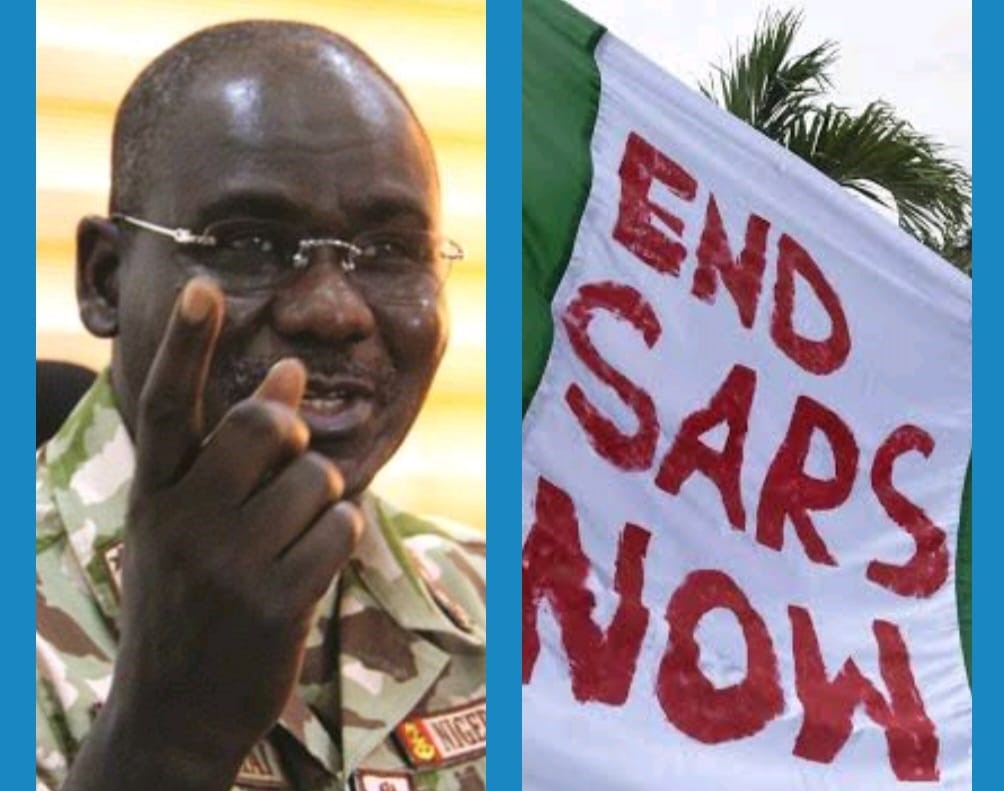
    It is baffling and hard to believe that the Nigerian Army under the current leadership of Lt. General Tukur Buratai would recruit the service of publicists for dark propaganda, rather than public relations to protect its image.

    Just recently, the Army’s publicists shot a movie titled “Fatal Arrogance” that portrays the leadership and members of the Islamic Movement of Nigeria (IMN), popularly known as a Shi’ite group, as terrorists.

    In their desperate execution of this plan, the publicists hired a veteran Nollywood Actor, Pete Edochie; a popular actress, Destiny Etiko, and a movie producer, Anosike Kingsley Orji, all Christians and Igbos, to portray Northern Muslims and by extension Islamic religion, in a bad light in the movie.

    In the movie, Edochie is featured in a role wearing an Islamic outfit that makes him resemble Sheikh Ibrahim El-Zakzaky, leader of the IMN, who has been in detention since December 2015, after the altercation that his followers had with Nigerian soldiers. Over 348 people were killed in that incident, and the follow-up aggression having the army lay siege to the IMN headquarters, with the bodies of the dead secretly buried by the army in a mass grave.

    The behind-the-scenes clip from the movie, which was shot in Igboland rather than a Northern city, is already generating a lot of controversies.

    A popular Kannywood actor who was lured into taking part in the movie, Mallam Yakubu Mohammed, has regretted his appearance in it due to what has turned out as the film’s bad intent.

    He said, “I never knew some of the scenes in the film will be portrayed in that manner… It was a film that showed the clash between Nigerian Army and Islamic brotherhood in Zaria, and many members of the group were killed. When I read the script, I saw nothing castigating Islam in it, but you know (a) script can change at some point, that was what happened.

    “…There is a place that every Muslim, if he sees it, must be concerned. There is a photo of Mr. Pete Edochie walking around in a Muslim dress, with a bottle of beer in his hand and with a girl. I really regret appearing in that movie.”

    Also, according to Mohammed, “I have told the producer to remove all my scenes in the movie, that I am ready to pay for damages, which is what the rule says.”

    The Islamic Movement in Nigeria has equally petitioned the Inspector-General of Police, Mohammed Adamu, and the National Film and Video Censors Board, over the movie.

    The spokesperson of the Movement, Ibrahim Musa, in accusing the Nigerian Army of furthering its campaign of aggression against the group through the sponsorship of the movie, stated that, “If film producers are not careful, some disgruntled elements in governance will make them side with the oppressors against the oppressed, as the film “Fatal Arrogance”, is meant to achieve.

    “Genocide is involved here; any move to justify the brutal and inhuman Zaria genocide of December 2015 is an affront (to) the Rome Statute of the International Criminal Court.

    “Evidently, for every Nigerian, these clips are meant to disparage the peaceful movement and portray it to the world as a violent armed movement.”

    One of the promoters of the distasteful movie against the Islamic group is Terrence Kuanum, a Christian from Benue who authored a book with a similar title, “Fatal Arrogance”, in defence of the Nigerian Army against the Shi’ite. The book is apparently the inspiration behind this film.

    I was also once a victim of the same Terrence Kuanum, who parades himself as General Buratai’s publicist. He had falsely accused me of being a patron of terrorist groups, in his distorted and apparently suborned response to my “Memo to President Buhari on the Service Chiefs”, which was widely published in the Nigerian print media.

    In his deliberate attempt to incite the military and victims of terrorism against me, on the basis of untrue accusations, Terrence compromised the websites of highly credible, as well as notoriously incredible, media platforms, by planting his offensive article there, mostly without the knowledge of the publishers and editors of some of these platforms. Subsequently, about 15 of these media organisations had to delete the highly libellous content from their websites, while offering profound apologies for the infiltration of their systems that allowed that to happen.

    In his over 3,000-word defamatory piece, revelling in insidiously deceitful claims, Mr. Terrence labelled me a Boko Haram supporter, an ISWAP propagandist and that I was on the payroll of terrorists.

    Given how defamatory and harmful the allegations in the very lengthy article were, I officially reported this to security agencies, including the Nigeria Police, the State Security Service (SSS) and the National Intelligence Agency (NIA). Till date, none of the agencies has taken any action to interrogate the writer on the very grievous allegations that sought to impugn my professional integrity and cast me as a threat to national security. The security services seem to be afraid to invite the author of “Fatal Arrogance” for questioning because of his godfathers in the Nigerian Army.

    Apart from moving about freely, Terrence Kuanum has exhibited the ‘fatal arrogance’ of being untouchable, not only by launching his book in Abuja, but also shooting the movie based on the book in Enugu, to the bewilderment of a sane society.

    Terrence Kuanum’s odious activities revolve around his membership of an obscure ‘Global Amnesty International Network’, Television Nigeria (TVN) and other shadowy groups that support the leadership of the Nigerian Army.

    The painful irony of this publicity attempt gone awry is the fact that the Nigerian military has an enviable reputation of professionalism, gallantry, resilience, and straightforwardness that do not require propaganda to push for a positive social narrative.

    It is only the leadership of an institution that appears to have something ugly it needs to cover up that engages charlatans in an effort at dark propaganda, rather than more astute and professional public relations organisations. It goes without much contemplation to know that this very poorly thought-through and ‘Fatal Arrogance’ will backfire very badly on the image and reputation of an institution that should otherwise be encouraged for its potentials, and the work it is doing to keep Nigeria safe.

    Yushau A. Shuaib
    Author of “An Encounter with the Spymaster” and “Crisis Communication Strategies”
    www.YAShuaib.com

  • Pantami and Digital Economy Projects in Nigeria by Yushau A. Shuaib

    Pantami and Digital Economy Projects in Nigeria by Yushau A. Shuaib

    Pantami and Digital Economy Projects in Nigeria by Yushau A. Shuaib

    It was almost late into the night when the calls came in. Since I didn’t have the number in my phone’s list of contact, I was initially reluctant to answer it. But when the call came again, this time with the ID Caller displaying ‘Isa Pantami’, my heart skipped a beat.

    The quite critical article I did on Dr. Isa Ali Pantami, the Minister of Communication and Digital Economy quickly flashed back to my mind.

    I had received different comments on the said article, with some friends saying I was not fair to the notable Islamic scholar and digital worldview professional.

    Prior to the publishing of the said article, I had only seen him at a distance when he served as a guest speaker at the book presentation of a childhood friend and forensic detective, Dr. Abdullahi Bello, and also at the conference of the Nigerian Institute of Public Relations (NIPR), both in Abuja.

    Still, on the two occasions, one thing I found impressive was Pantami’s promptness to the events, even arriving earlier than some of the organisers, and then the extempore manner of delivery of his remarks, in which he spoke to subjects and issues that he displayed a captivating command of.

    Meanwhile, on October 17, 2019, President Muhammadu Buhari had approved Pantami’s submission for the expansion of Ministry of Communication’s mandate to cover the novel and future-looking area of an encompassing digital economy that captures the direction of the global economy which the Nigerian one seeks greater participation in, particularly as anticipated in the strategy laid out in the National Economic Growth and Recovery Plan. As such, he is the first driver of the Nigerian economy in this regard.

    I am equally aware that apart from preaching against terrorism for over a decade as an Islamic scholar, Pantami as a digital professional has been in the forefront of advocating for the implementation of ICT-based solutions to tackle insecurity in Nigeria. I with his bosom friends, Jaafar Jaafar of the Gandollar fame and award-winning investigative journalist, Abdulaziz Abdulaziz, had causes to discuss, analyse and report the incessant threats of Boko Haram to the minister in our different media platforms.

    With all these running through my mind within a span of seconds, I picked the phone that night hoping it could however be one of those scam calls by the growing legion of increasingly sophisticated con artists, known as yahoo-yahoo boys, looking to another victim.

    “Assalam alaikum. My name is Isa Pantami. Am I speaking to Mallam Yushau Shuaib?”

    Immediately, I recognised the soft voice and responded in the affirmative, “Yes, Sheikh Pantami.”

    “I have been reading you for a very long time and I am impressed by some of your contributions to national discourses,” he continued.

    I was quite flattered, but being fairly familiar with this sort of ritual, I knew that such praises at the beginning of a conversation could easily take a sharp turn and nosedive into accusations and abuse.

    Surprisingly, rather than expressing any reservation, he commended the efforts of our media platforms in the objective reporting being carried out. As he went on, the news instincts of the journalist in me sought some quick responses from him to certain media reports about his alleged conflict with other public officials.

    However, he quickly interjected by saying that he was grossly misunderstood and attacked in the media, and that he was not even aware of some of the actions being attributed to him. He ended by saying that, “Surprisingly, I hold in high esteem and respect, some of the officers behind these reports.” Yet, I could sense his feelings about the unfair attacks on his person by the media, as we rounded up the call, with his promise to see me soon.

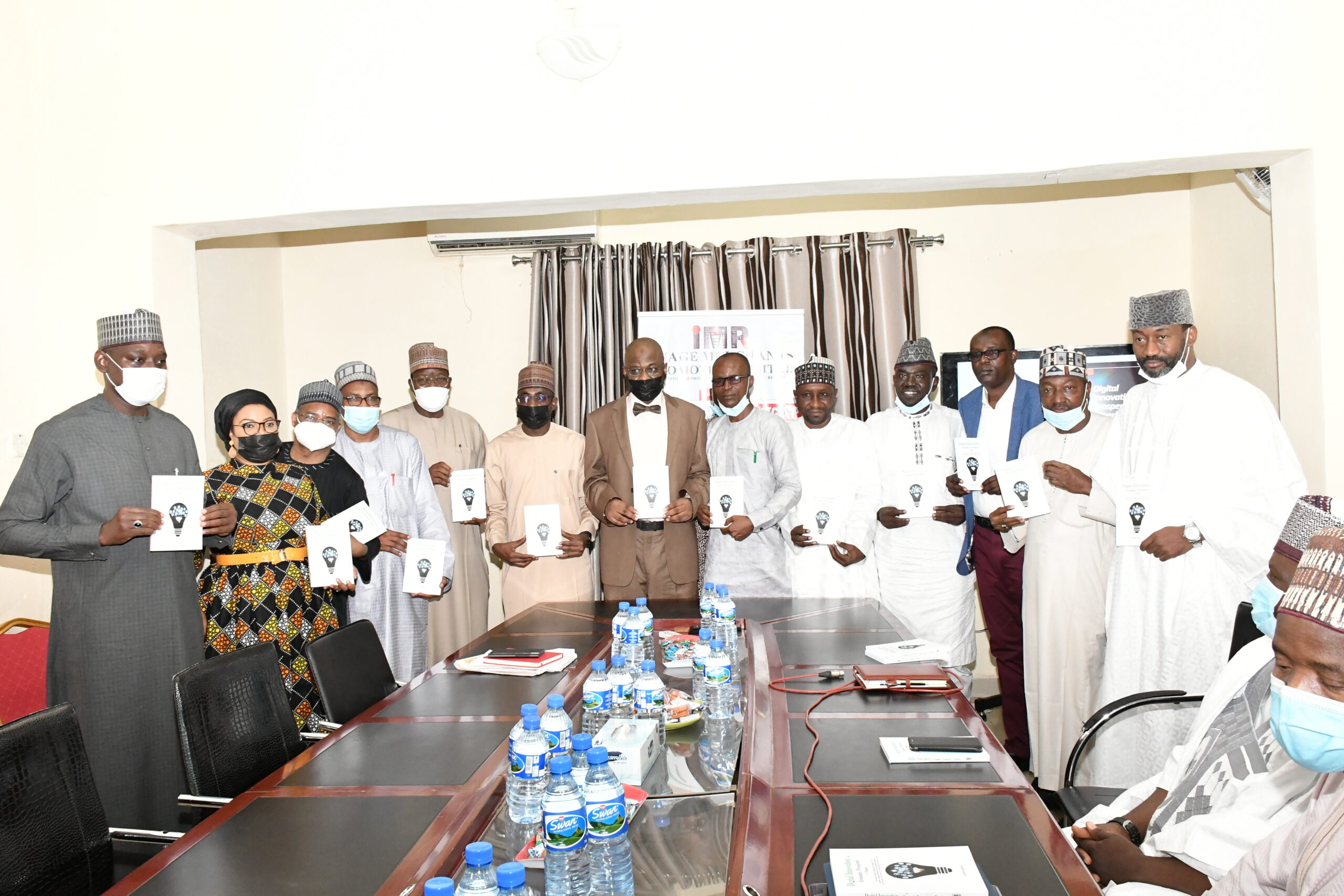
    Weeks later I received an invitation from the Director-General of the National Information Technology Development Agency (NITDA), Kashifu Inuwa to attend virtual commissioning of ICT projects in the first year of President Buhari’s second tenure in office.

    I was amazed at the unveiling of dozens of ICT projects across the country within a few hours. In attendance at the virtual commissioning of the projects in Abuja were the Ministers of Information, Lai Mohammed; Interior, Ogeni Aregbosla; Aviation, Hadi Sirika and the Minister of State for Works, Abubakar Aliyu. Governors Inuwa Yahaya of Gombe, Hope Uzodinma of Imo and Mohammed Abubakar of Jigawa State were equally present at the unique event.

    The two phases of the event were beamed live on big screens. Gracing the occasion at the other end on different locations were university Vice-Chancellors, public officers, religious leaders, traditional rulers and security chiefs, among others.

    Some of the digital projects commissioned during the two phases of the event included the School Knowledge Centres (SKC), Tertiary Institution Knowledge Centre (TIKCs), ICT Innovation Hubs, Digital Skills for Entrepreneurs and Innovators, Community IT Training Centres, Virtual Examination Centres, and the newly completed Emergency Communication Centres (ECC).

    More significant is the E-Health Centre, which aims to improve access to healthcare service delivery at medical facilities and the E-Accessibility Project that promotes digital inclusion of persons with disabilities through the provision of ICT and assistive technologies for institutions catering for their needs

    All the facilities were delivered with adequate infrastructure and tools for ICT teaching and learning, including the Virtual Academy, which provides digital skills to citizens for economic empowerment (digitalnigeria.gov.ng).

    Apart from these facilities provided within a year of Pantami’s tenure, his Ministry has also developed many policies to address concerns in the sector. These include the National Digital Economy Policy and Strategy 2020-2030 (NDEPS); Roadmap for the Implementation of the NDEPS; the National Broadband Plan 2020-2025; SIM Card Registration Policy; and the National Policy for the Promotion of Indigenous Content in the Telecommunications Sector (Draft). Also, the National Policy on Virtual Meeting in the Federal Public Institutions (Draft); National Dig-Once Policy; and the National Policy on Internet.

    Meanwhile, concerned about efficient productivity, the Minister also commissioned the Computer Emergency Response and Readiness Centre, the Digital Media Studio for Virtual Learning and the Digital Conference Centre for Remote Collaboration at the Nigeria Information and Technology Agency (NITDA).

    NITDA’s IT Project Clearance (ITPC) also successfully cleared the Unique IT Projects of the ministries, departments and agencies of government (MDAs) and saved the government N5 billion, while it commenced enforcement action against MDAs that flout the Local Content Policy of the Buhari administration.

    Presently, the structures of the Emergency Communication Centres (ECCs), a project under the Nigerian Communication Commission (NCC) are now available in 34 states of the federation, with the toll-free emergency number, 112, activated in 19 of these states.

    In the attempt to improve the efficiency and modernisation of the Nigerian Postal Service (NIPOST), the Minister has approved the unbundling of the service into five companies, to cover Banking and Insurance, Property Development, Logistics Transportation, E-Government Service, and the E-Commerce Service. He also suspended cash payment for the services offered by NIPOST to promote the entrenchment of a national digital economy, while also fighting corruption.

    Similarly, in a deliberate commercialisation effort to encourage private sector investment, Pantami endorsed the creation of Strategic Business Units within the Nigerian Communications Satellite Limited (NIGCOMSAT), which now operates the Satellite Infrastructure Company and the Satellite Broadband and Broadcast Company. Also, the Galaxy backbone, another agency under the Ministry of Communication and Digital Economy, has securely hosted the Open Treasury Portal to track all government expenditure above a certain threshold.

    In accomplishing these tasks, the Minister ensured a synergy across the different parastatals under the Ministry, which now work together as a team and complement each another in their respective mandates. It is therefore not surprising that the broadband penetration in the country has hit over 40%, while the contribution of ICT to the Nigerian GDP reached 14.07% within a year.

    I must admit that in all remarks, Dr Pantami gives credit to President Muhammadu Buhari for providing him with the enablement for the projects. I won’t be wrong to describe him as one of the keenest supporters of the President in the cabinet.

    Yushau A. Shuaib
    Publisher PRNigeria and Economic Confidential


  • Arotile: Curtains Drawn On An Inspiring Face of NAF’s Courageous Women of War‬‬‬‬

    Arotile: Curtains Drawn On An Inspiring Face of NAF’s Courageous Women of War‬‬‬‬

    Arotile: Curtains Drawn On An Inspiring Face of NAF’s Courageous Women of War‬‬‬‬
    By Yushau A. Shuaib

    “Congratulations for emerging a Finalist in the IPRA Golden World Awards for Excellence in PR 2020 with ‘NAF Women of War’ in the Category Crisis management.”

    That was the message in an email received from Janice Hill, the Member Services Manager of the International Public Relations Association (IPRA), notifying the Nigerian Air Force (NAF) of its campaign on gender balancing in the Nigerian military. The campaign had previously won the Public Sector/Government Category of African PR awards for Superior Achievement in Branding, Reputation and Engagement (SABRE) initially billed to hold at the Conference of the African Public Relations Association (APRA) in Dar es salaam, Tanzania in May this year, but which was postponed due to the raging COVID-19 pandemic that had claimed much ground across the world.

    The first female combat helicopter pilot in Nigeria, Flying Officer Tolulope Arotile, who died in an unfortunate freak auto-accident on July 14 at the age of 24, was one of the prominent faces of the inspirational PR campaign.

    Before her untimely death, Arotile’s outstanding profile and that of Kafayat Sanni, Nigeria’s first female fighter jet pilot, form part of NAF’s campaign on Women of War, in an attempt to eliminate the stereotypical notion that the military is dominated by men; and that more so women have no place in the combat operations of the armed forces.

    The campaign was an initiative of the forward-looking and detribalised Chief of the Air Staff (CAS), Air Marshal Sadique Abubakar, in rebranding the service as the most reputable, humane responsive military service in the African continent. Due to it uniqueness, the campaign had won several credible laurels, including African and global awards on reputation and crisis management in Rwanda and Armenia, only last year.

    While the Air Chief is not given to playing to the gallery or engaging in contrived and incredible propaganda towards political ends, he takes great delight in projecting the earned reputation of the Nigerian Air Force (NAF) as a progressive institution, through the exceptional efforts and gallantry of its personnel.

    Through the video and other levels of narrative, the ‘Women of War’ campaign proved that “what a man can do, a woman can do better” by depicting how female inclusiveness in the military is paying off. Apart from Arotile and Kafayat, other top female officers were interviewed in a documentary, as the campaign was towards proffering answers to questions pertaining to the roles of women in the NAF, which have been unfairly underrated and unnecessarily burdened by distorted cultural expectations.

    The campaign portrays how women of war have persistently showcased fearlessness and courage as pilots, combatants, and armament specialists, among other no less significant roles. These have tremendously led to the increased participation of female personnel in combat and war support functions, especially in the fight against armed banditry and insurgency in Nigeria. No doubt, this has portrayed the NAF as a gender-sensitive and balanced military institution, which projects positive female role models in the likes of Flying Officer Arotile and others, to the great admiration of Nigerians.

    The campaign has immensely boosted the morale of the female troops, who are everywhere, valiantly fighting armed banditry and terrorism in Nigeria’s North-West and North-East geopolitical zones. It has also further gingered the enlistment of female citizens into the Nigerian Air Force.

    During the unveiling of the newly acquired Augusta 109 Power Attack Helicopters, it was innocent-looking and brainy Arotile who introduced the features and operation of the aircraft to President Muhammadu Buhari in Abuja.

    As such, the unprecedented outpouring of emotions, attendant upon grief and disbelief, was not surprising, following the death of the young female officer. When she was laid to rest on July 23, with full military honours, Air Marshal Sadique Abubakar stated that the NAF was still in palpable shock and intense anguish over the loss of a mentee in whom the service had so much confidence. He described the late Arotile as a dedicated and goal-oriented young woman who carried out her assignments, both on the ground and in the air, with a high level of professionalism and commitment.

    While reiterating how the fallen heroine had contributed immensely to the decimation of subversive elements in several anti-banditry combat missions, Air Marshal Abubakar condoled with the entire womenfolk of Nigeria, whom he said, the late Arotile had represented so creditably.

    Born on December 13, 1995, Tolulope Arotile attended Air Force Primary School and Air Force Secondary School, both in Kaduna, from 2000 to 2011, before she later gained admission into the Nigerian Defence Academy as a member of the 64 Regular Course on September 22, 2012. She was commissioned into the Nigerian Air Force as a Pilot Officer on September 16, 2017, and was winged as the country’s first-ever female combat helicopter pilot on October 15, 2019, after completing her flight training in South Africa. She equally held a commercial pilot licence and had undergone tactical flying training on the Agusta 109 Power Attack Helicopter in Italy. Before her death, within short period of her commission, Arotile had attained over 400 flying hours in the service to the nation.

    Truly, Arotile has left her mark in the sands of time, proving that when it comes to the attainment of excellence and value addition to society, age or gender remains a poor measure of capability, and hence should never be entertained as barriers.

    While we thank the late Tolulope Arotile for fighting earnestly in protecting Nigeria’s sovereign integrity, I pray that other women of war would keep finding the courage to keep the flag of excellence flying, while never allowing their gender to constitute an hindrance to their remarkable capabilities.

    Adieu patriot.

    Yushau A. Shuaib
    Author, Award-Winning Crisis Communication Strategies
    www.YAShuaib.com

  • COVID-19: Of Chinese Experts, Encouraging Recovery and Breakthrough Therapies

    COVID-19: Of Chinese Experts, Encouraging Recovery and Breakthrough Therapies

    COVID-19: Of Chinese Experts, Encouraging Recovery, and Breakthrough Therapies
    By Yushau A. Shuaib

    The controversy over the arrival of Chinese medical experts in Nigeria is needless, going by an official statement from China Civil Engineering Construction Corporation (‘CCECC’), which sponsored the trip of this medical personnel and the supplies being brought into the country.

    The Managing Director of CCECC, Michael Jiang said the medical team is not coming to Nigeria to treat any COVID-19 patient but is only escorting the medical supplies to the country, and would be on hand to provide guidance for their usage and distribution. The supplies being donated to Nigeria include test kits, ventilators, disinfection machines, disposable medical masks, medicines, rubber gloves, protective gowns, goggles, face shields, infra-red thermometers and other critical care items. (https://cutt.ly/ccecc)

    On the day the Chinese medical team arrived in the country late in the evening of Wednesday April 8, the Nigeria Centre for Disease Control (NCDC) had announced then that the total number of coronavirus infection cases in the country was 276, with 44 of these having been treated and discharged, while quite unfortunately six of those who contracted the disease had died. (https://cutt.ly/ncdc)

    The rate of recovery of coronavirus disease patients in Nigeria is quite encouraging. In fact, a number of high-profile personalities who had tested positive to the infection have since recovered and been given a clean slate of health within a short period of time. They include Governors Bala Mohammed of Bauchi State and Seyi Makinde of Oyo State.

    While a conspiracy of silence subsisted on effective remedies for the coronavirus infection and disease, Governor Makinde of Oyo State revealed that he had fought the infection with carrots, vitamin C, black seed oil with honey and made vigorous efforts to boost his immunity, whilst regularly exercising when in isolation. (https://cutt.ly/makinde).

    Meanwhile, Nigerian professor of Pharmacognosy and Chairman of the Imo State Taskforce on COVID-19, Professor Maurice Iwu has laid claims to the creation of a plant-based and already patented drug for the treatment of the dreaded coronavirus, which he said is presently going through clinical trials in the United States of America. This, he had disclosed to Nigeria’s Minister of Science and Technology, Dr. Ogbonnaya Onu during a recent visit. (https://cutt.ly/iwu)

    Still, there has been cheerful news around the world about breakthrough medicines and remedies that are tackling the menace of coronavirus to great degrees of efficacy. After President Donald Trump of the United States of America had nudged at the use of Chloroquine therapy in curing the virus, a new controlled clinical study conducted by doctors in France has shown that a combination of Hydroxychloroquine and Azithromycin (Z-Pak) completely cures coronavirus patients within six days of treatment. In fact, the healing of 80 additional patients has confirmed the effectiveness of this new line of therapy, as advanced by the French researchers. (https://cutt.ly/chloro)

    In a similar development, another wonder drug, Tocilizumab, is reputed to have cured 90 per cent of those it was administered on, in a groundbreaking trial on severe and critical COVID-19 patients in two separate hospitals in the eastern province of Anhui in China. Tocilizumab, otherwise known as Actemra and produced by the Swiss pharmaceutical firm, Roche, is typically used to combat arthritis. (https://cutt.ly/actemra)

    Another report claims that Chinese doctors gave the medication to 20 patients during the peak of the epidemic in China. Of this number, nineteen of them were discharged within 14 days, despite having earlier been critically ill. The drug has now been approved for use in China and for trials in the U.S. (https://cutt.ly/trials)

    While I strongly believe that this period of anxiety and fear over the coronavirus disease pandemic would soon be over, there are many people – young and elderly, educated and uneducated, rich and poor, powerful and less powerful – who are greatly disturbed psychologically in this period, and who have no one to give them words of encouragement and hope.

    It is unfortunate that some traditional and religious leaders have been aggravating the anxiety of their followers by giving them misleading information and raising false hopes in them, at a time when fact-based approaches are essential to tackling the coronavirus scourge.

    It is however reassuring to note that a number of major religious bodies in Nigeria have aligned their messages to the faithful with medical advice. The Nigerian Supreme Council for Islamic Affairs (NSCIA) and the Christian Association of Nigeria (CAN), for instance, have asked their followers to obey the directives of governments and take all precautionary measures issued by the authorities on coronavirus. They have cautioned Muslims and Christians against convening or attending religious activities, while observing social distancing when they experience symptoms of coronavirus such as respiratory distress, fever, cough, and shortness of breath, etc. (https://cutt.ly/religions)

    At this period of global anxiety, confusion and a near state of hopelessness due to overwhelming and disturbing news about the coronavirus infection and disease, we should encourage our loved ones in coping with the attendant stress. According to experts, excessive thinking about the pandemic can worsen mental health conditions. It is therefore necessary to always take breaks from the preponderance of alarming information, disturbing news and activities on the traditional and social media. We need to cultivate a more positive mindset, fostered by healthy diets, regular exercise and taking enough rest in this difficult period. When disturbed, it is advisable that we talk to people we feel comfortable with and trust, in expressing our fears and concerns.

    The manageable levels of the pandemic, within the limits of our health care system in Nigeria, needs to be sustained through rigorous campaigns on social distancing and the adoption of appropriate hygienic lifestyles.

    Yushau A. Shuaib
    Author of Award-Winning Crisis Communication Strategies
    [email protected]

  • Memo to General Buratai on Alleged Army Consultants

    Memo to General Buratai on Alleged Army Consultants

    Memo to General Buratai on Alleged Army Consultants
    By Yushau A. Shuaib

    “My namesake, I commend your relentless counterinsurgency media campaigns against our enemies, on a pro bono basis without a penny from the military. Please sustain the tempo.”General Yushau Abubakar

    General Buratai, the above message was sent to me by the first Commander of Operation Lafiya Dole, Major General Yushau Mahmood Abubakar, when he was redeployed to the Nigerian Army Headquarters as the Chief of Training and Operation in January 2016. He later died in a very mysterious accident along Damaturu-Maiduguri road two months later in March 2016. It is one of several goodwill messages receive from top military officers and soldiers. I must also appreciate your goodwill message too when I voluntarily retired from the public service last year.

    As you are aware, this is not the first open letter to you or article that I have written about you and the Nigerian Army under your watch (https://cutt.ly/burataimemo). I am writing presently to draw your attention to the highly libelous and defamatory rejoinder written about me by one Terrence Kuanum, who is allegedly working as a contractor/activist for and supported by the Nigerian Army.

    In his over 3000 words-long defamatory piece, reveling in insidiously false claims, Mr. Terrence labeled me a Boko Haram supporter, ISWAP propagandist and that I was on the payroll of terrorists, while offering his distorted and apparently suborned response to my recent Memo to President Buhari on the Service Chiefs.

    In that Memo, I had argued on the need for the present service chiefs to be let go when the ovation is still audible, and after giving the best of their skills to the nation, while also allowing for a smooth progression in service through the promotion of other competent military officers to the Next Level. My argument was anchored on the necessity of enabling a new cadre of officers and set of competencies to come through in the national security architecture, if the war on terror in the country must be won.

    Yet, President Buhari has the right to decide otherwise, since he has signed the revised, though restricted, document on the Harmonized Terms and Conditions of Service for Nigerian Armed Forces Officer (HTACOS) in 2018, which now includes a provision stating that: “Notwithstanding (retirement age or expiry of tenure), the President, C-in-C reserves the prerogative to extend the tenure of CDS/Service Chief irrespective of his age or length of Service.”

    From available records and an Internet search, the activities and statements of the said Terrence revolve around his membership of a so-called Global Amnesty International Network, a National Coalition Against Terrorism, an obscure website known as Television Nigeria (TVN) and other shadowy groups to support the Nigerian Army.

    Surprisingly, in his deliberate effort to incite the military and the victims of terrorists against me, on the basis of false accusations, Terrence compromised the websites of highly credible, as well as notoriously incredible media platforms, by planting his offensive article, mostly without the knowledge of the publishers and editors of some of these platforms. Subsequently, about 15 of these media have had to delete the highly libellous content from their websites, while offering their profound apologies.

    Considering the gravity of the false accusations and information that he has been sharing, coupled with the criminality of spreading fake news and hate speech, through the breaching of the standards of a number of media platforms, I have since petitioned security and intelligence agencies, including the Police, National Intelligence Agency (NIA) and the Department for State Services (DSS) to investigate these allegations and the motive behind the malicious attacks I have been subjected to. I have also provided these agencies with the details of the web links and screenshots of the websites on which this defamatory information has been circulated.

    Surprisingly, more than two weeks after my petition, Terrence seems untouchable, as the security agencies have not been able to take any action on him, even as he has had the audacity to publicly launch a book in Abuja last week, where he blamed the victims of terror for being their own nemesis.

    I feel disappointed that after serving critical institutions in Nigeria, the system appears not able or willing to protect one from malicious, inciteful and false allegations that could possibly lead to the loss of one’s life. Yet, only recently, security personnel arrested the young Editor of an online medium, the Webmaster of this medium, alongside one of its reporters, and arraigned them in court in another state over a harmless investigative report against drug addiction that was carried out. How come drawing attention to the sinister motivation behind such a grave matter as the false allegation of Boko Haram membership, which could possibly subject one to lynching, is being treated with levity?

    General Buratai, sir, since your appointment as Chief of Army Staff, after your sojourn as the Commander of the Multinational Joint Task Force (MNJTF) in Chad Republic in 2015, I and my organisation have reported the activities of the Nigerian Army at no single cost to the Nigerian Army till date.

    When the alleged Dubai property of your family went viral, our platform, PRNigeria provided the other necessary perspective on the issue to the Nigerian public, on the basis of the information and documents provided to us by your associates and a presidential spokesperson. (https://cutt.ly/burataidubai)

    During the Shiite-Army fracas in December 2015, our medium, in close liaison with your spokesperson, became the major source of syndication of news and videos of your appeal to the protesters before the situation went awry a few days later (https://cutt.ly/buratai).

    We have also provided credible intelligence and engaged in and supported strategic media censorship for the protection of national security. These are facts that your respective spokespersons and spy chiefs can easily attest to pertaining to our professional integrity and ethical practice.

    It, therefore, beats my imagination that a fellow associated with, patronized and allegedly funded by the Army could be allowed to disparage my reputation to no consequence till date.

    My appeal to you as the Chief of Army Staff is to be wary of those who may be dropping your name or that of the military to engage in silly activities and criminal offences.

    I also urge the security services to be fair and just in protecting and treating Nigerians equally before the law, especially on cases involved heavy cybercrime offences.

    I trust that your sense of professionalism and reasonable conduct would make you investigate and call those behind this unfortunate situation to order. Thank you.

    Yushau A. Shuaib
    Founder PRNigeria and Author of An Encounter with the Spymaster

  • The Army-Police War: Where Is the NSA? – YAShuaib

    The Army-Police War: Where Is the NSA? – YAShuaib

    The Army-Police War: Where Is the NSA?
    By Yushau A. Shuaib

    “Our country is bedevilled… (by) multifarious security challenges by which each agency must bring its wealth of experience and comparative advantage to compliment the effort of another”- DG DSS

    The current Director-General of the Department of State Services (DSS), Yusuf Bichi Magaji made the above remarks in his keynote address, while hosting the meeting of the Forum of Spokespersons of Security and Response Agencies (FOSSRA) on April 24.

    The Forum was established in 2013 by the Office of the National Security Adviser (ONSA) to enhance synergy and collaboration amongst critical institutions that deal with issues of security and its challenges in Nigeria.

    As a sensitive security organ, the ONSA is statutorily empowered to coordinate the activities of military, security, intelligence and response agencies in combating terrorism, cybercrime and major issues affecting the wellbeing of the state in Nigeria. It is a known fact that during the previous administration, the ONSA hosted regular meetings of security and service chiefs in addressing issues that could create conflict in society.

    While the meeting of the security chiefs was held almost every other week in ONSA, the meeting of FOSSRA was held rotationally among member-agencies every month until June 2015.

    It is of utmost importance to highlight some instances when FOSSRA’s interventions doused tension and stabilised the polity within a climate of heightened agitations and security concerns in the country.

    In June 2014, the then National Security Adviser, Sambo Dasuki officially tendered an apology to the Speaker of the House of Representatives, Honourable Aminu Tambuwal, who was allegedly harassed by joint-security operatives at an international summit on Farmer-Herder Crisis in Kaduna. Both the former NSA and the Speaker are from the same royal family within the Sokoto sultanate, even if of different statuses. (Link: http://bit.ly/31HNERy)

    Similarly, in one of the Army-Shi’ite altercations in Zaria, also in July 2014, during which some members and children of Sheikh Ibrahim Zakzaky were killed by Nigerian soldiers, the Chairman of FOSSRA, who was then the Director of Defence Information, General Chris Olukolade, promptly issued an empathic statement, expressing regret over the incident and announcing that a panel would be constituted to unravel the remote causes of the fracas. The statement played a magical role in nipping the controversy in the bud. (Link: http://bit.ly/2TycxMD)

    The following month, the Commandant General of the Nigeria Security and Civil Defence Corps (NSCDC) and two operatives of the Corps were allegedly disrespected and manhandled on different occasions by the Police. As the media were feasting on the controversy, the then spokesperson of the Nigerian Customs Service, Wale Adeniyi hosted the monthly meeting of FOSSRA in September 2014, where the erstwhile Police spokesperson, Emmanuel Ojukwu walked to the NSCDC spokesperson, Emmanuel Okeh and issued a joint statement which doused the tension. (Link: http://bit.ly/31G3eNg)

    Meanwhile, since the appointment of Major General Babagana Monguno (Rtd) as the National Security Adviser (NSA) by President Muhammad Buhari in 2015, he has neither shown keen commitment to nor hosted the meeting of the FOSSRA to guard against inter-agency rivalry. The meeting of the Forum, which has become occasional, is now being hosted by the Centre for Crisis Communication (CCC) and other security agencies that value synergy and collaboration in information management.

    If FOSSRA, which is domiciled under the ONSA, is very active, the current acrimony between the Nigerian Army and the police over the killing of the Police’s Intelligence Response Team (IRT) operatives by soldiers in Taraba State could have been averted. There would most likely have been an existing synergy and a more cordial relationship between these two prominent actors within the Nigerian security architecture and system.

    It was alleged that soldiers of the 93 Battalion shot the IRT operatives – including Inspector Mark Ediale, Sergeant Usman Danzumi, and Sergeant Dahiru Musa – dead after they had arrested a notorious kidnap kingpin, Hamisu Bala Wadume, who is now on the run. The Army claims that the police officers were shot after being mistaken for “suspected kidnappers” and blames the attack on a communication gap.

    The initial statement from the Police spokesperson, DCP Frank Mba and immediate response by the Army spokesperson, Colonel Sagir Musa, would have been needless if an effective mechanism of inter-agency collaboration, as exemplified by FOSSRA, had been adhered to.

    There are trending videos, audios and sponsored stories on the fracas that need to be contained before they further exacerbate the present situation and persist as drivers of tension. It is quite unfortunate that many Nigerians on the social and mainstream media have continued to react to the incident through inciting, inflammatory and embarrassing innuendoes.

    It may not be surprising if the two public relations officers of the security organs involved were actually taking orders from their principals, rather than abiding by the ethics of crisis communication management, which guide professionals on their temperament, conduct and how to shape their messages during periods of high volatility.

    As spokespersons of security agencies, they are expected to be courteous, restrained and conscious of the need to show great human understanding and empathy in their public communications, at this sort of time when such really matters. It is also very important that their messages, like press releases, should be clear, concise, concrete, correct and complete, without allowing for any form of ambiguity in communication.

    In all these, the absence of strategic leadership in dousing the tension, beyond the critical levels of the individual service chiefs, merely escalates the inter-agency antagonism and fuels the heated debates and fury pervading the media from visible and anonymous sources.

    Is it not embarrassing that different panels were allegedly constituted to investigate this incident? While one is said to be chaired by a military officer in the rank of a major general, the other is noted as being headed by a security officer in the rank of an Assistant Inspector General of Police.

    As the coordinating organ of government on security matters, ONSA should step in and manage this crisis, more professionally and with experience, especially in the absence of a federal cabinet, as the Ministers of Defence or that of Interior are yet to be sworn in. The NSA can advise the Army Chief Lt General Tukuru Buratai and Police Boss IG Mohammed Adamu on the need to urge their officers to exercise restraint. In the alternative, the Presidential Media Adviser should intervene by calling on the spokespersons of the agencies to sheath their swords in this attrition and highly unfortunate media war.

    Yushau A. Shuaib
    Author of An Encounter with the Spymaster
    [email protected]