Category: Media/PR

  • SEGUN ADENIYI: When an Editor Becomes the Spokesperson- YAShuaib

    SEGUN ADENIYI: When an Editor Becomes the Spokesperson- YAShuaib

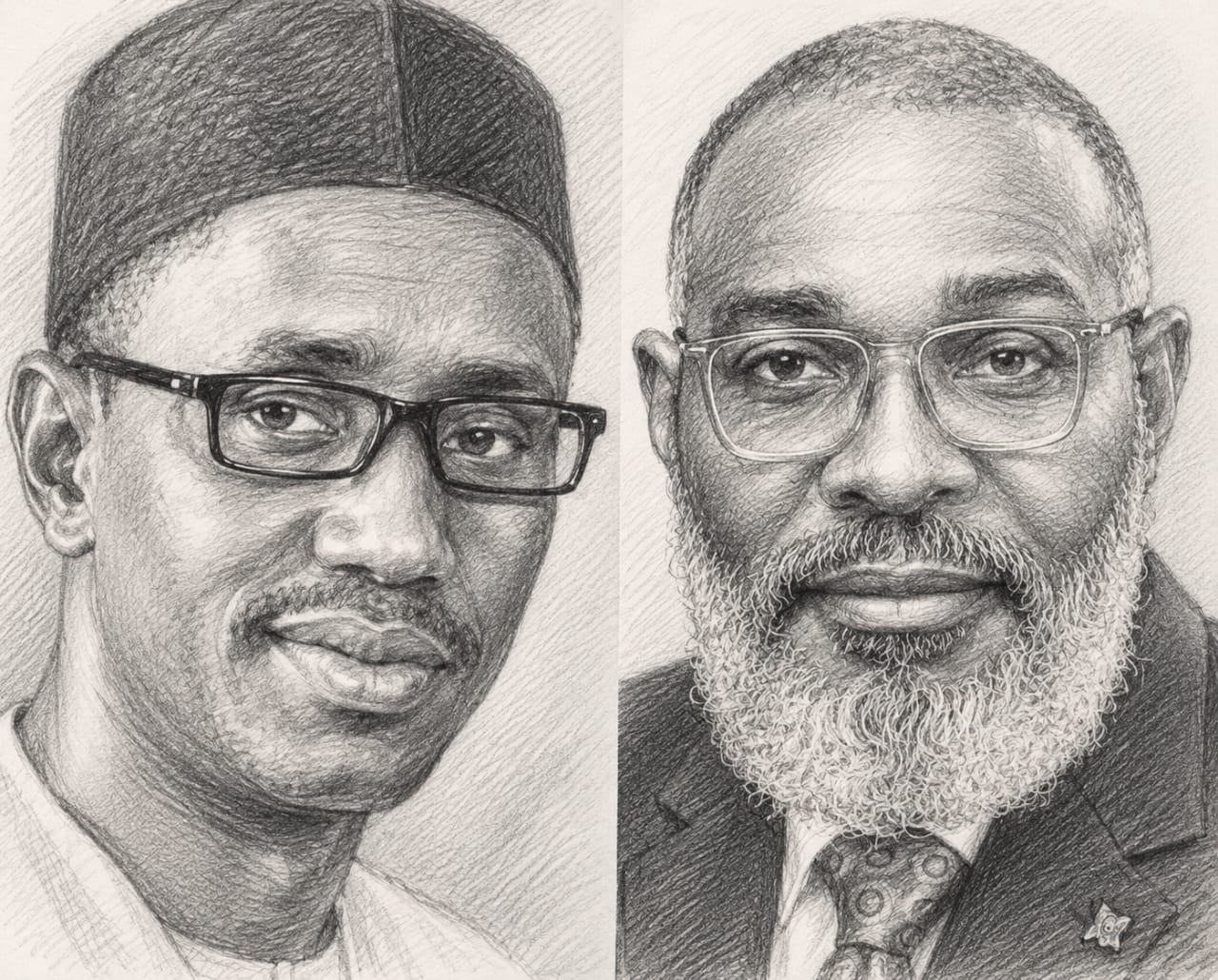
    Adeniyi
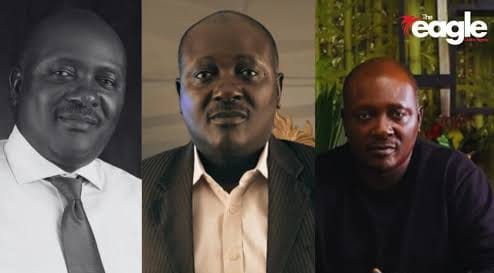
    Olusegun Adeniyi

    By Yushau A. Shuaib

    A Few years ago, a seemingly harmless piece of information was leaked to the press on the reappointment of some public officers into the board of the Revenue Mobilisation Allocation and Fiscal Commission (RMAFC). As the spokesperson of the organization, I got wind of the development from media sources. Instead of encouraging them to use it, I passionately pleaded that they should kindly drop it. My reason was predicated on the fact that previously, similar sensitive information leaked to the press and resulted in the overturning of the decision. In some cases such “exclusives” published before official pronouncements, have dashed the hope of potential beneficiaries – an example is the case of media reports of the purported reappointment of Suleiman Ndanusa as Director General of the Securities and Exchange Commission (SEC) and also appointment of Oby Ezekwesili as Director-General of the Bureau for Public Enterprises (BPE). The news reports might have been true, but the two officers could not realize the ambitions even if they did not lobby for them.

    Some of the editors whom I contacted and who in turn obliged my appeal included Segun Adeniyi, Editor of Thisday and his deputy Tunde Rahman, Yusuf Ali of the Punch newspapers and Ahmed Shekarau of the Daily Trust. But a radical finance correspondent, Yinka Akintunde insisted on the publication. As it turned out, some weeks afterwards, the story appeared in some media outfits. Surprisingly I was summoned by the then Secretary to the Government of the Federation, Ubong Ufot Ekaette over the rumour in the press. With a clear conscience, I exonerated myself before the SGF (after all, I was not in the Presidency). I informed him that though it is not professional for PROs to attempt to kill a story, I took the risk for the fear that fifth columnists are always on the prowl within and outside any system to play some pranks. The SGF was magnanimous enough to accept my explanation without instructions for my redeployment to ‘Siberia’ or a quiescent posting or indeed, any punishment, considering how appointments of top public officers had often been terminated on unfounded and flimsy excuses from the moles gambit of politics in the service. It took more than a month after the incident when the list was officially released that confirmed authenticity of the leaked story.

    This brief case study is a pointer to the delicate responsibilities of spokespersons and editors and also on their mutual relationships. Whilst an editor can easily have unfettered access to top management and confidential information, a lucky spokesperson may likely have only the listening ears of the boss and not necessarily the information required for the job; while editors enjoy the right to express their opinions on any issue through editorials and columns, the spokesperson has some restrictions on the kind of official information he can divulge to the public; while an editor is highly revered and respected by the society, the spokesperson is seen as an errand boy that only speaks the voices of his masters; while public officers can ill afford to mess with any editor, the same officers maltreat their spokespersons as if they were spies; while editors are seen as fighting for the public interest, the spokespersons are portrayed as protecting only the interest of their principals or organizations.

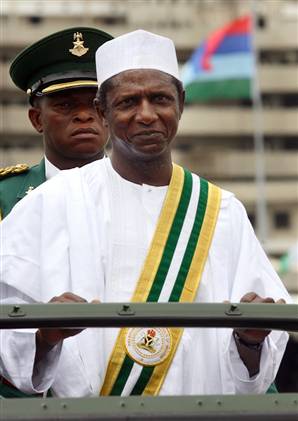
    Recently, some editors have found themselves in the public service as spokespersons. Top on the list is Olusegun Adeniyi, a celebrated editor and columnist with Thisday newspapers, who has been appointed as the Special Adviser to President Umar Musa Yar’ Adua on Communication. Many other members in the Fourth Estate of the Realm have accepted invitations to practice public relations in the public service come in nomenclatures such as Personal Assistant (PA)/ Special Assistant (SA), Senior Special Assistant (SSA)/Special Adviser, Chief Press Secretary (CPS)/ Director of Press (DPR) etc. They include: Funke Egbomode of Independent Newspapers who is now with the Speaker of the House of Representatives; Paul Mumeh formerly of Daily Times now with the Senate President, Mrs. Ajayi Gbadebo formerly with the Punch now in the Office of the SGF. At the states level too we have Chuks Ugwoke of the Vanguard called to service in the cabinet of Enugu State, Abdullahi Bego of Daily Trust is now with Governor of Yobe State, Usoro Usoro of the Sun now with the Governor of Akwa Ibom State, Mansur Lawal of the New Nigerian now with the Governor of Gombe State, Segun Olatunji of the Nigerian Tribune is now with the Governor of Ekiti State, Ahmed Tahir of the Leadership now with the government of Benue State, Adagbo Onoja of the Nation is now with Governor of Jigawa State, Hakeem Bello of the National Interest and Idowu Ajakaye of the Guardian now with the government of Lagos State. In fact, the list is quite endless.
    The rate by which media practitioners join the public service lately brings to the fore a debate on the appropriateness of desertion from their beats. Although there exist few conservative media houses who do not tolerate leave-of-absence for members of their editorial team for outside appointments, others not only encourage it but have built alumnus of veterans from the public service.

    What could have made media practitioners unique in our society? Let us take Segun Adeniyi as an example. Through his weekly column, the Verdict, Segun Adeniyi has courted a formidable network of admirers and friends including the powerful and the mighty in political and economic circles. He has also courted adversaries as one of the Nigerian columnists who have consistently and religiously sustained their columns with timely and punchy critiques on our socio-political and economic environment. He may not be a saint but one cannot deny the fact that he often took on some of his influential admirers, as he preferred to call a spade-a-spade. Like most of our editor-columnists, he was so blunt in his writings that one wonders how he would cope in the conservative system, he might have abhorred in the past.

    Editors in Nigeria are not as dreadful as some may wish to suggest even in the face of the new syndrome of dog-bite-dog. It will be unfair to comment now on their new political assignments when the public has not given them any breathing space. I may sound sycophantic if I assess them on their writings and personal integrity. But I am proud to say that I am one of the many Nigerians who receive maximum support from our editors in our official and personal works without any pecuniary inducement. Such supports have also shot to limelight many businessmen and politicians some of whom may even be ungrateful to accuse the press as ignoramuses who only speak local English instead of King-Kong language. The editors still perform their civic responsibilities to the admiration of the public no matter the intimidation.

    But as powerful as Editors are, what could have moved them to develop interests in the public service and changed from being the watchdogs to the dogs to be watched? I believe that the public service is everybody’s business. Those in the service pride themselves as serving the nation, not working in a family business or the interest of a private firm that can hire and fire at will. Even in the face of poor remuneration and the public notion of the service as a corrupt institution, there is a massive rush of member of the various professions to join the bandwagon. They include bankers, businessmen, academics, lawyers, and medical doctors amongst others.

    The truth is that contractors and political appointees who do not know the limits of their intrusion in the service have virtually taken over the jobs of the core civil servants. Take the case of a Minister in the last dispensation who appointed about ten personal aides in the name of Personal and Special Assistants and cutting-off even the director from performing their duties. While elected public officers have the prerogative to have as many political appointees as they may require, Ministers and other public officers have a limitation on the number of aides they can bring in, as stipulated in an Act of the National Assembly. If the present administration does not control the overzealousness of some of the political appointees who mostly prefer their relations and cronies as aides, the purpose of the monetization policy will be defeated through bloated recurrent expenditures.

    However, one should not begrudge the situation of aides taking over the jobs of Information Officers when one considers that some senior information officers whose major credentials in the service is their age, can neither write a press release nor do they have email addresses and the modern tools of information dissemination. But on the whole they need motivation and encouragement in order to put in their best.

    The dilemma of the hunters becoming the hunted is the expected suspicion within the new environment and the old beat. For instance, if a particular media publishes an exclusive story, the spokesperson may be suspected of the leakage by his principal, likewise other media may also be suspicious of discriminatory patronage.

    The roles of a spokesperson especially for a powerful personality involves versatility, as the officer has to ensure he/she only sleeps only after the boss must have slept and must wake up before ‘Oga’ wakes up. The press secretary should not rely on a time schedule, especially in a country where the leadership applies fire-brigade approach to public issues; travel on adventurous expeditions; receive and pay needless courtesy calls and organize Owambe in the name of official engagements.

    In a book “A Dozen Tips for Media Relations” (which coincidentally also has an endorsement of Segun Adeniyi amongst other editors) this writer suggests twelve points to be observed towards healthy and mutual relationships with the media for good public perception. These points that have illustrative and practical case studies include: knowing the operation of the media; understanding the new organization/environment; studying the boss’s temperaments; establishing network of professional bodies; developing good human relations; preparing logical budgets; acquiring the working tools; writing effective messages; speaking at the appropriate times; techniques of placing the message; managing crisis and evaluation through the feedback mechanisms.
    While Segun Adeniyi has so far successfully handled the publicity aspect of the present administration, the first official portrait of President Yar’Adua for display in offices has wrong positioning of the eagle in our coat of arm. This image problem easily reminds one of the first portrait of a former president, which promoted a designer Swiss wristwatch. A spokesperson should go beyond media relations/publicity activities to include reputation management in his schedule, which is about everything about the principal and the organisation. It includes techniques of studying public moods and advising the Chief Executive and management concerned on the desirability of tackling policy issues without necessarily drawing media attention.

    Like I wrote in my piece in 2003 title: ‘When A Woman Becomes a Spokesperson’ “let us hope that some of the new government appointees from the media are not deliberately withdrawn from their noble profession of voicing for the voiceless only to be used like sacrificial lambs after dirty jobs.” Today, we know those who are sincerely proud of their performance and those that would find it difficult to tell us about the principal and organization they served, if confronted.

    As hunters may become the hunted by the critics and the public, there may likely be other practitioners who may not mind to be called “Junior PA to PA to SA to SSA to Special Adviser on Publicity.” They should always remember the differences between Public Relations and Propaganda in their assignments.

    This article by Yushau A. Shuaib was originally published in Sunday Tribune July 22, New Nigerian July 22, Independent on Sunday July 22, Vanguard July 24-25, Weekly Trust July 28, Leadership Sunday July 29, Thisday on Sunday july 29, Punch July 30 and the Guardian August 6, 2007

  • The Spokesperson: Between Propaganda and Public Relations- YAShuaib

    YAShuaib
    Yushau A. Shuaib

    By Yushau A. Shuaib

    It is not about politics, product launch and cheap publicity. It is about image, reputation and editorial judgement. It is a choice between propaganda and public relations. Since information influences our attitudes to life, the kinds of message we receive from organizations and individuals to a large extent is of great concern to our livelihood.

    Information comes in different forms. While information that is not subjected to manipulation can be positive and negative like electoral victory and earthquake or economic prosperity and financial scandal, other news are processed and manipulated by concerned interests to draw public attention. The result of some of the processed information may also be encouraging or off-putting. In an effort to maintain objectivity and balance stories, the press allows contenders and competitors in public and private sectors to express themselves freely. This genuine generosity to utilize the media platform is abused by charlatans who have little idea or lack experience on the ethics of public affairs and the operation of the press. The media is awash with individual egocentricity, personality clashes and commercialized reportage. Yet as good as some of the subjects may be, the truth is not easily decodable from the surface.

    The desire to gain sympathy and acceptability of the target audience, for the sole purpose of winning patronage and support, make the roles of spokespersons, as intermediary, inevitable in any given society and corporate organization. While most spokespersons are expected to have undergone some training on ethics of mass communication or in the alternative acquire some experiences in public affairs and media practice, what we get from some of their activities are balderdash.

    Cheap publicities that have lately and largely invoked public discourse are handiworks of propagandists who defend the indefensible acts through fabrication, intimidation and excessive exaggeration to manipulate public opinion. Propaganda which many are not willing to associate with even though rampant as the outputs of some spokespersons, is used to sell bad products, hoodwink the consumer and pollute the air in most uncharitable and wicked mien. It may not be necessary that one must acquire basic elementary knowledge of mass communication, decency in choice of language and action for the purpose of winning public support could have been better deployed to, at least, give credibility and respect to the spokespersons and their principals.

    On the other hand, public relations is the most acceptable process of establishing and sustaining mutual and beneficial relationship with the general public by abiding to the strict code of professional practice. A PR practitioner gauges the public mood, conducts research and responds appropriately to issues in the most dignified and matured manner. A respected spokesperson, exemplified by trained public relations practitioners, gives sincere advice, undertakes genuine reconciliation and handles assignments professionally. He/she takes risk in defending his principal, organization and their programme/products with pride, conscious of the fact that there is tomorrow for men and women of honour.

    The influence of propaganda in creating newsworthiness on its principals and opponents has pushed to the background development journalism that could have addressed our economic and industrial needs. There is little the editors and other news gatekeepers can do to ensure that what they receive is accurate, factual and authoritative information because of the official designations of the sources, though they can easily identify propagandists from public relations persons. It may also be of importance to note that naked propaganda, sometimes as comic relief and melodrama, sells the media because bad news is truly the news for readership appeal and commercial purposes.

    It was in realization of importance of monitoring and regulating the practice and activities of masscommunicators that professional bodies are established to update members and new entrants on the rudiments, best practices and latest thinking in the field. The Nigerian Institute of Public Relations (NIPR) and Nigerian Press Council (NPC) were also established for that purpose. But unfortunately the NIPR, due to its internal wrangling which was recently resolved, has failed to assert its power to regulate, monitor and sanction quacks who give the profession a bad name. We must be impressed by the activities of other professional bodies that have effective internal mechanism to control influx of ill-qualified and inexperience persons into their folds like the Nigeria Bar Association (NBA), Institute of Chartered Accountant of Nigeria (ICAN), Nigeria Medical Association (NMA), Association of Advertising Practitioners Council of Nigeria APCON and Nigerian Guild of Editors. A credible professional body can reprimand chief executive officers of private enterprises and even heads of governmental organisations who flout the code of conducts of their respective offices. It happens in civilized world to serve as a deterrent.

    The failure of relevant bodies to checkmate officers responsible for information dissemination is one of the great dilemmas the nation faces today. Instead of engaging on issues of development and beneficial to the society, what is churned out by expected spokespersons of public and private institutions are abusive language, libelous statements, threatening directives, intimidating harassment and childish expositions. It has gone to a situation that those that were highly respected but who find themselves as spokespersons, especially from the media and civil society, have like chameleons changed overnight in defending the indefensible as they refuse to advise their principals on the implications of their utterances and actions that are detrimental to public good. Most of them seem to be scared stiff to advise their bosses as they append their signatures on handouts in the name of press statements without bothering to digest the contents. Probably due to the survivalist instinct of chop-i-chop they shamelessly condone unethical, illegal and in some cases unconstitutional demeanors just to be relevant not minding the dent on their professional integrity and social responsibilty. Surprisingly such officers after leaving the office disown their bosses of being dictatorial.

    While propagandists can engage in anything just to remain relevant, it is painful the constraints facing some genuine PR persons in discharging their duties. The PR professionals deserve our sympathy as they are mostly ignored or sacrificed for official exigency. The relevant professional bodies too like Nigerian Institute of Public Relations (NIPR), Association of Corporate Affairs Managers in Banks (ACAMB), Nigerian Guild of Editors (NGE) and Nigerian Union of Journalists (NUJ) should ensure that their registered members are protected as they operate within the tenets and code of their bodies.

    This article was originally published in Guardian February 26, Thisday February 26, Triumph February 27, Leadership February 27, Economic Confidential March, New Nigerian March 1, Sunday Trust March 4 and Sunday Champion March 2007

  • Freedom of Information and Political Disclosure

    National Assembly, Abuja
    While the Freedom of Information (FOI) Bill is lying fallow somehow, the nation wakes to note free and unsolicited full disclosures on political and financial state of affairs from the powerful public offices in Nigeria through the media. The legitimacy or otherwise of the exposure of hidden deals and confidential documents would not have generated controversy if the FOI bill has been passed.

    At the time the imbroglio was raging on those disclosures, a workshop was going on in Abuja on the Freedom of Information which was organized by Media Right Agenda (MRA) with the support of UK Government’s Global Opportunities Fund. Present at the programme were representatives of EFCC, ICPC, Nigerian Police, the military, Code of Conducts Bureau, Human Right Commission, National Press Centre, INEC, Security Printing Coy, Judiciary and a host of other sensitive stakeholders. I was in attendance to realize what Nigeria misses for not passing the law of FOI.

    The participants at the workshop might not require much case studies going by the development in the polity. As a section to the conflict doles out a litany of indictments, the other party rains down torrents of allegations and accusations to the curious populace. The reality is that the public is overwhelmed by the magnitude of hard facts and official documents that have wrapped up the media; instead of being amused they are bemused and in suspense of what may happen next.

    Though there is a provision in the 1999 Constitution on the principles of freedom of expression, it requires enabling legislations for freedom (free-exchange) of information for citizens to exercise these rights. The Freedom of Information (FOI) Bill is a necessary instrument required to get pure and substantiated political and financial disclosures on decisions of public institutions for the benefit of the public. The Bill which has been in the National Assembly for some years seeks to provide a right to public information or records kept by government, public institutions and/or private bodies carrying out public functions for citizens and non-citizens. This will promote transparency and accountability in all the sectors. The legislation is not a strange phenomenon as other countries have operated it through decades like Sweden since 1766, USA 1966, and France 1978 amongst other advanced countries. In Africa we have countries like South Africa in 2000 as an example amongst others.

    The delay in the legislation in most African countries, was as a result of the culture of secrecy that prevails across the public service as a reflection of the legacy of the Official Secret Act of colonial masters, which regulates and regiments the civil service in such a way that openness is usually sanctioned. Also, as could be observed, one-party states behave secretively to protect political leaders against stiff opposition and rebellion from their citizenries. As vital as access to information is, a culture of secrecy in a democratic government, negates the spirit of openness, accountability and transparency.

    The archaic Law of Secrecy which is deployed to reprimand and sanction lesser mortals (Civil servants/workers) may need to be revisited to reflect the digital age and democratic norms. In fact such secrecy laws call for amendments as documents that had been classified as TOP SECRET have ended up in Maisuya joint and Akara seller to wrap customers’ meals, as well as the antics of officers who are in the habit of using strangers to type and photocopy confidential materials at business centres across-the-road.

    As advantageous as Freedom of Information is in other countries there are legitimate exemptions to avoid interference with judicial process, its abuse for criminality and subversion of nation’s security. Some notable exemptions include those bordering on defence, international affairs, law enforcement, commercially sensitive information (patent) and personal information. The commercially sensitive information does not exempt financial institutions from public enquiry and scrutiny. In fact with the success of the consolidation in the banking sector in Nigeria, the citizen may have the right to know the operations and dealings of banks in that exercise. Clear pictures of privatization processes and the identity of major players may satisfy the curiosity of the citizenry. From the political angle too, the citizen may be delighted to know the sources of funding of political parties, campaign rallies and their statements of account since they all serve the public interest. Even states may be compelled to give detail account of their expenditures on public and private causes and on such flimsies as congratulatory messages, chieftaincy titles and flamboyant honorary awards to enable the citizen measure their relevance to their welfare.

    Since the Federal Government has been proactive in publishing monthly disbursements from the Federation Account, it is desirable that the tiers also give details of their expenditures to avoid suspicions, campaigns of calumny and denials from likely opponents. Without even prompting, the citizens require full information on how they are represented and governed.

    The very nature of democratic government implies accountability and transparency, a free press and other democratic checks. Interestingly, Nigeria as a developing nation has free and independent press. Its media have successfully exposed corruption in higher places and remained undaunted in the face of victimization, politicization and sentiment expressed in some quarters against their professional stubbornness. Nigerians are now more comfortable and believe in the information from the impartial press than from opposition politicians who are usually one-sided in their attempt to nail those in the authority. Therefore the media may be given unfettered access to information for the benefit of the citizenry. With the strong investigative journalism in Nigeria and the likelihood that the media may further be strengthened by passage of the bill to expose corrupt practices, the fear and risk of discovery will ultimately reduce inordinate tendencies of institutions and officers to vices.

    Though one of the sanctions in the bill is jail term for destruction and falsification of documents in an attempt to protect vested interest or commit fraud, the FOI Bill in the National Assembly has no provision for an agency to monitor its implementation. In other nations they assign statutory roles for ombudsmen to investigate complaints by citizens against public institutions. Ombudsman is independent in monitoring the application of FOI for the promotion of access to information by investigating complaints, mediating between the seeker of information and the institution concerned and also has power to enforce rulings. It would be desirable for our legislator to insert this provision for instituting the regulator.

    We are indeed in a very interesting period which calls for the support of FOI bill which recognizes the citizen’s right to know, promote war against corruption and sustain economic development. If activities of public institutions are subjected to scrutiny, it will be easier to measure their efforts against their goals and our expectations. Just as the media provides cover for whistleblowers as reliable sources, FOI would guarantee their maximum protection to further promote openness and transparency in service delivery. It is when the public is adequately informed, truthfully and honestly on services that they would feel the impact and be proud to identify with the institutions.

    This article by Yushau A. Shuaib was originally published in Daily Trust September 27, Nigerian Tribune September 27, New Nigerian September 28, The Guardian October 2, Daily Sun October 3, Leadership October 3, Daily Champion October 3 and Thisday October 24, 2006

  • CONFAB: Religion and the Media in Nigeria

    Christianity and Islam symbol
    “Kano seeks supremacy of Sharia over Constitution.” That was one of the lead stories of Daily Trust newspaper of March 17, 2005, in which it was reported that the Kano State delegation to the National Political Reform Conference demanded constitutional amendments to make Islamic Law supreme over provisions of the constitution. You will expect that other media would carry a story with this import, possibly under different headlines. But it was only the Daily Trust that used it that week. Others it appears, succumbed to self-imposed editorial censorship and influence of media ownership, probably for political or security reasons.

    The media like the conference is an autonomous arena of public debate, which provides to forum for rational and critical deliberation. With or without the ongoing national dialogue, it has effectively and positively acted as agency of rationality and empowerment which the rich and the poor use to voice out their grievances. On the other hand, religion has served as a unifying instrument of brotherhood that binds its adherents to spiritually and emotionally pursue the goal of establishing oneness with the Creator. The media and religion are easily manipulated for mass-opinion and political struggle in Nigeria. Therefore, the threat to the ongoing conference may surely be how the media and religion are handled to serve the cause of the confab and Nigeria.

    The President in his inaugural speech downplayed the impact of religion in our national life by emphasizing on political and economic issues that are desirable for a united and prosperous Nigeria. He, therefore, did not spare time to reflect on the implication of having the Chairman, Secretary and Deputy Secretary of the confab belonging to the same religious faith. He could not have also noticed the allegation that Muslims representatives in the confab are 160 against 233 Christians. Daily Trust and its sister publication, Weekly Trust, devoted much space to hammer on the lopsided composition of leadership and membership of the confab. In addition, respected Northern writers and columnists like Kabir Yusuf, Garbadeen, Sunusi Lamido Sunusi, Haruna Muhammad and Sam Nda Isaiah have argued amongst themselves on the alleged uncomplimentary remarks by Rev Father Hassan Kukah, Secretary to the conference in justifying the membership composition.

    Some of the writers wondered why the clergyman made such remarks when he knows that he is highly respected by the Muslims and Northerners alike for his principles, nonpartisanship, intellectual prowess, eloquence and objectivity in national discourse. When Gen. Buhari was alleged to have made controversial remarks on sharia a few years ago, Kukah took the pain to visit the former head of state and later exonerated him of any blame. His tributes to Northern Muslims, like that on late Adamu Dan Kabo, portrayed him as someone who has fraternized with and understood Muslims more than any other Christian leader and has always been cautious on the Sharia and other sensitive religious issues.

    While other groups like youth and women folk alleged marginalization in the composition of delegates to the confab, there was no fuss on the media nominees, possibly because the major media are geographically located in the South and owned by Christians. The disparity could only be blamed on the Northern elites, both Muslims and Christians, who do not value the importance of media but rather believe in other business enterprises and lobbying for public offices. The delegates representing Newspaper Proprietors Association of Nigeria, Mr. Nduka Obaigbena of Thisday and Chief Ajibola Ogunshola of Punch, are pragmatists who see their media as purely professional outfits. Nevertheless, Cultural and social interest of ownership cannot sometimes be divorced from editorial contents.

    The global media moguls like Rupert Murdoch, Henry Luce, Sylvio Berlusconi and the Warner Brothers have used their empire to protect other businesses and deployed them to protect their political patrons. In the local scene, MKO Abiola, a southern Muslim used his National Concord to balance the equilibrium and occasionally influenced the promotion of Islamic values as is being done by Alex Ibru who supports the Christian faith with dedication of pullout (Ibru Centre) in the Sunday Guardian to promote charity programmes, ecumenism and ethics. Unfortunately, the Northern elites have constantly frustrated the efforts of young Northern publishers and media outfits and yet turn back to cry themselves hoarse over marginalization or play up religious sentiments whenever they lose patronage.

    While one may argue that the media delegates merit the nomination, even though regionally lopsided, not all the religious representatives at the confab are truly representatives of their respective faiths. The composition appears more to be an amalgam of the political class. For instance, the list of Muslim delegates is short of reputable Islamic scholars and Imams and does not reflect prominent faithfuls from other regions, like Mujahid Asari Dokubo, a famous Muslim from the Ijaw minority tribe of Southern Nigeria, who could make positive contributions on equity and justice than politicians and businessmen.

    It is unfortunate that whenever a religious issue crops up, the South-North dichotomy is replayed up regardless of the fact that in some least expected states, Muslim and Christian faithful are 50-50 like Ogun and Osun in the South and Plateau and Taraba in the North. That means to say that not all Northerners are Muslims, likewise not all Southerners are Christians. We can understand and appreciate our differences and united for a common goal. Given our background and experiences, it is necessary to advise that religious issues should not dominate discussions at the confab, because of its sensitivity and the disenchantment from a section of Nigeria on membership composition. Other sensitive issues like Fiscal Federalism, federal character principles, political structure, power sharing, resource control and the age long settler- indigene dispute can be the core issues for discussion. The delegates should also find solutions to youth unemployment, gender inequality, violent crimes, endemic corruption amongst the leadership, elite-induced sectional crises and the failure of our elders to address the seeming disunity in the polity.

    The media can influence the agenda and outcome of the forum if it is sincere in its drive to save this nation. Afterall, the ongoing confab is an outcome of aggressive media agitations on the need for a national dialogue to chart a new course and proffer solutions to our myriads of problems. The media have only to ensure that it reflects the views and values of the stakeholders germane to the promotion of our unity and oneness. As the watchdog too, it should be kind enough to be fair and just when the government errs in its responsibility to the populace.

    This article by Yushau A. Shuaib was originally published in The Guardian March 28, New Nigerian April 3, Daily Champion April 8, Nigerian Tribune April 15, Leadership April 17, Daily Trust April 19, The Punch April 29, 2005

  • Sesebo: When a Business Editor Dies

    The failure of information/communication technology is glaring when one considers its inadequacy as a means of communicating with a dead acquaintance. How can one confirm from a deceased his death through his GSM or email address? That was the dilemma I face, when the speculation was strong about the death of jolly media-friend whom I interacted with regularly through email and GSM.

    When the news was broken of the death of the Group Business Editor of Independent newspapers, fear, bewilderment and shock overwhelmed those who had interacted with him or have read and benefited from his excellent economic reportage and business analysis over a decade in the media. For those in the corporate world, whether in the private sector or institutions of public finance, the name Joseph Sesebo rings a bell – a bell that reminds one of a guru in financial and business reporting, a personification of high standard in journalism, an embodiment of simplicity and humility. Writing a tribute on a talented star in his prime age is more grief-stricken than the dirge.

    Late Sesebo for more than a decade was on the financial desk, one of the dreadful and sensitive beats in the media. Any slight misrepresentation or mischief invariably has adverse effect on the political and economic environment. Factual and undisputable report can also put the reporter in danger apart from incurring more enemies. It is nonetheless, the same media reports that promote many big names presently in high positions and enrich the credibility of many organizations. It is through the media that the public are acquainted with the share index and the rating of business enterprises. As adequate information propels the emergence of big companies and heroic personalities, media alarm has seen to the demise of weak and fraudulent institutions. Therefore any institution that conceals public information, or individual that ignores the importance of the media, does so at its own peril. Afterall in a democracy, accountability and transparency are all about openness to the stakeholders.

    An economist by qualification, Sesebo had ample opportunities to bolt out from the newsroom to the real financial world, where he could have risen to top management level, yet he stuck to the noble media profession to serve as a voice for the voiceless and a defender of human virtue. Sesebo who started his media profession as Sub-Editor in the Guardian in 1988, was Business Editor in Vanguard in 1991and later, Editor at Corporate magazine. He was also Assistant Editor in Thisday newspapers and later the pioneer Editor of the first financial daily in Nigeria, Financial Telegraph. He moved to the elitist journal, Exchequer as Editor-in-Chief. It was in 1999 that he returned to the Guardian as Business Editor before his last movement to Independent newspapers in 2003 as Group Business Editor. Until his death, he was a founding member of African Economic Editors Network AEEN, which promotes the best ethic in modern business journalism in the continent and beyond.

    Even as many claim that the Nigerian media are corrupt, it is possible to vouch for many financial reporters and business editors. Knowing the sensitivity of their beat, Sesebo and some crop of other related correspondents formed an alliance, through a forum for business editor and finance correspondents to check unethical practice amongst their colleagues and to weed out fake journalists. As refined journalists, they hardly wait after an assignment to hassle for gratification which is popularly known as Qua, Communikua, Brown Envelope and Dividends.

    As the Nigerian media receive condemnation in some areas, it is interesting to note the patience and courage of the practitioners when it comes to information gathering and objectivity in reportage. Mr. Sesebo was amongst the journalists who believe that fact and figure are crucial ingredients of business reporting, and therefore should not be twisted or sacrificed on the alter of sensationalism. He enquired, listened, examined and analyzed issues fairly. The positive impact of the activities of Business Editors and Finance Correspondents, who are the watchdogs of the nation’s economic development, can be viewed from the professional ways they cover their beat. Their searchlight reveals the success stories of privatization under Elrufai; revenue and fiscal policies from Hamman Tukur-led Revenue Commission; reform in oil sector under the watchful eyes of Funsho Kupolokun; strengthening of banking sector under Professor Charles Soludo; reinvigoration of capital market under Dr. Ndi Okereke-Onyiuke; revolution in GSM operation under Mr. Earnest Ndukwe; sanitization of finance bodies under Dr. Okonjo Iweala; transparency in debt reconciliation under the watchful eyes of Dr. Mansur Mukhtar and other banks and insurance firms under friendly and transparent management.

    The Business Editors just like popular columnists have tremendous respect from the public with direct access to business moguls and exposure to outside world, but they rarely abuse that enviable privilege as they remain consistent and fearless in the discharge of their duties. Born 49 years ago with children, Mr. Sesebo was a core-practicing journalist; an incorruptible media man. He would attend and treat issues fairly and objectively without expecting a reward even in the face of the hardship Nigerian journalists confront in the course of performing their assignments. With the high cost of GSM tariff in Nigeria, Mr. Sesebo would call your office just to clarify an issue and yet would not force you to give him a scratch card in return. Imagine Sesebo, a journalist hosting a PRO to a feast on the basis of fraternity.

    He was a journalist who craved for exclusive stories which he treated with maturity against frivolity and negativity. Even though it is unethical to kill a story, he was a reporter who considered the need to soften injurious story to protect the image of corporate Nigeria. Apart from taking pain to balance controversial news items, he accepted rejoinders to either correct erroneous impression or to give others the chance to express their views freely. Like a professional soldier who must perform his role at battlefront, Sesebo died in the course of duty when he had to sacrifice his work-free day to cover an accident and file the report to his office. It was on his return journey home that a monstrous vehicle rammed into his car culminating in his sudden death.

    With the benefit of hindsight many would speculate on possible scenarios that would have saved Sesebo’s life with belated admonitions. Some would suggest he shouldn’t have been taken to a public hospital were the resident doctors have been on nationwide strike for weeks. Others would query the sense of going to office on the day he was supposed to be off duty. Some would say he should have since moved to a lucrative organization, where he could have raked millions, outside the thankless field of journalism. But he was a journalist, a core mediaman who was passionate about his profession and succeeded in setting standards for new generation of business reporters. Mr. Sesebo would forever be remembered as a professional martyr who died in the course of duty and left behind a good name and first-class legacy in business reporting.

    This article by Yushau A. Shuaib was originally published in The Daily Independent Jan. 24 The Guardian Jan. 24, New Nigerian Feb 5, 2005

  • Voice of Nigeria and the Challenge Before Jijiwa

    “The rejuvenation of VON is part of our effort to correct the global imbalance in broadcasting industry which has been in favour of the more powerful nation.” – Atiku Abubakar.

    These are the words of Nigeria’s Vice President Atiku Abubakar while confirming the Federal Government commitment and aspiration to propagate our values and enhance our national interest and that of the African continent in the global scene through the Voice Of Nigeria (VON), the nation’s external public broadcasting organization

    The popular public service broadcasting stations at national level in Nigeria are the Nigerian Television Authority (NTA) and Federal Radio Corporation of Nigeria (FRCN). But to Nigerians in Diaspora and other foreign listeners to broadcast media, the Voice of Nigeria remains the global voice of Nigeria in promoting our culture, tradition, heritage and social values.

    Before the announcement of the disengagement of Mr. Taiwo Allimi as the Director General of VON, he was able to record notable achievements, which were confirmed by his able lieutenant, Mallam Abubakar Jijiwa who was the most Senior Director in the agency and appointed as Ag. Director General. Mr. Jijiwa disclosed that he would build on the noble achievements of Mr. Taiwo Alimi, which nobody can throw away. Though, he admitted, they may have different styles, Mr. Taiwo performed well in the area of securing a lot of partnership and collaboration with other foreign organizations.

    Voice of Nigeria is modeled after external services of other powerful nations like the Voice of America, British Broadcasting Service, Radio Moscow, Radio Australia, and Deuswelle amongst others. Voice of Nigeria provides radio broadcast services for global reception in foreign and local languages.

    Though founded and commissioned by late Prime Minister Tafawa Balewa in 1961 as the External Service of the then Nigerian Broadcasting Corporation, the station fully became autonomous on January 5, 1990. As the tradition with most external service public media, VON does not carry commercial advert or sponsored announcement but carry for fee programmes approved for international broadcast by United Nations’ agencies. Some of its programmes focus attention on indices of viable platform for major development in areas of industrialization and agricultural potentials; cultural heritage that create a well-ordered society with due respect for the rule of law.

    Before the age of Information Technology, where internet service provide timely report, Nigerians abroad and other foreign interest rely on programmes from Voice of Nigeria as it broadcasts globally on different short wave frequencies to nooks and crannies of Africa, Europe, United States, South America and some part of Asia.

    The appointment of Alhaji Abubakar Jijjiwa as the Acting Director General after more than 10 years as the Director of Finance in the corporation did not come to many as a surprise. He had a distinguished career in the print and broadcast media with additional experience as seasoned financial expert and as an accountant who was also former Commissioner of Finance in Adamawa State.

    But the challenge before the new Acting Director General is very enormous having garnered more experience in media establishment and for being the only Northerner, presently to head one of the information machinery of the federal government. The other Federal outfits include Nigerian Television Authority headed by Tony Iredia, Federal Radio Corporation of Nigeria under Eddie Iroh, and News Agency of Nigeria which has Mr. Akin Osuntokun as the Managing Director.

    Born on March 15, 1961, Alhaji Jijiwa has a degree in Accountancy and has received several certificates in Broadcast and Media management both at home and abroad. As a man who is interested in the media world, he started off as Staff Writer with New Nigerian newspapers before moving to News Agency of Nigeria as Head of Accounts. Some of his other working experiences include General Manager/Chief Executive of Gongola Broadcasting Corporation, Director General /Sole Administrator Adamawa Broadcasting Corporation, Assistant General Manager, News Agency of Nigeria before moving to Voice of Nigeria in 1993 as Director Finance and Supplies. He was also Commissioner of Finance, Economic Planning and Budget in Adamawa State.

    One may not expect him to perform miracles overnight in the agency that have wider foreign audience, but he should focus the station’s programming on the Nigerian Image Project initiated by the detribalized Minister of Information and National Orientation, Chief Chukwuemeka Chikelu. Syndication of the programmes to other partner foreign radio stations is desirable in sharing ideas and information vital to promotion of our image and sustenance of democracy.

    It is widely known that the overall radio listening audience is larger than the television viewers as it is not only targeting specialized audiences but coincidentally too, the general populace. Therefore external radio services should provide a wealth of cultural diversity across frontiers. Statistics indicates that foreigners and non-Nigerians enjoy some of the varieties of VON’s programmes especially on our indigenous musical rhythms and sports exploits.

    Mr. Jijiwa should also realized that VON’s website which was launched not long ago needs to be regularly, on daily basis, updated with news items from their programmes in the major global and local languages. A visit to the website would indicates that, it lags far behind compared to other such media, where one does not need to tune to their stations to get the gist of latest development.

    While it is easy to tune to VON within some selected location in Nigeria through the two Short Wave frequencies 7255KH and 1512KH, there is need to upgrade the equipment for clearer reception and signal to all parts of the country.

    His experience as former Commissioner of Finance in Adamawa State, where he distinguished himself as manager of men and material should enable him to design programmes and welfare packages to boost the morale of the staff in the unsung media outfit.

    While one may wish that his confirmation would be announced as soon as possible to strike a balance on the federal character, it would also be a fulfillment of desire of staff in government institutions who pray to reach the peak in their establishment through career progression.

    This article by Yushau A. Shuaib was originally published in Guardian Sept 10, New Nigerian 11, Champion Sept 14, Tribune Sept 14, Daily Trust Sept.22, 2004

  • Building Nigeria’s Image: The FAPRA’s Option

    Nigeria

    “The image of our country has been battered at home and abroad; more by our own mishandling and mismanagement than by anything else” – President Olusegun Obasanjo

    President Olusegun Obasanjo made the admission above at the launching of the “Nigerian Image Project” at the Presidential Villa, Abuja where he approved the earmarking of over N600 million for the purpose of promoting the nation’s image at home and abroad.

    The project which was initiated and organized by the Minister of Information and National Orientation, Chief Chukwuemeka Chikelu, is timely. One hopes that the government and captains of industry, who are involved would pursue the execution of the programme with all seriousness and determination. The new initiative of the young and ebullient Minister of Information will also correct the impression that in the last one year, he has only excelled in tactical and cautious appearance in the defence of government policy to avoid reckless pronouncement and unwarranted controversy.

    The Minister who represented President Obasanjo at the last All African Public Relations Conference organized by Federation of African Public Relations Association (FAPRA) with the theme “Africa, Good Governance and the Challenges of Public Relations,” might have been impressed and motivated by the quality of papers and recommendations on how the African nation could redeem its sullied global image.

    The one-week international conference hosted by Nigeria was well attended and sponsored by more than 20 big corporate organizations. The packaging, which was spearheaded by a Nigerian and Secretary-General of the body, Mallam Kabir Dangogo, was not only about speeches, perfect arrangement and coordination of the event but practical solutions were also proffered to enhance the most populous black nation’s image. It was a forum that all elements of PR were implemented that drew wide commendation by local and foreign media.

    It was clear to all that much of the country’s progress and achievements have been beclouded and damaged by sheer weight of bad publicity and erroneous impression by the acts and actions of few individuals, corporate organizations and public officers whose activities have wrecked havoc on our reputation as the largest black nation in the world. By the launching of Nigerian Image Project one should ask: what does the country intend to achieve? how will it be accomplished? what are the parameters for the execution and how credible are those involved in its implementation?

    The problem of image building of a country like Nigeria, just like any other African country, is a very arduous task if it is intended to only attract the attention of foreign media. What make news from Africa, including Nigeria in foreign broadcast stations and print media are gory tales of war, hunger, disease, communal clashes and endemic corruption. The same media devote more time and space to promoting their entertainers, sportsmen and women as heroes and models to be adored.

    It is not deniable that a lot of vices have continuously bedeviled the level of our progress. It easy to mention over-reported corruption, insecurity, fraudulent practices (419), human and drug trafficking, money laundry, degeneration of moral and ethical values, indiscipline, violent crimes, incessant labour strike, political rascality, communal and ethical crises, disrespect to the rule of law, shameful judicial pronouncements, and non-challant attitude to public opinion. Though some of these are purely exaggerated. It was unanimously agreed at the FAPRA conference that since public relations examines pitfalls and proffer practical solutions, African governments should institute measures to counter all negative factors that impede the flow of investments into the continent before selling itself to the outside world. Like bad products no amount of marketing strategies, advertising and publicity expended in promoting appalling programmes and policies can yield desired fruits. The country must therefore genuinely assess its problems and critically face and examine the ills in the society and eradicate them, so that Nigerian would develop passion for their country for the global community to have the same for us.

    It must be admitted that the Federal Government has taken appropriate step to checkmate the cankerworms through the establishment of relevant agencies like ICPC, EFCC, NAFDAC and NDLEA. There still exist few scenarios involving members of high class, which make the international community especially the media not to take us serious. They wonder about scams perpetrated by public officers through inflated contracts, assassination of high caliber personalities and our annual rating amongst the most corrupt nations in the world. These activities of undesirable elements, according to the Minister of Information are perpetrated by less than one percent of the populace.

    It is noted that Africans seem to generally have negative image of their continent due to past failures of their leaders to solve their countries problems. In projecting Nigeria’s image, the militating problems should be addressed and corrected through political will and collective efforts of stakeholders. There should be a reorientation of the citizens towards attitudinal changethat would raise them from hopelessness to hope and pride enough to tame the crave to jet out for greener pastures. Religious and community leaders can be involved in the sensitization campaign against materialism and intolerance while promoting spiritual, ethical and moral values. Our movie industry that is widely recognized as instrument of change can always play outstanding role in the reorientation and promotion of our enviable culture and achievements.

    At the FAPRA Conference, the PR practitioners in Africa warned over the rush in designing actions and communication programmes without adequate environmental scanning. For the project to be successful it should not be a copy-copy theoretical thesis but proactive analysis of issues and events for the sustainability of good governance. The Nigerian Image Project should therefore, decide on the message – truthful and honest message that promote our ingenuity, creativity, hospitality and conducive environment.
    Nigeria has never lacked good speakers, script and copywriters who can deliver the message but the channel may be another serious challenge. Sometimes our failure to attract foreign media attention is due to our nonchalant attitude to effective public relations strategies through research, planning and media identification. Recently our information attaches abroad were withdrawn on an excuse that our diplomats can use diplomacy to inform and educate the international community. The implications of such unprofessional incursion to specialized assignments do not augur well to a nation seeking favourable image. The way a medical doctor cannot take over the job of an engineer and that of an accountant with a carpenter and vice versa so also is the job of information officer not to be assigned to a foreign officer. In fact in the communiqué issued at the end of the FAPRA Conference, Governments in Africa were criticized for not being imaginative, innovative and proactive in their diplomatic efforts to protect and project the image of their countries. It advised that the governments and their public relations professionals should adopt the public diplomacy strategy in projecting their country’s image abroad as opposed to the traditional government-to-government diplomacy.

    As the Chief Spokesperson of the government, the eloquent and intelligent Minister of Information needs to coordinate information flow of related agencies, so that a single and consistent message is disseminated to all stakeholders in and outside the country. This according to some speakers at the FAPRA Summit is to avoid conflict with multiplicity of agencies and spokespersons who often express divergent views on issues that further confuse potential investors. The Ministry of Information has never and should not be a silent organ on government programmes and policies. Since Chief Chikelu has succeeded in reorganizing and motivating the staff of the Ministry for optimum service delivery, he should assign responsibility to competent and qualified officers on merit devoid of parochial considerations. If Nigeria must blow its trumpet in more civilized manner, as others are busy blowing theirs, it needs to conform to international standards in order to attract foreign investment.

    Since foreign media hardly give the country positive coverage, the involvement of captains of corporate organizations in the Nigerian Image Project is a positive initiative that could yield more dividends. In Nigeria corporate organizations have the best manpower in reputation management through training and retraining of their workforce and the use of latest technology to reach the large communities. Through their websites they proactively gather and disseminate information. Our local broadcast stations such as AIT, Channels Television, Minaj and NTA can be encouraged and supported to break the jinx and compete in the global media scene just as the Al-Jazeera and Arabiya stations that promote the Arab World and remain irresistible and reliable media sources for acclaimed international channels.

    If the country’s major objective is to woo foreign investors, the policy makers must deemphasize bandying about political and economic rhetoric, technical jargons and bloated slogans but work assiduously on creating conducive economic environment, political stability and hospitality. Though globalization is described as openness to the world market and world best practice, Mr. Peter Walker at FAPRA conference pointed out that it is performance that gets a nation respect not rhetoric in public arena. The country must study its attitude and that of other nation and see how to blend them together.

    In summary, for the Nigerian Image Project to be successful there is need for it to have a clear cut mission statement, time-bound execution, stages for actualization and necessary feed back as it progresses. Effective use of professional lobbyists and all the elements of integrated marketing communications are desirable. More emphasis should be laid on pride in our culture, products and people. Our traditional attire of flowing gown and caftan are beautiful brand that have for years distinguished our nation as lover of culture.

    For the success of the new image project, involving public and private sectors participation, the initiators must heed the advice of FABRA in its communiqué, that there is need for planned, focused and sustained efforts at creating, maintaining and sustaining cordial relationship within and outside the government. Regular evaluations of public opinion, attitudes and perception of all stakeholders are necessary for proper plan of action to address them.

    This article by Yushau A. Shuaib was originally published in Guardian July30, Nigerian Tribune Aug4, ThisDay Aug5, New Nigerian Aug9, Daily Champion Aug9, Daily Trust Aug10, 2004.

  • PR Analysis of Fani-Kayode’s Rejoinder on Dangiwa Umar

    PR Analysis of Fani-Kayode’s Rejoinder on Dangiwa Umar

    “As long as I remain in this government, I will reply him fire for fire” -Femi Fani-Kayode

    Fani Kayode and Obasanjo
    Fani Kayode and Obasanjo

    Fire for fire has no place in public relations practice just as fire brigade approach to public issues. This piece is not intended in whatever way to join the debate in the media war between Colonel Abubakar Dangiwa Umar, a retired military officer and Lawyer Femi Kayode, Special Assistant to President Olusegun Obasanjo on Public Affairs. It is a PR analysis of the contribution of an officer responsible for public affairs as epitomized in public relations practice.

    Though in the Code of Ethics of Nigerian Institute of Public Relations (NIPR), it is recognized that each person has the right to reach his own judgement and in doing that he should respect the right of parties in a dispute to explain their respective points of view. Col. Umar received tremendous spotlights in the media by virtue of his past activities as a military governor and activist while Fani Kayode came to limelight by his past critical views and for being a son of prominent politician in the First Republic. Let me admit from the outset that President Olusegun Obasanjo is a man who appreciates constructive criticism laced with fact and data and cannot be easily cowed by harassment and intimidation.

    Therefore the immediate response of his aide on public affairs, which generated a lot of furore, need to be critically examined from the professional angle. Public affairs as a unique aspect of public relations, is employed to establish goodwill and maintain mutual and beneficial relationship between an individual or an entity with its entire publics. The publics are therefore in the best position to assess and judge the impact of a message from the messenger whether it receives goodwill or ill feeling.

    Since Col. Umar is a retired military man who may not be trained or assigned the responsibility for image laundering, I am constrained to comment on his Open Letter. But since Barrister Fani-Kayode is presently an image-maker of the government, this review is to examine his rejoinder whether it meets ethical and professional standard. It would not delve on the private and personal life of the SA, especially on the alleged escapades with a lady who threatened the life of Thisday Editor, Mr. Segun Adeniyi. In the lengthy article by the Special Assistant to President on Public Affairs, one may observe the use and misuse of high-sounding derogatory remarks such as ‘pathological liar, treachery, ingratitude, destructive fake, suffer form of delusions of grandeur and misguided sense of self-importance. These are not appropriate words to clear policy issues as they are against the Code of Ethics of International Public Relations Association (IPRA), which says a PR person ‘shall not employ method tending to be derogatory of others.’ It is only in propaganda, an instrument of defending the indefensible that one can exercise the right to distract and intimidate others to total submission.

    The rejoinder also tends to join others with the petitioner in total condemnation, though without mentioning names. Mr. Fani Kayode referred to a former military leader, whom many thought is in the good book of the President in unfavorable terms. He mentioned that Col Umar “continues to manifest an inexplicably high degree of love and intimacy for the man that annulled June 12 and brought democracy to a halt, adding that it is the kind of affection that only a dutiful wife should have for her husband. He goes on to point out that, that is the obvious moral degeneration that Umar has now been afflicted with.” Those phrases to rational public may indicate that the retired military officer is either not married or involved in stunning and satanic intimacy with a man. Though such impression is disgusting, morally and spiritually objectionable.

    The Public Relations Society of America (PRSA) warns an officer from using any manipulative methods or techniques designed to create subconscious motivations which the individual cannot control of his own free will. The media attack could not spare the suspected mentor and the petitioner over public misconduct, where the Public Affairs manager queried a donation of $5million USD by the said military leader to Col Umar to start his ostrich farm as whether the amount is not from those looted from Nigerian treasuries. He pointed out that Col. Umar could be counted as one of the principal beneficiaries of the rampant corruption that took place between 1985 and 1993.

    Professionally, it is unfair and unjust to join a person and group in official rebuttal when they are not involved in the petition. Other disclosures, which are irrelevant to national discourse, were dropped in espionage bombshells. In fact from the revelation in the article, Gen. Abacha received good mention when the writer states that ” despite his (Umar) nuisance, Abacha did not lock up Abubakar Umar or, at worst, have him eliminated.” One start to wonder whether Abacha is not glowingly portrayed as a responsible and compassionate leader who rather than react negatively to perceived enemies he remained focused to avoid distraction.

    The publicist seems to foreclose some personalities that may not be relevant even in 2007 when he said that “he (Umar) and the small group that he holds brief for, will never smell power in Nigeria again” It is not difficult to suggest those categories of personalities from the proceeding outburst. But surprisingly towards the end of the write-up, the writer was more professional as he states the obvious, that “as regards the specific issues raised by Umar in his open letter, we shall, at appropriate time, answer them point by point with facts and figures and not with sentiment and emotion.” It is expected that the rejoinder should have addressed the specifics instead of being temperamental. Since public relations is about goodwill and friendly humour, the rejoinder has a plus where it narrated the past existing rapport between the President and Col Umar with the latter taking the former to even peppersoup party at Chief Audu Ogbe’s house in a cordial affinity. Such humours are useful if only to retain friendship and brotherhood. As there were recapitulations on inexplicable love to somebody so also is on the allegation of Umar looking for contracts and for appointment as chairman of a government agency.

    The most unfathomable is the way the lawyer rained a big curse from the Book of Proverbs where he said “‘He who repays good with evil shall never leave his household’ And so it shall be for this ungrateful, bitter and vengeful soul who goes by the name of Abubakar Umar” The Special Assistant should have been advised to update himself and broaden his scope of knowledge on the rudiments of public affairs’ practice. It may not be too late to learn the code of conduct and professional ethics of public relations even though he declared that “I am not the least bit concerned by what Umar or anyone else says or writes about me as long as I am doing my job . . . it is certainly not for Umar or anyone else to tell me how to do it.” Even as a lawyer, there are sanctions for flouting strict rules of professional bodies and regulatory authority. A successful publicist is not judged by power of oratory, expensive regalia and appearance with bodyguards, but by his ability to analyze critically with inquiring mind and sound editorial judgement. Amiability, humility and openness to criticisms, are not weakness but attributes of a good listener with a mission. The impression that Umar may not appreciate the biblical concepts because he is a Muslim is like playing religious sentiments. You don’t need to be a follower of particular religion before you appreciate their faith. Other Muslims who overwhelmingly support the President may feel unease with that intuition from the spokesperson. As a believer, Mr. Kayode should not have restricted his argument with quotations from the Bible but with the Koran too since his rival, a Muslim substantiated his argument from the two holy books. Balance and objectivity are desirable in healthy debate. It is regrettable that the style and approach adopted by Mr. Kayode are unprofessional, diversionary and so cheap that may impact negatively on the image of other public affairs officers and the profession.

    Professional values according to PRSA provide foundation for Members’ Code of the Ethics and set the industry standard for the professional practice. These values are fundamental beliefs that guide on behaviors and decision-making process.

    The professional values are vital to the integrity of the individual and profession a whole. The Senior Special Assistant to the President (Media) Mrs. Remi Oyo and even the sacked Villa Publicity Aides Garba Shehu and Dr. Stanley Makebu, could not exhibit that level of immaturity in handling public discourse. Had it been Barrister Fani-Kayode is assigned the portfolio of Special Assistant on Legal Affairs by his academic qualification or Special Adviser on Perceived Political Enemies by his present skill, those of us in PR profession would not have bothered.

    The British Institute of Public Relations (IPR), in its Code of Professional Conduct advises spokespersons to have positive duty at all times as to respect the truth and avoid disseminating misleading information knowingly or recklessly which may frequently occur inadvertently. But it is not late for the officer to learn from others or be tutored on Ethics of the profession from Nigerian Institute of Public Relations or similar professional bodies to polish himself and the image of our dear President. The profession that does not require qualification and experience is propaganda…real propaganda to hoodwink gullible publics.

    This article by Yushau A. Shuaib was originally published in New Nigeria Feb18, Nigerian Tribune Feb19, Daily Trust Feb23, Thisday February 24, Daily Champion February 25, Sun Feb26, Daily Times Feb25-26, 2004

  • Between Obasanjo, Atiku and the Media by YAShuaib

    Obasanjo
    Obasanjo

    By Yushau A. Shuaib

    Democracy is appreciated by the roles of political office holders whose activities are beamed efficiently to the public through the media. In our political system, the executive, legislature and judiciary, have been amplified as sensitive arms of government, while the media is recognized, even if not constitutionally, as the fourth estate of the realm, by serving as watch dogs over other branches of the bureaucracy.

    When President Obasanjo recently asked his vice, Atiku Abubakar to take over negotiation over the increase on fuel pump price, after the attendant workers’ strike which engulfed the nation, many were dumbfounded by the seeming generosity of the president to his partner in the face of strong insinuations on their no-love-lost-relationship. Though, the media widely reported the request cum directive for Atiku to lead the technical committee set up to resolve the fuel crisis, but not without varied headlines that suggested many interpretations on strained relationship between the landlords in Aso Rock. The misconception over the relationship was borne by the way the media portrayed the two leaders.

    Public analysts and commentators have severally dealt with the roles of the Media since the inception of democracy in the country after decades of military intervention in our nationhood. But nothing has been highlighted other than the purported disagreements and rancour between the political leadership. It could be recalled that in the struggle for the enshrinement of democracy, especially during the regime of General Abdulsalami, the press played laudable roles in the emergence of Chief Olusegun Obasanjo, also a General, as the candidate of the People Democratic Party and by extension, made case for a moderate and liberal personality as his running mate. Atiku Abubakar who had already won a gubernatorial seat in Adamawa State, was invited to be the vice by the then President-in-waiting as the best alternative. Almost towards the end of the first tenure of the administration the president had a healthy and cordial relationship with his vice, this cannot be said in the case of most Governors whose first tenure did not end without unfortunate scenarios, in which some deputies attempted to dethrone their bosses from office.

    Though the press may not participate in the vigorous campaign for public office or seek for political appointment, it is a vibrant and outspoken arm for change and radical transformation. It is truly a representative institution, endorsed by large patronage from viewers and readership who express themselves through the platforms and contribute to the media sustenance in the marketplace. But unfortunately, the media, which is used by the office seekers to metamorphose into elected representatives of the people, are reused to fractionalize the polity, thereby overheating the system.

    Just before the last party primaries, the President and his vice were aloof over alleged frosty alliance. The media were awash with behind the scene rivalry between the two powerful men that at a stage they created an impression that the boss had to passionately plead with his junior partner to save him from the emerging likely humiliation from powerful opponents. The messages to the electorates during the period were centred on the growing antagonisms amongst the political class, while issues bordering on mission statements and manifestoes of the political parties which are vital instruments to equip voters rationally in exercising their franchise were highly neglected at the expenses of the system.

    One might have expected that at least after the election, when the supposedly warring parties must have established a clear unity of purpose, the media would concentrate on advocating for social changes and developmental efforts, but the media instead, concentrate and act as an instigating referee, who incites bloody fights. To buttress this further, a magazine recently published a damning report, which may likely estrange the public officers. The journal probably in its quest to win laurels or crave for breaking news, indicted the presidency, as it consistently did over the years with each administration. The publication, which carried two strange paid adverts of a former military leader it had attacked in the past, seems to recreate the infighting between the present occupants of the Presidential Villa. In the same edition, a governor who was recently sworn in after being cleared before the election was accused of forging educational qualifications, which couldn’t add anything constitutionally to his aspiration to govern a state. The scandalous media scrutiny has necessitated some office seekers to attach video and pictures of their academic background to academic credentials.

    The moral question one asks in this situation is, if the electorates voted by the influence of the media campaign, as represented in editorial commentaries and sponsored spotlight, would it be fair to condemn the elected officers immediately before undertaking any activity in their new tenure? Were the allegations, though trivial, not belated when they could have been used effectively to forewarn the electorates? There may not be any thing wrong in condemning bad policies and programmes of government, but a lot is wrong if the public is fed with personality clashes and scandalous insinuations which neither are significant to the administration of a state nor have direct connections to performance in office.

    Even if Obasanjo and Atiku’s camaraderie of regular convivial exchange of banters is a pretext before the cameras, they have never betrayed any emotion of hostility. This is a clear distinction from the animosity that existed between some governors and their deputies over flimsies. It is regrettable that when the masses are distraught with hardship in the early stage of the tenure, the disputations are speculated as part of the struggle for plum offices in 2007, as if they know who may survive and be relevant tomorrow.

    It is a well-known fact that politicians with egocentric ambitions encourage and finance anonymous and destructive stories against political opponents, even within the same party. The activities of such faceless politicians in collusion with some sections of the media are total disservice to the poor and innocent electorates who suffered the negative distraction over alleged power tussles of the titans.

    The excessive coverage and reporting on political office holders in media against special focus on the populace have deprived competent and well-intentioned Nigerians to vie for public office. For instance, out of the thirty registered political parties in the country, the few reported are those involved in clownish presentations and combatant remarks. The reasons are not far-fetched as the press, especially the electronic media, commercialize most of their services which are hardly affordable to the ordinary citizens but exclusively utilized by those in power and the moneybags. This unfortunate stand seems to justify, to some extent, the craving for campaign donations by some candidates. But unfortunately, it is the elites and those in power who benefitted from organised jamborees, which are largely viewed as morally incomprehensible and politically objectionable.

    In addition, due to high level of sensationalism, where conflicts, sex and diseases constitute the element of newsworthiness, the public is wary and extremely selective on media products. No one in his right senses would call for the regulation of the press despite the activities of few practitioners who are beclouded by sectional allegiance and promoted discord in the society. Regulation would no doubt encourage editorial interference and political pressure, rendering the press with no teeth to bite and remains a mere rubber stamp in endorsing the interest of those in power, even where its decision is against the public interest.

    While at the national level, the battle is fought in the private and public media, the states wholly control the press at that level which are mostly owned by the government. Most electronic and print media at the second tier, as used by respective public figures, are not in any way instruments of empowerment and rationality, but means of sidelining the public whom they intended to protect. That was why some corrupt officers were returned because the public media is used to manipulate mass-opinion, undermines public right to self-expression, perpetuates the rotation of illegitimate and unconstitutional acts and promotes selfish interest of the few. This attitude is defeatist and that is why the selling and competitive state owned media that were not challenged could not measure up to the circulating strength of private media.

    As the media become a football to be dribbled forth and back by the politicians who accused it of partisanship, while the public becoming disenchanted over non-representation, the role of media in democracy has therefore, called for a reassessment. The media in a democratic system must represent the voice of the voiceless, the artisans, market women, students, labour, activists, traditional institutions, religious bodies, organized sectors, and every segment of the society, by bringing to the fore their positions and plights. As the public watch dogs they must oversee the activities of government as related to its impact on the society and facilitate general debate on issue of national importance by participating in the resolution of conflicts for the benefit of the society. It should check the excesses of government and protect the public interest through constructive criticisms and patriotic commentaries that encourage flow of investment thereby boost revenue even through tourism.

    Since Aso Rock has magnanimously appointed two former Presidents of Nigerian Guild of Editors, Remi Oyo and Garba Shehu as spokespersons to Chief Obasanjo and Atiku Abubakar respectively, the Media representatives in government should guide their bosses on the manner and mannerism that may not be misinterpreted in the editorials and public views as distraction from social reforms towards better society. As Professor James Curran says “free market media inform citizens from a variety of view points; they keep open the channels of communication between government and governed, and between different groups in society; they provide neutral zones for the formation of public opinion. In short, the processes of the market are central to exercise of popular sovereignty.”

    This article by Yushau A. Shuaib was originally published in Guardian July14, New Nigeria July15, Daily Trust July17, Nigerian Tribune July21, Daily Champion Aug5, Daily Times August 28, 2003

  • A Woman as Spokesperson to Government by YAShuaib

    Remi Oyo
    Remi Oyo

    By Yushau A. Shuaib

    When Mrs. Remi Oyo, President of Nigerian Guild of Editors was announced as the new Special Assistant on Media and Publicity to President Olusegun Obasanjo, many in the media circle saw it as deserving appointment and a welcome development given from her decades of experience in journalism. To the female folks, it is a development that answers to the cry for gender equality. It would be on the record that she is the first woman to be so appointed to this highly sensitive and mobile office, especially in our democratic dispensation where the President is widely known for his frequent foreign trips and working almost around the clock.

    Though it may not be a big deal for a woman to occupy such sensitive office, afterall many of them abound in the media where the practice is full 24hours-7days a week. But a versatile spokesperson only sleeps after the boss must have slept and must have woken up before ‘Oga’ wakes up. That is why I wonder how a married woman with children could cope with the strenuous life of a spokesperson whose phone is ever busy for enquiries from foreign and local media and public scrutiny. The press secretary does not have a time schedule, especially in a country where the leadership at the tiers apply fire-brigade approach to public issues; travel on adventurous expeditions; receive and pay needless courtesy calls and organize Owambe in the name of social parties.

    Most journalists are finding themselves in public affairs, as Special l Assistants on Media, Personal Aide on Press Matter, Chief Press Secretary, Media Consultant, Publicity Special Adviser, and many of such nomenclatures. We need to ask how adequately are they prepared to man the offices, which though media related, is more of public relations routines. For Mrs. Oyo, a scholar in International Relations with Distinction in Mass-Communications, she has added advantages and should do well in tackling the myriad of problems associated with high-level image management, even though she has little practical experience in public relations as a profession.

    Unfortunately many chief executives have preference for journalists to handle public relations jobs which is not restricted to media relations. Because at best the officer so appointed only provide such publicity activities as press briefings, media interviews and issuance of press releases.

    A journalist without prerequisite qualifications and experience in PR may realize that the public affairs’ role is not all about issuing press release and attending to the media but involves a lot of techniques of studying public moods and advising the chief executive and management concerned on the desirability of tackling policy issues without necessary drawing the media attention.

    In PR, there are such implementable and practicable programmes towards establishing and maintaining goodwill and seeking and receiving public support. The recommendable PR techniques for any press secretary include effective planning, perceptive research, incisive evaluation, reputation management, crisis and issue management; name and brand building; public identification and classification; media categorization and selection and strict adherence to ethical standards and code of conduct.

    There are benefits to be derived by joining relevant professional bodies like Nigerian Union of Journalists, Nigerian Institute of Public Relations, British Institute of Public Relation, International Public Relations Association amongst others. The benefits of membership of professional bodies entail management development, recognition, understanding new trends through publications and conferences, and as a meeting point for members to rub minds with professionals and veterans as to gain from their vast experiences.

    A good spokesperson must be a go-getter personality with good temperament. He /she should demonstrate energetic initiative and creative demeanor to enable him/her to come up with fresh ideas and worthwhile programmes. Amiability, resourcefulness and openness without necessarily being frivolous, are qualities that can enable the officer to attend to enquiries and handle situations with ease without giving wrong signals to the public.

    Press secretaryship in the public service, is neither strictly restricted to civil service rules nor seen solely as political appointment but moderate assignment between the extremes. Public relations as management function, empowers the officers to have direct access to the chief executive where they interact on horizontal basis. A spokesperson who is afraid to meet or advise the boss, is not worth the salt. It is by having direct access that the chief executives are informed and advised regularly on policy issues and public expectation before any public forum. The advisory roles performed by a dynamic PR person may contain warning on when the leader can deliver extempore speech, crack jokes, wear mournful visages and when to keep mute as is known sometimes that silence is golden. Every environment requires unique disposition of chief executive to avoid public misinterpretation and misconception.

    Due to recruitment and appointment of ineffective and inefficient officers for image making, many public officers have committed political harakiri through their unguided statements and misguided behaviors in public cause which embarrassment to several individuals and institutions.

    Though in the media what make news is sensational and exclusive stories, but care should be maintained in curtailing damaging information which are better controlled by effective media relations and openness of government which is to be seen as transparent and accountable to the public.

    I know Mrs. Oyo may not have difficulties in retaining her respect with the editors and newsmen, she should be very careful in media identification and selection. Though she may not need to understand all Nigerian vernaculars, but there are local dialects widely and publicly spoken that need media monitoring. For instance Nigerians who cannot afford newspapers due to poverty and illiteracy levels, tune to electronic media for information. Most Northerners, for instance, rely on Hausa Service from foreign electronic media where hourly news is provided in Hausa language worldwide from international news stations such as British Broadcasting Corporation, Deuschevele of Germany, Voice of America, and other broadcast stations in China, Moscow, Bulgaria and even from Botswana in South Africa. Though it is claimed in some quarters that some of the stations are biased, the new spokesperson to the Nigerian President may find that monitoring the stations and responding appropriately would further correct any erroneous representation and ensure the goals of effective information management.

    Let us pray that some of the new government appointees from the media are not deliberately withdrawn from their objective, fearless and just profession of voicing for the voiceless only to be discarded like sacrificial lamps. We hope that Mrs. Remi Oyo and all other media practitioners in the new political disposition would not be active in denying and denouncing actions and utterances of their bosses through rejoinders and rebuttals.

    This article by Yushau A. Shuaib was originally published in The Guardian June16, Daily Trust June17, New Nigeria June18, Vanguard June22, Nigerian Tribune June18, ThisDay June22, Monitor June24-26, Daily Times June23-24, 2003