Category: Features

  • Arotile: Curtains Drawn On An Inspiring Face of NAF’s Courageous Women of War‬‬‬‬

    Arotile: Curtains Drawn On An Inspiring Face of NAF’s Courageous Women of War‬‬‬‬

    Arotile: Curtains Drawn On An Inspiring Face of NAF’s Courageous Women of War‬‬‬‬
    By Yushau A. Shuaib

    “Congratulations for emerging a Finalist in the IPRA Golden World Awards for Excellence in PR 2020 with ‘NAF Women of War’ in the Category Crisis management.”

    That was the message in an email received from Janice Hill, the Member Services Manager of the International Public Relations Association (IPRA), notifying the Nigerian Air Force (NAF) of its campaign on gender balancing in the Nigerian military. The campaign had previously won the Public Sector/Government Category of African PR awards for Superior Achievement in Branding, Reputation and Engagement (SABRE) initially billed to hold at the Conference of the African Public Relations Association (APRA) in Dar es salaam, Tanzania in May this year, but which was postponed due to the raging COVID-19 pandemic that had claimed much ground across the world.

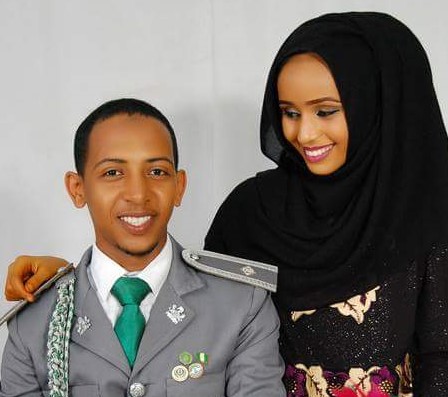
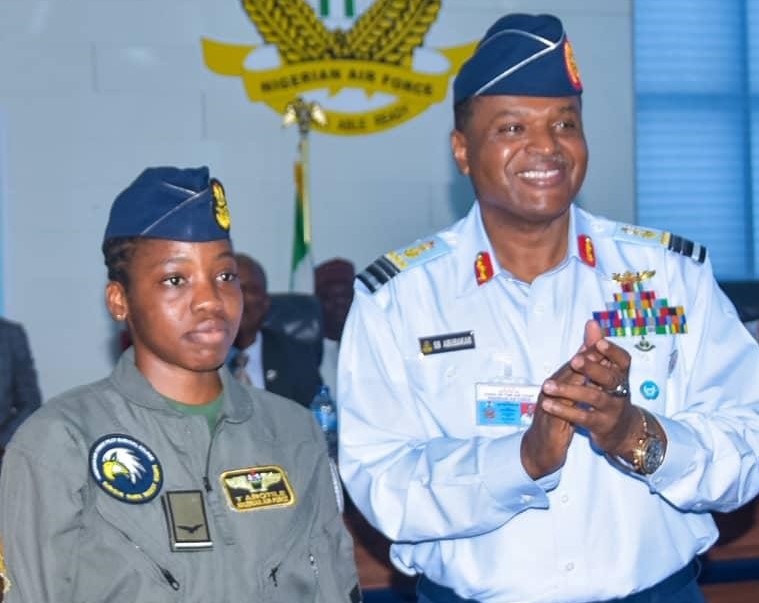
    The first female combat helicopter pilot in Nigeria, Flying Officer Tolulope Arotile, who died in an unfortunate freak auto-accident on July 14 at the age of 24, was one of the prominent faces of the inspirational PR campaign.

    Before her untimely death, Arotile’s outstanding profile and that of Kafayat Sanni, Nigeria’s first female fighter jet pilot, form part of NAF’s campaign on Women of War, in an attempt to eliminate the stereotypical notion that the military is dominated by men; and that more so women have no place in the combat operations of the armed forces.

    The campaign was an initiative of the forward-looking and detribalised Chief of the Air Staff (CAS), Air Marshal Sadique Abubakar, in rebranding the service as the most reputable, humane responsive military service in the African continent. Due to it uniqueness, the campaign had won several credible laurels, including African and global awards on reputation and crisis management in Rwanda and Armenia, only last year.

    While the Air Chief is not given to playing to the gallery or engaging in contrived and incredible propaganda towards political ends, he takes great delight in projecting the earned reputation of the Nigerian Air Force (NAF) as a progressive institution, through the exceptional efforts and gallantry of its personnel.

    Through the video and other levels of narrative, the ‘Women of War’ campaign proved that “what a man can do, a woman can do better” by depicting how female inclusiveness in the military is paying off. Apart from Arotile and Kafayat, other top female officers were interviewed in a documentary, as the campaign was towards proffering answers to questions pertaining to the roles of women in the NAF, which have been unfairly underrated and unnecessarily burdened by distorted cultural expectations.

    The campaign portrays how women of war have persistently showcased fearlessness and courage as pilots, combatants, and armament specialists, among other no less significant roles. These have tremendously led to the increased participation of female personnel in combat and war support functions, especially in the fight against armed banditry and insurgency in Nigeria. No doubt, this has portrayed the NAF as a gender-sensitive and balanced military institution, which projects positive female role models in the likes of Flying Officer Arotile and others, to the great admiration of Nigerians.

    The campaign has immensely boosted the morale of the female troops, who are everywhere, valiantly fighting armed banditry and terrorism in Nigeria’s North-West and North-East geopolitical zones. It has also further gingered the enlistment of female citizens into the Nigerian Air Force.

    During the unveiling of the newly acquired Augusta 109 Power Attack Helicopters, it was innocent-looking and brainy Arotile who introduced the features and operation of the aircraft to President Muhammadu Buhari in Abuja.

    As such, the unprecedented outpouring of emotions, attendant upon grief and disbelief, was not surprising, following the death of the young female officer. When she was laid to rest on July 23, with full military honours, Air Marshal Sadique Abubakar stated that the NAF was still in palpable shock and intense anguish over the loss of a mentee in whom the service had so much confidence. He described the late Arotile as a dedicated and goal-oriented young woman who carried out her assignments, both on the ground and in the air, with a high level of professionalism and commitment.

    While reiterating how the fallen heroine had contributed immensely to the decimation of subversive elements in several anti-banditry combat missions, Air Marshal Abubakar condoled with the entire womenfolk of Nigeria, whom he said, the late Arotile had represented so creditably.

    Born on December 13, 1995, Tolulope Arotile attended Air Force Primary School and Air Force Secondary School, both in Kaduna, from 2000 to 2011, before she later gained admission into the Nigerian Defence Academy as a member of the 64 Regular Course on September 22, 2012. She was commissioned into the Nigerian Air Force as a Pilot Officer on September 16, 2017, and was winged as the country’s first-ever female combat helicopter pilot on October 15, 2019, after completing her flight training in South Africa. She equally held a commercial pilot licence and had undergone tactical flying training on the Agusta 109 Power Attack Helicopter in Italy. Before her death, within short period of her commission, Arotile had attained over 400 flying hours in the service to the nation.

    Truly, Arotile has left her mark in the sands of time, proving that when it comes to the attainment of excellence and value addition to society, age or gender remains a poor measure of capability, and hence should never be entertained as barriers.

    While we thank the late Tolulope Arotile for fighting earnestly in protecting Nigeria’s sovereign integrity, I pray that other women of war would keep finding the courage to keep the flag of excellence flying, while never allowing their gender to constitute an hindrance to their remarkable capabilities.

    Adieu patriot.

    Yushau A. Shuaib
    Author, Award-Winning Crisis Communication Strategies
    www.YAShuaib.com

  • Abba Kyari, Maryam Danna and Reputation Management

    Abba Kyari, Maryam Danna and Reputation Management

    Abba Kyari, Maryam Danna and Reputation Management
    By Yushau A. Shuaib

    “Please can you kindly stop any further media campaign against Mallam Abba Kyari over Hajia Maryam Danna, since the Senate has reinstated her. He will do the needful on her case.”

    That was the call I received from a person close to Mallam Abba Kyari, the all-powerful Chief of Staff (CoS) to President Muhammadu Buhari on Thursday, February 20, 2020. The gentleman’s call had come immediately after PRNigeria published a news report of yet another resolution of the Senate that day, for the immediate reinstatement of Mrs. Maryam Danna, of the Shuwa ethnic nationality from Borno State, like Abba Kyari.

    Mrs. Danna, a chartered accountant with the Niger Delta Power Holding Company (NDPHC), was a respected whistle-blower who had exposed corrupt practices and other irregularities in the federal agency, for which some of its officials were sanctioned. But rather than be rewarded for this act of patriotism, the government had reabsorbed and promoted some of the indicted officials, who had earlier been suspended, to higher levels in other government ministries, while she was arbitrary sacked without any justification in July 2016.

    Surprisingly, on his awareness of the case, President Muhammadu Buhari had directed that the woman should be reinstated to her position in the agency. In a memo dated October 25, 2016, the Justice Minister, Abubakar Malami (SAN), wrote the Chief of Staff to the President, Abba Kyari, intimating him of the decision of the President, following a meeting with the Head of State, in which he had ordered a recall of the widow to her erstwhile job. But that never happened.

    Through an advocacy campaign of PRNigeria, some notable Non-Governmental Organisations, alongside the local and foreign media, had also made cases for the restoration of Mrs. Danna to her duties at the NDPHC, through their lead reports, which unfortunately came to no avail.

    The eighth Senate of the Federal Republic, under the leadership of Senator Bukola Saraki, had thereafter passed a resolution on May 3, 2018, ordering Maryam Danna’s immediate recall to her position as General Manager (Audit & Compliance) of NDPHC, but the power-that-be in the Presidency refused to budge on this. The recent decision of the federal legislators, therefore, was coming some 22 months after they had passed a similar resolution.

    PRNigeria has published reports and opinion articles on the plight of Mrs. Danna, which was initially thought to be a conspiracy between Vice President Yemi Osinbajo and former Secretary to the Government of the Federation, Babachir Lawal. However, it was later realised that the buck on the matter stopped at the desk of the Chief of Staff to the President.

    The caller who had given assurance that the restoration of Mrs. Danna to her position in NDPHC would be effected shortly thereafter, however mentioned that the roles of Mr. Kyari on various issues were wrongly misinterpreted in the media and as such was grievously misunderstood by the public. He described the CoS as a very humble, reliable, workaholic, loyal, generous, intelligent and detribalised Nigerian, who meant well for the country.

    In expressing my reservation to some of the superlatives used in describing the now late CoS, I had reminded the caller of the plight of this woman from his ethnic group, who had been displaced from her job for more than four years and also Kyari’s known infightings with other influential personalities in government. I mentioned his widely publicised rift with the First Lady, Aisha Buhari, allegedly over a ministerial nomination; his heated quarrel in the Federal Executive Council Chamber with the former Head of Service, Mrs. Oyo-Ita, over the surreptitious reinstatement of the indicted pension looter, Abdulrasheed Maina, in his job; his tug of war with the National Security Adviser, Babagana Monguno, over coordination of the national security architecture and his alleged discordant views with Vice President Yemi Osinbajo over the Ruga livestock settlements and other humanitarian projects, which had prompted the claim by a federal legislator that Abba Kyari was ‘more powerful’ than VP Osinbajo.

    The caller had then retorted that the enumerated scenarios were mere imaginary rifts created and promoted by the political opposition to tarnish the reputation of the CoS, whom he described as sincere and incorruptible.

    I told him that a reputation is the general belief about a person on the basis of social evaluation and other credentials. I then asked if the caller was aware of damning reports in the media about the reputation of Mr. Kyari, which were neither refuted through factual counter-narratives nor debunked through more credible arguments. I further cited the alleged scandal of a N500 million bribe said to have been given to him by the telco firm, MTN; the reported swindling of his townsman, named Bako Waziri Kyari, of a N29 million naira bribe for a contract; and the claimed maltreatment of a Police officer, DSP Tijjani Bulama, for intervening in Bako Kyari’s plight to recover his money. Most of these allegations were made on a live broadcast of the popular Brekete Human Right Radio in Abuja.

    The caller stuttered some response that Kyari was a gentleman, who is tolerant of criticism, and added that no matter how much the CoS was vilified, such media denigration would not change Kyari as, to him, most of the allegations were false and fake news sponsored by those in the opposition.

    Realising the bitter turn his mood had taken, I refrained from continuing to engage the caller over the reputation of CoS, nor bothered to inform him that some of the leaked official documents soiling the reputation of the Mallam Abba Kyari came from his party members. For instance, in 2016, a memo from Governor Nasir El-Rufai to President Buhari was leaked, in which the governor accused Mr. Kyari of “being totally clueless about the APC and its internal politics.” In another leaked memo the following year, 2017, the then Minister of State for Petroleum Resources, Ibe Kachikwu had blamed Kyari for blocking him from seeing the president over matters pertaining to his ministry. Also, in a leaked brief sent to the House of Representatives Committee on National Security and Intelligence in 2018, the former NIA Spymaster, Ambassador Mohammed Dauda, leveled grave allegations against the CoS.

    Ultimately, the caller agreed that the office of the Chief of Staff to the President required serious reputational management to correct erroneous perceptions around its functions and principal, through the public provision of facts surrounding a number of matters. The caller even promised to arrange an appointment for PRNigeria to have an audience with the Chief of Staff, after he might have perfected the reinstatement of Mrs Maryam Danna to her duties.

    Reputation management, an act of public relations, is a deliberate effort in shaping public perception by influencing positive attitudinal and behavioural changes in an organisation or system, where necessary, for it to recover its due respect, trust and patronage. Such a rehabilitated reputation would be consequently measured by the subsequent character and professionalism of the office and its managers, going forward.

    Although the upper legislative chamber of the Nigerian National Assembly had dispatched a letter in March 2020 to the Secretary to the Government of the Federation, Boss Mustapha, urging him to direct the Managing Director of the NDPHC to comply with and implement its resolution on the case of Mrs. Danna, I doubt if the CoS had been officially briefed about this before he was hospitalised and unfortunately died from the coronavirus disease recently.

    There is an urgent need for public officers to be aware of the necessity of managing their reputations positively by tracking and understanding the reasons behind the public misconception of their roles and activities in government. They would need to start responding in timely and responsible manners to public concerns, including false reports, fake news and unfounded allegations about them and their actions. Where necessary, a crisis communication plan is essential in managing any untoward development around these officials and their offices, subsequently.

    When I read some of the glowing tributes written by family, friends and associates of Mallam Abba Kyari after his death, even if belated, I seem persuaded to now believing the caller that the former Chief of Staff was truly a nice man, detribalised and possibly misunderstood Nigerian.

    Yushau A. Shuaib
    Founder PRNigeria and Author “Crisis Communication Strategies”
    [email protected]

  • Memo to General Buratai on Alleged Army Consultants

    Memo to General Buratai on Alleged Army Consultants

    Memo to General Buratai on Alleged Army Consultants
    By Yushau A. Shuaib

    “My namesake, I commend your relentless counterinsurgency media campaigns against our enemies, on a pro bono basis without a penny from the military. Please sustain the tempo.”General Yushau Abubakar

    General Buratai, the above message was sent to me by the first Commander of Operation Lafiya Dole, Major General Yushau Mahmood Abubakar, when he was redeployed to the Nigerian Army Headquarters as the Chief of Training and Operation in January 2016. He later died in a very mysterious accident along Damaturu-Maiduguri road two months later in March 2016. It is one of several goodwill messages receive from top military officers and soldiers. I must also appreciate your goodwill message too when I voluntarily retired from the public service last year.

    As you are aware, this is not the first open letter to you or article that I have written about you and the Nigerian Army under your watch (https://cutt.ly/burataimemo). I am writing presently to draw your attention to the highly libelous and defamatory rejoinder written about me by one Terrence Kuanum, who is allegedly working as a contractor/activist for and supported by the Nigerian Army.

    In his over 3000 words-long defamatory piece, reveling in insidiously false claims, Mr. Terrence labeled me a Boko Haram supporter, ISWAP propagandist and that I was on the payroll of terrorists, while offering his distorted and apparently suborned response to my recent Memo to President Buhari on the Service Chiefs.

    In that Memo, I had argued on the need for the present service chiefs to be let go when the ovation is still audible, and after giving the best of their skills to the nation, while also allowing for a smooth progression in service through the promotion of other competent military officers to the Next Level. My argument was anchored on the necessity of enabling a new cadre of officers and set of competencies to come through in the national security architecture, if the war on terror in the country must be won.

    Yet, President Buhari has the right to decide otherwise, since he has signed the revised, though restricted, document on the Harmonized Terms and Conditions of Service for Nigerian Armed Forces Officer (HTACOS) in 2018, which now includes a provision stating that: “Notwithstanding (retirement age or expiry of tenure), the President, C-in-C reserves the prerogative to extend the tenure of CDS/Service Chief irrespective of his age or length of Service.”

    From available records and an Internet search, the activities and statements of the said Terrence revolve around his membership of a so-called Global Amnesty International Network, a National Coalition Against Terrorism, an obscure website known as Television Nigeria (TVN) and other shadowy groups to support the Nigerian Army.

    Surprisingly, in his deliberate effort to incite the military and the victims of terrorists against me, on the basis of false accusations, Terrence compromised the websites of highly credible, as well as notoriously incredible media platforms, by planting his offensive article, mostly without the knowledge of the publishers and editors of some of these platforms. Subsequently, about 15 of these media have had to delete the highly libellous content from their websites, while offering their profound apologies.

    Considering the gravity of the false accusations and information that he has been sharing, coupled with the criminality of spreading fake news and hate speech, through the breaching of the standards of a number of media platforms, I have since petitioned security and intelligence agencies, including the Police, National Intelligence Agency (NIA) and the Department for State Services (DSS) to investigate these allegations and the motive behind the malicious attacks I have been subjected to. I have also provided these agencies with the details of the web links and screenshots of the websites on which this defamatory information has been circulated.

    Surprisingly, more than two weeks after my petition, Terrence seems untouchable, as the security agencies have not been able to take any action on him, even as he has had the audacity to publicly launch a book in Abuja last week, where he blamed the victims of terror for being their own nemesis.

    I feel disappointed that after serving critical institutions in Nigeria, the system appears not able or willing to protect one from malicious, inciteful and false allegations that could possibly lead to the loss of one’s life. Yet, only recently, security personnel arrested the young Editor of an online medium, the Webmaster of this medium, alongside one of its reporters, and arraigned them in court in another state over a harmless investigative report against drug addiction that was carried out. How come drawing attention to the sinister motivation behind such a grave matter as the false allegation of Boko Haram membership, which could possibly subject one to lynching, is being treated with levity?

    General Buratai, sir, since your appointment as Chief of Army Staff, after your sojourn as the Commander of the Multinational Joint Task Force (MNJTF) in Chad Republic in 2015, I and my organisation have reported the activities of the Nigerian Army at no single cost to the Nigerian Army till date.

    When the alleged Dubai property of your family went viral, our platform, PRNigeria provided the other necessary perspective on the issue to the Nigerian public, on the basis of the information and documents provided to us by your associates and a presidential spokesperson. (https://cutt.ly/burataidubai)

    During the Shiite-Army fracas in December 2015, our medium, in close liaison with your spokesperson, became the major source of syndication of news and videos of your appeal to the protesters before the situation went awry a few days later (https://cutt.ly/buratai).

    We have also provided credible intelligence and engaged in and supported strategic media censorship for the protection of national security. These are facts that your respective spokespersons and spy chiefs can easily attest to pertaining to our professional integrity and ethical practice.

    It, therefore, beats my imagination that a fellow associated with, patronized and allegedly funded by the Army could be allowed to disparage my reputation to no consequence till date.

    My appeal to you as the Chief of Army Staff is to be wary of those who may be dropping your name or that of the military to engage in silly activities and criminal offences.

    I also urge the security services to be fair and just in protecting and treating Nigerians equally before the law, especially on cases involved heavy cybercrime offences.

    I trust that your sense of professionalism and reasonable conduct would make you investigate and call those behind this unfortunate situation to order. Thank you.

    Yushau A. Shuaib
    Founder PRNigeria and Author of An Encounter with the Spymaster

  • Boko Haram: Memo to President Buhari on Service Chiefs

    Boko Haram: Memo to President Buhari on Service Chiefs

    Boko Haram: Memo to President Buhari on Service Chiefs

    Dear President Muhammadu Buhari,

    This open letter was actually intended to be an appeal to the service chiefs to turn up their letters of voluntary retirement after they have served their mandatory two-year tenures, and another two years of extension, which expired last year.

    Since their stay in office is at the discretion of the President and Commander-in-Chief of the Armed Forces, I have rather decided to write this memo, appealing to you in the spirit of fairness, standard procedure and progression in the service, to allow the longest-serving service chiefs go after exceeding their run-out dates (ROD), which is the mandatory 35 years of military service, and the additional discretionary extension, which is generally time-bound.

    As you are aware Mr. President, the Chief of Defence Staff (CDS), General Gabriel Abayomi Olonisakin from Ekiti was born on December 2, 1961. He enrolled at the Nigerian Military School, Zaria in 1973 and later joined the Nigerian Defence Academy (NDA) as a member of the 25th Regular Course. He was commissioned as a Second Lieutenant in 1981.

    The Chief of Naval Staff (CNS), Vice Admiral Ibok Ete-Ibas from Cross River, was born on September 27, 1960. He enlisted into the NDA as a member of 26th Regular Course on June 20, 1979 and was commissioned a sub-lieutenant on January 1, 1983.

    Chief of Air Staff (CAS), Air Marshal Sadique Abubakar from Bauchi was born on April 8, 1960 in Azare, Bauchi State. He joined the Nigerian Air Force as a member of the Cadet Military Training Course (CMTC 5) in November 1979.

    The Chief of Army Staff (COAS), Lt. Gen Tukur Buratai from Borno was born on November 24, 1960. In January 1981, he attended the NDA as a member of the 29th Regular Course (29 RC). He was commissioned as a Second Lieutenant on December 17, 1983.

    Meanwhile, the most senior military officer, besides the service chiefs, is Lieutenant General Lamidi Adeosun from Osun, who was born on August 22, 1963 and enrolled into the Army on July 4, 1983. He has also clocked 35 years in the service.

    As you may be aware Mr. President, apart from attaining the ROD, the tenures of the defence and service chiefs have since expired, going by the revised Armed Forces of Nigeria Harmonised Terms and Conditions of Service (HTACOS) for officers.

    In Section 09.08 of the said HTACOS, which is the authoritative and official service order in the military, it is stated that, “An officer appointed to the substantive appointment of the Chief of Defence Staff, Chief of Army Staff, Chief of Naval Staff and the Chief of Air Staff will hold the appointment for a continuous period of two years. The appointment could be extended for another two years from the date of expiration of the initial two-year period.”

    The service chiefs were first appointed in July 2015 and their tenures were extended for an additional two years in 2017, which finally expired in 2019. It has always been the standard practice, since the return of democratic governance to Nigeria in 1999, for service chiefs to be in office for a maximum term of two years, except on a few occasions of discretionary extension by Mr. President, after which replacements are made.

    The retention of the chiefs stagnates the careers of other senior officers and induces unfair early mature retirements, in the absence of vacancies at the topmost echelons of the services.

    As in the practice in the past, the exit of a service chief automatically impels the departure of their course mates from the service, such that officers who are next in seniority, such as the chiefs of various corps and departments at the service headquarters; general officers commanding; commandants; brigade commanders; and directors then experience an upward movement in their careers.

    As it is now, at least five sets, and generations of regular course (RC) members, including those in the 27th, 28th, 29th, 30th, 31st, 32nd and 33rd courses, with the exception of Lt. General Adeosun, have left the service without any of them attaining the highest military positions in their various services. There is likelihood that those of the 33rd and 34th courses may also not have the privilege of producing a service chief among them if this trend continues. With limited vacancy, only a few officers can be promoted, while several other brilliant officers would be forced to go on retirement.

    Meanwhile, after staying for more than four years, with adequate resources provided to the military chiefs for procurements, recruitments and the training of personnel, they have performed to the best of their abilities, yet recent developments call for more strategic thinking, fresh ideas and a change in the administration and style of managing generations of military talents.

    The international community has been raising concerns about disturbing trends from the end of last year into the beginning of the new year (2020) pertaining to the steady reversal in the fortunes of our troops in the hands of terrorists.

    The European Parliament, the legislative branch of the European Union (EU), observed that there has not been any significant progress in the fight against the Boko Haram and ISWAP terrorists. The Parliament, in its resolution of January 16, 2020, remarked that the security situation in Nigeria has deteriorated significantly, with insurgents turning the Maiduguri-Damaturu and surrounding routes into an extended death zone.

    In the same vein, the United Nations (UN) had expressed outrage over the scale and intensity of the attacks carried out by the suspected insurgents against its facilities and other targets in parts of North-East Nigeria. The UN Humanitarian Coordinator in Nigeria, Mr. Edward Kallon strongly condemned attacks on its humanitarian hub.

    There is also the alarming Global Terrorism Index of the Institute for Economics and Peace (IEP), which ranked Nigeria as the third country with the highest level of terrorist activity in 2019, after Iran and Afghanistan.

    Some of these reports are not only distressing in terms of the upsurge in the insurgency but have been very embarrassing, as terrorists are not only going for soft targets but staging ambushes against our gallant troops while attacking military facilities. In some instances, civilians, as well as soldiers, have been either abducted or killed by the cowardly but deadly terrorists.

    In other climes, including Mali, Burkina Faso, Chad and the Niger Republic, such incidents usually necessitate the replacement of service chiefs under whose leadership there are repeat assaults and losses of lives of troops in the hands of terrorists.

    While I believe the service chiefs have good intentions and have done their best, I suggest they leave when the ovations are loudest and in order to allow fresh ideas to come into the management of our national security, whilst encouraging progression and the promotion of deserving officers in the armed forces. This will also inspire in a coming generation of officers, the hope of their finding ultimate career fulfilment in the armed forces, after decades of sacrifice.

    The President can even promote any one of the military chiefs to the position of Chief of Defence Staff since the current CDS has remained the most senior and older officer in the military in the last four years.

    Yushau A. Shuaib
    Founder PRNigeria and Author “An Encounter with the Spymaster”
    [email protected]

  • Ile-Arugbo: Beyond the Politics of Saraki-Abdulrazaq Feuds in Kwara

    Ile-Arugbo: Beyond the Politics of Saraki-Abdulrazaq Feuds in Kwara

    Ile-Arugbo: Beyond the Politics of Saraki-Abdulrazaq Feuds in Kwara
    By Yushau A. Shuaib

    Since his election as governor of Kwara State, AbdulRahman AbdulRazaq has endeared himself to the people by his unassuming disposition, gender equality initiatives, developmental programmes and the prompt payment of the remuneration of workers.

    In fact, in October 2019, Kwara ranked third on the list of states that had attracted huge foreign investments, recording an accumulated inflow of $1.14 billion. It was next to Lagos and Abuja.

    It was therefore surprising that the gender-friendly and youth-centric administration of Governor AbdulRazaq would commit a public relations blunder within a year of its first tenure by destroying Ile-Arugbo, a popular charity home for the aged (particularly old women) established by late Abubakar Olusola Saraki, the father of the former governor of the State and Senate president, Bukola Saraki.

    The compound of the home had served as a constituency office where old and young beneficiaries converged to receive relief materials, financial support and health care services, as part of the philanthropy of the late politician’s family.

    The government should have considered several factors before taking such a delicate decision in an environment riven by mutual suspicion and political sentiments that could easily revive the alleged old rivalry between the major patriarchs in the power elite of the Ilorin Emirate, including the Belgores, Gambaris, Akanbis, Oniyangis, Gobiris, Sarakis and AbdulRazaqs.

    There is no denying the fact that the AbdulRazaq and Saraki families have huge influence in Kwara because of their very rich credentials and huge contributions to the development of the State. Nevertheless, there has been a seemingly strained, no love lost, relationship between the two families, reputed to have been passed down by their patriarchs, Alhaji AbdulGaniyu Folorunso (AGF) AbdulRazaq, an iconic legal luminary and the late Dr. Oloye Olusola Saraki, a renown political juggernaut in his days.

    Born on November 13, 1927 in Onitsha, Anambra State, Alhaji A.G.F. AbdulRazaq is a Pan-Nigerian who attended secondary school in Buguma, Rivers State, obtained a law degree from the University of Ibadan, Oyo State and established his law firm in Zaria, Kaduna State. In fact, he was the first legal practitioner in Northern Nigeria, who subsequently became appointed as national legal adviser of the Northern People’s Congress.

    Meanwhile, Dr. Olusola Abubakar Saraki was born on May 17, 1933 in Ilorin and attended Eko Boys High School, Lagos, before proceeding to University of London, and St George’s Hospital Medical School, London, for his medical training. On his return to Nigeria, he worked as a medical officer at the Lagos General Hospital and the Creek Hospital.

    Apart from serving as Nigeria’s Ambassador to Cote D’Ivoire and a Member of Parliament in the Northern Regional House of Assembly, the senior AbdulRazaq was equally Minister in charge of the railway in the First Republic, and the first Commissioner for Finance in Kwara State. He also established the first private secondary school in Kwara State, Ilorin College (now Government High School, Ilorin), which provided affordable education for the children within the immediate and surrounding communities.

    Although the senior Saraki failed in the 1964 parliamentary election for Ilorin as an independent candidate, he was nevertheless elected a senator in 1979, and became the Senate Leader. He was re-elected into the Senate in 1983, before the military took over political power shortly afterward. Subsequently, the elder Saraki set up a bakery and other ventures for empowering people in the state

    Alhaji AbdulRazaq, who holds the traditional title of Mutawali of Ilorin, has groomed young people who became successful administrators and businessmen. He is also blessed with children that have excelled in different fields of endeavours, notable among who are the immediate past Chief Finance Officer of the Nigerian National Petroleum Corporation (NNPC), Mallam Isiaka AbdulRazaq; Senator Khairat Gwadabe; Barrister Alimi AbdulRazaq; Hajiya Aisha Lawal; and the current governor, AbdulRahman AbdulRazaq.

    On his own part, elder Saraki, who held the traditional title of Wazirin Ilorin, was instrumental to the elections of many of the former governors of Kwara State, including Adamu Attah in 1979; Cornelius Adebayo in 1983; Shaba Lafiaji, 1992; Mohammed Alabi Lawal, 1999; and his son, Bukola Saraki in 2003. His daughter, Gbemisola Rukayat Saraki was also elected as a member of the House of Representative in 1999 and a Senator in 2003, while his son emerged Senate President in June 9, 2015.

    The rivalry between the two powerful Kwara families manifested in an interview granted by Alhaji AbdulRazaq to TheNEWS magazine in 2010, where he claimed that the Saraki family was not from Ilorin. The distinguished diplomat then said that Dr. Olusola Saraki’s father, the late Alhaji Muttahiru Saraki, who was a businessman across West Africa, had informed him about their ancestry during a discussion.

    In Alhaji AbdulRazaq’s recollection: “He (Alhaji Muttahiru Saraki) asked me where I come from. I told him I am from Ilorin. Alhaji Saraki said he was an Egba man from Abeokuta. By this time, I did not even know the existence of Olusola Saraki. So, the man told me he was from Abeokuta, but he went to a Quranic School in Ilorin at Agbaji, an area reputed for Islamic scholarship. The man with his own mouth told me he was an Egba man from Abeokuta, not an Ilorin man. This was in early 1963.”

    Alhaji AbdulRazaq also disclosed that Alhaji Muttahiru Saraki had later introduced his son, Olusola Saraki, to him, at a time when he was studying Medicine in London. He recollected that at their first meeting, as the younger Saraki had stretched out his hand to shake him, but his father slapped him instead. However, he managed to calm the elder Saraki down. After the meeting, the father informed him that he was putting the younger Saraki in his care, stressing that he should, “Take care of him for me.”

    Meanwhile, the families have always been on opposing sides of the political spectrum, contesting against each other in elections for decades. In 1979 Alhaji AbdulRazaq contested the gubernatorial election under the Great Nigeria People’s Party (GNPP), while Saraki sponsored Adamu Attah under the National Party of Nigeria (NPN); also, in 1999, Dr. Alimi Abdulrazak contested for the Kwara governorship under the People’s Democratic Party (PDP) against the Saraki sponsored retired Admiral Mohammed Lawal of the All People’s Party (APP).

    In 2003, Bukola Saraki contested for governorship of Kwara State under the PDP, against AbdulRazak’s in-law, Mohammed Lawal; and in 2011 AbdulRahman AbdulRazak constested under the Congress for Progressive Change (CPC) against the Bukola Saraki sponsored Fatai Ahmed of PDP. Later in 2015 AbdulRahman AbdulRazak contested for the Senate under the PDP against Bukola Saraki of the All Progressives Congress (APC).

    It was only in the year 2019 that Sarakis were defeated as the AbdulRazaq family won all the seats they sponsored and supported under APC, including that of AbdulRahman AbdulRazaq as governor, against Saraki’s sponsored candidate, Razak Atunwa of the PDP. In fact, it was the year that all the candidates sponsored by Bukola Saraki were defeated woefully at various levels of election.

    Meanwhile, since the interview of the patriarch of the AbdulRazaq family about a decade ago, neither Dr. Olusola Saraki nor his children responded or showed any sign of the rivalry between the two families, until after the demolition of Ile-Arugbo.

    In a statement he signed, Senator Bukola Saraki described the revocation of the family’s land as ‘the height of vengeance’ against his father, adding that quite unfortunately, Governor Abdulrahman had been attacking his father’s legacies from the moment he came to power.

    “This action is clearly a manifestation of vengeance … in his narrow-mindedness, the governor believes his victory at the polls is an empowerment, entitlement and enablement to settle scores, provoke and pursue inter-family rivalry… His open antagonism against my late father and his legacies is unwarranted and will not be tolerated,” he said.

    Speaking in the same vein, the Minister of State for Transportation, Senator Gbemisola Saraki accused Governor AbdulRahman of using security agencies to settle old generational family political scores in what she described as an ‘unwarranted assault on her late father’s heritage.’

    While stating that that “revenge cannot be a policy thrust of governance,” she rounded off by saying that, “We must stand up against vindictive politics, driven by envy, motivated by jealousy and practised without integrity.”

    My take in this family feud is that both patriarchs had been pathfinders, pacesetters and philanthropists who not only inspired and motivated younger generations to excel in their different endeavours, they had also provided employment opportunities, scholarships and financial support to their people.

    In this regard, therefore, the children of these distinguished patriarchs and families should sheathe their swords and embrace dialogue to enable mutual understanding, tolerance and peaceful coexistence.

    Kwara State should not be turned to a battlefield through heightened tension, like a state in Nigeria where due to a slight misunderstanding, the leader of a religious sect was shot and arrested, his properties destroyed, while his family members and followers were equally killed and nothing happened because of the powerful position of the aggressors in the polity.

    Yushau A. Shuaib
    Author, An Encounter with the Spymaster
    [email protected]

  • Sadiya Farouq: Agenda-Setting for Nigeria’s Humanitarian Affairs Minister

    Sadiya Farouq: Agenda-Setting for Nigeria’s Humanitarian Affairs Minister

    Sadiya Farouq: Agenda-Setting for Nigeria’s Humanitarian Affairs Minister
    By Yushau A. Shuaib

    When President Muhammadu Buhari announced Sadiya Umar Farouq as the Minister of Humanitarian Affairs, Disaster Management and Social Development, only a few people could truly decipher the gamut of huge responsibilities and critical roles of this super-powerful Ministry.

    The idea for the establishment of the Ministry was proposed by the House of Representatives early this year, to take care of the huge humanitarian needs of those displaced by insurgency in the North-East.

    Before her ministerial appointment, Ms. Sadiya Umar Farouq was Federal Commissioner of the National Commission for Refugees, Migrants and Internally Displaced Persons ((NCFRMI)) and had served as a staff of the National Assembly Service Commission before leaving to join politics in 2010.

    An astute politician from Zamfara State and former National Treasurer of the All Progressives Congress (APC), Sadiya attended Ahmadu Bello University, Zaria where she obtained a Bachelor of Science (Bsc.) degree in Business Administration (Actuarial Science) and Master’s degrees in International Affairs and Business Administration.

    In his Independence Day speech on October 1, President Muhammadu Buhari hinted that the new Minister would oversee the administration’s Special Intervention Programmes.

    Speaking on the Special Intervention Programme, which was hitherto under the supervision of the office of the Vice President, Professor Yemi Osinbajo, the President stated that, “Our ongoing N500 billion Special Intervention Programme continues to target vulnerable groups, through the home-grown School Feeding Programme, Government Economic Empowerment Programme, N-Power, Job Creation Programme, loans for traders and artisans, Conditional Cash Transfers to the poorest families and social housing scheme.

    “To institutionalise these impactful programmes, we created the Ministry for Humanitarian Affairs, Disaster Management and Social Development, which shall consolidate and build on our achievements to date. To the beneficiaries of these programmes, I want to reassure you that our commitment to social inclusion will only increase.”

    From this background, therefore, the Minister of Humanitarian Affairs has a huge task on her shoulders. During her tenure at the Refugees Commission, Sadiya played a prominent role in the passage of the National Commission for Refugees, Migrants and Internally Displaced Persons (IDPs) (Repeal and Re-enactment) Bill, 2018 (SB 335), which annulled the extant Act and re-enacted certain provisions to protect the rights of refugees, migrants, and IDPs, in line with international best practices.

    The law empowers the Commission to act as the coordinating arm for the effective administration and management of issues pertaining to refugees, migrants and IDPs in Nigeria, while expanding the scope of the Commission to include facilitating the management and utilisation of funds from government and donor agencies.

    In one of her public engagements, she had then pointed out that the extant law would address the issues of migration arising from communal conflicts, insurgency, and insecurity, due to the absence of a legal framework to prevent evolving challenges in this regard.

    With the establishment of the new ministry, it is expected that the Minister will ensure better coordination of humanitarian services, the protection of relief providers and safety of emergency workers, whilst ensuring the judicious utilisation of resources.

    It is undeniable that disaster management and poverty alleviation programmes in Nigeria are currently undertaken without synergy, hence a proper institution-based coordination mechanism is necessary to tackle humanitarian and emergency needs, with the effectiveness required to bring enduring relief to those affected by these situations.

    The social development aspect of the mandate of the Ministry would need to consider soft approaches, entailing programmes that would address the roots of insurgency, kidnapping, armed banditry, poverty and disease which have been attributed to various factors, including the political, social and economic.

    There is currently a document, the National Counter Terrorism Strategy (NACTEST), which aims to forestall, secure, identify, prepare and implement key objectives and indicators, to effectively ensure the monitoring and evaluation of these soft approach programmes.

    The Strategy, developed by international partners, experienced academics and select non-state actors, actually recommends useful programmes for education, economic empowerment and gender issues in vulnerable communities. With its implementation anchored on the Office of the National Security Adviser (ONSA), the Strategy was put together taking into account the root causes of terrorism and other violent crimes in order to apply appropriate solutions to them.

    Using the template in its programmes, the Ministry can involve the participation of the civil society, academics, the media, and traditional, religious and community leaders, as it utilises existing structures within and outside government to deliver targeted activities that further the overall objective of stemming the tide of radicalism and economic crimes.

    The mandatory registration of local and international humanitarian agencies should also be undertaken, against the background of the alleged suspicious activities of some of them by the Nigerian military. In fact, considering the sensitive nature of Sadiya Umar Farouq’s office in relation to national security, the Ministry should work with the security and intelligence services in disaster prevention and response operations, as well as coordinating the activities of home-based NGOs interested in humanitarian and social development endeavours.

    For sure, some of agencies expected to report to the Ministry would likely include the organisation she previously led, the National Commission for Refugees, alongside the National Emergency Management Agency (NEMA), the North-East Development Commission (NEDC), the Border Communities Development Agency (BCDA), Federal Fire Service and, possibly, the Presidential Amnesty Programme.

    On the economic front, especially in terms of poverty alleviation programmes, the Ministry should supervise or, in the alternative, work closely with the Nigeria Social Insurance Trust Fund (NSITF), the Ecological Fund Office, National Social Investment Programme (NSIP), School Feeding Programme, TraderMoni and N-Power, which are part of the Government Enterprise and Empowerment Programme (GEEP).

    The activities of the listed agencies should be streamlined for proper coordination and to avoid the duplication of responsibilities. Proper documentation is equally essential for the humanitarian service providers, interventionist agencies, and Non-Governmental Organisations, including the putting together of an accurate database of the IDPs.

    The Ministry requires adequate and competent manpower, including financial and logistics resources for disaster management and poverty alleviation. This will ensure proper supervision and implementation of the various programmes by the existing agencies.

    Yushau A. Shuaib
    Author “An Encounter with the Spymaster”
    [email protected]

  • General Magashi and the National Security Agenda- By YAShuaib

    General Magashi and the National Security Agenda- By YAShuaib

    General Magashi and the National Security Agenda
    By Yushau A. Shuaib

    When Major General Bashir Magashi (rtd.) was announced as a ministerial nominee, I reached out to the former Commissioner for Information and Finance in Kano State, Mallam Garba Yusuf, for an insight into the capabilities of the retired military officer.

    I was aware that Magashi had led a 12-man high-powered reconciliation committee of the ruling party in the state, of which Garba Yusuf was a member, which ensured the amicable reconciliation of aggrieved politicians in the State, within the shortest possible time, before the last general elections.

    Garba Yusuf said: “General Magashi, as an experienced lawyer, not only meticulously handled the delicate reconciliation process, but through his strategic interventions and guidance, the State witnessed peace and tranquillity after the elections.”

    A few weeks later, Mallam Garba drew my attention to the live transmission of the ministerial screening of General Magashi on national television.

    A former military governor of Sokoto State during the regime of Ibrahim Babangida and member of the Provisional Ruling Council (PRC) during the Sani Abacha’s regime, General Magashi spoke eloquently and with confidence, while responding to the queries of the federal legislators.

    Whilst discussing insecurity in Nigeria, Magashi insisted that infighting among Nigerian service chiefs was affecting the war against insurgency and analogous efforts against other forms of insecurity.

    A former Commander of the elite Brigade of Guards in Abuja and erstwhile General Officer Commanding (GOC) the strategic 2 Mechanised Division in Ibadan, Magashi berated the non-cooperation among the service chiefs, as each of them sought to individually appear to his Commander-In-Chief, and the country, as the most conscientious in his remit. He added that the current military command structure is not a true reflection of what should be obtainable in the services and advocated for the restructuring of the armed forces.

    Magashi gave an example of his experience as Commander of the ECOWAS Monitoring Group (ECOMOG) during the Liberian civil war, where he ensured cohesion of all the services maintaining peace, including the police and paramilitary agencies, at that time.

    “In an ideal situation where I served as an ECOMOG commander, it was a single unit that was overseeing the needs, aspirations, (and) welfare of our troops in combat zones. In Nigeria today, what we call (the) command structure is now being seen as weakness. We only have divisions probably by name, but I do not think we have the required manpower to man them,” he said

    His tour of military formations in the North-East, in his first outing as Defence Minister, was quite impressive. And, some of his statements were quite encouraging and motivational to the troops, as they inspired and admonished them to redouble their efforts in the counter-insurgency operations.

    Yet, it was shocking that General Magashi, a retired military intelligence officer and a lawyer, could make a controversial statement during his tour, when he claimed that 22 local government councils in Borno State have been liberated from the grip of insurgency since the inception of President Buhari’s administration on May 29, 2015. Possibly aware of the implication of making such an unfounded claim, he refrained from mentioning the specifics of the so-called rescued local councils.

    In my book “Boko Haram Media War: An Encounter with the Spymaster,” I have provided the details, timelines and manners in which more than 25 towns were liberated from the grip of terrorism during the former Goodluck Jonathan administration.

    In one of the chapters, I stated that: “At the twilight of Jonathan’s administration when Sambo Dasuki was the National Security Adviser, dozens of towns and cities in Adamawa, Borno and Yobe states were recovered and confirmed with video and pictorial evidence through military press releases.

    “Some of the liberated towns include, but (are) not limited to: Abadam, Askira, Baga, Bama, Bara, Buni Yadi, Damboa, Dikwa, Gamboru-Ngala, Goniri, Gujba, Gulag, Gulani, Gwoza, Hong, Kala Balge, Konduga, Kukawa, Marte, Madagali, Michika, Monguno, Mubi, Vimtim, among other communities with pictorial and video evidences provided by the Defence Headquarters.

    “In one day alone, April 30, 2015, at least 234 abductees (Women and Children) were rescued by the military, who had stormed sections of the Sambisa Forest.

    “A clear testimony to some of the accomplishments was the official DHQ release dated March 16, 2015, with reference No: DHQ/ABJ/901/32/DDI and titled: ‘Troops Finally Rout Terrorists from Bama and Last Stronghold in Yobe.’” That was before the coming of the present administration.

    It is necessary to point to the new Defence Minister that he should always seek credible and trustworthy intelligence on the realities on the ground before making claims, and more importantly in finding a more lasting solution to the menace of Boko Haram.

    The public commentary of Governor Zulum of Borno State, the open letter to President Buhari by Zanna Boguma of Borno, Alhaji Hassan Zanna and media reports on the current situation in the North-East, merely suggest the urgent need for a truly pragmatic approach to winning the war on terrorism in the country.

    President Muhammadu Buhari must be commended for deploying huge resources to the security sector, which has enabled the massive recruitment of personnel, acquisition of sophisticated equipment and the upgrade of infrastructure that have been crucial requirements, even though something essential is still missing.

    I strongly believe that the current service chiefs, who were top military officers in the previous Jonathan administration, know the strategies deployed between January and May 2015, in the defeat of Boko Haram and recovery of the aforementioned towns. The traditional and political leaders in that axis are also aware of this too. Not every action of the past can be jettisoned, especially when it has to do with the lives of our troops and citizens.

    Yushau A. Shuaib
    Author of An Encounter with the Spymaster
    [email protected]

  • The Army-Police War: Where Is the NSA? – YAShuaib

    The Army-Police War: Where Is the NSA? – YAShuaib

    The Army-Police War: Where Is the NSA?
    By Yushau A. Shuaib

    “Our country is bedevilled… (by) multifarious security challenges by which each agency must bring its wealth of experience and comparative advantage to compliment the effort of another”- DG DSS

    The current Director-General of the Department of State Services (DSS), Yusuf Bichi Magaji made the above remarks in his keynote address, while hosting the meeting of the Forum of Spokespersons of Security and Response Agencies (FOSSRA) on April 24.

    The Forum was established in 2013 by the Office of the National Security Adviser (ONSA) to enhance synergy and collaboration amongst critical institutions that deal with issues of security and its challenges in Nigeria.

    As a sensitive security organ, the ONSA is statutorily empowered to coordinate the activities of military, security, intelligence and response agencies in combating terrorism, cybercrime and major issues affecting the wellbeing of the state in Nigeria. It is a known fact that during the previous administration, the ONSA hosted regular meetings of security and service chiefs in addressing issues that could create conflict in society.

    While the meeting of the security chiefs was held almost every other week in ONSA, the meeting of FOSSRA was held rotationally among member-agencies every month until June 2015.

    It is of utmost importance to highlight some instances when FOSSRA’s interventions doused tension and stabilised the polity within a climate of heightened agitations and security concerns in the country.

    In June 2014, the then National Security Adviser, Sambo Dasuki officially tendered an apology to the Speaker of the House of Representatives, Honourable Aminu Tambuwal, who was allegedly harassed by joint-security operatives at an international summit on Farmer-Herder Crisis in Kaduna. Both the former NSA and the Speaker are from the same royal family within the Sokoto sultanate, even if of different statuses. (Link: http://bit.ly/31HNERy)

    Similarly, in one of the Army-Shi’ite altercations in Zaria, also in July 2014, during which some members and children of Sheikh Ibrahim Zakzaky were killed by Nigerian soldiers, the Chairman of FOSSRA, who was then the Director of Defence Information, General Chris Olukolade, promptly issued an empathic statement, expressing regret over the incident and announcing that a panel would be constituted to unravel the remote causes of the fracas. The statement played a magical role in nipping the controversy in the bud. (Link: http://bit.ly/2TycxMD)

    The following month, the Commandant General of the Nigeria Security and Civil Defence Corps (NSCDC) and two operatives of the Corps were allegedly disrespected and manhandled on different occasions by the Police. As the media were feasting on the controversy, the then spokesperson of the Nigerian Customs Service, Wale Adeniyi hosted the monthly meeting of FOSSRA in September 2014, where the erstwhile Police spokesperson, Emmanuel Ojukwu walked to the NSCDC spokesperson, Emmanuel Okeh and issued a joint statement which doused the tension. (Link: http://bit.ly/31G3eNg)

    Meanwhile, since the appointment of Major General Babagana Monguno (Rtd) as the National Security Adviser (NSA) by President Muhammad Buhari in 2015, he has neither shown keen commitment to nor hosted the meeting of the FOSSRA to guard against inter-agency rivalry. The meeting of the Forum, which has become occasional, is now being hosted by the Centre for Crisis Communication (CCC) and other security agencies that value synergy and collaboration in information management.

    If FOSSRA, which is domiciled under the ONSA, is very active, the current acrimony between the Nigerian Army and the police over the killing of the Police’s Intelligence Response Team (IRT) operatives by soldiers in Taraba State could have been averted. There would most likely have been an existing synergy and a more cordial relationship between these two prominent actors within the Nigerian security architecture and system.

    It was alleged that soldiers of the 93 Battalion shot the IRT operatives – including Inspector Mark Ediale, Sergeant Usman Danzumi, and Sergeant Dahiru Musa – dead after they had arrested a notorious kidnap kingpin, Hamisu Bala Wadume, who is now on the run. The Army claims that the police officers were shot after being mistaken for “suspected kidnappers” and blames the attack on a communication gap.

    The initial statement from the Police spokesperson, DCP Frank Mba and immediate response by the Army spokesperson, Colonel Sagir Musa, would have been needless if an effective mechanism of inter-agency collaboration, as exemplified by FOSSRA, had been adhered to.

    There are trending videos, audios and sponsored stories on the fracas that need to be contained before they further exacerbate the present situation and persist as drivers of tension. It is quite unfortunate that many Nigerians on the social and mainstream media have continued to react to the incident through inciting, inflammatory and embarrassing innuendoes.

    It may not be surprising if the two public relations officers of the security organs involved were actually taking orders from their principals, rather than abiding by the ethics of crisis communication management, which guide professionals on their temperament, conduct and how to shape their messages during periods of high volatility.

    As spokespersons of security agencies, they are expected to be courteous, restrained and conscious of the need to show great human understanding and empathy in their public communications, at this sort of time when such really matters. It is also very important that their messages, like press releases, should be clear, concise, concrete, correct and complete, without allowing for any form of ambiguity in communication.

    In all these, the absence of strategic leadership in dousing the tension, beyond the critical levels of the individual service chiefs, merely escalates the inter-agency antagonism and fuels the heated debates and fury pervading the media from visible and anonymous sources.

    Is it not embarrassing that different panels were allegedly constituted to investigate this incident? While one is said to be chaired by a military officer in the rank of a major general, the other is noted as being headed by a security officer in the rank of an Assistant Inspector General of Police.

    As the coordinating organ of government on security matters, ONSA should step in and manage this crisis, more professionally and with experience, especially in the absence of a federal cabinet, as the Ministers of Defence or that of Interior are yet to be sworn in. The NSA can advise the Army Chief Lt General Tukuru Buratai and Police Boss IG Mohammed Adamu on the need to urge their officers to exercise restraint. In the alternative, the Presidential Media Adviser should intervene by calling on the spokespersons of the agencies to sheath their swords in this attrition and highly unfortunate media war.

    Yushau A. Shuaib
    Author of An Encounter with the Spymaster
    [email protected]

  • Still on the Presidency, Shiites and the Police- Yushau A. Shuaib

    Still on the Presidency, Shiites and the Police- Yushau A. Shuaib

    Still on the Presidency, Shiites and the Police
    By Yushau A. Shuaib

    “Please, in the name of God don’t fight or fire…” – DCP Usman Umar

    The above were the last words of Deputy Commissioner of Police (DCP) Usman Umar, who was shot while attempting to rescue one of his officers, Assistant Superintendent of Police (ASP) Sani Shehu, during a violent protest by members of the Islamic Movement In Nigeria (IMN), a Shi’ite group, in Abuja. Umar was later certified dead at the hospital.

    As a Muslim and a Northerner, I am deeply concerned and worried about the activities of Boko Haram terrorists in the North-East, armed banditry in the North-West and the seeming uncontained Shi’ite protest in Abuja, North-Central Nigeria. The root causes of most crises in Nigeria are the disappearance of means of livelihoods, the lack of jobs and human insecurity, alongside the deepening incidence of poverty and immiseration. Also, ignorance, impunity, acts of lawlessness, the expressions of fanatical ideologies and sectional sentiments that are being exploited and manipulated by political elites.

    On Wednesday, July 17, 2019, the Nigerian Police announced restriction on all forms of protests in Abuja to the Unity Fountain area, to contain what had become the daily processions and protests of Shi’ite members. The Force spokesman, DCP Frank Mba said that by that directive, intending protesters were expected to steer clear of all critical national infrastructure, especially in the “Three Arms Zone.”

    A few days later, precisely on July 19, the Presidency issued a statement seemingly indicating the likelihood that the Buhari administration would obey a decision of the courts to release the leader of the Shi’ites in Nigeria, Sheikh Ibrahim Elzakzaky.

    A presidential spokesperson, Mallam Garba Shehu, in the statement, said: “Rallies and street dances (by Shi’ites) ostensibly to openly insult the president and other leaders, threatening bloodshed, will lead nowhere… The Buhari administration has absolutely no hand in the on-going court case and the courts are free to determine the bail request and the outcome.”

    In its reaction, the Shi’ites wondered how the Presidency would make such a claim when the government has contemptuously refused to obey court orders in this regard. In its statement dated July 21, the Shiite spokesperson, Ibrahim Musa, wrote that: “In December 2016, Justice Gabriel Kolawole of the Federal High Court freed Sheikh Zakzaky from the illegal detention ordered that he, along with his wife, be compensated to the tune of N50m, a house be provided for him in any part of the country he desires and security be provided for his protection. The Buhari government deliberately acted in contempt of court and refused to respect the judiciary. So which court is the presidency talking about that will decide the fate of our leader?”

    The following day, July 22, Shi’ite members stormed Abuja with a procession that commenced from Wuse and moved towards the Three Arms Zone, which accommodates the Presidential Villa, National Assembly, and the Supreme Court.

    When the procession was becoming rowdy and confrontational, DCP Umar, who had peacefully contained more than two-dozen Shi’ite protests in the last few months, thought he could re-enact his magic wand in pacifying and engaging the protesters to be peaceful.

    As the Officer in Charge of Operations at the Abuja Police Command, Umar had saved many lives by defusing highly violent protests in the Federal Capital Territory in the past. A very religious, detribalised and patriotic Nigerian, DCP Umar had a golden rule, which he proudly announced to his team whenever they were on sensitive assignments. He often told members of his squad that: “Policing is not kill-and-go but a humane profession of saving humanity.”

    In several instances whenever his team was provoked, he would always insist that live ammunition should not be fired. That was the same directive he had earlier issued on the day he was killed while on duty.

    A few days after the death of the police officer, precisely on July 26, the judiciary designated the Shi’ite movement in Nigeria a terrorist group, after the Federal Government sought a court order to proscribe the group. Justice Nkeonye Maha who issued the order also restrained “any person or group of persons” from participating in any form of activity involving or concerning the IMN “under any name or platform” in Nigeria.

    With this development, the Presidency should work with credible intelligence to ensure that the Shi’ite issue does not snowball into a major crisis that could worsen the current insecurity in the country, because radical ideologies are usually – rather, unfortunately – given further life through the use of coercive force on its subscribers or membership.

    It is necessary to point out that Shi’ite members seem to be more sophisticated in their ideologies than similar groups, as they are scattered across diverse fields such as the academia, business, media, judiciary, military, security, civil service, and politics. Members of the movement don’t necessarily proclaim their affiliation but generally identify with the broader category of being Muslims and perform pilgrimage in Mecca without being stopped by their regional arch-rival, the Saudi-Arabia. Their foreign supporters, especially the Islamic Republic of Iran, have, to some extent, exercised restraint in the last four years of the Shi’ite issue in Nigeria, which simply indicates behind-the-scene workings of intelligence services and diplomatic efforts in keeping the matter from frothing to the surface.

    Even the powerful Trump administration is struggling to counter Iran’s network of proxies across the globe, notably in Iraq, Lebanon, Syria, Yemen. During the American war in Iraq, Iranian-linked Shi’ite militia hit foreign forces with lethal roadside bombs that penetrated even armoured vehicles. The Pentagon has officially disclosed that: “those attacks killed hundreds of U.S. troops between 2003-2010.” Several years after, the militia groups still wield significant influence in the country and elsewhere. Iran certainly knows how to exploit the chaos in some countries to promote its ideologies and interests in keeping its rivals off-balance.

    In its efforts to address the challenges confronting our nation, the Presidency needs to deploy more sophisticated responses by thoughtfully engaging in diplomacy and negotiations for amicable solutions, rather than the utilisation of military or police force. When some Shi’ite members were killed in a similar altercation with the military in Zaria in 2014, not only did the Defence Headquarters tender an apology and set up a panel to look into the incident, President Goodluck Jonathan also personally reached out to and empathized with Sheikh El-Zakzaky for peace to reign. This is one approach that could be extended or built on.

    Yushau A. Shuaib
    Author “An Encounter with the Spymaster”
    www.YAShuaib.com

  • Abu Gidado: Encountering an Incorruptible Patriarch

    Abu Gidado: Encountering an Incorruptible Patriarch

    Alhaji Abu Gidado Congratulates Yushau Shuaib for PRMan Award of NIPR in Kano 1998
    Alhaji Abu Gidado Congratulates Yushau Shuaib for PRMan Award of NIPR in Kano 1998

    Abu Gidado: An Encounter with Incorruptible Patriarch
    By Yushau Shuaib

    On his 66th birthday on April 2, 2006, I wrote a tribute on the incorruptible nature of Alhaji Abu Muawiya Gidado, Nigeria’s former Minister of State for Finance and Chairman of the monthly meeting of the Federation Accounts Allocation Committee (FAAC) during the Abacha administration.

    I was his personal aide and spokesperson when he was Minister between 1994 and 1998. As he clocks 79 on April 2 this year, it is necessary to revisit the life of Alhaji Abu-Gidado as a man of unquestionable integrity, who distinguished himself through selfless service, godliness and simplicity.

    Although tribute is usually paid to the memory of heroes, it is certainly more important and instructive to celebrate the exemplary leadership qualities of the living, as a way of encouraging others to emulate their virtues and inspiring ways of life. In any case, why wait for a hero to pass on when we have ample opportunities to testify to their goodness while alive, and whatever gives one the feeling of surviving such a person? Such are the ironies of life!

    As a spokesperson in the Ministry of Finance back then, before I was assigned as his aide, Alhaji Gidado once said that a responsible person is conscious of his responsibility to the family and society. When he, therefore, encouraged me to marry early rather yield to temptations and indiscretion, I complied and later named my first child after him.

    The Ministry of Finance during the military era was very powerful, combining both executive functions and those of the legislature in a democratic dispensation. The Minister was responsible for budgetary allocations and the appropriation of funds while approving foreign exchange allocations, tax exemptions, import waivers, and the settlement of contractors and special grants.

    As the Chairman of parastatals under the Finance Ministry and Chairman of FAAC, Abu Gidado stood for justice and fairness in the disbursement of allocations to all the tiers and arms of government. His official interventions and benevolence rescued a number of financial institutions and business enterprises from the full weight of official sanction, while other genuine contractors and consultants thrived appropriately under the dispensation.

    Yet, often to the dismay of the beneficiaries of his official magnanimity, Abu-Gidado rejected their various acts of gratitude, whether in the form of the allotment of shares, cash gifts, free products or other forms of appreciation. Not only did he routinely decline the inducements of stakeholders, he always insisted that his aides returned suspicious gifts, with the acknowledgment of the receipt of such by the senders. I and his security orderly, Ahmed Ibrahim who is currently an EFCC officer, were involved, in most cases, in returning these gifts.

    Since I was responsible for keeping the finances of his office for maintenance, traveling and other contingencies, he always directed me to refund unutilised funds to the treasury, including unspent estacode for foreign trips. For instance, after a 1994 diplomatic-business tour of more than 10 African countries within a week in a President Jet, Abu-Gidado instructed me to refund the huge unexpended estacodes and contingency funds meant for a month tour. The jet was flown by the Flight Commander Samuel Atti and Captain Alkali Mamu who both retired as Air Vice Marshalls (AVM) in the Nigerian Airforce (NAF).

    Before the introduction of the monetisation policy by the federal government, he keenly guarded against wastage of public funds on frivolities and extravagant social pastime. He was so uncompromising that he withheld endorsements from questionable expenditures and projects. For instance, when it was the practice for top public officers to have official guest houses, with all the services involved and amenities provided by the government, he declined this, even though he is polygamous. He only maintained an official residence in Abuja.

    The former Minister never allowed nepotism to becloud his sense of judgment, as he did not allow members of his family to benefit from projects and contract awards within the ambit of the ministry. As a man of God who thinks about death as if he would die at any moment, he used to keep a special diary in which he recorded money he borrowed from individuals, with amounts sometimes as meagre as five hundred naira then, for the simple reason that his family had the obligation to settle all indebtedness from his assets at his demise.

    Banner on the Book Launch of Nightmare for the Rich on October 10, 1997 at Sheraton Hotel Abuja
    Banner on the Book Launch of Nightmare for the Rich on October 10, 1997 at Sheraton Hotel Abuja

    With an understanding of his strict lifestyle of contentment but my own need for an additional source of income to augment my meagre official remuneration, I had pleaded with him to support the launch of my first book, ‘Nightmare for the Rich in 1997.’ Although, he reluctantly gave his endorsement and accepted to be the Chief Host, for fear of a conflict of interest. He nevertheless allowed me to use his name on the invitations. His name attracted top public functionaries, finance commissioners and chief executives of corporate organisations to the event. In fact, Bar Jimoh Ibrahim, Mr. Waziri Kyari Mohammed, Mrs Cecilia Ibru, Hajia Hamrat Imam and Mr. Kayode Naiyeju were among top dignitaries who made generous donations at the book presentation. That was how I built my first house the same year!

    When Abu Gidado was relieved of his appointment by the administration of General Abubakar Abdulsalam in 1998, he requested the presence of the Director of Finance and Supply, Mrs Grace Archibong and her staff to take an inventory of the items in his official residence. He accounted for and returned every single bit of public property in his possession, including cutlery, and even broken plates.

    Immediately after the inventory was taken, instead of the official vehicles attached to him, he used his personal cars to convey himself and his family back to his hometown in Katsina. Mrs Archibong, who later became a Federal Permanent Secretary, was emotionally moved at the astonishing personality of Alhaji Gidado.

    Before his appointment into the public service, his career in the private sector was meritorious, as he rose rapidly to the position of the Retail Manager (North) for Shell Nigeria limited, and then became General Manager, Arewa Textiles Limited, before later becoming Deputy Managing Director with Peugeot Automobile Nigeria (PAN).

    His patience after a frustrated attempt at getting into the civil service of the old Kaduna State was however subsequently rewarded with an appointment the following year as a Commissioner in the the same Ministry, where he subsequently became Deputy Chairman of the State Executive Council, which handed over to the incoming civilian administration of Balarabe Musa in 1979.

    Alhaji Gidado’s past high-profile engagements include serving as a member of the Boards of Directors of Peugeot Automobiles of Nigeria, Arewa Textiles and DPMS/IBM. He was a member of the Board of Governors, Kaduna Polytechnic; Chairman, Katsina State Water Board, and Finance Commissioner in the former Kaduna and Katsina States. He also served in TCPC Sub-Committee for Privatisation and Commercialisation in the Automotive Industry; director of some multinational conglomerates, and he represented Nigeria’s interest in the Africa Development Bank (AfDB), and Afreximbank, before serving as Federal Commissioner in the Revenue Mobilisation, Allocation and Fiscal Commission.

    Abu-Gidado’s life is a clear testimony to the existence of incorruptible Nigerians who do not worship money or idolise godfathers to reach the peaks in their careers and earn public respect. Their simple lifestyles and self-contentment give them comforts that elude many powerful and wealthy people in society.

    As Alhaji Abu Gidado graciously steps into his 79th year on earth, while remaining hale and hearty, may we learn and imbibe enduring lessons from such a great person.

    Yushau A. Shuaib
    www.YAShuaib.com
    [email protected]