Category: Features

  • PHOTOS: A Week without Imam Shuaib Agaka

    PHOTOS: A Week without Imam Shuaib Agaka

    A Week without Imam Shuaib Agaka
    By Yushau A. Shuaib

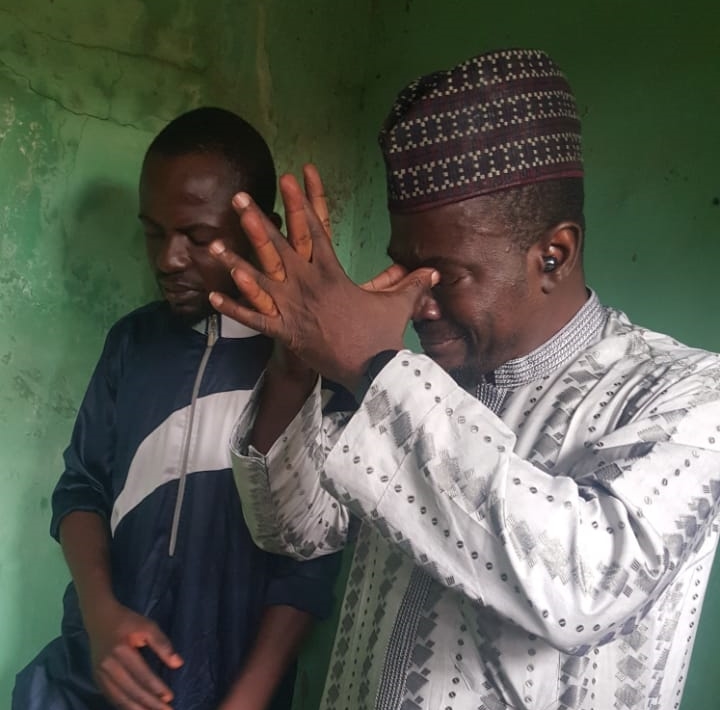
    Imam leads Muslim Prayers for Imam Shuaib Agaka

    Tick tick tick And the breath stopped suddenly at 11.33 p.m. on Saturday, June 4, 2022.

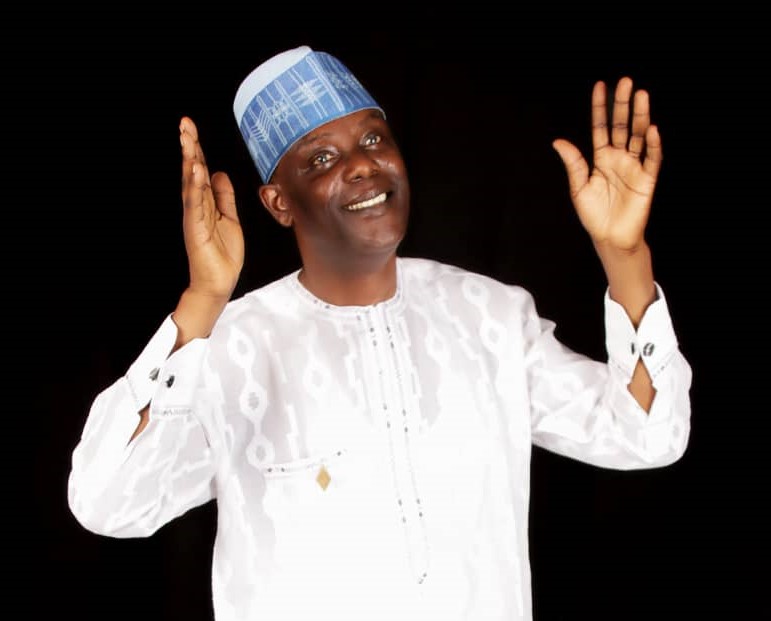
    It was the moment I lost my beloved motherly father and brotherly friend, my dad, Imam Abdulhameed Shuaib Agaka (PhD).

    I had arrived Ilorin on Friday and met him at a private hospital where he had been admitted for the treatment of malaria. I gently collected the prayer rosary from his fingers and held his hand gently, even if a bit tightly He responded with a very brief smile, without uttering a word.

    Inside me, I felt that his prayer over the past two years was about to be answered But I refused to accept that it could come so soon. I recall that on his 75th birth in February 2020, he told me, as the eldest child and in the midst of my siblings, that we should be strong, as he would soon depart for the world beyond.

    That encounter influenced my homage to him during my birthday on October 10, 2020, titled, Imam Agaka: A Tribute To My Father” https://yashuaib.com/2020/10/imam-shuaib-agaka/

    While he prayed for his transition to occur, we prayed vehemently against it. We were not unmindful of the fact that he had been having a running battle with diabetes and hypertension. He was even advised to reduce his participation in public engagements, which was quite hectic, including his weekly Islamic radio programmes, sermons, advocacy visitations and other activities outside the house.

    From that period in 2020, he had devoted more of his time to Quranic recitations, remembrance of the Almighty, and prayers and nothing else.

    Late Imam Abdulhameed Shuaib

    As I held his hands tightly, praying, and with tears rolling down my face, I had a sudden recall of the circumstances of the year 1998, when he finally agreed to accept the title of Imam Agaka, a community with close proximity to the Emir of Ilorins palace.

    Since he had made up his mind, we couldnt stop him from leaving Kano, where he was fully established as a respected spiritual leader, Islamic preacher and Arabic scholar, even with a PhD in Arabic Morphology and Quranic Grammar from Bayero University Kano in 1992.

    He voluntarily retired from the public service afterwards and started a new life in Ilorin.

    His family compound in Agaka hosts one of the oldest Quran as well as a Quranic centre in Ilorin, where members of the royal family, including the late mother of the current Emir Sulu-Gambari, learnt basic Islamic teachings.

    Apart from his prayer to be buried close to the grave of his parents in Agaka, he had refused all appeals to travel outside the town in the last five years, not even for a visit to Abuja, for the fear that he could die far away from his preferred burial ground close to his parents.

    We shared great moments together and he was always glad about his children’s accomplishments.

    On May 26, when I told him about my plan to travel to Daar es Salaam in Tanzania for the annual African Public Relations Conference and Awards, he had urged me to return as soon as possible to Ilorin with the award, in order for him to bless it as he had always done on similar occasions in the past.

    On my return, I received a message that he had a fever and had been admitted into a private hospital. Earlier on that Friday morning, I had packed the awards that I intended to present to him, as part of my most recent professional acknowledgements, which I was certain would cheer him up, and boarded a 40-minute flight to Ilorin. On arrival, I rushed to the hospital to see him. As mentioned earlier, he noted my presence by opening his eyes, but he could not talk.

    As I collected the rosary of prayer beads from his hands, he was still using his fingers consciously in counting the Tasbiu (Muslim prayers). I clapped his hands and he responded with a brief smile.

    At that moment, I pleaded with the Almighty Allah to kindly grant my father more time, so that he could counsel and pray for me as he usually did, at least for the last time. I wanted to experience his jokes, smile, prayers and embrace, even if for only one more moment.

    I beseeched the Almighty to restrain the Angel of Death for another instant to allow me to present our latest publication and awards to him in a state of full consciousness.

    With my eyes raised to the high heavens, I implored: God, this man has devoted the last few years doing nothing else but just praying and praying and praying. Please spare him some moment so we can talk.

    I was at this and hardly knew when my sister and in-laws took me away for medical attention in a nearby health centre. I was thereafter checked into a hotel close to the hospital, to calm down, while sleeping away the stress and trauma.

    I returned to the hospital the following morning to see him. He was sleeping and breathing normally, without being unconscious. By evening, however, the rhythm of his breathing had become a bit faster.

    At 11.33 pm on that Saturday, his breathing stopped, and his prayers had been answered.

    I momentarily became an adult orphan’ and lapsed into deep grief. My thoughts were suffused with sadness, loneliness and an overwhelming sense of grief. I equally experienced fatigue, confusion and anxiety in heightened measures.

    YAShuaib with Emir Sulu Gambari after the death of Imam Abdulhameed Shuaib Agaka

    We were consoled by the kind words of many leaders and scholars, and even the Emir of Ilorin, Alhaji Sulu-Gambari whose exhortation reminded us of how Imam Agaka had positively impacted Arabic scholarship and Islamic teaching in the North.

    It has now dawned on me how it really feels to lose a truly loved one.

    My sincere apologies to all those whose calls I have been unable to pick or whose messages I am yet to respond to in the last week of a final caregiving leave in the honour of my late father. May we all find the fortitude to bear the deep losses that come with life when these come to our way, while still retaining the presence of mind to keep giving thanks to God despite everything.

    Yushau A. Shuaib
    Editor-in-Chief PRNigeria
    Abuja

  • Eluemunor: A Lousy Writer’s Weak Punches Against Shuaib, Dahiru – A REJOINDER by Salis Manaja

    Eluemunor: A Lousy Writer’s Weak Punches Against Shuaib, Dahiru – A REJOINDER by Salis Manaja

    Eluemunor: A Lousy Writer’s Weak Punches Against Shuaib, Dahiru
    By Salis Manaja

    Above all, don’t lie to yourself. The man who lies to himself and listens to his own lie comes to a point where he cannot distinguish the truth within him, or around him, and so loses all respect for himself and for others. And having no respect he ceases to love.– – Fyodor Dostoevsky

    My emotions switched between tragedy and comedy – and later ended up at tragi-comedy – reading a rejoinder by one Tony Eluemunor who hides under the nothingness of his obscure brand name to spew bile and venom on more accomplished writers in his lousy attempt to prove that he was a journalist before he became the defender and attack dog of the most notorious, stupendously corrupt public officer in the history of official looting, worldwide.

    First, he went all out to attack the person of an award-winning crisis communicator, Yushau Shuaib unfairly and unjustifiably over his well-received piece that promotes peace and tolerance on the impasse between supporters of Air Peace and Emir of Kano, Aminu Ado Bayero. Rather than appreciating the spirit behind the patriotic piece, Eluemunor wrote an article titled “The Emir And Air Peace: Yushau Shuaibus Errors” in the Independent Newspaper among others.

    It is very clear from his initial article, that Eluemunor fruitlessly attempted to defend the spokespersons of Airpeace when he wrote that he had every reason to believe that Shuaibs piece was directed at Air Peace spokespersons. He added that I make bold to state that nothing in the statement the airline issued on that matter was boisterous or confrontational.

    In an egocentric attempt to redefine Strategic Communication, Eluemuno childishly cited Wikipedia for what he considered an academic engagement and used derogatory remarks in condemning not only the article but the personality of Yushau Shuaib.

    Not done, he penned another article titled: Shuaibu on Emir and Air Peace: Teacher dont teach me nonsense” in the Vanguard newspaper. With the same theme in attacking Shuaib and his article.

    The rule of hole says when you are already inside a hole, you stop digging. But Elumuno has probably lived all his adult life overrating himself, so every opportunity he had on this matter, he kept on digging and digging and going down and down.

    When an award-winning Fact-Checker, Dahiru Lawal, published a rejoinder to educate and guide him on some of his incoherent and illogical arguments, Eluemunor wrote another article this time with a title: Dahiru Lawal on Yushau Shuaib: Less Sense, More Nonsense. If the rejoinder he wrote to Shuaib was laughable, the latest one he wrote in response to Dahiru was just ridiculous.

    A mere google search of his name reveals the stench and filth that comes with benefitting from illicit and illegal wealth, and erroneously thinking that you have earned the right to attack serious-minded professionals who are adding a lot of value to this noble field.

    Like in his previous article, the rejoinder by Eluemunor simply exposed him as an antagonist and irredeemable misogynist who disrespect gender-based endeavours by attacking the work of a ThisDay female editorial staff who diligently conducted a personality interview with Shuaib and came up with a journalistic masterpiece that cast a spotlight on Shuaib’s style, accolades and pace-setting tracks in the PR World.

    In his unfortunate prejudice against the female journalist, Eluemuno who claimed to have been a journalist all his life, could not differentiate between an editorial and feature piece written by editorial staff from an opinion article written by outsiders.

    Without any substance, sound argument or logical thoughts, the self-acclaimed writer merely sustained the attack on Shuaibu, on Dahiru as well. He wrote that When Dahiru reacted to my column I was shocked. It lacked civility and was uncoordinated because he rambled on and on, jumping from one issue to another. It was an unfocused, chaotic clutter, a total mess!

    In a nutshell, the columnist lacks the comprehension skills to understand Shuaibs strategic communication idea on the need to take result-oriented decisions in crisis communication in resolving the impasse between Air Peace and the Emir. Strategic moves do not have to be conventional, theoretical or textbook-based! Hence the refrains by Shuaib in his article when he stated that Beyond theory, strategic communication doesnt seek publicity in whatever ways through the media. This singular phrase was the major offence of Shuaib in the eyes of Eluemunor.

    Eluemunor also proved his lack of comprehension when he mixed up Dahirus charge on him to use credible scholarly works to buttress his arguments rather than use FREE online resources, like Wikipedia, which is editable by every Tom, Dick and Harry. The man simply doesn’t understand these things.

    For one who communicates to an audience, it is worrisome that Eluemenors inability to keep an eye on the ball, comprehend and decipher is legendary – the reason why he attacked Shuaib in the first place and later attacked Dahiru in another rejoinder.

    For Eluemunor to have the time to come up with the same line of thinking and the same pattern of argument in response to a response, proved that he is a hack hustler who has another illicit interest to protect in the matter, probably from his friends, the Airpeace Spokespersons. He has been doing it for ages before landing the contract on whitewashing Nigeria’s most corrupt and convicted political office holder.

    Probably intimidated by Shuaibs numerous awards at the university, during his national youth services, in the communication industry and various appointments some automatic employments on merit at the federal level, Elumunor claimed that in worked in the PUNCH for two weeks and left and that he was contributing articles in Sketch in the 70s. On his claims of being a 1990 Nieman fellowship, the publicly acknowledged list for that year does not include his name but other notable personalities such as Andrew Drysdale, Teru Nakamura, Elaine Shannon, Olusegun Osoba, Yong-tae Kim, Sheryl Fitzgerald, Curtis Matthews Jr., Ranjan Gupta among others.

    Since his name is conspicuously missing from the list, it is left for him to tell us why. But what bothers me more is the question that beggars belief. Should we begin to scrutinize all Eluemunor’s claims? Like his contributions to ThisDay editorial, Punch newspapers, etc? It is curiously amusing that Eluemunor claimed to be on the Editorial Board of ThisDay between 1995 – 96 yet no publicly available information to substantiate this.
    It is one thing to make an impact in practice, it is another to be a benchwarmer. Eluemunor should show us evidence of the impact of his decades of wielding the pen. An online search of his name and that of Yushau Shuaib and Dahiru Lawal would prove one fact: The Difference is CLEAR.

    In a rush to make false claims, Eluemunor again failed to comprehend or even understand the Global Creativity Index, the yearly index, produced by PRovoke, formerly Holmes Report, ranks the most awarded PR campaigns and firms in the world, weighing their impact, while taking cognisance of their staff size. The ranking goes two ways, both by staff size and financial weight. The result he found was those ranked by bigger staffing and bigger pockets, yet he thought it was Eureka for him, pathetic! The list is there in the Provoke Media and Statista on the ranking of Yushau Shuaibs Image Merchants Promotion Limited, which has also bagged multiple awards in communication, especially from the Nigerian Institute of Public Relations (NIPR), African Public Relations Association (APRA) and International Public Relations Association (IPRA).

    While Shuaib has deliberately refused to join issues with him, I advise reputable media houses, especially the Vanguard and Independent Newspapers he deployed to attack innocent personalities, to be wary of contributors that could put them in litigation trouble of defamation suits for libel and slander.

    With relentless attacks on his person by Eluemunor, may I advise Mr Yushau Shuaib to issue a strongly worded rejoinder to teach him a lesson in journalistic writings? Even though the PR scholar often advocates that “Silence is golden against dignifying frivolities,” he can also sue him in a court of law.

    Useful References:
    Air Peace, Kano Emir and Unwarranted Attacks by Yushau Shuaib
    https://prnigeria.com/2022/03/02/air-peace-kano-emir/

    Shuaibu on Emir and Air Peace: Teacher dont teach me nonsense by Tony Elumunor
    https://www.vanguardngr.com/2022/03/shuaibu-on-emir-and-air-peace-teacher-dont-teach-me-nonsense/

    On Emir and Airpeace: How Eluemunor Goofed on Shuaibs Interventions by Dahiru Lawal
    https://prnigeria.com/2022/03/23/emir-airpeace-eluemunor-shuaib/

    Dahiru Lawal On Yushau Shuaib: Less Sense, More Nonsense by Tony Eluemunor
    https://independent.ng/dahiru-lawal-on-yushau-shuaib-less-sense-more-nonsense/

    Most creative PR agencies worldwide weighted by staff size in 2020, according to Global Creative Index in Statista
    https://www.statista.com/statistics/276889/the-most-creative-advertising-agencies-in-the-world/

    2021 PR Agencies of the Year in Provoke Media https://www.provokemedia.com/events-awards/agencies-of-the-year/2021-agencies-of-the-year/emea

    Yushau Shuaib: A Publicist with Panache by THISDAY
    https://www.thisdaylive.com/index.php/2022/02/06/yushau-shuaib-a-publicist-with-panache/

    Salis Manaja, a graduate of Information and Media Studies, Bayero University Kano writes from Kofar Dukawuya Kano City via [email protected]

  • Empowerment Enablers: Between Gwarzo and Agaka

    Empowerment Enablers: Between Gwarzo and Agaka

    Empowerment Enablers: Between Gwarzo and Agaka
    By Yushau A. Shuaib

    They are apolitical, non-partisan and yet contribute to socio-economic developments through the facilitation of worthy projects, empowerment programmes and scholarships.

    As unassuming philanthropists, Professor Abubakar Adamu Gwarzo and Engineer Kale Kawu Agaka have demonstrated that beyond political office, one can make positive impacts by enabling developments in ones respective communities and the nation in general.

    At different times and for different events, I have encountered the two personalities of the Generation X and observed the enormous energies and resources they deployed in ensuring community development.

    Gwarzo, an international businessman, a professor of Modern European Languages (French), and founder of Maryam Abacha University of Nigeria (MAAUN), invests heavily in tertiary institutions to ensure the affordability of high-quality education in the country.

    Agaka, an electrical engineer and a director at the Rural Electrification Agency (REA), ensures and supervises the provision of quality electricity facilities in various communities across Nigeria.

    Less than a year after the National Universities Commission (NUC) issued a licence for the operation of Maryam Abacha American University of Nigeria (MAAUN) on its Kano campus, precisely on Monday, February 15, 2021, Professor Gwarzo has constructed a network of well-tarred roads around the area, a pedestrian walkway, alongside lush greenery and a luxuriantly pleasant layout of flowers. By March this year, he has already completed magnificent structures, such as faculty buildings, lecture theatres, laboratories, staff quarters, a cafeteria, and playground, among other facilities, in a highbrow district of Kano State.

    Despite being one of the finest and best equipped private universities in northern Nigeria today, the founder still managed to peg the tuition fees for students pursuing degree programmes at less than N1,000,000 per session. The academic programmes that have been approved for commencement in the University are under the Schools of Management, Computing and Law. There is also the School of Allied Health Sciences, in which students can study Nursing, Medical Laboratory Science and Physiotherapy.

    In addition to the first-class facilities in the university, through his philanthropist initiative, the AAG-Foundation, Professor Gwarzo has donated vehicles and ambulances to select higher institutions of learning in Northwest Nigeria. The Foundation also champions campaigns towards improving access to quality education, strengthening healthcare systems, inspiring women and youths for development and promoting gender equity.

    The businessman, who operates another American-styled university in the Niger Republic, has promised to establish a Franco British International University in Kaduna and a Canadian University in Abuja soon.

    While many business people would rather invest in real estate and other high yielding lucrative enterprises, it is indeed commendable that Professor Gwarzo is investing heavily in education to address the educational deficit and challenges we are facing in the country, especially in Northern Nigeria.

    Meanwhile, Engineer Kawu Agaka, a prince of Ilorin Emirate, on behalf of the Rural Electrification Agency (REA) where he is the Director of Projects, facilitates and supervises the provision of high-quality electricity transformers, dedicated solar lights and mini-grid injection substations, in the effort at boosting and ensuring the steady and stable supply of electricity in various communities across the country.

    Apart from facilitating infrastructural developments through the lengths and breadths of Nigeria, Kawu Agaka, who was recently turbaned as the Dan-Iyan of Ilorin Emirate by Emir Zulu Gambari, enables the provision of scholarships to indigent students and skill acquisitions programmes for youth empowerment and self-reliance, while equally supporting widows and orphans with free medications through his familys foundation.

    It was therefore not surprising that an unprecedented crowd of people, from far and near, thronged the emirs palace in Ilorin during his turbaning ceremony as the Dan-Iya. In fact, several beneficiaries of his philanthropic and other support gestures played major roles in that traditional chieftaincy ceremony by contributing a huge volume of resources towards the hosting of the event.

    The title of Dan-Iya is usually bestowed on a prince with a high sense of integrity, a strong vision and strong participation in community service. Agaka was also deemed as highly befitting of this title, which had been held before him by his father, Late Alhaji Ibrahim Kawu Agaka, a royal prince and successful businessman, who was the first titleholder.

    Engineer Agaka has proven the veracity in the fact that public office, as the highest point of service, should essentially be used for the public good, towards community and national development, and not for ulterior or selfish interests. Governor AbdulRahman AbdulRazaq of Kwara attested to this when he described the new Dan Iyan as the pride of the Ilorin Emirate.

    AbdulRazaq said the traditional honour was truly well-deserved because of the quintessential good nature of the recipient, his love for the Ilorin culture and his selfless form of philanthropy.

    His choice as the holder of this prestigious cultural rank attests to his huge contributions to the growth of our community, his support for our cultural heritage, and his open-door policy and support, especially for young people. We are indeed proud of him. I thank His Royal Highness, the Emir of Ilorin, Dr Ibrahim Sulu-Gambari, and the Emirate Council for the excellent choice of the fine gentleman as Dan Iyan Geri (Ilorin), the governor said.

    In our constructive engagements and criticisms, we should also endeavour to always celebrate those that are contributing to the wellbeing of society. Professor Adamu Gwarzo and Engr Kale Agaka, among a host of others, are models whose contributions should inspire others to do the same, if not more for humanity, through selfless service, sacrifice, and a dogged commitment to the attainment of a much more better society, anchored to the need for greater human development.

    While I strongly advise the proprietor of the American University in Kano, Professor Gwarzo to ensure the recruitment of highly qualified and experienced scholars for the academic programmes, I will equally urge Engr Agaka to maintain his apolitical stance, while ensuring equity and fairness in discharging his duties and carrying on with the enviable roles he plays in the society. May both of these gentlemen continue to find fruition, fulfillment and the motivation to do more, as they keep modelling the best that human nature has to offer.

    Yushau A. Shuaib
    www.YAShuaib.com
    [email protected]

  • Air Peace, Kano Emir and Unwarranted Attacks

    Air Peace, Kano Emir and Unwarranted Attacks

    Air Peace, Kano Emir and Unwarranted Attacks
    By Yushau A. Shuaib

    Beyond theory, strategic communication doesnt seek publicity in whatever ways through the media. It considers the dynamics of the environment, the target audiences, their behaviours, and trending issues for effective messaging.

    Creative thinking is crucial in strategic communication, towards offering better ideas, and sound judgment in responding to issues in the most responsible manner.

    Sometime in 2021, my mother was denied boarding on an Air Peace plane going from Ilorin to Abuja, even though she was among the first set of passengers who arrived at the airport very early that morning. Apart from frustrating her attempt to board the aircraft, the airline further charged her exorbitantly for the use of the same ticket for the next days flight.

    I was so bitter that I posted her plight on Facebook. As usual, while some friends expressed concern about the situation, others had contrary views. Meanwhile, the notorious social media hecklers and agents provocateur descended on the issue on the platform, spewing their routine ethnic chauvinism and religious bigotry, while misinterpreting a simple case that could be effectively addressed by the customer care service of the airline.

    Meanwhile, a few hours after my post, one Mrs Olubunmi Korede, who I later learnt was the Air Peace Manager at the airport, reached out to my siblings and later called me privately and narrated what had really transpired that day.

    We discovered that Mama came early but was on the wrong queue at a counter of another airline. By the time she realised the mistake, the Air Peace Counter had been closed. We deeply regret what happened, especially to an innocent aged mother.

    Not only that, the Manager also personally received Mama the following day at the airport and courteously processed her travel, while still offering the airlines apologies for the incident of the previous day. That single episode influenced my loyalty to Air Peace, which then became my preferred airline on some select routes.

    I also developed an interest in the business model of the owner of the airline, Allen Onyema, a Nigerian to the core, who strongly believes in a united and prosperous nation devoid of the divisive sentiments that are unfortunately attendant upon a prejudicial national outlook. During the inaugural Spokespersons Communication award, Air Peace, as a corporate citizen, was honoured for its nationalistic no-city-left-behind initiative, which interconnects various Nigerian cities by air, and its various citizen engagement efforts and conversations. The expansion of its different routes across diverse national and international spaces has equally been a big relief to its teeming users, in a manner that has favourably coupled with the airlines huge reductions of its fares to make them highly affordable. The activities of Air Peace also strengthen and enhance the economy of many of its beneficiary cities/states in the North and South, as it truly connects Nigerians in Nigeria, giving access to safe and best-in-class air connectivity.

    It was, therefore, not surprising that during the faceoff between the airline and the government of the United Arab Emirates (UAE) over the discriminatory international airport slot and frequency allocation to it, the Federal Government of Nigeria stood firmly behind the Onyema-led business organisation, in supporting ones own against injustice.

    While retaliating the ill treatment of Air Peace in Dubai, the Buhari administration also cut down on the frequency and slots allocated to Emirate Airlines in Nigeria, to mirror the stringent measures meted out to the Nigerian carrier in the Arab country. The UAE eventually capitulated to the demands of the government and rescinded its decision to deny Air Peace the stipulated number of slots and frequencies for reciprocity and fairness in the bilateral air service agreement between the two countries.

    Therefore, it was quite shocking when the same airline was reported to have treated the Emir of Kano, Alhaji Aminu Ado Bayero, unfairly by not enabling him and his entourage the opportunity of taking a connecting local flight from Lagos to Kano, after having initially created a situation that led to the delay of his international flight, on another Air Peace aircraft, from Banjul to Lagos.

    The Chief Protocol Officer to the Emir, Isa Bayero thereafter wrote a letter of complaint to the Nigerian Civil Aviation Authority (NCAA), seeking punitive actions against Air Peace Airline for missing their connecting flight.

    The leaked letter subsequently attracted needless attacks and counterattacks between the admirers of the Emir of Kano and supporters of Air peaces stance on the ensuing imbroglio.

    It is unfortunate that many are not aware of the enviable qualities and personality of the Emir of Kano. A graduate of Mass Communication from Bayero University, the Emir had worked in the aviation sector as a spokesperson and a Flight Officer, where he earned respect as a customer-friendly, empathetic, and cultured official.

    An urbane and cosmopolitan personality, whose mother was a princess of Ilorin Emirate in Kwara State, Aminu had held top traditional titles in Kano, the most populous and heterogeneous city in Nigeria, before ascending to the throne of his forebears. With friends from different backgrounds and classes, the unassuming and humble Emir has consistently demonstrated great awareness of and sensitivity in dealing with people of sundry multicultural identities and religious beliefs, which have earned him tremendous respect for his capacity to engage with diversity in a positive manner.

    The so-called leaked memo from the Palace to the NCAA, which has attracted all the unnecessary bickering and unwarranted attacks, ought to have been handled more professionally and strategically from the outset of the situation.

    Traditional institutions deserve respect and aides of revered personages like Emirs need to be a lot more mindful of the statements they make on behalf of their principals, particularly the tone and language of communications that could ultimately become public documents, which can either enhance or tar reputations.

    On the other hand, Air Peace needs to be aware of the position it has attained as a respected national brand and not a regional enterprise that could yield to egocentric displays and stoke unnecessary controversy. The airline has grown to become a Nigerian business for Nigerians and not a parochial powerhouse that can engage in some form of chest-beating.

    Sometimes silence can be golden in strategic communication. Weighing a situation very carefully before venturing a statement is essential, rather than the haste for justification that can unnecessarily escalate a crisis. Spokespersons should realise that PR is not about issuing boisterous and confrontational releases but the creation of channels of mutual understanding, in a way that strengthens and further builds relationships.

    Yushau A. Shuaib
    Author of “Award-Winning Crisis Communication Strategies”
    www.YAShuaib.com

  • 2023: Bola Tinubu and his ‘Loyal Boys’ in Government

    2023: Bola Tinubu and his ‘Loyal Boys’ in Government

    2023: Bola Tinubu and his ‘Loyal Boys’ in Government
    By Yushau A. Shuaib

    During a visit to Lagos on an advocacy campaign on the need for the diversification of the Nigerian economy in 2004, the Chairman of the Revenue Mobilisation Allocation and Fiscal Commission (RMAFC), Engineer Hamman Tukur told the then Governor Bola Tinubu that any local government created outside the constitution was deemed illegal, according to the provisions of the legislative grundnorm, and hence would not receive allocations from the Federation Account.

    Tinubu responded that he would rather intensify the revenue generation and collection drive in Lagos State to sustain the third tier of government, and without the Federation Account, than retract the over 30 newer local governments he had created.

    The Department of Allocation at RMAFC, where the present governor of Kogi State, Yahaya Bello, was then a staff, recommended the withholding of federal allocations to any state that created local governments outside the ambit of the 774 constitutionally created and recognised local council areas.

    Other states that had created additional local governments at that time, reverted to the formally recognised ones, as President Olusegun Obasanjo, working on the advice from the Commission, suspended federal allocations to the local government areas in Lagos State.

    Being the Head of Press and Public Relations at RMAFC between 1999 and 2004 when this went on, my team monitored the ensuing media war over the withholding of local government funds to Lagos State by the Federal Government. Almost all organs of the state government, especially the Executive Council and its members, including commissioners and advisers, alongside public commentators from the Lagos axis, whom we tagged as Tinubus boys, deployed different media strategies to win public support for the position of Lagos State on its right to create newer local councils. And the purported heavy hand of the Federal Government in its dealing with the State.

    In fact, apart from my office, the Public Affairs Adviser to President Obasanjo, Barrister Femi Fani-Kayode was the most vocal voice against Tinubu and his loyalists on that public discourse. Even lawyers recruited by Governor Tinubu, through his Attorney General and Commissioner of Justice, Professor Yemi Osinbajo (the current Vice President), had to write a very lengthy rejoinder against Femi Fani-Kayodes position. I recall that the lawyers who had signed the rejoinder then were Senior Advocates of Nigeria (SANs) including Wole Olanipekun, Rickey Tafa, Taiwo Osipitan, and Kola Awodein.

    Surprisingly, and to the amazement of many, despite the suspension of funds to the State, in a manner that could forestall development and breed economic and geopolitical crises, the government in Lagos started to generate more revenue than what the Federal Government could have released to it from the Federation Account till date.

    Some years later, precisely in 2012, while in a discussion about the stubbornness of some politicians, Mallam Yusuf Alli of The Nation newspapers had made a call and handed the phone to me, saying, Speak to the Jagaban!

    Although initially shocked, I was subsequently impressed by the humane and compassionate disposition of Tinubu when he explained to me that our positions are not borne out of stubbornness but to provide leadership by example through courage, fearlessness, equity and justice to serve and empower our people.

    He even cracked some jokes and explained in detail what leadership entails.

    When Tinubu recently declared his intention to contest for the Presidency, I recalled those closer encounters in assessing his personality. Surprisingly, I have been shocked to the marrow on realising that most of the virulent attackers, since the declaration of his presidential ambition, have not only been from his geopolitical zone, the South-West, but some are also from the camp of his past loyalists Tinubu boys who were his erstwhile defenders, such as during the period of the withheld council funds. And others who had benefitted from his goodwill to gain nominations and appointments into public offices at the state and federal levels.

    It is quite worrisome to observe that when Tinubu was aggressively promoting and supporting the aspirations of many to top public offices, they hailed him to the high heavens; but now that he is seeking a high public office himself, they have turned on him with passionate hatred. They, who once extolled him as the Jagaban, the Leader and the Last man standing when he helped give wings to their ambitions, now describe him as old, sickly and corrupt because of his political ambition.

    Senator Kashjim Shettima and Northern APC Leaders for Tinubu
    Senator Kashjim Shettima and Northern APC Leaders for Tinubu

    Meanwhile, the most vocal and leading voices lending support to Tinubu’s aspiration at this seeming last moment of his political career, are mostly APC northern leaders led by former governor of Borno State and now federal senator, Kashim Shettima.

    These Northern campaigners have pointed out the political debt owed Tinubu and pleaded with President Muhammadu Buhari to reward him for what he did for the All Progressives Congress in the 2015 and 2019 elections, by giving him the right of first refusal to the presidential ticket. They see this as a decent payback.

    On the claim that Tinubu is physically unsuitable for the Office of the President due to his age, Senator Shettima has pointed out that the presidency is not a job for bricklayers. According to him, the mark of true leadership isnt the ability to lift a bag of cement, but having the requisite experience in governance, being able to design innovative public policy, and putting the right team that will implement this together.

    The Northern campaigners have reminded Buhari that, In 2015, some aspirants with very huge war chests were itching to clinch the ticket of the APC, but like the Rock of Gibraltar, Asiwaju and his progressive team stood solidly behind the candidacy of President Buhari.

    While I am also deeply concerned about Tinubus health, considering what befell President Umar Musa YarAdua in office and the fact that Buhari too was almost done in by age and ill-health, earlier in his administration, yet I regard the more recent life given to allegations of Tinubus past misdemeanour in his climb to wealth and reckoning as a common feature characteristic of most successful politicians in Nigeria.

    Unfortunately, it is very difficult to point out a successful politician in public office in Nigeria who has never been accused whether true or false of age falsification, certificate forgery or corrupt practices, among other unbecoming acts.

    As we keep making efforts at perfecting our system to check and push back the ills in our political processes, we should continually seek to enhance and manage our democracy in its content and form, including the highly critical area of leadership recruitment.

    Meanwhile, if I could advise Tinubu, the kingmaker, on his dream of becoming a king himself, I would rather say: You have right to your aspiration, but if under extreme pressure to step down, you might as well consider Vice President Yemi Osinbajo, your topmost ally from the South-West, for support to become the most powerful Nigerian. Or, Senator Orji Kalu, a former governor from the South-East. Or, the minister of Transportation and former governor of Rivers State, Rotimi Amaechi, from the South-South. Or even the youngest presidential aspirant of the moment, Governor Yahaya Bello of Kogi State from the North-Central, a region that is yet to produce an elected president or vice to date.

    Yushau A. Shuaib, author of “An Encounter with the Spymaster” and “Crisis Communication Strategies” blogs at www.YAShuaib.com [email protected]

  • Bashir Tofa: The Publisher with the Finest Mansion- An Intern’s Experience

    Bashir Tofa: The Publisher with the Finest Mansion- An Intern’s Experience

    Bashir Tofa: The Publisher with the Finest Mansion- An Intern’s Experience
    By Yushau A. Shuaib

    Beyond his active involvement in politics and the business world, Alhaji Bashir Tofa who died on January 3 at the age of 74, was a consummate writer, publisher and general perfectionist, whose edifice in Kano city remains one of the finest mansions ever built in the emirate, since the 1980s.

    As a teenager in the ’80s, I always desired passing by the magnificent and sprawling mansion, which has been continuously retouched to perfection till date, at the Gandun Albashu district of Kano.

    As a writer, Tofas articles on the socio-economic and political development of Nigeria had appeared in the then major national dailies in the ’70s, includingNew Nigerian,Daily Times,Nigerian Tribune,The Sketch, and the vernacular tabloid, Gaskiya Tafi Kwabo.

    Beyond his journalistic interventions, he was a wordsmith extraordinaire who authored several books and short stories on contemporary issues in both English and Hausa languages. As a deeply religious person, he also set up the Bureau for Islamic Propagation (BIP) which helped to unite Muslims and promoted interfaith dialogues with non-Muslims towards peaceful coexistence.

    During my university days in the late 80s, I admired his literary contributions, which were the source of attraction that led me to seek an internship in his media conglomerate that published Pen and Alkalami newspapers, and whose offices were situated within a tall building along the Post Office Road in Kano.

    It was in this media outfit that I met the manager, Mallam Garba Yusuf, who introduced me to the art of media marketing and Mallam Magaji Galadima, under whose tutelage I was groomed into the vocation of investigative journalism and copy editing for production and publication.

    While Garba Yusuf later rose to become a highly influential commissioner in the cabinet of Governor Ibrahim Shekarau, back in the day he was a painstaking worker who always ensured that the editorial team met the production deadlines that made the newspapers available on the newsstands every Friday.

    On his part, Magaji Galadima, who later became the pioneer Director-General of the Kano Geographic Information Systems (KANGIS) and currently holds the traditional title of Kachallan Kano in the Emirate, was a very thorough editor who ran a fine comb through our news reports and feature articles for factual accuracy and fidelity to the house style.

    Due to the strictness of Bashir Tofa as the publisher, the management ensured that the reports in both newspapers were not only factual and truthful, but also drew from reliable and authoritative sources. Further to this, the publisher made sure that the editorial staff adhered to the core journalism ethics of accuracy, objectivity, impartiality, accountability and an overarching humanism in their work.

    Even as the Bashir Tofa ethos was very strict, he still gave the two most senior management staff, who were responsible for the publications, the freedom to manage the newspapers in an independent manner. And although I was just an intern then, I was afforded the opportunity of occasionally going out on marketing drives for advert placements and the commissioning of special reports, alongside my main duty of pursuing investigative stories.

    It was during that early phase of my experience in journalism that I met Jarman Kano, Alhaji Adamu Dankabo; Talban Kano, Alhaji Garba A.D. Inuwa; and respected businessman, Mallam Sabiu Bako.

    As a publisher who believed strongly in the tenets of a free press, I recall vividly how the Chairman, Alhaji Bashir Tofa, refused to interfere in an investigative report I had anchored over the mysterious death of a Muezzin in a mosque at the Sheikh Isyaku Rabiu Estate in Kano, the outcome of which he was pressured to alter. I had then conducted an interview with the Chief Imam of the mosque and the Divisional Police Officer of Dala District, one B. I. Bayero when concerns were raised on the need for the report to be stopped.

    While no attempt was made by the publisher or my editors to restrain me from concluding that piece of investigative journalism, the ensuing story was not only published in the Pen, but also in the Alkalami, the Hausa version of the newspaper.

    Apart from the team and leadership building attributes of delegating responsibilities to his staff, also because he travelled abroad often, Alhaji Bashir Tofa was equally a very generous Muslim, especially in the provision of scholarships to students and payment for the health care of indigent people. As an intern, I was placed on a generous monthly allowance and my final year research project in the university in 1992, was funded by his company.

    Being a philanthropist with a difference, he made huge anonymous donations to different public support causes on a regular basis. And, since the early 90s when he introduced the Ramadan Kitchen, food items have been provided for families in need during the holy month of fasting, while cooked food is also made available to people for the breaking of their fast and the early morning Sahur, in various mosques and communities.

    In addition to that, Tofa recruited dozens of tailors annually to sow clothing in large quantities for the masses in communities surrounding him and also for the needy for festive seasons.

    Born to a Kanuri family in Kano on June 20, 1947, the late Bashir Tofa attended the City of London College, before he started a business and later joined politics. He was the Financial Secretary of the ruling National Party of Nigeria (NPN) during the Secondary Republic. At the resumption of political activities in the country during the early 1990s, Tofa joined the then National Republican Congress (NRC), and rose to become its presidential candidate at the June 1993 election, which he however lost to his rival, Chief Moshood Kashimawo Olawale Abiola. The official results were never fully released by the Babangida government.

    Alhaji Bashir Tofa was a noteworthy businessman, oil trader, industrialist, politician, author, activist, journalist and a strong contender during what has been declared as the freest presidential election in Nigerian history in 1993. He died in the early morning of January 3 at the age of 74, after battling health issues that kept him at the Intensive Care Unit (ICU) of the Aminu Kano Teaching Hospital in Kano.

    Yushau A. Shuaib
    Editor-in-Chief PRNigeria
    www.YAShuaib.com
    [email protected]

  • Nigerian Army, General Buratai and EndSARS Protests

    Nigerian Army, General Buratai and EndSARS Protests

    Nigerian Army, General Buratai and EndSARS Protests
    By Yushau A. Shuaib

    You have started again! You should know that PR is not a licence to support atrocities. Innocent persons (at Lekki) were deliberately murdered by your clients (Nigerian Army) and for you, profit is more important than those souls.
    – Omoyele Sowore, Publisher of Sahara Reporters.

    The above was a text message sent to me by my good friend, Omoyele Sowore after PRNigeria published a 204-page book titled, 101 Fake News on EndSARS” and commenced the serialisation of some of the blunders and inconsistencies contained in the recently submitted report of the Lagos State EndSARS panel chaired by Retired Justice Doris Okuwobi.

    In fairness to Sowore, he has been consistent in his brand of activism through citizen journalism. But in our many debates, I have always explained to him that the public relations approach through fact-seeking and efforts at mutual understanding are better ways of managing difficult situations.

    I have received similar concerns from people of goodwill and even from unknown individuals, who claim I am on the payroll of the Nigerian Army, and that all the things we do at PRNigeria are for pecuniary gains. I am therefore compelled to clear the erroneous impression about PRNigerias relationship with the Nigerian Army and our position on the EndSARS panel report.

    First, while PR is a profitable business in the communications practice, in which a practitioner legitimately deserves a remuneration, we have never had a client-relationship with the Nigerian Army, since the emergence of General Tukuru Buratai as the Chief of Army Staff in 2015. The Nigerian Army is NOT our client but one of the stakeholders in the brand of journalism we practice.

    In fact, PRNigeria has never been engaged directly or indirectly by the Nigerian Army in the last six years, but we enjoy the fact of having access to authoritative and sometimes sensitive information from credible authorities and reliable sources in the sector to authenticate our reports.

    Having had a good working relationship with all the Army spokespersons, from Brigadier Generals Sani Kukasheka, Sagir Musa, Mohammed Yerima to the incumbent, Onyema Nwachukwu, they are living witnesses to the professional integrity of our communication outfit.

    Some public commentators have accused us not a few times of excessively defending the Army, especially General Buratai, the past Army Chief who is now the Nigerian Ambassador to Benin Republic. They ignore the fact that objective reportage is not about defending anyone but providing accurate, timely and credible information. While we objectively reported the clearance of Buratai over the Dubai properties saga and highlighted his earlier successes in decimating Boko Haram terrorists and institutional accomplishments, we were yet very critical of the Nigerian Army over the Zaria massacre of 2015, the unjust retirement of the Army 38 in 2016, the closure of the offices of Daily Trust newspapers in 2019, the killing of Police officers by soldiers in Taraba in 2019, and the tenure elongation of military chiefs in 2020, among others.

    Just as the critics attack us, so do the apologists on the other side. For instance, some Army media consultants sponsored a number of articles in several media houses claiming that we are financiers and masterminds of the Boko Haram insurgency. Not only did we report them to the security and intelligence services, but we also sued the accusers in a court of law, to clear our names.

    Our support for the military and intelligence services, especially the Nigerian Army, is our own way of showing patriotism in the defence of national interests when doing so could deny us of securing grants from foreign interests. Our editorial policy does not glorify the activities of enemies of the state. We deliberately censor their propaganda by supporting the gallantry of Nigerian security against violent agitations, banditry, terrorism among others.

    The Chief of Military Intelligence and now Chief of Defence Intelligence, General Samuel Adebayo, can testify to the fact that while we were not engaged to provide any crisis communication component of the Nigerian counterterrorism strategy, we never felt bad about this. After all, General Buratai only demonstrated his detribalized nature by engaging other firms for the Armys PR services.

    Meanwhile, we are equally not unmindful of the fact that the lack of patronage by the Nigerian Army and few others is likely due to the fact that we had worked closely with a consummate spymaster on the national security architecture during the immediate past administration of President Goodluck Jonathan.

    Nevertheless, while we had no pecuniary relationship with the Nigerian Army, General Buratai was gracious enough to have acceded to our interventions on the plight of some journalists and media houses in critical moments, and he even delegated officers to attend our programmes.

    Still, with all sense of modesty, if the Nigerian Army were indeed our client, they would not have committed the communication harakiri of initially denying the presence of troops at the Lekki Toll Plaza during the height of the EndSDARS protest of October 20, 2020.

    The armys blunder, which is also cited in the book, “101 Fake News on EndSARS,” is among the reasons for the public mistrust of the security services and lingering distrust of the government since that incident.

    Meanwhile, the EndSARS panels attempt to redefine the meaning of the words massacre and genocide was faulted by professional opinions of pathologists, forensic experts, ballistic specialists, legal practitioners, among others, as contained in the report itself.

    Interestingly, the author of the book on EndSARS, Dahiru M. Lawal, was an early supporter of the EndSARS movement, until the peaceful protests turned violent. The decentralised mass movement against police brutality was unfortunately hijacked by hoodlums, leading to violent attacks, including killings and the destruction of property worth billions of naira.

    For instance, the initial video of a policeman allegedly shooting a civilian in Ughelli, Delta State, which triggered the EndSARS rallies, and other similar reports, turned out to be fake.

    As chronicled in the book, notable personalities, including the Nobel Laureate, Professor Wole Soyinka, and a former Minister of Foreign Affairs, Professor Bolaji Akinyemi, had to issue written and record video rejoinders respectively, to deny the fake inciteful statements attributed to them during the crisis.

    Similarly, politicians like Asiwaju Bola Ahmed Tinubu of the All Progressives Congress (APC) and Governor Nyesom Wike of the Peoples Democratic Party (PDP) had to address the press on falsehoods fabricated against them, which could have inflamed situations then.

    Some spokespersons to public officials, Femi Adesina and Funke Egbemode, both incidentally former Presidents of the Nigerian Guild of Editors (NGE), were also victims of the mischief of fake news merchants.

    These peddlers of illicit information, apart from impersonating celebrities, also lied against religious bodies by grafting the images of Catholic Bishops on their false narratives, claiming that these distinguished clerics were marching in support of EndSARS, while this was blatantly untrue. In another misleading contrivance, some female Muslims were also said to be protesting in Katsina State, while no such thing happened.

    Meanwhile, some of the credible, traditional media platforms that published fake stories and footage from that series of protests have since dropped these unfortunate contents from their sites. One of the national broadcast stations “Arise TV” that quoted the famed witness DJ Switchs claim that snipers were shooting protesters from Access bank building, had to tender an apology after the management of the bank issued a statement saying the people located on their head office tower were staff members carrying out maintenance work on the building, and not Nigerian Army snipers who had been drafted to kill protesters.

    While some of the media could not offer unreserved apologies for misleading the public, a diligent web search reveals that a number of pages that had initially carried the fake news have since dropped them which are no longer online.

    I strongly believe that media platforms should be harnessed as effective tools in swiftly countering false information, especially if this is defamatory, discriminatory, malicious, uncorroborated or clearly dangerous.

    We must find a way of protecting our ethnic and religious diversity in Nigeria, which is a source of strength so that our fault lines are not exploited by undesirable elements bent on setting citizens against each other.

    Government must find a way of regaining the needed, but already eroded, confidence of the public/masses of Nigerians, due to the high wave of distrust and cynicism about its officials, statements, and actions.

    Also, the Nigerian security services should always display utmost professionalism in the course of discharging their statutory responsibilities, while also eschewing the temptation to be corrupt, high-handed and lawless, especially in their interactions with regular Nigerians.

    Yushau A. Shuaib
    Author “An Encounter with the Spymaster” and Crisis Communication Strategies
    www.YAShuaib.com

  • Can Fani-Kayode Bring Secessionist Agitators to the Peace Table? YAShuaib

    Can Fani-Kayode Bring Secessionist Agitators to the Peace Table? YAShuaib

    Can Fani-Kayode Bring Secessionist Agitators to the Peace Table?
    By Yushau Shuaib

    The title of this article was the exact question posed by a senior security official at an informal breakfast in August. It was at a time when speculations were rife that Chief Femi Fani-Kayode would defect to the All-Progressives Congress (APC) from the Peoples Democratic Party (PDP).

    I have always referred to Femi Fani-Kayode (FFK) as a “Fire-for-Fire” advocate, since February 2004 when I wrote a rejoinder to his unacceptable public outburst while he was Special Adviser on Public Affairs to the then President Olusegun Obasanjo. My rejoinder exposed the loophole in a statement Fani-Kayode had issued against Colonel Dangiwa Umar, a former military administrator of Kaduna State, and General Ibrahim Badamasi Babangida (IBB), over an issue they had with Obasanjo.

    In the article, which was widely published and titled, PR Analysis of Fani-Kayodes Rejoinder on Dangiwa Umar, ( Read https://yashuaib.com/2004/02/pr-analysis-of-fani-kayodes-rejoinder-on-dangiwa-umar/), I had criticised him for using high-sounding, derogatory expressions, such as pathological liar, treachery, ingratitude, destructive fake, suffer a form of delusion of grandeur and misguided sense of self-importance, among others, against the subjects of his diatribe.

    While appealing to ethics and utilising the tools of PR to counter his approach, I offered crucial advice to Fani-Kayode. I insisted that a successful publicist is not judged by the power of his/her oratory, expensive regalia and appearance with bodyguards, but by the ability to analyse issues critically, and not in a manner thats so vitriolic and disagreeable even when pushing an issue he or she is so passionate about. I added that amiability, humility and openness to criticisms, are not weaknesses but attributes of a good communicator who equally has a clear mission.

    With his combative postures and bombastic public engagements, Fani-Kayode has continued to remain relevant, meeting the right people at the right time, and making the right connections for the right appointments.

    Born on October 16, 1960, and named David Oluwafemi Abdulateef Fani-Kayode, he had most of his schooling in Britain. After serving as Chief Press Secretary to the first national chairman of the National Republican Convention (NRC), Chief Tom Ikimi in 1990, he was appointed Special Assistant to Alhaji Umaru Shinkafi, a former head of the Nigerian Security Organisation (NSO).

    Thereafter, President Olusegun Obasanjo appointed him as his Special Assistant on Public Affairs in 2003, before he was elevated to the post of Minister of Culture and Tourism, and later as the Minister of Aviation in 2006.

    FFK was a member of the PDP until 2013 when he defected to the APC as a founding member. In that initial role, he constituted a continuous thorn in the side of the administration of President Goodluck Jonathan. However, he returned to the PDP in June 2014 to become the spokesperson for Jonathans re-election campaign till 2015.

    When his party lost in the presidential election and was hounded by the newer administration, FFK refused to be intimidated. He constantly pushed back and railed against President Buhari, top APC members and the government, taking them to the cleaners for their various perceived unethical acts. His choice of words in tackling those in power was as mercilessly as it was venomous.

    Meanwhile, in responding to the enquiry by the senior security source earlier mentioned, I pointed out that FFK had cordial relationships with the detained leaders of the Indigenous People of Biafra (IPOB), Nnamdi Kanu, and of the Yoruba Nation, Sunday Igboho. I equally emphasised that although the two men are the prominent faces of the secessionist agitation in Nigeria today, they yet have stronger sympathisers and supporters within and outside government.

    In some of FFKs engagements with the agitators, he seemed to affirm and encourage their divisive and inciting rhetoric, particularly in terms of the purported Fulanisation, Arewanization and Islamisation agenda of Northerners in Nigeria.

    Therefore, I expressed doubt about the possibility of the acceptance of Fani-Kayode into APC by President Buhari and the party stalwarts. I nevertheless mentioned my strong belief that if FFK genuinely renounces his essentialist, if not bigoted, ethnic and religious outlook, he has the potential to add value to political and social stability, in a manner that enhances national security.

    A few weeks after the breakfast talk, FFK did not only decamp to APC but was received through a red carpet reception at the Presidential Villa, Abuja, when the APC caretaker chairman, Governor Mala Buni of Yobe State, alongside Bello Matawalle of Zamfara State presented him to President Buhari.

    The reception was also greeted with wild attacks across Nigerias political spectrum. Surprisingly, the majority of those condemning Fani-Kayode for decamping to APC now were the same ones commending him then when he was attacking the North, its leaders and the Buhari administration. Some of his attackers have been politicians, public commentators, and secessionist campaigners of the outlawed IPOB and Yoruba Nation groups.

    The politics of decamping and defection in Nigeria is nothing new. Even though some observers pointed out that Fani-Kayode had abused, insulted, and disparaged everyone indiscriminately, this could be likewise said of other noteworthy politicians like Asiwaju Ahmed Tinubu and Mallam Nasir El-rufai at different occasions in the past, who had vented their rage against General Buhari in disturbingly unprintable language, before they also swallowed their vomit and set up a political company with him in the same party.

    Yet, unlike others, the central question being considered by many is actually what value Fani-Kayode could add to the Buhari administration at this point, which made the red carpet to be rolled out to him as he jumped ship into the APC.

    Speaking with journalists after his meeting with President Buhari, FFK said it was time for him to cross over to join hands with the Head of State in moving Nigeria forward. He added that Nigerians must remain united to salvage the country from the stranglehold of those bent on destroying its progress. He also advised Nigerians not to allow any person or group to divide them or enable the disintegration of the country.

    As Fani-Kayode put it: The point is that I felt it was time to do the right thing, to put Nigeria first. When the time is right, we change direction to join forces and join hands to move the country forward. Doing this doesnt mean we are enemies to anybody. Even if we are in another party, the PDP or any other party or group, we can still work together across party, regional, ethnic or religious lines.

    Sounding quite reflective, he continued: We must remain one as a nation, and build bridges, work together to move the country forward. The most important thing is for us to understand the fact that Nigeria must not disintegrate and those that want us to end up fighting one another in a war will be put to shame.

    My take on Fani-Kayode’s defection from the PDP to APC is not so much about the morality or otherwise of his carpet crossing, but the genuineness of his proclaimed political rebirth from being a highly divisive actor, who had championed an incendiary brand of politics anchored around ethnic and religious identification, to one promoting national unity, tolerance and peaceful coexistence.

    To his credit, before his eventual defection to APC, he was noted to have worked closely with some key players in the APC, including Governor Yahaya Bello of Kogi, in resolving some ethnoreligious conflicts in some states of the country.

    I can only sincerely hope his better angels take charge this time around, to enable the role of a real bridge-builder rallying together many aggrieved stakeholders of the Nigeria project to work towards the socio-economic and political stability of our nation, which he is eminently qualified to play if he is so sincerely inspired.

    By the way, I learn that beyond being Yoruba and Pentecostal Christian, FFK has Muslim and Fulani roots, and hence major traces of the Nigerian diversity, which he ought to be deeply concerned about promoting our national unity in ensuring national security of the Federal Republic of Nigeria.

    Yushau A. Shuaib is the author of ‘A Dozen Tips for Media Relations’
    www.YAShuaib.com, [email protected]


  • Pantami Again: When August Visitors Gather for Digital Innovation- YAShuaib

    Pantami Again: When August Visitors Gather for Digital Innovation- YAShuaib

    Pantami Again: When August Visitors Gather for Digital Innovation
    By Yushau A. Shuaib

    It was on August 23, 2021, that a man in a black suit walked into our office at 9.30 am. He introduced himself as the Protocol Officer in the Ministry of Communication and Digital Economy and announced that the Minister, Professor Isa Ali Pantami, would arrive at our office by 11.00am.

    Prior to that, we had sent out invitations to the Minister and the agencies under his Ministry, to a close-knitted and private event of a book presentation in our modest conference room at PRNigeria Centre, Wuye District, Abuja

    While aware of the fact that a Monday morning is usually a hectic period for many chief executive officers, we had kept our expectations moderate and hoped that at least the Minister and the CEOs of associated agencies would send representation to the event.

    As we went about organising the sitting arrangement of the anticipated guests with the protocol officer, the Director-General of the National Information Technology Development Agency (NITDA), Mallam Kashifu Inuwa, arrived, followed shortly by the Chief Executive Officers (CEOs) of cognate parastatals of the Communications Ministry.

    The CEOs included Prof. Umar Garba Danbatta of Nigerian Communications Commission (NCC), Prof. Muhammad Abubakar of Galaxy Backbone Limited, Dr. Abimbola Alale of the Nigerian Communications Satellite Limited (NIGCOMSAT), Engr. Aliyu A. Aziz of National Identity Management Commission, (NIMC), Dr. Ismail Adebayo Adewusi of Nigeria Postal Service (NIPOST) and Mr. Ayuba Shuaibu of Universal Service Provision Fund (USPF)

    We were flabbergasted and exhilarated in equal measure by the arrival of the minister at about a quarter to 11 a.m, before the start of the event, which is highly unusual for an official of his calibre in Nigeria. Following this, our premises became a beehive of uncommon activities.

    Before that day, the last time I had met the Minister Face-to-Face was in August 2020, when I led editorial members of the Economic Confidential publication to his office for an interview. That encounter motivated one of our staff writers, Inyene Ibanga, to develop a keen interest in covering the Information Technology sector, going forward.

    As a Mass Communications graduate, with a Master’s Degree in Public Relations, Ibanga not only started filing in reports on the sector but he equally wrote weekly articles on Digital Innovation, with a particular focus on activities at NITDA.

    By July this year, Inyene Ibanga, who currently edits TechDigest, had developed a remarkable portfolio of published articles on the digital economy sector in Nigeria and other related developments in Artificial Intelligence, Robotics, Blockchain technology, Big Data, the Internet of Things, cybersecurity, social media, among others.

    In realising the paucity of literature on the Information Technology sector in Nigeria, the parent company of our publications, Image Merchants Promotion (IMPR), which was declared the Most-Creative PR Agency Worldwide in 2020 (check Statista), decided to compile and publish Ibanga’s articles into a book form entitled, Digital Innovation for Prosperity in Nigeria.

    The book comprises eight chapters of 40 well-researched and articulated subjects, with the chapters of the book including, “Enhancing Start-ups”; “Strengthening Innovative Solutions”; “Managing Data for Productivity”; “Protecting Cyber Security”, and “Accessing E-Learning”. The other chapters consist of, “Promoting Digital Inclusion”; “Transforming the Way of Doing Things” and “Advancing the Digital Economy.”

    Analogous issues and areas mediated upon in the book include elucidations on the smart city, smart campuses, digital transformation, disruptive technology, e-commerce, e-learning, e-tourism, fact-checking, the Industrial Internet of Things, virtual reality, augmented reality, e-voting, among others.

    We were delighted, at the compilation stage of the book, when the Minister accepted to write the Foreword. And, in his recommendation, the erudite scholar and professor of cybersecurity noted that the “book will help expose its readers to the benefits of digital innovation and digital economy.”

    As earlier mentioned, with the arrival of the Minister, the programme started with a welcome address by Chairman of the Board of IMPR, Dr Sule Yau Sule, who hailed the rapid development of the digital economy in Nigeria, with Information and Communications Technology (ICT) being the fastest-growing sector of the economy.

    Whilst speaking in the same vein, the DG of NITDA, Mallam Kashifu Inuwa, who was also celebrated at the occasion for clocking two years in the saddle, expressed excitement that the well-thought-out policies, initiatives and promotion of digital innovation, as engineered by the Minister, are already yielding huge positive results.

    As I reviewed the book, I informed our August visitors that the compendium explores ways in which Nigeria does not get left behind in the deployment of technology for providing solutions to economic challenges. The book also examines the roles of regulatory bodies, especially NITDA in the promotion of Information Technology across all the spheres, through the development of frameworks, standards, guidelines, regulations, and policies.

    As the Special Guest of Honour, the minister commended the contributions of IMPR’s titles in constructive engagements and the media coverage of various sectors.

    Pantami said: “The publications of IMPR, especially PRNigeria, Economic Confidential and TechDigest have demonstrated the quality of evidence-based journalism.”

    Speaking on the book, the minister noted the author, Inyene Ibanga, as highlighting how digital innovation has led to surging economic prosperity in Nigeria, within the framework of the ground-setting and key initiatives of the Ministry of Communication with the full endorsements of President Muhammadu Buhari.

    The Minister, therefore, urged Nigerians to develop the habit of reading, as “Readers are leaders”, and that all noted world leaders are people who spend quality time reading.

    Speaking on behalf of all other special guests at the occasion, the Executive Vice-Chairman of the Nigerian Communications Commission (NCC), Professor Umar Garba Danbatta praised the author and the publisher for the compendium on ICT in Nigeria, and with special reference to the significant milestones that have been attained by NITDA.

    In commending the excellent synergy and rapport among the chief executives of agencies under the Ministry of Digital Economy, Mallam Yusuf Alli, one of the directors of IMPR, used the opportunity of the closing remarks at the event to also laud the rare leadership of Prof Pantami.

    Mallam Alli, who is an award-winning investigative editor further stated that other ministries and agencies of government in Nigeria could learn a lot from the unity of purpose of these officials, as exemplified in their collaborations for the development of the country, alongside their humility, brilliance, intellection, and high senses of responsibility.

    Days after, while the magnificence of that event still resonates, the coming together of a rich calibre of personalities to reflect on Nigeria’s digital journey so far, on a unique Monday Morning, is not only a great honour to many of us who have been toiling to produce information that enhances Nigeria’s image, but also a memory that will remain indelible in our minds for a long time to come.

    To the August visitors, especially, the enviable Professor of Cybersecurity, we are indeed highly indebted for the surprise visit and kind words. As PR people, not just communicators, we cherish friendship and the sense of brotherhood through constructive engagements towards a greater nation.

    Yushau A. Shuaib
    Editor-in-Chief PRNigeria and Economic Confidential
    www.YAShuaib.com

  • Abba Kyari: The Celebrated Super Cop and the Unsung Heroes

    Abba Kyari: The Celebrated Super Cop and the Unsung Heroes

    Abba Kyari: The Celebrated Super Cop and the Unsung Heroes
    By Yushau A. Shuaib

    Mallam Yusuf Alli presents SAEMA Award 2019 to Twins Police Officers, Hassan and Husseini Gimba in Abuja
    Mallam Yusuf Alli presents SAEMA Award 2019 to Twins Police Officers, Hassan and Husseini Gimba in Abuja

    In September 2019, over a dozen entries were received nominating DCP Abba Kyari for a certain category of the First Security and Emergency Management Awards (SAEMA). At that time and up till recently, the now-suspended police officer was the most celebrated crime-buster in the Nigeria Police Force, leading him to be given the sobriquet of a “Supercop” for his extraordinary, if not close to legendary, prowess in tracking down and nabbing armed robbers and kidnappers.

    The Chairperson of the awards panel, retired Air Vice Marshall Mohammed Audu-Bida, while considering other factors, urged members of the panel to reach out to senior officers in the security services for their comments on the process and probably put forward more nominations of potential awardees in the various categories being rewarded.

    Thereafter, more nominations of gallant but unsung security personnel were received, especially from the Police, which have many officers who are mostly involved in intelligence and combat operations.

    The former FCT Police Commissioner, now Assistant Inspector General of Police (AIG) Bala Ciroma, had eloquent testimonies of how he had led officers and men of the Command in discreet operations that culminated in the arrests and occasional elimination of vicious armed gangs that were terrorising and abducting innocent people. Some of the cases and suspects were subsequently referred to the Force Headquarters or other security services for further actions.

    Rather than accept his nomination, Ciroma had suggested a very thorough and disciplinarian female police officer, CSP Olabisi Davies, who was DPO at Wuye, which had become one of the most peaceful districts in Abuja. The policewoman was always on patrol at night, seeking out those involved in nefarious activities, usually under the cover of darkness. She also had a track record of successfully turning young offenders into productive citizens through counselling in the district.

    Similarly, one DCP Kolo Yusuf, who had also led his team to capture over 100 kidnappers terrorizing innocent people in mostly the North-West and North-Central zones, politely declined his nomination for an award but rather recommended the twin police officers, Hassan and Hussaini Gimba, who were noted as developing remarkable profiles in crime-fighting in his team.

    The twins have appeared on several verified videos clips interrogating arrested criminals, whose sophisticated weapons and arms had equally been wrested from them and put forward as exhibits. Strangely too, the twin officers had insisted that unless the Police Headquarters endorsed their nomination, they could not honour the award events.

    There was also another counter-terrorism police officer, CSP Ibrahim Mohammed, who had not only competently engaged ISWAP/Boko Haram terrorists in combat, but had led his team on several rescue operations involving citizens, including soldiers, who were delivered from the vice-grip of the insurgents in Borno State.

    In fact, the story of DCP Tunji Disu, who replaced Abba Kyari, constitutes another chapter entirely. Disu has saved many lives, especially those of youths and young graduates, who could have found themselves either as victims or engaged in fraud and other criminal activities. It was only when it had become absolutely necessary, and there was unassailable evidence of wrongdoing that Disu ever agreed to the public parade of crime suspects.

    There are indeed many security personnel in the Force today, who are performing exceedingly well in their areas of responsibility and would rather keep low profiles than cultivate unnecessary public exposure, due to the sensitive nature of their assignments. They are the unsung security personnel but highly dedicated to the protection of the lives and properties of which only a very few are ever celebrated.

    While it is regrettable that Abba Kyari allowed overzealousness, exuberance and indiscretion to define his actions in his security and law enforcement duties, I would rather blame the society, his media handlers and the Police Force for what is now deemed as his fall from grace to grass.

    Even though society naturally appreciates the gallantry of our security agencies and officials, it was quite unfortunate that many top public functionaries and business people were inviting DCP Kyari to their events and posting such engagements in the media to ratchet up their social standing. And yet ill-advisedly too, instead of becoming very cautious about some of these outings, Kyari appeared to have gotten carried away and revelled in the spotlight, leading to the abuse of the privileges and disposition of his sensitive strategic positions, in hobnobbing with people of questionable integrity, and equally posting these on social media platforms.

    While the media developed interests in his exploits as a crime fighter, they allowed him or his media handlers to promote his efforts, rather than those of his team to the high heavens. This became one of his major Achilles heels. There is a huge gulf between the practice of public relations and the indulgence in publicity as an end in itself. In PR, not all activities need to be publicised or promoted because of the potential fallouts of such exposure. Some publicity in terms of policing or security duties could end up enabling the reprisal intents of the targets of one’s exertions, besides the envy of peers and enemies that comes which such territory.

    As an institution with moral and ethical values, the Police appeared not to have been able to tame Kyari, even when he was showing up in very lousy places for the glitz of the celebrity showcase. Instead of reprimanding and curtailing him, the command seemed to have gotten caught up in the cult of the celebrity of an individual, rather than the celebration of the team. In fact, when his younger sister got married in 2019, the creme de la creme of society ‘stormed’ Maiduguri, including the then Inspector General of Police, among top dignitaries, in what was a high society event witnessing guest arrivals in different aircraft.

    Meanwhile, DCP Kyari’s case still hangs on the balance. Before the American FBI went public in indicting him, as it has done, it ought to have contacted its Nigerian counterpart with the overwhelming evidence it had against the super cop, as it is traditionally the case. Even at that, it might be difficult to perfect the extradition of Abba Kyari to the United States of America on technical grounds, alongside other militating factors. Similar indictments by the American system against prominent Nigerians were not consummated in the extradition of these personalities. There was the case of a politician, Senator Buruji Kashamu, indicted for alleged illicit drug peddling, which was ongoing before he died, and there is the example of the owner of Air Peace, Allen Onyema, over money laundering claims, as recent references.

    While he could attempt to hide under the concept of an agent provocateur to defend himself in this situation, nevertheless his work as an undercover operative is not known. In fact, agent provocateurs are expected to act as secret agents encouraging suspected criminals to carry out their illegal activities as a way of obtaining evidence. However, Abba Kyari could not be said to fit into this role because he has been widely promoted as a known or overt crime fighter.

    My greatest concern has been the huge damage this affair has done to our law enforcement services, as a well-decorated officer considered as one of our finest, who had taken enormous risks in resolving fighting crime and saving lives (winning laurels, accolades and swift promotions) is suddenly discovered to have gone rogue or compromised at some point.

    There are a lot of lessons to be learnt from the Abba Kyari affair, especially by law enforcement officials on reputation management and the seductive adulation of the public spotlight.

    Yushau A. Shuaib
    Author of Award-Winning Crisis Communication Strategies
    www.YAShuaib.com