
CP Jimoh: The Art of Policing Lagos
By Yushau A. Shuaib
On February 17, 2026, I arrived at the Lagos State Police Command Headquarters in Ikeja for a scheduled press briefing. I had travelled to Lagos a day earlier and informed the Commissioner of Police, CP Moshood Olohundare Jimoh, that I would be glad if selected PRNigeria Fellows could attend alongside me.
My relationship with CP Jimoh spans over two decades. I first encountered him when he served as the Police Public Relations Officer (PPRO) of the Federal Capital Territory (FCT). Later, he was elevated to Force Public Relations Officer, where he became an active and cerebral member of the Forum of Spokespersons of Security and Response Agencies (FOSSRA). Over the years, I have observed his evolutionnot merely in rank, but in philosophy.
The press conference commenced at exactly 1 p.m. on that Wednesday afternoon. CP Jimoh methodically reeled out the Commands challenges and accomplishments over the preceding year. His presentation was data-driven, structured, and confident. He fielded questions from journalists with composure and clarity.
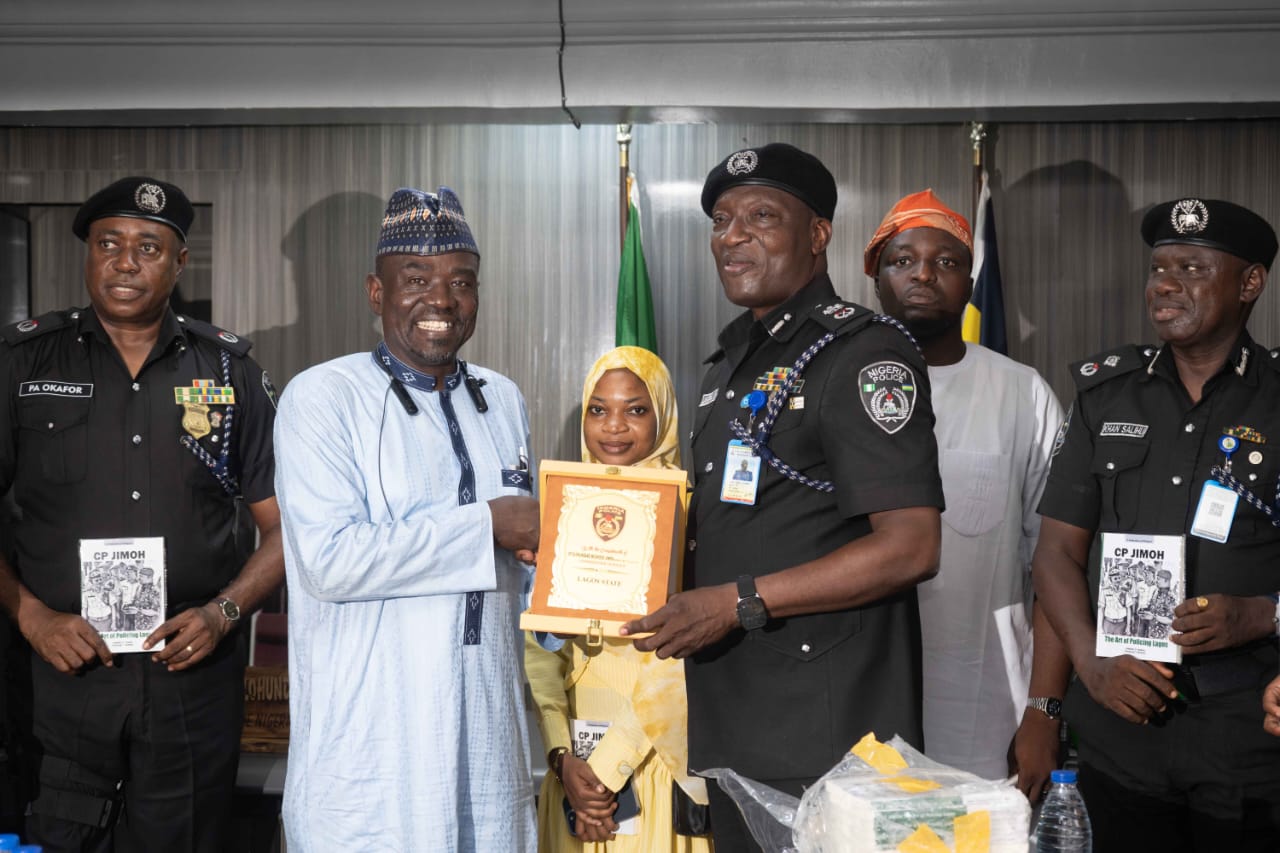
After the session, I sought his permission to allow a PRNigeria Fellow to make a brief remark. He graciously obliged.
The Fellow, Adam Adebisi, introduced himself as a Lagosian and a participant in the 2025 PRNigeria Young Communication Fellowship in Ilorin. He explained that following the fellowship, he and a colleague embarked on a research project on security communication in Lagosone that had culminated in a special publication he wished to present.
A carefully wrapped package was brought forward.
As it was unwrapped, copies of a book emerged, boldly titled: CP Jimoh: The Art of Policing Lagos.
For a brief moment, the Commissioner was visibly stunned. Words failed him. The surprise was genuine.
Such unexpected unveilings are not new at the PRNigeria Centre. In 2016, I authored Sambo Dasuki: An Encounter with the Spymaster while the subject was still in detention. Similar surprise presentations followed with works such as General CG Musa in Peacekeeping: Leveraging Interagency and Civil-Military Relations, Gen. Leo Irabor: The Pearl of Defence, Impactful PR in Customs Management The CG Wale Adeniyi Example, Pantami: The Trials and Triumphs of a Digital Economy Maestro, and 47 Narratives on a Change Agent. More recently, four serving corps members co-authored Anti-Drug, Anti-Smuggling Campaigns A Corpers Chronicle and Diplomacy and Digital Innovation Youth Insight.
But this moment in Ikeja was particularly symbolic.
At a time when public confidence in institutions is under strain and the complexity of urban security continues to intensify, rigorous and evidence-based documentation of policing has become indispensable. CP Jimoh: The Art of Policing Lagos, authored by two outstanding PRNigeria FellowsAdebisi O. Adams and Shukurat T. Ibrahimarrives at a critical juncture in Nigerias security discourse.
Read Also:
The PRNigeria Young Communication Fellowship was conceived to nurture a new generation of communicatorsprofessionals who combine research competence, narrative discipline, and strategic insight in service of public interest. Adebisi and Shukurat exemplify this vision. Their intellectual rigour and civic commitment are evident throughout the 203-page book.
The project emerged from the Ilorin Cohort of the 2025 Fellowship. During their assignment on security communication, the authors observed that CP Jimohs policing approach in Lagos reflected a deliberate shift towards intelligence-led operations, structured information management, proactive stakeholder engagement, and ethical accountability.
Encouraged by mentors and peers, they began publishing analytical articlesalmost weeklyon evolving security dynamics in Lagos. These pieces appeared on PRNigeria, Emergency Digest, and in national newspapers, gradually positioning them as credible young voices in contemporary urban security analysis.
Those articles have now been expanded, curated, and refined into this comprehensive volume.
By choosing LagosNigerias most complex and demanding security theatrethe authors embraced an ambitious intellectual challenge. Through field observations, content analysis, institutional review, and synthesis of primary and secondary data, they document not just incidents, but institutional transition.
At the centre of their study stands CP Moshood Olohundare Jimoh, whose leadership illustrates how modern policing can move beyond reactive enforcement to become intelligence-driven, community-oriented, and communication-conscious. His efforts align with the broader reform trajectory of the Inspector-General of Police, IGP Kayode Adeolu Egbetokun, PhD, NPM, whose emphasis on professionalism and institutional renewal has created enabling space for transformative leadership across commands.
One of the books most valuable contributions lies in its focus on communication as a pillar of institutional legitimacy. In todays digital era, policing is not only about force projection; it is about narrative clarity, responsiveness, and trust-building. The authors demonstrate how structured communication can counter misinformation, strengthen cooperation, and reinforce public confidence.
This publication is a testament to what young communicators can achieve when mentorship meets discipline and opportunity. Adebisi and Shukurat have produced work that enriches policy dialogue, supports institutional learning, and elevates public understandingprecisely the mission of the PRNigeria Fellowship.
I commend the authors for their diligence and professionalism. I equally commend CP Jimoh for his openness to documentation and constructive engagementtraits that distinguish reform-minded leadership from defensive authority.
CP Jimoh: The Art of Policing Lagos is more than a book. It is a thoughtful contribution to Nigerias ongoing journey toward building a policing system that is intelligent, humane, accountable, and anchored in democratic values.
It deserves serious attentionfrom practitioners, scholars, policymakers, and citizens alike.
Yushau A. Shuaib, author of Award-Winning Crisis Communication Strategies, is Editor-in-Chief of PRNigeria [email protected]