The Gombe Succession: Who is Afraid of the Pantami Factor
By Yushau A. Shuaib
My recent visit to Gombe for a capacity-building programme on Artificial Intelligence and strategic communication offered more than professional engagementit provided a revealing glimpse into the states evolving political dynamics ahead of the next gubernatorial race.
From the airport to the city centre, one could not miss the growing visibility of Professor Ali Isa Pantami, the former Minister of Communication and Digital Economy. His images adorned commercial vehicles and strategic locations, signalling what many interpret as an early but deliberate build-up of political momentum.
I must state upfront that Pantami is a brotherly friend with whom I have shared years of a professional relationship. He listens, reflects, and applies constructive criticismeven when such engagement is not publicly acknowledged. Over time, this trait has shaped my own perspective about him, transforming me from a critic into an admirer of his policy-driven approach to governance.
This evolution informed my decision to author Pantami: Trials and Triumphs of a Digital Economy Maestro, a work that chronicles his reform agenda, policy battles, achievements, and controversies during his tenure in public office. His role in navigating complex institutional disputesfrom multiple taxation in the telecom sector to the NIN-SIM linkage challenges and stamp duty controversiesdemonstrated an uncommon capacity to manage bureaucratic tensions within Nigerias digital ecosystem.
Equally significant were the external pressures he confronted, including the ASUU versus IPPIS/UTAS dispute, the controversy surrounding his professorship at Federal University of Technology Owerri (FUTO), and allegations linking him to extremist narratives. These episodes tested his resilience, yet they also reinforced his ability to withstand public scrutiny.
Beyond controversies, Pantamis legacy in expanding Nigerias digital infrastructure is undeniable. Institutions such as the National Centre for Artificial Intelligence and Robotics (NCAIR), the Office for Nigerian Digital Innovation (ONDI), the National Digital Innovation and Entrepreneurship Centre (NDIEC), and the Nigerian Data Protection Commission (NDPC) stand as enduring pillars of his contribution to the countrys digital transformation. These initiatives not only strengthened the countrys digital ecosystem but also created new economic opportunities.
Given this background, his entry into the gubernatorial race under the All Progressives Congress (APC) was not a surprise. What is more intriguing, however, is the intensity of reactionsboth supportive and oppositionalthat his ambition has generated.
During my interactions with journalists, academics, students, and even artisans in Gombe, I sought to understand the political terrain beyond social media narratives. The responses I received were candid, diverse, and, in some cases, sobering.
There are indeed forcesboth within the state and at the federal levelwho would prefer alternative candidates to emerge as the APC flag bearer. For some, Pantamis perceived bluntness, independent-mindedness, and principled stances make him a difficult figure within conventional political structures. For others, it is simply a matter of competing interests and entrenched loyalties.
To move beyond speculation, I probed further: who are the likely contenders?
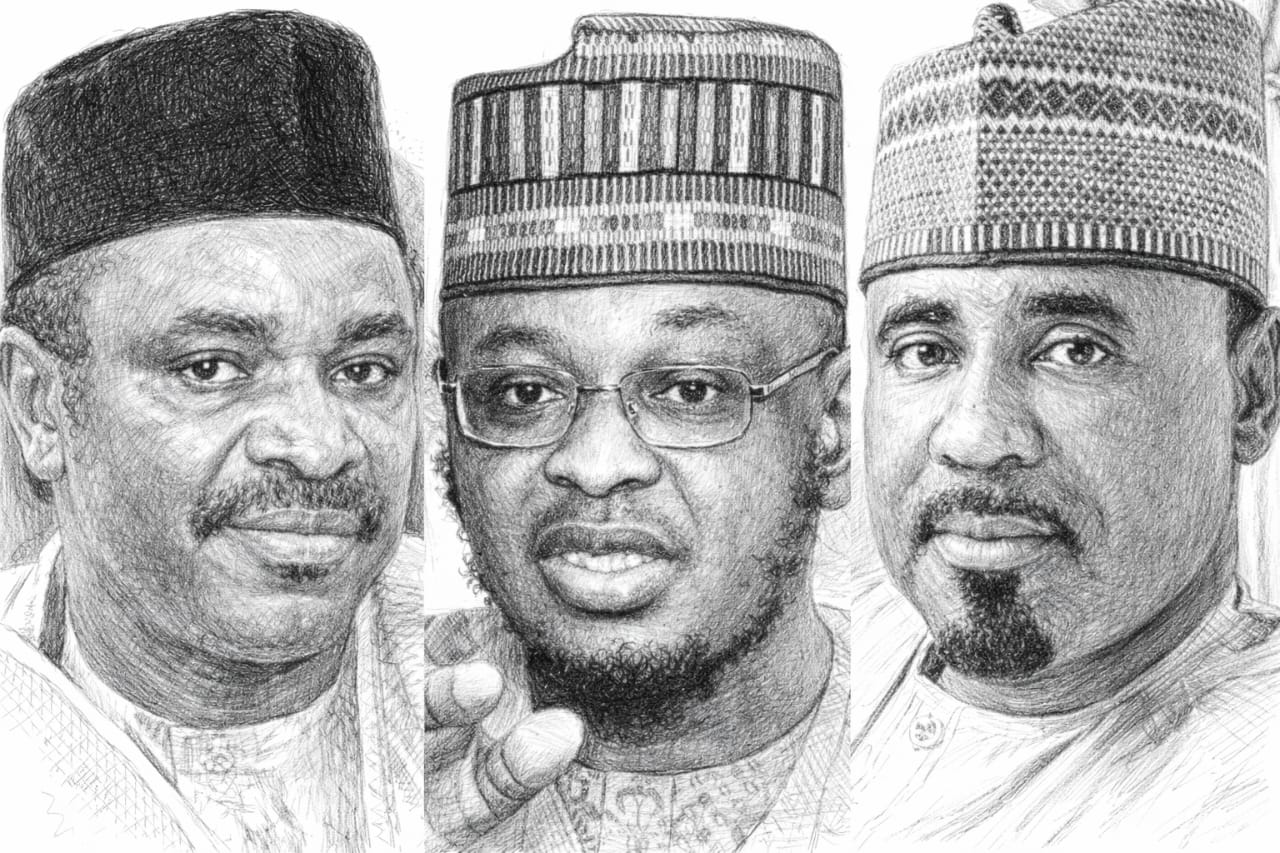
At the federal level, names such as Senator Saidu Ahmed Alkalia two-term senator and former Minister of Transportationfeature prominently. His political network and relationship with Vice President Kashim Shettima are seen as strategic advantages. Similarly, Hon. Usman Bello Kumo, a three-term member of the House of Representatives and Chief Whip, is widely regarded as a formidable contender with strong legislative backing.
Within the state, influential figures such as the Commissioner for Finance and Economic Development, Muhammad Gambo Magaji, and the Accountant-General, Prince Aminu Umar Yugudaboth considered close allies of Governor Inuwa Yahayaare also being mentioned in political calculations.
From the private sector, Dr. Jamilu Isyaku Gwamna, former Managing Director of the Kano Electricity Distribution Company (KEDCO), is reputed to possess strong financial backing and elite networks. Other notable figures include Architect Yunusa Yakubu of Nobel Nigeria Ltd and Engr. Aliyu Mohammed (Combat) of the Velocity Groupboth successful entrepreneurs with growing political interest.
While many of these aspirants are yet to formally declare their intentions, Pantami has already taken the decisive step of publicly announcing his ambitionan indication of confidence and readiness.
The critical question, however, is not just about who is contesting, but what the electorate truly desires. Pantami arguably enjoys a unique advantage in name recognition, intellectual pedigree, and a public service track record that resonates beyond partisan lines. His blend of religious scholarship, technological expertise, and administrative experience positions him differently from traditional politicians.
Yet, politics is rarely decided by credentials alone.
There are legitimate concerns about whether his technocratic style can seamlessly translate into grassroots political leadership. There are also debates about the role of religious scholars in partisan politicsa discourse that often surfaces in Nigerias complex socio-political environment.
However, such arguments must be approached with balance. Nigeria has seen Christian clerics ascend to governorships. The 2023 elections were spectacular as two ordained Christian ministers Rev. Fr. Dr. Hyacinth Iormem Alia, a Catholic priest, and Pastor Umo Eno, founder of All Nations Christian Ministry International were sworn in as Governors of Benue and Akwa Ibom States, respectively. Many observers viewed this as a culmination of longstanding advocacy by the Christian Association of Nigeria (CAN) for greater Christian participation in politics.
It would therefore be inconsistent to deny an Islamic scholar the same democratic opportunity to test his competence through the ballot. Ultimately, democracy thrives on choice, not exclusion.
As observersparticularly those of us who are not direct participants in Gombes political processit is neither our place to impose candidates nor to dismiss legitimate aspirations. We can advocate for a fair, transparent, and competitive process that lets the best ideas and leadership qualities emerge.
Yushau A. Shuaib, the Author of An Encounter with the Spymaster writes from [email protected]