Tag: General Tukur Buratai

  • Self-Censorship and Security Reports- YAShuaib

    Self-Censorship and Security Reports- YAShuaib

    media self-censorship
    media self-censorship

    Self-Censorship and Security Reports
    By Yushau A. Shuaib

    Self-censorship by the media is a moral act of repressing, limiting, holding back or classifying information from public disclosure through mutual understanding. In most cases, editors exercise control over what to investigate and report despite the news value and commercial benefits.

    Imbibing the practice of self-censorship also protects journalists and media organisations from prosecution or persecution in the event of negative consequences of their disclosure. For instance, in the evening of April 23, 2015, a credible piece of news on terrorists was issued by PRNigeria, a press release platform. Less than an hour later, the platform sent an SMS to Editors requesting them to embargo a segment of the story that had ‘Thuraya’ with an updated version. The media complied with the ‘directive’ and the intelligence operation was successful.

    Several instances abound where self-censorship, through systematic collaboration between the media and security agencies contributed to the success of military operations in Nigeria. Such restrictions serve common interest, especially in promoting best practices, moral standards as well as protecting life and property. For instance, when Nigerian troops had misunderstanding with their GOC in Maimalari Barracks on May 14, 2014, intelligence officers privately appealed to the media to be mindful of the danger of using the strong word ‘Mutiny’ as against a lighter word ‘Protest.’ Mutiny, according to them, is punishable by long jail-terms or death. At least a section the media were considerate enough to substitute the word in attempt to save the career and lives of the soldiers.

    Self-censorship has been used in battle of wits among parties in conflicts, not necessarily against the main enemies. There were attempts by some neighbouring countries to rubbish the integrity of Nigerian military by insinuating that our troops displayed cowardice. There was an incidence at a border town in August 25, 2014, followed by an embarrassing media leak from a neighbouring country to disgrace our troops. The then Defence spokesperson, General Chris Olukolade swiftly responded by issuing a statement with military jargon of ‘Tactical Manoeuvre’ which was widely used and celebrated by the media. Surprisingly, few months later the troops involved in the ‘tactical maneuver’ succeeded in launching aggressive military assaults and recovered the border town. While the enemies and ignoramuses might be laughing at the drama and the jargon, the military tacticians were focused on victories.

    Meanwhile, between the months of January and April 2015 there were series of interfaces between the media and security agencies on planned strategies to recover occupied territories from Boko Haram when Sambo Dasuki was the National Security Adviser. The media bought into the idea of self-restraint over some classified information on the counter-terrorism campaign. As patriotic stakeholders in Nigerian project, most editors became more conscious and prevented the inadvertent revelation of military secrets. While some of the journalists deliberately omitted terrorists’ propaganda from their bulletins, others suppressed news that could be injurious to national security. Till today many Nigerian are yet to know how over 20 towns were recovered in Adamawa, Borno and Yobe States within the short-period of election postponement and before the handing over to Buhari administration in May 29, 2015. The media protected the military strategies and supported our troops throughout the period.

    The point here is that while security agencies use weapons to confront criminal elements, the media use their pens to frame the public perceptions on those efforts. The positive media narratives on the counter-insurgency operations, not only boosted the morale of the troops and built the public confidence, the anti-terrorism editorial policies also weakened the fighting spirits of terrorists.

    However, conflicts sometimes brew between security agencies who desire to control information and the media that dig for fresh facts and newsworthy information from credible authorized and anonymous sources.

    The role of the media is basically to promote public awareness; shape public opinion; influence decision makers and mobilize support and resources for public good. On the other hand, critical institutions are mandated to provide services, gather intelligence and respond to emergencies and educate the public amongst others.

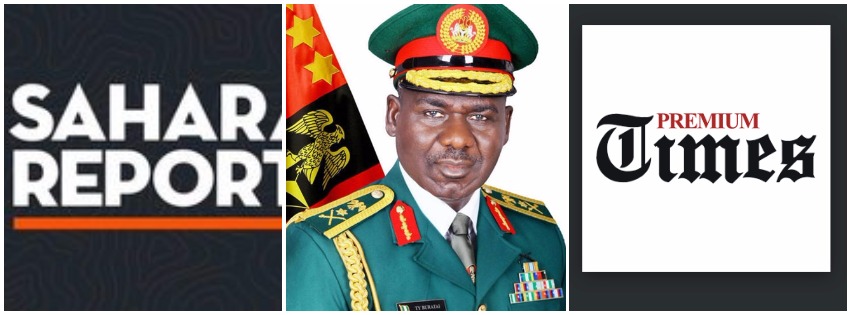
    The recent mistrust between security agencies and the media over the arrest of publishers of the Sahara Reporters, Sowore Omoyele and that of the Premium Times, Dapo Olorunyomi is unwarranted and worrisome. More disturbing is the involvement of Nigerian Army in the latest fracas. Surprisingly, the Nigerian Army under the current Chief of Army Staff, Lt. General Tukur Buratai has received tremendous media goodwill and publicity than any branch of security sector in Nigeria. The positive media exposure on the Army is so overwhelming that other branches like Defence Headquarters, Airforce, Navy and other intelligence organs get lesser mentions in the press.

    More painful is the fact that the name of General Buratai, one of the finest and humble officers is frequently mentioned in the impasse that the Federal Government and even the Nigerian Army, as an institution disassociated themselves from the legal tussle.

    It is also funny that one of the lawyers denounced attempts for a peaceful resolution of the impasse and even threatened to invoke cybercrime law against the media. Cybercrime law was signed by the previous administration to tackle fraudulent and criminal elements not for intimidating the media who have continued to save the military and other security apparatuses from ridicule and imminent exposure to danger.

    The Chief of Army staff should be wary of busy-body consultants and lawyers who may wish to profit from the crisis by instigating him to take irrational steps against the media. No one fights the press publicly, especially credible media, in attempt to enforce censorship, not self-censorship, and get away with it unscathed. The security agencies and the media need one another towards ensuring sustainable peace and progress and stability of the polity.

    Yushau A. Shuaib
    www.YAShuaib.com
    [email protected]

  • Gen Buratai: An Encounter with Soldiers’ Soldier- Yushau A. Shuaib

    Gen Buratai: An Encounter with Soldiers’ Soldier- Yushau A. Shuaib

    COAS, Gen Buratai when CCC paid a visit to Army HeadquartersOn December 12, 2015, my phone displayed missed calls from the Army Spokesperson, Colonel Sani Kukasheka Usman. Such missed calls from security spokespersons, can signify ‘fire on the mountain.’

    I had been in Maiduguri the previous week on a special assignment where I encountered a team of Lt General Tukur Buratai, the Nigeria’s Chief of Army Staff. They had been regular in the North-East zone probably in anticipation of meeting the presidential deadline to rout Boko Haram terrorists by December 2015.

    There is this general impression of Buratai from not only his team but ground troops and the local community who refer to his exemplary conduct of humility, simplicity, probity and integrity. A son of a soldier, General Buratai is a Soldiers’ Soldier who is passionate about soldiering. I gathered that he hardly stays in the cosy Army Headquarters but at the battlefield coordinating military offensives against terrorists. Rather than merely directing the commanders, he leads in some daring military campaigns of pursuing terrorists, recovering villages and rescuing captives from Boko Haram’s dens.

    His troops have become accustomed to his trademark infectious smile and can readily vouch for its genuineness. They are also at home with the fact that his words are constantly reassuring and his promises especially on welfare are kept. In the thick of the battle, he stays close to his troops, interacts, eats and sleeps with them – a risky undertaking for his rank and position. But like a leader who matches his words with actions, he does that to prove his sincerity and share in their critical moment of sacrifice for the nation.

    When I returned the missed call on that Saturday, Colonel Usman Kukasheka narrated an incident that happened in Zaria when the convoy of Chief of Army Staff on a courtesy visit to Emir of Zazzau was obstructed by protesters. As we were talking his line went off and I could not reach him again.

    I reached out to an embedded journalist in the convoy who narrated the incident. He said that some miscreants blocked the convoy of the Chief of Army Staff and that they remained adamant despite the pleadings and admonitions of Col Usman and other senior officers who pleaded that they allow the convoy a passage. The journalist disclosed that General Buratai had cautioned his team not to shoot but to plead even when the protesters were shouting and brandishing arms like Knives, catapult and clubs, in most provocative manner against the military convoy. He added that “The officers prevented the Army Chief from stepping out of his vehicle, to avoid being harmed by the protesters…”

    I therefore sent a text to Colonel Usman requesting for an official Press Release on the incident for syndication by PRNigeria which he obliged with photos and video clips from the incident.

    After the episode of December 12, 2015 with fewer casualties, the following days witnessed unfathomable confrontations that claimed over 300 lives of men, women and children, based on official estimates by Kaduna State government.

    Many had expected an immediate response from the government. In the previous administration of Goodluck Jonathan where similar incident occurred in July 2014, the former National Security Adviser and Sokoto Prince, Sambo Dasuki led a government delegation to empathise with the community, sympathise with the victims and condole Sheik Ibrahim ElZakzaky whose children were also killed then. At that time, the then opposition leader, Nasir Elrufai tagged the incident “Genocidal Jonathanian Army kills Once Again” on his facebook page. But as a governor of the state one year after, his (Elrufai) state officials were prompt in demolition of residence, institutions and places of worship belonging to the Shiite group.

    Meanwhile before the December incident in Zaria, there were some official releases by the Army that cautiously warned about attempts by undesirable elements to frustrate the war on terror. For instance, the Army Press Release of September 8, 2015 disclosed that it had “uncovered plans to thwarts efforts on War on Terror” by some organisations to create situations for human right abuse. In another Press Release of September 25, 2015, the Army warned “prominent individuals and political groups who hailed from Borno State in particular and North East generally… over plans to undermine and scuttle the fight against terrorism and insurgency in Nigeria.” It went further to state that the individuals and groups “are employing the services of marabouts and other unethical means in order to frustrate our efforts and the operations in addition to campaign of calumny.”

    Similarly, there was also a final warning to terrorists in October 20, 2015, where the Army cautioned “All Boko Haram terrorists wherever they are, to desist from all acts of terrorism, surrender themselves and face the law (and that) … failure to surrender will result in serious consequences as our troops have closed up on them.”

    Finally, on November 23, 2015, the Army issued an alert on impending smear campaign by some disgruntled elements. The release clearly stated that “The Nigerian Army has received report of some elements both within the Nigerian Army and outside… to ridicule the Nigerian Army and the person of the Chief of Army Staff for reasons best known to them. They intend to execute this plan as from next month, December 2015, using all means possible….”

    The release also alluded to the existence of fifth columnists in the system when it added that “the Nigerian Army has identified some of the officers involved and their collaborators. The officers are being investigated to unravel their motive and motivation.”

    Going by those warnings and alerts, could it not be possible that some undesirable elements infiltrated the protesters in Zaria by acting the ugly script since the Shiite group are claiming that they had been holding such processions and demonstrations for more than 30 years? Can the speedy action of Kaduna State Government in the demolitions of Shiite’s places have other motives? Apart from the military presence could there be some unknown forces remotely triggering the reported carnage? Were some members of the community who are now blaming the Shiites for nuisance in Zaria be directly or indirectly involved in the whole shoddy incident?

    I was delighted to accompany the management of Centre for Crisis Communication (CCC) on a visit to the Chief of Army Staff in Abuja last week with the hope that General Buratai would say something on the issue. During our interaction however, the quintessential General narrated the successes of the military campaign in the North-East and other initiatives on human right compliance in the armed forces. When the issue of Zaria incident came up, his countenance changed: his head bowed with jaws resting on his hands. For some seconds the room was silent.

    When he raised up his head, looking towards our direction, his smile had disappeared, and with emotion, he merely said: “I don’t want to join issue with anyone…. But I must state that by our culture and professional training, soldiers don’t just attack anyone arbitrarily without provocation and justification. We abide by the rules of engagement which guide every action we take. We have a responsibility to protect our citizens from insecurity and impunity.

    “We have been fighting terrorism with all our might, spirit and energy and would avoid anything that will distract our efforts.”

    “How can anybody accuse a responsible armed agency of government of murder? On the contrary, the people were attacking the soldiers with petroleum bomb and other weapons. In actual fact, not all of them knew how to handle Molotov they were trying to use against the Army and it back fired on them.”

    After his words, I realise that there is an urgent need for a thorough, independent and unbiased investigation on Zaria carnage to unravel the mystery behind the sad incident.
    Yushau A. Shuaib
    www.yashuaib.com

Latest News
End the Apartheid of Indigeneship: Why Nigeria Must Adopt Residency-Based RightsKwara 2027: The Chess Game of Sarakis PDP and AbdulRazaqs APC by YAShuaibNkechi Ali-Balogun: The African PR Amazon @70 By Yushau A. ShuaibKishiya: Between Ribadus ONSA and Famadewas Homeland SecurityConsensus Fraud: When Governors Usurp the Voters MandateTo Wike: It Is Wickedly Wicked to Convert Wuye's Public Hospital into a Private EstateProfs Adamu & Pate: Gentle Giants of Communication ScholarshipCan AtikuObi Unseat TinubuShettima in 2027?The Gombe Succession: Who is Afraid of the Pantami FactorShettiman Dukawuya @30: Linking Three Regions and GenerationsThe Trials of Dasuki and Malami A Study in Nemesis: What You Do Unto OthersEnough Is Enough: After Bashar Sanis Death, the North Must Finally Confront Its Own Monsters2027 Elections: The Fear of Trump, Werekaci and Nigerian Politics By YAShuaibBetween IGP Disu and DIG Mba: A Personal ReflectionTo DSS Boss: What Was Good for Ese Oruru Must Also Be Good for Walida Abdulhadi